
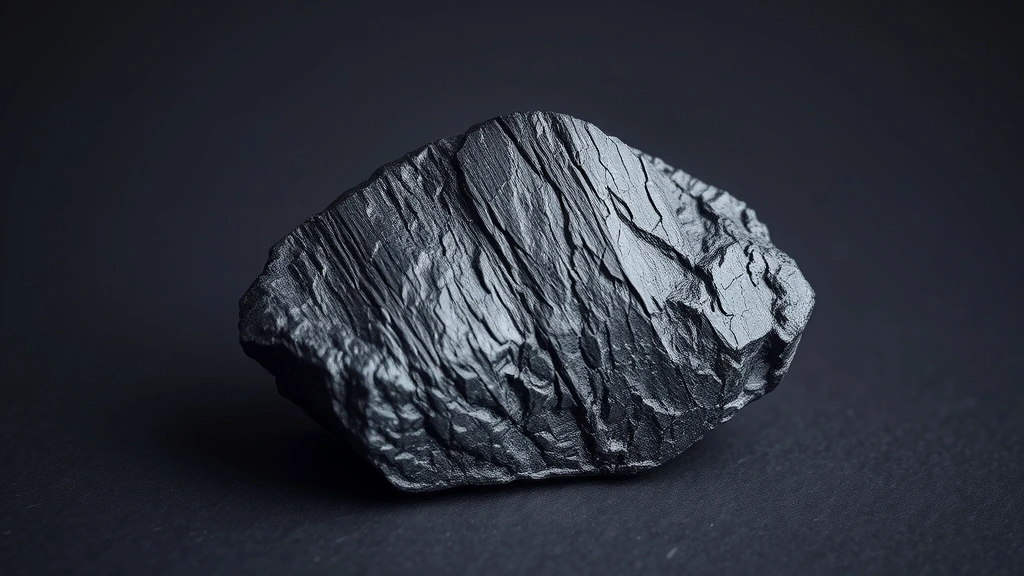
Black tourmaline belongs to the extensive tourmaline supergroup, classified strictly as a natural mineral and crystalline solid. This geological entity forms within granitic pegmatites and metamorphic schists, where volatile-rich fluids facilitate its growth. As a member of the borosilicate family, it represents one of the most chemically complex mineral groups known to science. Its formation requires specific geochemical conditions involving boron, silicon, and various alkali and alkaline earth metals.
What is Black Tourmaline? Geological Overview & Definition
Black tourmaline, specifically schorl, is the most common variety within the tourmaline supergroup. It typically occurs as prismatic crystals with hexagonal cross-sections and striated faces. Geologically, it is an indicator mineral for high-temperature, fluid-rich environments associated with granitic intrusions.
The stone’s defining characteristic is its extreme chemical variability, allowing for extensive solid solution series. Unlike simpler silicates, it accommodates a wide range of cations within its lattice structure. This flexibility results in diverse physical properties, including its distinctive pyroelectric and piezoelectric behaviors.
Black Tourmaline Chemical Composition & Crystallographic Properties
Black tourmaline crystallizes in the trigonal crystal system, characterized by a complex hexagonal lattice. Its structure consists of chains of silicate tetrahedra interconnected by borate groups and metal cations. This intricate arrangement creates a rigid framework that contributes to its high Mohs hardness and durability.
The primary chromophore responsible for its opaque black color is the presence of iron and manganese cations. These elements substitute for magnesium and aluminum within the crystal lattice, absorbing visible light across the spectrum. The cation substitution process is critical, as it dictates the specific variety and physical properties of the mineral.
Thermal behavior in black tourmaline is notable for its pyroelectric nature, generating an electric charge when heated. This property arises from the displacement of ions within the trigonal lattice during temperature changes. The mineral exhibits high thermal stability, resisting decomposition until exposed to extreme temperatures.
Acid sensitivity is generally low, as the borosilicate framework provides significant chemical resistance. However, prolonged exposure to strong acids can slowly alter the surface, affecting the refractive index of 1.62 – 1.64. This resilience makes it a durable candidate for gemological applications and industrial uses.
| Property | Specification |
|---|---|
| Mineral Group | Natural Mineral / Crystal |
| Chemical Formula | NaFe₃Al₆(BO₃)₃Si₆O₁₈ |
| Mohs Hardness | 7.0 – 7.5 |
| Crystal System | Trigonal |
| Specific Gravity (Density) | 3.06 – 3.25 |
| Refractive Index | 1.62 – 1.64 |
| Color & Optical Properties | Natural Black Tourmaline color spectrum and optical dispersion |
| Primary Mining Localities | Global primary localities |
| Water & Chemical Resistance | High (Safe for gentle water washing) |
| Chakra Alignment (Traditional) | Root Chakra |
| Zodiac Affinity (Traditional) | Capricorn, Taurus, Virgo |
| Symbolic Meaning (Traditional) | Protection, grounding, and shielding against negative energy |
Black Tourmaline Varieties & Color Spectrum
Black Tourmaline displays distinct mineralogical characteristics across its geological varieties and structural habits. Gemologists evaluate these natural varieties based on crystal habit, trace chromophore concentrations, and visual luster.
Primary Natural Black Tourmaline
The benchmark natural variety exhibiting diagnostic color saturation and classic crystallographic symmetry.
Distinct Geological Morphs of Black Tourmaline
Secondary regional and structural varieties formed under localized geological temperature and pressure conditions.
Standard Black Tourmaline (Berylite)
This common variety forms in orthoclase‑rich granitic pegmatites where sodium and iron combine to produce a deep, uniform black hue. Its crystal habit is typically elongated, with occasional graphitic inclusions that give a subtle sheen. The color is consistent across the stone, making it a popular choice for jewelry and protective talismans. Although abundant, high‑clarity specimens are prized for their flawless appearance.
Black Tourmaline with Green Inclusions (Green‑Banded)
In this rare variant, chlorite or epidote inclusions create striking green bands within the black matrix. The bands result from localized hydrothermal alteration during late pegmatite crystallization. These inclusions are highly diagnostic, allowing gemologists to distinguish them from dyed or treated stones. Green‑banded specimens are scarce, often commanding premium prices in the market.
Black Tourmaline with White or Gray Inclusions (White‑Band or Gray‑Band)
White or gray bands arise from silicate or quartz inclusions that were trapped during rapid crystal growth. The contrast between the black background and pale bands provides a dramatic visual effect. These inclusions are typically planar, reflecting the crystal’s growth direction. While more common than green‑banded types, high‑quality banded stones remain relatively rare.
Black Tourmaline with Orange or Red Tones (Orange‑Toned)
Orange or red tints in black tourmaline are caused by trace amounts of chromium or manganese incorporated during formation. The resulting color gradient can range from subtle blush to vivid orange. These specimens are often found in alkaline igneous environments where trace element mobility is high. Due to the delicate balance of trace elements required, orange‑toned black tourmaline is considered a specialty variety.
Black Tourmaline with Blue or Violet Tones (Blue‑Toned)
Blue or violet hues are produced by boron‑rich environments that introduce trace copper or iron into the crystal lattice. The resulting color is subtle, often appearing as a faint wash over the black background. Blue‑toned black tourmaline is extremely uncommon, with most known specimens originating from the Siberian and Alaskan pegmatite fields. Collectors prize these stones for their rare chromatic variation.
Black Tourmaline from the Kola Peninsula (Kola Black)
The Kola Peninsula in Russia yields a distinctive black tourmaline with a subtle smoky gray undertone. This color arises from high concentrations of iron and magnesium during crystallization. The Kola variety is noted for its excellent clarity and minimal inclusions, making it a favorite among high‑end gem cutters. Its limited geographic source adds to its allure and market value.
Where is Black Tourmaline Found? Geological Mining & Extraction
Black tourmaline is predominantly extracted from orthoclase‑rich granitic pegmatites that host high concentrations of sodium, iron, and boron. Major production centers include the Kola Peninsula in Russia, the Siberian region, and the Alaska and Nevada pegmatite districts in the United States. Mining operations typically involve open‑pit or underground methods, with careful screening to isolate the dense, black crystals from surrounding host rock. The extracted material is then sorted by color, clarity, and size before being shipped to global gem markets.
Historical Significance & Cultural Lore of Black Tourmaline
Across ancient Greco‑Roman and Egyptian traditions, black tourmaline was revered for its protective qualities, often incorporated into amulets and jewelry to ward off malevolent forces. In Vedic lore, the stone was associated with the Root Chakra, symbolizing grounding and stability, and was used in rituals to safeguard against negative energies. Chinese alchemists also prized the mineral for its supposed ability to absorb harmful influences, incorporating it into talismans and protective charms. These enduring cultural practices underscore black tourmaline’s long‑standing role as a symbol of defense and resilience.
Modern Uses & Jewelry Applications of Black Tourmaline
Black tourmaline is most often cut as a cabochon to showcase its deep, uniform black luster, though skilled lapidaries also produce brilliant faceted stones for high‑impact settings. Its toughness and natural charge make it a favorite for protective pendants, bracelets, and earrings that are worn close to the skin. Ornamental carving—into beads, intaglios, and small figurines—leverages the mineral’s ability to hold fine detail without chipping.
- Cabochon pendants for grounding jewelry
- Faceted stones in cocktail rings and cufflinks
- Carved beads for mala strands and rosaries
- Decorative inlays for watch faces and luxury pens
Carat, Quality Grades & Value Factors of Black Tourmaline
The market evaluates black tourmaline primarily through the 4Cs—Color, Clarity, Cut, and Carat weight. Deep, uniform black with a subtle metallic sheen scores highest in Color, while the absence of visible inclusions or fractures enhances Clarity. A well‑executed cut that maximizes surface area without compromising structural integrity boosts both visual impact and durability, especially for daily‑wear pieces. Carat weight influences price, but because the stone’s density (3.06‑3.25 g/cm³) is moderate, larger stones remain relatively affordable compared with other black gemstones.
Durability is a key selling point: a Mohs hardness of 7.0‑7.5 resists scratches from everyday contact, and the trigonal crystal system provides resistance to cleavage under normal wear. Commercial grading follows GIA‑style criteria, assigning grades such as “Excellent” for cut, “Very Good” for color uniformity, and “Good” for clarity when minor internal fractures are present. Stones that exhibit a strong negative‑ion charge are sometimes marketed at a premium for their reputed energetic properties.
Zodiac and Astrological Lore of Black Tourmaline
Across ancient lapidary traditions, black tourmaline has been linked to the Root Chakra, grounding the wearer’s energy to the earth. In astrological practice, the stone aligns with Capricorn, Taurus, and Virgo, reinforcing stability, perseverance, and practical insight—qualities prized by these earth signs throughout history.
Historical records from Greco‑Roman jewelry workshops note that black tourmaline was set in signet rings for officials seeking protection against malefic influences. In Vedic texts, the mineral is described as a “shield of the earth,” used in amulets to ward off negative forces and to enhance the wearer’s connection to the material world.
How to Identify Real vs. Fake Black Tourmaline
Artificial imitations of black tourmaline include dyed quartz, synthetic glass, and resin composites that mimic its deep hue but lack the mineral’s characteristic negative‑ion emission and specific gravity. Synthetic tourmaline crystals, produced in laboratory furnaces, may display flawless clarity but often differ in refractive index and magnetic response. Recognizing these differences requires a combination of visual inspection and simple physical tests.
Practical At-Home Authenticity Tests
- Temperature Test (Thermal Feel): Genuine black tourmaline feels cool to the touch and retains that coolness longer than glass or resin, which quickly equilibrate to ambient temperature.
- Specific Gravity & Weight Test: Using a calibrated scale and water displacement, a real stone will register a specific gravity between 3.06 and 3.25, noticeably heavier than dyed quartz (≈2.65).
- Scratch & Hardness Test (Mohs Comparison): A steel file (Mohs ~5.5) will not scratch authentic tourmaline, whereas glass or quartz may show surface marks.
- Microscopic & Loupe Inspection (Internal Inclusions): Under 10× magnification, natural tourmaline reveals fine, hair‑like inclusions or striations, while synthetic glass appears uniformly clear with no internal features.
Black Tourmaline Valuation Factors, Grading & Pricing
Market value is primarily driven by color saturation and the stone’s deep, uniform black hue. High-grade specimens exhibit a velvety luster with minimal visible inclusions or surface fractures. Optical clarity remains a critical metric, as transparent or semi-transparent varieties command significantly higher premiums than opaque stones.
Lapidary grading strictly adheres to the 4Cs framework, with particular emphasis on cut precision and facet symmetry. Larger carat weight stones with excellent proportions reflect light more effectively, enhancing their visual depth. Professional cutters prioritize maximizing weight retention while ensuring the stone’s structural integrity during the faceting process.
Geographical Provenance Premium significantly influences final pricing, with stones from renowned Brazilian and African mines often fetching higher rates. Certified gem market value trends show steady demand for ethically sourced material with documented origin. Buyers should always request independent laboratory reports to verify authenticity and assess long-term investment potential.
How to Clean and Care for Black Tourmaline
Black tourmaline possesses a Mohs hardness of 7.0 to 7.5, making it highly durable against daily wear and abrasion. Its non-porous structure allows for safe cleaning using warm soapy water and a soft, lint-free cloth. This gentle method effectively removes oils and dust without damaging the polished surface or internal crystal lattice.
For deeper maintenance, the stone is safe for ultrasonic cleaning, which efficiently dislodges debris from hard-to-reach facet junctions. Always ensure the ultrasonic cleaner uses a mild, non-abrasive solution to preserve the stone’s luster. Avoid exposing the gemstone to sudden temperature changes, which could theoretically induce thermal shock in fractured specimens.
Cleansing and Recharging Black Tourmaline (Energetic Care)
Holistic practitioners often employ herbal smudging with sage or palo santo to clear perceived energetic stagnation. This dry method respects the mineral’s physical integrity while aligning with traditional metaphysical practices. The smoke is believed to purify the stone’s vibrational field without introducing moisture or chemical residues.
Alternatively, placing the gemstone on a selenite charging slab under gentle moonlight allows for passive recharging. This approach avoids direct heat or intense sunlight, which could potentially alter the stone’s structural stability. Resting the mineral in a cool, dry environment ensures its energetic properties remain balanced and potent.
Frequently Asked Questions About Black Tourmaline
Black Tourmaline displays distinct mineralogical characteristics across its geological varieties and structural habits. Gemologists evaluate these natural varieties based on crystal habit, trace chromophore concentrations, and visual luster.
Primary Natural Black Tourmaline
The benchmark natural variety exhibiting diagnostic color saturation and classic crystallographic symmetry.
Distinct Geological Morphs of Black Tourmaline
Secondary regional and structural varieties formed under localized geological temperature and pressure conditions.
Is black tourmaline safe to wear in the shower?
Yes, black tourmaline is highly water-resistant and safe for gentle washing. Its dense trigonal crystal structure prevents moisture absorption, making it durable enough for daily wear. You can confidently wear it during showers or rain without fear of structural degradation or surface damage.
How should I clean my black tourmaline jewelry?
Use warm soapy water and a soft cloth for routine maintenance. This gentle approach effectively removes oils and dirt without scratching the stone. The mineral is also safe for ultrasonic cleaning, allowing for deep purification of intricate settings and bezels.
Which zodiac signs are best aligned with black tourmaline?
Capricorn, Taurus, and Virgo are the primary aligned signs. These earth and air signs resonate with the stone’s grounding properties and protective nature. Wearing this gemstone can enhance stability and focus for individuals born under these astrological influences.
What chakra does black tourmaline correspond to?
It is exclusively associated with the Root Chakra. This energetic connection supports feelings of security, stability, and physical vitality. The stone’s deep black color reinforces its link to the earth element, helping to anchor spiritual energy to the physical body.
Can black tourmaline be used in ultrasonic cleaners?
Yes, it is safe for ultrasonic cleaning due to its high hardness. With a Mohs hardness of 7.0 to 7.5, the stone withstands the vibrations of ultrasonic baths. This makes it an excellent candidate for professional jewelry cleaning services and home maintenance routines.
What is the chemical composition of black tourmaline?
It is primarily composed of sodium, iron, and boron silicates. The specific formula is NaFe₃Al₆(BO₃)₃Si₆O₁₈, defining it as a dravite variety. This complex borosilicate structure contributes to its exceptional durability and distinctive opaque black appearance in gemological contexts.
Is black tourmaline suitable for everyday jewelry wear?
Yes, its high hardness makes it ideal for daily use. The stone resists scratches from common materials like steel and glass. Its density of 3.06 to 3.25 ensures it remains robust and retains its polish over time, even with frequent handling.
Does black tourmaline have any historical significance?
It has been valued for protection in ancient lapidary traditions. Historically, it was believed to shield against negative energies and physical harm. This protective reputation persists in modern metaphysical practices, linking the mineral to ancient concepts of spiritual defense.