
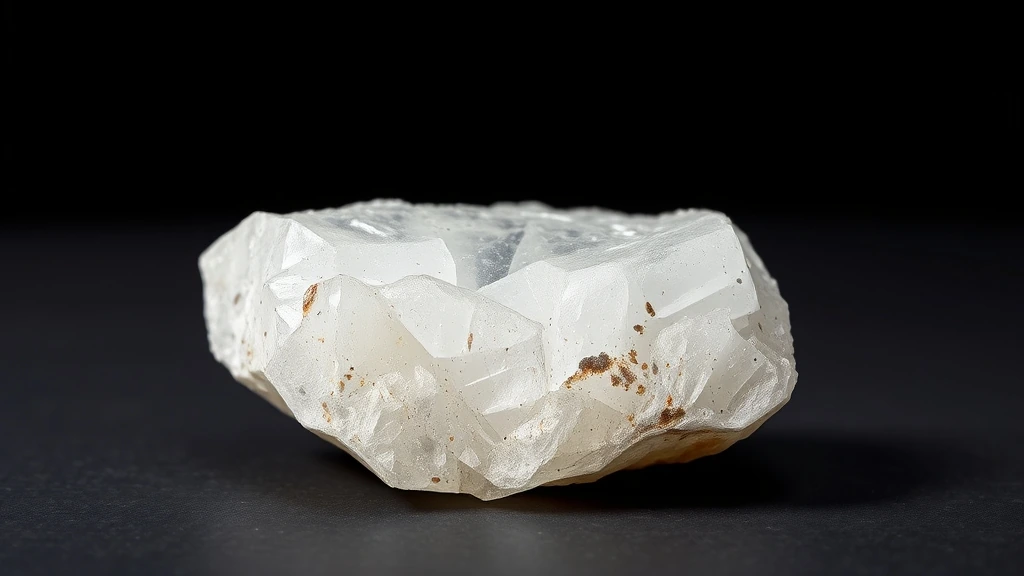
Quartz belongs to the silicate family, specifically the tectosilicates within the Quartz Group. As a single mineral rather than an aggregate, its crystal chemistry is uniform, and it crystallizes from hydrothermal fluids in veins and pegmatites worldwide. This mineral’s stability under surface conditions has made it a staple in both geological studies and ornamental applications.
What is Quartz Gemstone? Geological Overview & Definition
Quartz is a tectosilicate composed of a three‑dimensional framework of SiO₄ tetrahedra, each sharing all four oxygen atoms with neighboring tetrahedra. This robust lattice gives the mineral its characteristic hardness and resistance to chemical weathering. In gemology, quartz is prized for its clarity, brilliance, and the ability to host a wide array of trace elements that produce vivid colors.
The gemstone form of quartz includes varieties such as clear (rock crystal), amethyst, citrine, rose quartz, and smoky quartz. Each variety shares the same fundamental structure but differs in trace impurities or radiation‑induced color centers that alter its optical properties. These subtle differences are the basis for their distinct market identities and metaphysical attributions.
Quartz Gemstone Chemical Composition & Crystallographic Properties
Quartz crystallizes in the Trigonal (Rhombohedral / Trapezohedral) system, forming six‑pointed prisms terminated by pyramidal faces. Its unit cell is hexagonal‑like but belongs to the trigonal space group P3₁21 or P3₂21, reflecting a threefold rotational symmetry about the c‑axis. This symmetry governs the gemstone’s typical twinning and habit.
The lattice is a continuous network of Si–O bonds, leaving no room for large cation substitution; only minor trace elements (Fe³⁺, Al³⁺, Ti⁴⁺) occupy interstitial sites, influencing color without disrupting the framework. Because quartz lacks free cations, it is relatively acid‑resistant, though prolonged exposure to hydrofluoric acid can dissolve the SiO₂ matrix.
Color in quartz arises from chromophore centers: Fe³⁺ creates purple amethyst tones, while irradiation of Fe²⁺/Ti⁴⁺ pairs yields smoky hues. In rose quartz, trace Mn³⁺ or Ti³⁺ produces pink shades, and the presence of colloidal hematite can deepen the color. These centers are stable under normal lighting but may fade under intense heat.
Thermally, quartz exhibits a α‑β phase transition at 573 °C, where the low‑temperature α‑quartz (trigonal) transforms to β‑quartz (hexagonal) with a slight expansion of the lattice. This reversible change is exploited in heat‑treatment of certain varieties to enhance or modify color, yet the fundamental trigonal symmetry is retained upon cooling.
| Property | Specification |
|---|---|
| Mineral Group | Silicates (Tectosilicates / Quartz Group) |
| Chemical Formula | SiO₂ (Silicon Dioxide) |
| Mohs Hardness | 7.0 |
| Crystal System | Trigonal (Rhombohedral / Trapezohedral) |
| Specific Gravity (Density) | 2.65 |
| Refractive Index | 1.544 – 1.553 |
| Color & Optical Properties | Natural Quartz Gemstone color spectrum and optical dispersion |
| Primary Mining Localities | Brazil, Madagascar, USA (Arkansas), Swiss Alps |
| Water & Chemical Resistance | High (Fully resistant to water and moisture) |
| Chakra Alignment (Traditional) | All Chakras (Universal Harmonizer) |
| Zodiac Affinity (Traditional) | All Zodiac Signs (Especially Leo and Aries) |
| Symbolic Meaning (Traditional) | Master energy amplifier, clarity, purification, and focus |
Quartz Varieties & Comprehensive Sub‑Types
Amethyst
Amethyst forms in silica‑rich hydrothermal veins where iron is irradiated to create Fe⁴⁺ color centers, producing a violet to royal‑purple hue. The crystals grow as macrocrystalline trigonal prisms, often displaying parallel banding that records temperature fluctuations during crystallization. High‑grade stones are mined in Brazil, Zambia and Uruguay, commanding premium prices for their clarity and deep color.
Citrine
Citrine’s golden‑yellow to amber tones arise from trace iron in the crystal lattice, but natural specimens are scarce; most market‑ready citrine is heat‑treated amethyst that re‑oxidizes Fe³⁺ centers. The resulting quartz retains the same trigonal habit, occasionally showing faint growth zoning that hints at its original purple parent. Primary sources include Brazil’s Minas Gerais region, where treated stones dominate global trade.
Rose Quartz
Rose quartz acquires its soft pink hue from microscopic fibrous inclusions of a dumortierite‑like borosilicate mineral, uniformly dispersed throughout the crystal. These inclusions create a milky translucency and a characteristic conchoidal fracture prized in carving. Large deposits in Madagascar and South Africa supply the bulk of the market, where the stone is graded by color uniformity and lack of visible inclusions.
Smoky Quartz
Smoky quartz’s brown to black coloration is produced by natural radioactive irradiation of aluminum impurities, generating color centers that absorb light. The crystals often exhibit parallel growth bands that contrast the darker matrix, a signature used to verify authenticity. Major mines in the United States (Colorado) and Brazil yield material that is cut into both cabochons and faceted gems for its grounding properties.
Rutilated Quartz
Rutilated quartz is a clear rock crystal pierced by acicular rutile (TiO₂) needles, which may appear golden, copper‑red, or black. These needles form during late‑stage hydrothermal growth, aligning parallel to the crystal’s c‑axis and creating striking asterism in polished sections. High‑quality specimens from Madagascar and Brazil are prized by collectors for the dramatic contrast between the transparent host and metallic inclusions.
Strawberry Quartz
Strawberry quartz displays a translucent base speckled with red or orange hematite, lepidocrocite, or goethite inclusions that resemble tiny strawberries. The inclusions are typically trapped during crystal growth in iron‑rich pegmatites, producing a patchwork pattern unique to each stone. Brazil’s Minas Gerais and the United States (North Carolina) are the chief sources, and the stone is marketed for its vibrant, decorative appeal.
Ametrine
Ametrine is a rare, naturally zoned quartz that simultaneously exhibits purple amethyst and golden citrine sectors within a single crystal. The zoning results from localized variations in iron oxidation state during slow cooling in the Anahi mine, Bolivia, creating a sharp color boundary. Because unaltered specimens are scarce, ametrine commands high prices and is often cut to showcase the dramatic dual‑tone effect.
Prasiolite (Green Quartz)
Prasiolite, or green quartz, is produced by controlled heat treatment of iron‑bearing amethyst, converting Fe⁴⁺ centers to a pale green leek hue. The process preserves the crystal’s trigonal habit while eliminating the original purple, yielding a transparent stone with subtle growth striations. Major production occurs in Brazil and the United States, where treated material is marketed as an affordable alternative to emerald.
Comparative Summary
Gemologists differentiate these quartz varieties primarily by color origin (irradiation, heat treatment, mineral inclusions) and the presence of diagnostic inclusions such as rutile needles or iron‑oxide specks. Microscopic examination of growth bands, zoning patterns, and inclusion chemistry, combined with spectroscopic analysis, allows precise identification and grading for both commercial and collector markets.
Where is Quartz Gemstone Found? Geological Mining & Extraction
Quartz crystals crystallize in silica‑rich pegmatites and hydrothermal veins that cut through granitic host rocks, often forming large, well‑developed prisms. In Brazil’s Minas Gerais and Bahia states, deep‑seated pegmatite dikes yield abundant amethyst, citrine, and rose quartz, extracted by both open‑pit and underground methods.
Significant deposits also occur in the United States (Colorado, Arkansas, North Carolina), Madagascar, and Zambia, where miners exploit alluvial gravels and primary vein occurrences. Modern extraction combines selective hand‑picking with mechanized crushing, followed by flotation and hand‑sorting to preserve the integrity of high‑value crystals.
Historical Significance & Cultural Lore of Quartz Gemstone
Since antiquity, quartz has been revered for its clear, glass‑like appearance, featuring in Egyptian scarabs, Roman mosaics, and Mayan ceremonial mirrors. The stone’s durability and ability to be finely polished made it a favored medium for talismans, prayer beads, and early optical devices such as the Nazarite’s “quartz lenses.”
Across cultures, quartz was believed to channel earth energy, with amethyst protecting against intoxication in Greek lore, rose quartz symbolizing love in Renaissance poetry, and smoky quartz serving as a grounding stone among Native American shamanic practices. Its universal appeal endures in modern metaphysical traditions, where it is hailed as a master amplifier of intention.
Modern Uses & Jewelry Applications of Quartz Gemstone
Quartz is the most versatile gemstone in the lapidary trade, prized for its durability and optical clarity. Its Mohs hardness of 7.0 allows for intricate faceting that retains brilliance over decades of wear. Lapidaries often cut high-clarity specimens into brilliant or emerald cuts to maximize light return.
- Faceted Jewelry: Clear rock crystal and amethyst are commonly set in rings, earrings, and pendants.
- Cabochon Cutting: Milky quartz and citrine are polished into smooth domes to display their internal luster.
- Ornamental Carving: Large geodes and blocks are sculpted into decorative bowls, spheres, and architectural accents.
Metaphysical Properties & Traditional Meaning of Quartz Gemstone
According to historical traditions and metaphysical lore, quartz is revered as a master energy amplifier that enhances the potency of other crystals. Practitioners believe its piezoelectric properties allow it to store and release subtle vibrational frequencies. This stone is widely used in meditation to promote mental clarity and emotional purification.
The symbolic resonance of quartz extends to focusing intention and grounding spiritual energy. It is often carried as a talisman to dispel negativity and sharpen cognitive focus. Users report a sense of heightened awareness and balanced mental states during prolonged interaction with the stone.
Which Chakra and Zodiac Signs Align with Quartz Gemstone?
In esoteric practice, quartz is recognized as a Universal Harmonizer that resonates with all seven chakras. It does not favor a single energy center but instead balances the entire chakra system. This makes it an ideal stone for holistic healing and energetic alignment.
Astrologically, quartz aligns with All Zodiac Signs, providing broad energetic support. However, it shows a particularly strong affinity for Leo and Aries. These fire signs benefit from quartz’s ability to amplify their natural vitality and creative drive.
How to Identify Real vs. Fake Quartz Gemstone
Distinguishing natural quartz from synthetic imitations requires attention to subtle physical and optical cues. Common fakes include synthetic glass, which lacks natural inclusions, and dyed replicas that may show color bleeding. Understanding these differences helps prevent purchasing low-quality or fraudulent gemstones.
Practical At-Home Authenticity Tests
- Temperature Test (Thermal Feel): Hold the stone in your palm for 30 seconds. Real quartz feels cool to the touch initially and warms slowly, while glass warms up much faster due to lower thermal conductivity.
- Specific Gravity & Weight Test: Compare the stone to a similarly sized piece of glass. Quartz has a density of 2.65, making it slightly heavier than most common glass imitations, which typically range from 2.4 to 2.5.
- Scratch & Hardness Test (Mohs Comparison): Gently rub the stone against a steel file or glass window. Quartz, with a Mohs hardness of 7.0, will scratch glass but not be scratched by it. Glass imitations will scratch easily.
- Microscopic & Loupe Inspection (Internal Inclusions): Examine the stone under a 10x loupe. Natural quartz often contains fluid inclusions, mineral needles, or “jardin” patterns. Synthetic glass is usually perfectly clear or contains tiny, spherical air bubbles.
Quartz Gemstone Valuation Factors, Grading & Pricing
Market value hinges primarily on Color Saturation and tone uniformity across the stone. High-grade specimens exhibit vivid, even hues without zoning or color banding. Additionally, optical clarity and vitreous luster significantly elevate desirability among collectors.
The Carat Weight of a quartz specimen directly influences its per-carat price structure. Precise facet symmetry ensures maximum light return and visual brilliance. Conversely, the presence of matrix or internal inclusions typically reduces overall market value.
Geographical Provenance Premium often dictates pricing for rare locality-specific varieties like Ametrine. Wholesale costs remain stable, while retail prices fluctuate based on current market trends. Certified origin documentation can substantially increase the final sale price.
How to Clean and Care for Quartz Gemstone
Quartz is highly durable and fully resistant to water and moisture. You can easily clean the stone using warm water and mild soap. Gently scrub the surface with a soft brush to remove any accumulated dust or oils.
For deeper cleaning, the gemstone is suitable for ultrasonic cleaning under standard conditions. However, you must avoid ultrasonic baths if the stone is heavily fractured. This precaution prevents further damage to structurally compromised crystal lattices during the cleaning process.
Cleansing and Recharging Quartz Gemstone (Energetic Care)
To maintain energetic integrity, use dry methods that respect the mineral’s physical structure. Smoke smudging with sage or palo santo is a popular and safe technique. This practice purifies the stone without exposing it to liquid elements or heat.
Alternatively, place the quartz on a selenite plate or under moonlight overnight. These passive methods allow the crystal to recharge naturally. Always ensure the stone is completely dry before storing it in its case.
Frequently Asked Questions About Quartz Gemstone
Is quartz safe to wear in the shower?
Yes, quartz is fully resistant to water and moisture. With a Mohs hardness of 7.0, the mineral withstands daily exposure to water without dissolving or degrading. Its stable chemical formula ensures it remains structurally intact even during prolonged contact with liquids.
Can I clean quartz in an ultrasonic cleaner?
Quartz is suitable for ultrasonic cleaning unless it is heavily fractured. The stone easily cleans with warm water and mild soap, but ultrasonic vibrations help remove deep-seated grime. Always inspect for included fissures before submerging to prevent potential damage to delicate internal structures.
Which zodiac signs are aligned with quartz?
Quartz resonates with all zodiac signs, especially Leo and Aries. As a universal harmonizer, it supports the energetic needs of every astrological sign. Its amplifying properties make it particularly beneficial for the fiery, dynamic energies associated with Leo and Aries.
Which chakras does quartz activate?
Quartz acts as a universal harmonizer for all chakras. It does not target a single energy center but instead balances the entire chakra system. This makes it an ideal stone for meditation, promoting clarity and purification across the body’s energy field.
How hard is quartz on the Mohs scale?
Quartz measures 7.0 on the Mohs hardness scale. This makes it significantly harder than most other common gemstones, such as feldspar or calcite. Its durability ensures it resists scratching from everyday objects, making it a practical choice for jewelry and daily wear.
What is the crystal system of quartz?
Quartz crystallizes in the trigonal system, specifically rhombohedral or trapezohedral forms. This structure contributes to its distinctive hexagonal prisms and pyramidal terminations. Understanding this crystallography helps identify natural formations and distinguish them from synthetic lab-grown varieties.
Does quartz have a high refractive index?
Quartz exhibits a refractive index between 1.544 and 1.553. This moderate value gives the stone a pleasant, glassy luster rather than intense fire. The optical properties vary slightly depending on the specific variety, such as amethyst or citrine, but remain consistent within this range.
What is the specific gravity of quartz?
The density of quartz is approximately 2.65. This specific gravity helps gemologists distinguish it from lookalikes like topaz or synthetic glass. Measuring density is a standard identification technique, ensuring accurate classification for both collectors and professional gemological analysis.