
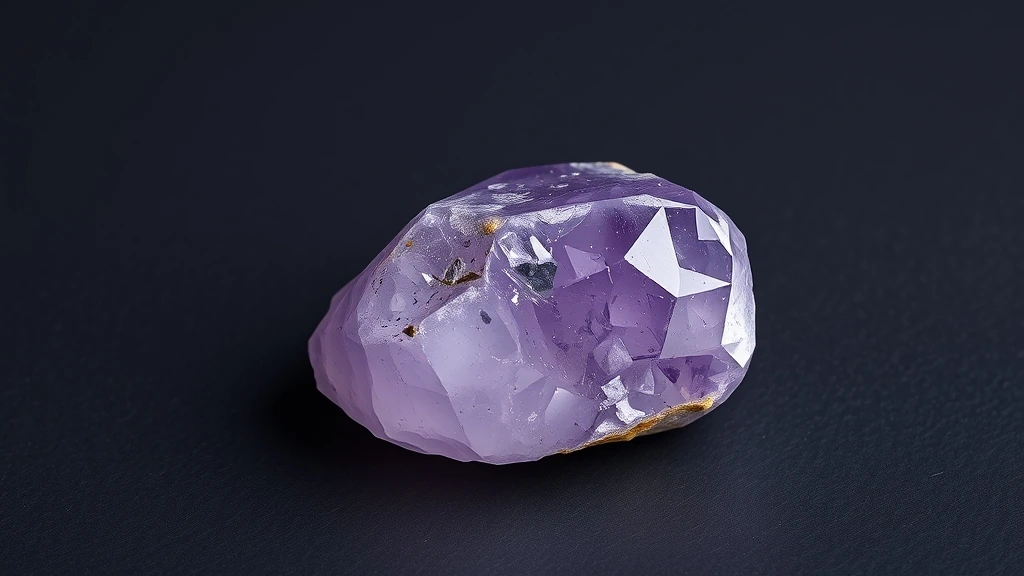
Amethyst belongs to the vast silicate mineral group, specifically classified as a tectosilicate. It is a polymorph of the quartz family, sharing the same fundamental silicon-oxygen tetrahedral framework. This geological lineage places it among the most abundant and geologically significant minerals on Earth. Its formation typically occurs in volcanic cavities known as geodes, where silica-rich fluids cool slowly.
What is Amethyst Gemstone? Geological Overview & Definition
Amethyst is geologically defined as a violet-colored quartz formed in igneous and metamorphic environments. It crystallizes primarily in geodes, often lining cavities in rhyolite or andesite rocks. The stone’s value depends heavily on the intensity and saturation of its purple color.
The term “amethyst” derives from the Greek *amethystos*, meaning “not intoxicated.” Ancient cultures believed the stone could prevent drunkenness, a myth rooted in its calming aesthetic. Today, it is recognized as a birthstone for February and a zodiac gem for Aquarius. Its widespread occurrence makes it more accessible than rarer quartz varieties.
Amethyst Gemstone Chemical Composition & Crystallographic Properties
Amethyst crystallizes in the trigonal crystal system, forming hexagonal prisms with pyramidal terminations. Its lattice structure consists of corner-sharing silicon-oxygen tetrahedra, creating a rigid and stable framework. This arrangement results in a density of 2.65 g/cm³ and a refractive index between 1.544 and 1.553. The crystal habit often exhibits striations on prism faces, a diagnostic feature for identification.
The purple coloration stems from chromophore color centers created by iron impurities. Specifically, ferric iron (Fe³⁺) substitutes for silicon in the lattice, generating electron-deficient sites. Natural irradiation then displaces electrons, forming the characteristic violet hue. Without this radiation, the stone would appear colorless or pale yellow.
Thermal behavior is critical for gemological identification, as amethyst is heat-sensitive. Heating above 250°C causes the color centers to collapse, turning the stone pink or colorless. This instability distinguishes it from synthetic purple quartz, which retains its color under heat. Acid sensitivity is low, as quartz is highly resistant to chemical weathering and standard acids.
| Property | Specification |
|---|---|
| Mineral Group | Silicates (Tectosilicates / Quartz Group) |
| Chemical Formula | SiO₂ (Silicon Dioxide) |
| Mohs Hardness | 7 |
| Crystal System | Trigonal (Hexagonal prismatic crystals) |
| Specific Gravity (Density) | 2.65 |
| Refractive Index | 1.544–1.553 |
| Color & Optical Properties | Natural Amethyst Gemstone color spectrum and optical dispersion |
| Primary Mining Localities | Brazil (Rio Grande do Sul), Uruguay (Artigas), Madagascar, Russia, Turkey |
| Water & Chemical Resistance | High (Water resistant; avoid prolonged direct sunlight to prevent color fading) |
| Chakra Alignment (Traditional) | Crown Chakra and Third Eye Chakra |
| Zodiac Affinity (Traditional) | Pisces, Aquarius, Virgo |
| Symbolic Meaning (Traditional) | Spiritual clarity, inner peace, meditative focus, and negative energy dispelling |
Amethyst Gemstone Varieties & Color Spectrum
Amethyst exhibits a wide range of purple hues, driven by iron impurities and natural irradiation. The intensity varies from pale lilac to deep violet, with saturation significantly impacting market value. Color zoning is common, creating distinct bands within the crystal structure.
Siberian Amethyst
Historically prized for its deep, uniform violet tones, this variety originated from the Ural Mountains. It features minimal inclusions and exceptional clarity, making it highly sought after by collectors. Although mines are now depleted, these stones remain a benchmark for quality.
Uruguayan Amethyst
This variety is renowned for its intense, saturated purple color and high transparency. It often displays a slight reddish undertone, distinguishing it from other regional types. High saturation levels make Uruguayan stones command premium prices in the global gem market.
Brazilian Amethyst
Brazil produces the majority of the world’s amethyst, offering diverse color ranges from light to medium purple. These stones frequently exhibit color zoning, where distinct bands of varying intensity are visible. While abundant, top-grade specimens with vivid hue and clarity are still highly valued.
Zambian Amethyst
Originating from the Copperbelt region, this variety is characterized by a unique red-purple hue. It often contains hematite inclusions, which give the stone a distinctive metallic sheen. This specific coloration sets it apart from traditional violet amethysts found elsewhere.
African (Mozambique) Amethyst
Mozambican amethysts typically display a lighter, lavender-purple shade with excellent clarity. They often feature a subtle blue undertone, creating a cool and elegant appearance. High clarity and consistent color make this variety popular for modern jewelry designs.
Siberian (Ural) Amethyst
While similar to the general Siberian category, specific Ural deposits produced stones with exceptional depth. These gems often lacked the common color zoning seen in other varieties. Their rarity today is due to the exhaustion of these specific historical mining sites.
Where is Amethyst Gemstone Found? Geological Mining & Extraction
Amethyst typically forms in pegmatite dikes or volcanic cavities, where silica-rich fluids cool slowly. The purple color results from gamma radiation interacting with iron atoms within the crystal lattice. These geological conditions create the ideal environment for large, high-quality gem crystals to develop.
Major mining regions include Brazil, Uruguay, and Zambia, each contributing distinct color characteristics. Brazil remains the dominant producer, supplying the bulk of the global gemstone market. Extraction involves careful drilling and blasting to preserve the integrity of the large crystal formations found in these deposits.
Historical Significance & Cultural Lore of Amethyst Gemstone
Ancient Greeks and Romans believed amethyst could prevent intoxication, deriving its name from the Greek word for “not drunk.” It was frequently carved into drinking vessels and worn as protective amulets during social gatherings. This association with sobriety and clarity made it a popular choice for ceremonial and personal use.
In medieval Europe, amethyst was reserved for bishops and royalty, symbolizing spiritual purity and wisdom. Archaeological findings reveal its use in elaborate jewelry and religious artifacts across various civilizations. Today, it remains a cherished birthstone for February, symbolizing calmness and clarity of mind.
Modern Uses & Jewelry Applications of Amethyst Gemstone
Amethyst is prized for its versatility in lapidary cutting, allowing gem cutters to maximize its vibrant purple hues. Faceted stones are the standard for rings and pendants, while cabochon cuts are often chosen for lower-grade material to enhance its waxy luster.
- Faceted Jewelry: Ideal for engagement rings, earrings, and necklaces where brilliance is key.
- Ornamental Carving: Historically used for cameos, intaglios, and architectural accents in ecclesiastical settings.
- Beads & Carvings: Common in artisan jewelry, decorative sculptures, and spiritual tools.
Metaphysical Properties & Traditional Meaning of Amethyst Gemstone
According to historical traditions and metaphysical lore, amethyst has long been revered as a stone of spiritual protection and sobriety. Ancient Greeks believed it could prevent intoxication, while medieval clergy valued it for its calming influence on the mind.
In modern metaphysical practice, the stone is associated with emotional balance and mental clarity. It is often used in meditation to quiet the mind, reduce stress, and promote a sense of inner peace during turbulent times.
Which Chakra and Zodiac Signs Align with Amethyst Gemstone?
Amethyst is canonically aligned with the Crown Chakra and the Third Eye Chakra. These energy centers govern higher consciousness, intuition, and spiritual connection. The stone’s deep violet resonance is believed to stimulate these areas, aiding in meditation and psychic development.
Astrologically, amethyst is the primary birthstone for Pisces, Aquarius, and Virgo. These signs are said to benefit from the stone’s ability to enhance intuition, intellectual clarity, and spiritual grounding. It serves as a harmonizing influence for their specific elemental and mental traits.
How to Identify Real vs. Fake Amethyst Gemstone
Distinguishing natural amethyst from artificial imitations requires careful observation of physical properties. Common fakes include synthetic glass, which lacks natural inclusions, and dyed quartz, which may show color concentration in fractures. Understanding these differences is crucial for accurate valuation.
Practical At-Home Authenticity Tests
- Temperature Test (Thermal Feel): Genuine amethyst feels distinctly cool to the touch initially and warms slowly. Glass imitations tend to warm up much faster when held in the palm.
- Specific Gravity & Weight Test: With a density of 2.65, amethyst feels slightly heavier than glass of the same size. Compare it against a known glass sample to detect subtle weight differences.
- Scratch & Hardness Test (Mohs Comparison): Amethyst has a Mohs hardness of 7, meaning it can scratch glass (hardness 5.5) but will not be scratched by it. Glass fakes will scratch easily against steel or other hard minerals.
- Microscopic & Loupe Inspection (Internal Inclusions): Use a 10x loupe to look for natural inclusions like feathers or color zoning. Glass is usually flawless or contains tiny bubbles, which are a dead giveaway for imitation.
Amethyst Gemstone Valuation Factors, Grading & Pricing
The primary driver of value is color saturation, specifically the deep purple hue known as “Siberian” or “Ural” purple. Gemologists assess the tone uniformity across the entire stone, as uneven color zoning significantly reduces market appeal. High optical clarity and a strong vitreous luster further enhance the gem’s visual impact and desirability.
Carat weight influences pricing, with larger stones commanding higher per-carat premiums due to rarity. Precise facet symmetry ensures optimal light return, maximizing the stone’s brilliance and fire. The presence of a natural matrix or visible inclusions can either reduce value or add unique character, depending on the specific market segment.
Geographical Provenance Premium plays a crucial role, with stones from Brazil, Uruguay, and Zambia often fetching higher prices. Wholesale trends show steady demand for mid-range stones, while retail values for top-grade specimens remain robust. Understanding these market dynamics helps buyers and sellers navigate the complex gemstone trade effectively.
How to Clean and Care for Amethyst Gemstone
For routine maintenance, immerse the amethyst in warm soapy water to gently remove oils and dust. Use a soft-bristled brush to clean hard-to-reach areas without scratching the surface. Rinse thoroughly with lukewarm water and dry immediately with a lint-free cloth to prevent water spots.
Ultrasonic cleaning is generally acceptable for untreated specimens that are free from fractures or treatments. However, you must avoid ultrasonic cleaners if the stone contains liquid inclusions, as the vibrations can damage them. Always inspect the gem for internal flaws before subjecting it to high-frequency cleaning methods.
Cleansing and Recharging Amethyst Gemstone (Energetic Care)
Many practitioners believe amethyst absorbs negative energy, requiring periodic cleansing to maintain its vibrancy. A safe dry method involves smoke smudging with sage or palo santo, which bypasses water entirely. This technique respects the mineral’s structure while addressing energetic concerns without physical risk.
For recharging, place the stone on a selenite plate under moonlight overnight. This method leverages natural light and crystal resonance to restore the gem’s perceived energy. Ensure the environment is dry to prevent any potential moisture-related issues during this process.
Frequently Asked Questions About Amethyst Gemstone
Is amethyst safe to wear in the shower?
Yes, amethyst is water-resistant and safe for shower exposure. The stone’s Mohs hardness of 7 ensures it withstands water contact without dissolving. However, avoid prolonged direct sunlight, as UV radiation can cause the purple hue to fade over time.
Can I put amethyst in an ultrasonic cleaner?
Ultrasonic cleaning is generally safe for untreated amethyst specimens. You can also use warm soapy water for routine maintenance. Always inspect the stone first; if it contains liquid inclusions, skip ultrasonic cleaning to prevent internal damage or cracking.
Which zodiac signs are associated with amethyst?
Pisces, Aquarius, and Virgo are the primary aligned zodiac signs. These individuals often resonate with the stone’s calming energy. Wearing amethyst is believed to enhance spiritual awareness and emotional balance for these specific astrological profiles.
Which chakras does amethyst activate?
Amethyst primarily activates the Crown Chakra and Third Eye Chakra. These energy centers govern intuition, spiritual connection, and higher consciousness. Meditating with the stone helps align these upper chakras, promoting mental clarity and deep inner peace.
What is the chemical composition of amethyst?
Amethyst is a variety of quartz with the formula SiO₂. Its distinctive purple color results from iron impurities and natural irradiation. This silicon dioxide structure gives the gem its durability and characteristic glassy luster found in trigonal crystal systems.
How hard is amethyst on the Mohs scale?
Amethyst ranks 7 on the Mohs hardness scale. This makes it durable enough for everyday jewelry like rings and bracelets. It resists scratches from most common materials, though it can still be scratched by diamonds or corundum.
Does amethyst lose its color in sunlight?
Prolonged direct sunlight can cause amethyst to fade. The refractive index of 1.544–1.553 interacts with light, but excessive UV exposure weakens the color centers. Store your gem in a dark place to preserve its vibrant purple hue indefinitely.
What is the specific gravity of amethyst?
Amethyst has a specific gravity of 2.65. This density helps gemologists distinguish it from synthetic alternatives or other quartz varieties. Combined with its trigonal crystal system, these physical properties confirm its natural mineral identity.