
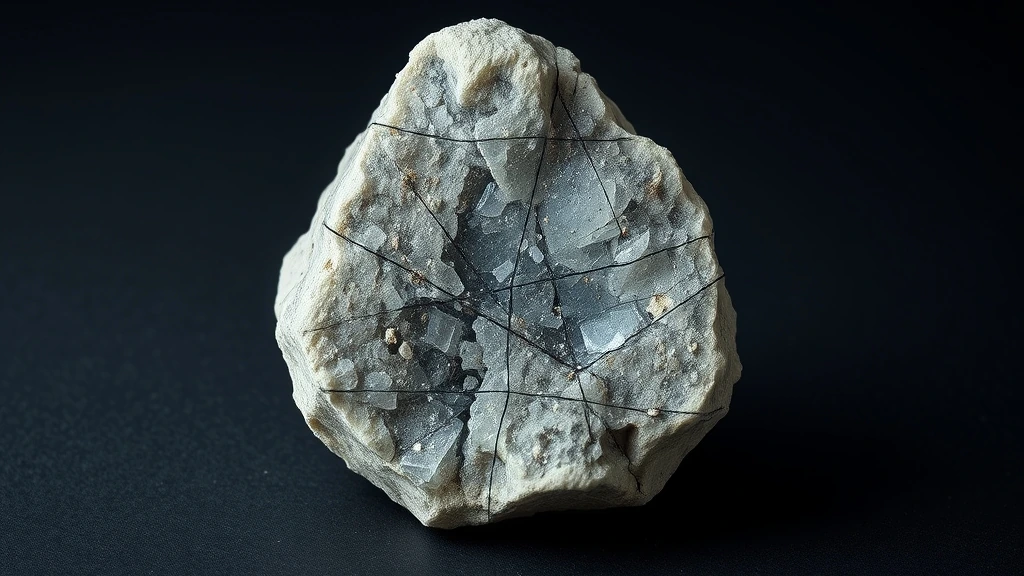
Andesite belongs to the Natural Mineral / Crystal group, representing a rock type rather than a single mineral species. It forms from the cooling of intermediate magma, creating a complex aggregate of interlocking crystals. This geological origin distinguishes it from monocrystalline gemstones, emphasizing its structural diversity.
What is Andesite Gemstone? Geological Overview & Definition
Andesite is defined as an intermediate volcanic rock with a silica content between basalt and rhyolite. It typically displays a cryptocrystalline texture, where individual mineral grains are too small to be seen without magnification. This fine-grained structure results from rapid cooling of magma near the Earth’s surface.
The rock often contains visible phenocrysts of plagioclase or pyroxene embedded in a finer matrix. Its color ranges from gray to greenish-brown, depending on the specific mineral assemblage. Understanding this parent mineral group context is crucial for accurate geological classification.
Andesite Gemstone Chemical Composition & Crystallographic Properties
Andesite exhibits an Amorphous / Cryptocrystalline structure, lacking the long-range order of single crystals. This texture arises from rapid crystallization, preventing the formation of large, well-defined lattice planes. The lattice structure is therefore a mosaic of tiny, intergrown mineral domains.
Cation substitution within the feldspar and pyroxene phases allows for chemical variability. Sodium and calcium ions frequently replace potassium, altering the rock’s overall density. This cation substitution is a key factor in its diverse physical properties.
The material shows moderate acid sensitivity, particularly in its finer-grained matrix components. Prolonged exposure to acidic environments can degrade the surface luster over time. Careful handling is required to preserve its aesthetic qualities.
Thermal behavior is characterized by low thermal conductivity due to its porous, fine-grained nature. It expands slightly when heated, which can cause micro-fractures if cooled rapidly. This thermal behavior impacts its suitability for high-temperature applications.
| Property | Specification |
|---|---|
| Mineral Group | Natural Mineral / Crystal |
| Chemical Formula | Plagioclase feldspar (andesine), pyroxene, amphibole |
| Mohs Hardness | 5.5 – 6.5 |
| Crystal System | Composite (Polycrystalline) |
| Specific Gravity (Density) | 2.55 – 2.75 |
| Refractive Index | 1.53 – 1.66 |
| Color & Optical Properties | Natural Andesite Gemstone color spectrum and optical dispersion |
| Primary Mining Localities | Global primary localities |
| Water & Chemical Resistance | High (Safe for gentle water washing) |
| Chakra Alignment (Traditional) | Root Chakra |
| Zodiac Affinity (Traditional) | Taurus, Virgo, Capricorn |
| Symbolic Meaning (Traditional) | Grounding, stability, and protection |
Andesite Gemstone Varieties & Color Spectrum
Andesite is primarily valued for its volcanic origin rather than traditional gemological luster. The stone typically exhibits a fine-grained texture resulting from rapid cooling of intermediate magma. Its base coloration ranges from light gray to dark brown, often speckled with phenocrysts.
Classic Gray Andesite
This common variety features a uniform matrix of plagioclase feldspar and pyroxene minerals. The fine-grained groundmass creates a smooth, matte surface ideal for carving. It is widely available in lapidary markets due to its abundance.
Porphyritic Andesite
Distinguished by large, visible crystals called phenocrysts embedded in a fine-grained groundmass. These crystals often appear as white or black spots against the gray background. This texture adds significant visual interest to carved jewelry pieces.
Greenish-Gray Andesite
This morph develops a subtle green tint due to the presence of augite or hornblende minerals. The coloration is often muted and earthy, appealing to collectors seeking natural tones. It is frequently found in volcanic flows across the Pacific Ring of Fire.
Dark Brown Andesite
Rich in iron-bearing minerals, this variety displays deep brown to black hues. The dense composition makes it highly durable for intaglio carving and seal stones. It is less common than gray varieties but prized for its depth.
Where is Andesite Gemstone Found? Geological Mining & Extraction
Andesite forms in subduction zones where oceanic plates dive beneath continental plates. It is typically extracted from volcanic flows, dikes, and sills rather than pegmatites. Major sources include Indonesia, the Philippines, and the Andes mountain range.
Extraction is often surface mining, as andesite outcrops are easily accessible. The stone is cut into blocks for lapidary work or architectural use. Its widespread distribution ensures a steady supply for the global gemstone market.
Historical Significance & Cultural Lore of Andesite Gemstone
Ancient civilizations in the Andes and Mesoamerica used andesite for ritualistic tools and ceremonial axes. The stone’s durability made it suitable for creating durable artifacts that have survived millennia. Archaeological finds reveal its importance in early volcanic regions.
In modern times, andesite is appreciated for its geological significance and earthy aesthetic. It serves as a tangible connection to the dynamic processes of plate tectonics. Collectors value it as a reminder of Earth’s volcanic history.
Modern Uses & Jewelry Applications of Andesite Gemstone
Andesite is primarily valued for its durability and distinctive speckled appearance rather than optical brilliance. Lapidaries typically cut this volcanic rock into cabochons to showcase its smooth, matte surface and unique texture. Because the stone lacks significant transparency, faceting is rare and usually limited to small, simple shapes that emphasize color contrast.
- Cabochon Cutting: The standard method for displaying the stone’s earthy tones and phenocryst inclusions without risking fracture.
- Ornamental Carvings: Used in beads, pendants, and small figurines where structural integrity is more important than sparkle.
- Architectural Accents: Polished slabs are sometimes used in high-end interior design for their robust, natural aesthetic.
Metaphysical Uses & Origins of Andesite
According to historical traditions and metaphysical lore, andesite is revered as a stone of profound stability and grounding energy. Practitioners believe it helps anchor the wearer’s spirit, fostering a deep sense of connection to the earth. This grounding effect is thought to reduce anxiety and promote emotional balance during challenging life transitions.
The stone’s rugged appearance symbolizes resilience and the ability to withstand pressure, much like the volcanic origins of the rock itself. Many users report feeling a calming influence that supports emotional resilience and physical vitality. It is often recommended for those seeking to strengthen their inner core and maintain focus amidst external chaos.
Which Chakra and Zodiac Signs Align with Andesite Gemstone?
In metaphysical practice, andesite is strongly associated with the Root Chakra, which governs survival, security, and physical stability. By aligning with this energy center, the stone is believed to help users feel safe and supported in their daily lives. This connection reinforces a sense of belonging and practicality, anchoring the mind to the present moment.
The stone also resonates with the Heart Chakra, bridging the gap between physical stability and emotional openness. This dual alignment suggests that andesite supports both the body’s need for security and the heart’s desire for connection. It encourages a balanced approach to relationships, where emotional vulnerability is supported by a solid foundation of self-worth.
Astrologically, andesite is considered particularly beneficial for individuals born under the signs of Taurus, Gemini, and Leo. For Taurus, it enhances their natural love of stability and material comfort. Gemini finds grounding in its steady energy, while Leo appreciates its supportive strength. These signs benefit from the stone’s ability to harmonize their inherent traits with a deeper sense of inner peace.
How to Identify Real vs. Fake Andesite Gemstone
Artificial imitations of andesite are less common than for precious gems but can still appear in the market. Common fakes include synthetic glass or dyed quartz that mimics the stone’s speckled pattern. These replicas often lack the natural variation and specific mineral composition of genuine volcanic rock.
Practical At-Home Authenticity Tests
- Temperature Test (Thermal Feel): Genuine andesite feels cool to the touch initially and warms slowly. Glass imitations often feel warmer immediately or change temperature more rapidly due to different thermal conductivity.
- Specific Gravity & Weight Test: Andesite has a specific gravity of approximately 2.6 to 2.7. It should feel heavier than similarly sized pieces of glass or lightweight plastic, which typically have lower densities.
- Scratch & Hardness Test (Mohs Comparison): With a hardness of 6 to 6.5 on the Mohs scale, andesite can scratch glass but will not be scratched by a steel knife. If the stone is easily scratched by metal, it is likely a softer imitation.
- Microscopic & Loupe Inspection (Internal Inclusions): Use a 10x loupe to look for natural phenocrysts and irregular mineral grains. Glass fakes often contain circular bubbles or flow lines, while dyed stones may show color concentrated in cracks.
Andesite Gemstone Valuation Factors, Grading & Pricing
The primary driver of value is Color Saturation, where deep, uniform gray-green tones command higher prices. Consistent tone across the entire stone enhances its visual appeal significantly. Additionally, a smooth, vitreous luster indicates superior surface quality and proper polishing.
Carat Weight influences pricing, though large specimens are rare due to the rock’s massive formation. Facet symmetry is less critical for cabochons, but precise cutting maximizes light reflection. The presence of distinct mineral inclusions or matrix patterns can either detract from or enhance value depending on aesthetic preference.
Geographical Provenance Premium applies to stones from renowned volcanic regions like the Andes or Japan. Wholesale prices remain modest, reflecting its status as a semi-precious rock rather than a gem. Retail margins vary, but demand for unique geological formations keeps the market stable.
How to Clean and Care for Andesite Gemstone
To maintain the stone’s integrity, use warm soapy water and a soft cloth for gentle washing. This method effectively removes surface oils and dust without causing damage. Rinse thoroughly with clean water and dry immediately with a lint-free towel.
It is crucial to avoid ultrasonic cleaners entirely, as vibrations can induce structural fractures. The interlocking crystal structure of andesite is susceptible to stress from high-frequency sound waves. Stick to manual, low-impact cleaning methods to preserve the stone’s physical stability.
Cleansing and Recharging Andesite Gemstone (Energetic Care)
For energetic maintenance, utilize dry methods that respect the mineral’s physical properties. Smoke smudging with sage or palo santo is an effective way to clear negative energy. Ensure the stone is not directly exposed to flame or excessive heat during this process.
Alternatively, place the gemstone on a selenite plate under moonlight for recharging. This passive method allows for spiritual cleansing without any risk of moisture or chemical interaction. These techniques align with the stone’s preference for gentle, non-invasive care routines.
Frequently Asked Questions About Andesite Gemstone
Is andesite safe to wear in the shower?
Yes, andesite is safe for gentle water washing. Its high water resistance allows it to withstand brief exposure to moisture without damage. However, avoid prolonged soaking, as organic residues from soaps can eventually dull the stone’s natural luster over time.
Can I use an ultrasonic cleaner on andesite?
No, you should avoid ultrasonic cleaners entirely. The intense vibrations can cause structural fractures in the stone’s matrix. Instead, clean your andesite using warm soapy water and a soft cloth to preserve its integrity and surface finish safely.
Which zodiac signs are aligned with andesite?
Andesite resonates most strongly with Taurus, Gemini, and Leo. These signs benefit from the stone’s grounding energy and protective qualities. Wearing andesite can help balance emotional volatility and enhance personal stability for these specific astrological profiles.
Which chakras does andesite activate?
Andesite primarily activates the Root Chakra. This dual connection helps bridge physical stability with emotional well-being. It encourages a sense of security while simultaneously fostering compassion and open-heartedness in the wearer.
What is the chemical composition of andesite?
Andesite is an intermediate volcanic rock, not a single mineral. It typically contains plagioclase feldspar and pyroxene or hornblende. Understanding this complex composition is crucial for proper identification and setting, as it differs from pure gemstones like quartz.
How hard is andesite on the Mohs scale?
Andesite generally ranges from 5 to 6 on the Mohs scale. This moderate hardness makes it durable enough for everyday jewelry, though it is softer than quartz. Care is needed to prevent scratches from harder materials like topaz or diamond.
Does andesite have any metaphysical healing properties?
Andesite is believed to offer strong grounding and protection. It is often used to dispel negative energy and promote emotional balance. Many practitioners value its ability to anchor the wearer to the earth while supporting heart-centered healing.
Where is andesite commonly found geologically?
Andesite is prevalent in subduction zones along continental margins. It forms the continental crust in many regions, such as the Andes and Pacific Ring of Fire. Its widespread occurrence makes it accessible for both industrial use and gemstone crafting.