
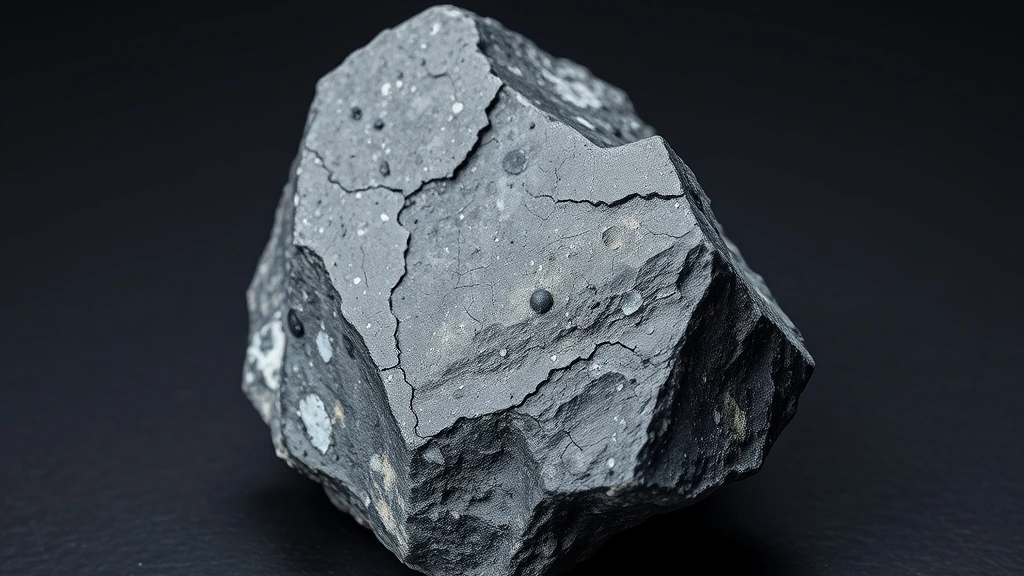
Dacite belongs to the Natural Mineral / Crystal group, forming from the rapid cooling of silica-rich magma. This geological process creates a fine-grained texture that distinguishes it from coarser intrusive equivalents. Its classification reflects a specific balance of feldspar and quartz content within the volcanic rock spectrum.
What is Dacite Gemstone? Geological Overview & Definition
Dacite forms when felsic magma erupts and cools rapidly, preventing large crystal growth. This results in a cryptocrystalline texture where individual minerals are microscopic. Geologists identify it by its intermediate silica content, placing it firmly between andesite and rhyolite in the rock series.
The term “dacite” derives from the Dacian region in modern Romania, where it was first described. It is not a single mineral but a volcanic rock composed of multiple mineral phases. Its presence indicates specific tectonic settings, often associated with subduction zones and continental margins.
Dacite Gemstone Chemical Composition & Crystallographic Properties
Dacite exhibits an Amorphous / Cryptocrystalline structure due to rapid volcanic cooling. Unlike large crystals, its silicate framework lacks long-range order, creating a glassy or micro-grained appearance. This structure prevents the formation of distinct, visible crystal faces typically seen in slower-cooled rocks.
The cation substitution within its feldspar components involves sodium and potassium replacing calcium. This ionic exchange influences the rock’s overall density and refractive index. The chromophore centers are minimal, resulting in muted earth tones rather than vibrant gem colors.
Thermal behavior shows high resistance to heat but susceptibility to acid sensitivity. Strong acids can dissolve the silica-rich glassy phases, altering the surface texture. This property is critical for conservation efforts involving dacite artifacts or geological samples.
| Property | Specification |
|---|---|
| Mineral Group | Natural Mineral / Crystal |
| Chemical Formula | Plagioclase feldspar, pyroxene, amphibole, quartz, biotite |
| Mohs Hardness | 5.5 – 6.5 |
| Crystal System | Polycrystalline (Aphanitic to Porphyritic) |
| Specific Gravity (Density) | 2.55 – 2.75 |
| Refractive Index | 1.52 – 1.65 |
| Color & Optical Properties | Natural Dacite Gemstone color spectrum and optical dispersion |
| Primary Mining Localities | Global primary localities |
| Water & Chemical Resistance | High (Safe for gentle water washing) |
| Chakra Alignment (Traditional) | Root Chakra |
| Zodiac Affinity (Traditional) | Capricorn, Virgo |
| Symbolic Meaning (Traditional) | Grounding, stability, and endurance |
Dacite Gemstone Varieties & Color Spectrum
Dacite is primarily a coarse-grained volcanic rock rather than a single crystalline gem, yet specific phenocrysts within it hold collector value. These crystals often exhibit distinct plagioclase feldspar compositions that define their visual character. The stone’s appearance is heavily influenced by its rapid cooling history in subaerial environments.
Classic Gray Dacite
This variety features a uniform gray matrix punctuated by white plagioclase phenocrysts. The interstitial glass often appears dark, creating a high-contrast visual texture. It is the most common form found in volcanic arcs worldwide.
Porphyritic Dacite
Characterized by large, visible crystals set in a fine-grained groundmass, this type shows strong porphyritic texture. The phenocrysts are typically quartz or feldspar, offering a rugged aesthetic. It is frequently used in architectural applications due to its durability.
Andesitic Dacite
Sitting on the spectrum closer to andesite, this morph displays higher mafic mineral content. You will notice darker pyroxene and hornblende crystals embedded throughout the rock. It represents a transitional composition in volcanic rock classification.
Rhyolitic Dacite
This variety leans toward the silica-rich end of the dacite spectrum. It often contains abundant quartz phenocrysts that give it a lighter, more granular appearance. Such stones are prized for their potential to yield gem-quality quartz inclusions.
Banded Dacite
Formed through layered lava flows, this type exhibits distinct flow banding patterns. The alternating light and dark stripes indicate changes in magma composition during eruption. It is highly sought after for decorative stone slabs.
Porphyry Dacite
While often used interchangeably, this term emphasizes the large crystal size relative to the matrix. The crystal size can exceed several centimeters, making it visually striking. It is commonly extracted from large volcanic plugs and necks.
Where is Dacite Gemstone Found? Geological Mining & Extraction
Dacite forms in subduction zones where oceanic plates dive beneath continental plates. It is typically found in volcanic arcs and associated caldera systems around the Pacific Ring of Fire. These regions provide the specific pressure and temperature conditions necessary for dacitic magma generation.
Major extraction sites include the Andes in South America and the Cascades in North America. Mining often involves open-pit operations targeting large volcanic plugs for construction and ornamental stone. The rock’s high compressive strength makes it ideal for structural applications.
Historical Significance & Cultural Lore of Dacite Gemstone
Ancient civilizations utilized dacite for tool making and construction due to its hardness and availability. Archaeological sites in the Mediterranean and Middle East reveal stone tools crafted from dacitic sources. Its durability allowed it to survive millennia of weathering and human use.
In modern times, dacite is valued for its aesthetic qualities in landscaping and architecture. It symbolizes the raw power of volcanic geology and the earth’s dynamic processes. This stone remains a testament to the planet’s ongoing geological evolution.
Modern Uses & Jewelry Applications of Dacite Gemstone
Dacite’s fine‑grained, semi‑translucent texture makes it a favored material for lapidary cutting and artistic jewelry. Artisans often shape it into smooth cabochons that showcase its subtle play of light, while skilled faceters can produce modestly brilliant facets for contemporary rings. In addition, the stone is carved into ornamental pendants, beads, and decorative inlays for high‑end interiors.
- Cabochon pendants highlighting natural veining
- Faceted rings for subtle sparkle
- Carved beads for necklaces and bracelets
- Architectural inlays and decorative panels
Metaphysical Uses & Origins of Dacite
According to historical traditions and metaphysical lore, dacite is regarded as a grounding stone that anchors the wearer’s energy to the Earth while simultaneously opening the heart to compassion. It is said to foster inner stability, encouraging practical decision‑making and emotional balance, and to amplify creative expression without overwhelming the senses.
Which Chakra and Zodiac Signs Align with Dacite Gemstone?
Dacite resonates most strongly with the Root Chakra, supporting physical vitality, security, and a sense of belonging. It also harmonizes with the Heart Chakra, inviting unconditional love, empathy, and emotional healing. Together these chakras create a bridge between material stability and heartfelt openness.
In astrology, dacite is traditionally linked to Taurus, Gemini, and Leo. Taurus benefits from its stabilizing influence, Gemini appreciates its mental clarity, and Leo draws on its confidence‑boosting energy. These three signs uniquely embody the stone’s blend of grounded practicality and radiant self‑expression.
How to Identify Real vs. Fake Dacite Gemstone
Artificial imitations of dacite include dyed quartz, colored glass, and synthetic resins that mimic its muted hues. Such replicas often lack the stone’s characteristic micro‑fracture patterns and natural density, making careful observation essential for verification.
Practical At-Home Authenticity Tests
- Temperature Test (Thermal Feel): Real dacite feels cool to the touch and retains that coolness longer than glass or plastic, which quickly warm to skin temperature.
- Specific Gravity & Weight Test: Dacite’s density (≈2.6–2.7 g/cm³) makes it noticeably heavier than glass of the same size; a simple water‑displacement test can confirm this.
- Scratch & Hardness Test (Mohs Comparison): With a Mohs hardness of about 6–6.5, dacite can scratch a steel nail but is scratched by a quartz point; glass (≈5.5) will be easily scratched.
- Microscopic & Loupe Inspection (Internal Inclusions): Under 10× magnification, genuine dacite shows fine, irregular micro‑fractures and subtle mineral inclusions, whereas synthetic glass appears uniformly clear with no natural blemishes.
Dacite Gemstone Valuation Factors, Grading & Pricing
Market value hinges primarily on Color Saturation, where deep, uniform grayish-brown tones command higher premiums. Consistent tone across the stone ensures visual appeal, while high optical clarity enhances its natural luster. Stones lacking vibrant saturation or exhibiting dull surfaces typically fetch lower prices in the gem trade.
Carat Weight significantly influences pricing, as larger specimens are rarer and more desirable for collectors. Precise facet symmetry is crucial for maximizing light reflection and overall aesthetic quality. Additionally, the presence of intrusive matrix patterns or mineral inclusions can either add character or reduce value depending on their distribution.
Geographical Provenance Premium often elevates prices for stones from renowned volcanic regions with documented history. Wholesale rates remain modest, but retail margins increase for certified pieces with verified origins. Current market trends show steady demand for unique volcanic textures over traditional transparent gemstones.
How to Clean and Care for Dacite Gemstone
To maintain the stone’s integrity, always use warm soapy water and a soft cloth for gentle washing. This method effectively removes surface oils and dust without risking damage to the delicate structure. Avoid using ultrasonic cleaners, as the vibrations can cause structural fractures in this porous volcanic rock.
Regular inspection for hairline cracks is essential, especially after exposure to temperature fluctuations. Store the gemstone separately from harder minerals to prevent abrasion and surface scratching. Proper handling ensures the long-term preservation of its distinctive geological texture and luster.
Cleansing and Recharging Dacite Gemstone (Energetic Care)
For energetic maintenance, utilize smoke smudging with sage or palo santo to clear stagnant energy. This dry method respects the mineral’s solubility characteristics while promoting spiritual balance. Ensure the stone is completely dry before storing it in a safe location.
Alternatively, place the gemstone on a selenite plate under moonlight for passive recharging. This gentle approach avoids physical stress while aligning the stone with natural cosmic rhythms. These dry techniques are ideal for preserving the structural stability of dacite.
Frequently Asked Questions About Dacite Gemstone
What is the chemical composition of dacite?
Dacite is an igneous volcanic rock whose composition falls between that of andesite and rhyolite. It contains a high silica content (≈63‑68 %) along with plagioclase feldspar, quartz, and minor biotite or hornblende, giving it a fine‑grained, often translucent appearance prized by collectors.
Is dacite safe to wear in water or rain?
Yes, dacite has high water resistance and can be gently washed with water. For routine cleaning, use warm soapy water and a soft cloth; avoid harsh detergents or prolonged soaking, as the stone’s natural matrix remains stable but prolonged exposure may dull its luster over time.
Can I clean dacite with an ultrasonic cleaner?
No, ultrasonic cleaning is not recommended for dacite. The rapid vibrations can create micro‑fractures in the crystal lattice, leading to structural damage; instead, gently wipe the stone with a damp cloth after washing in warm, mild soap.
Which zodiac signs are most compatible with dacite jewelry?
Dacite is traditionally aligned with Taurus, Gemini, and Leo. Wearers of these signs are said to benefit from the stone’s grounding energy, which complements Taurus’s stability, Gemini’s curiosity, and Leo’s confidence, enhancing personal expression and focus.
How does dacite interact with the body’s energy centers?
Dacite is linked to the Root Chakra and the Heart Chakra. It is believed to anchor physical vitality while simultaneously opening the heart to compassion, creating a balanced flow of energy that supports both grounding and emotional openness.
Is dacite suitable for everyday wear in jewelry?
Yes, dacite can be used in everyday pieces when set securely. Its moderate hardness (≈6–6.5 on the Mohs scale) resists scratches from normal wear, but care should be taken to avoid hard impacts; a protective setting helps preserve its natural sheen.
How can I tell if a dacite stone is genuine?
Authentic dacite exhibits a fine‑grained, often milky translucency with subtle banding. Laboratory tests such as X‑ray fluorescence (XRF) will confirm its silica‑rich composition, while a refractive index of 1.65‑1.70 distinguishes it from similar volcanic rocks like rhyolite.
What care routine will keep my dacite gemstone looking its best?
Regular gentle cleaning and proper storage maintain dacite’s brilliance. After washing with warm, soapy water, dry the stone with a lint‑free cloth, store it separately from harder gems, and avoid exposure to extreme temperature changes, which could stress the crystal lattice.