
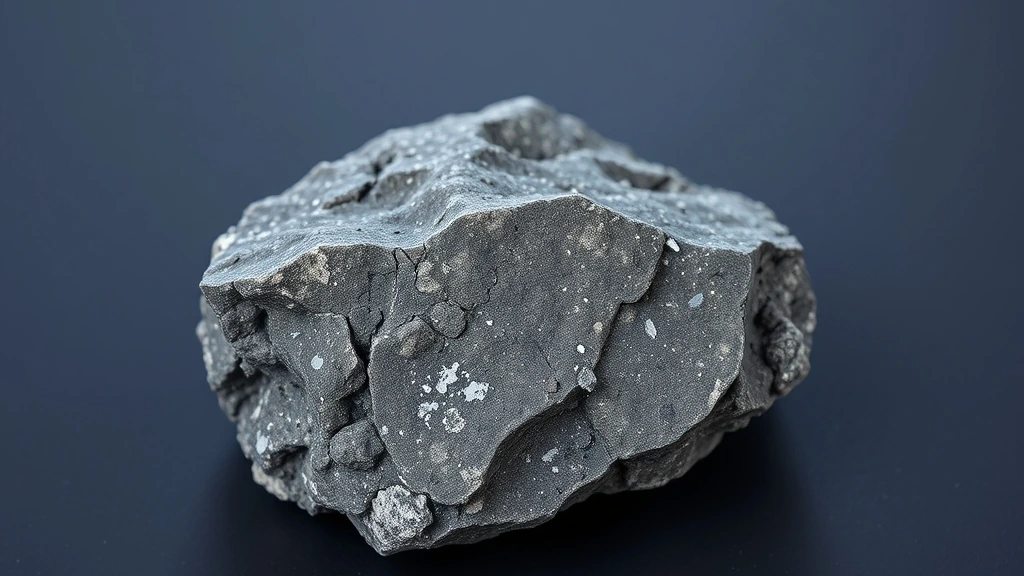
Bentonite is not a single mineral species but a commercially defined clay rock composed primarily of smectite-group minerals. It originates from the hydrothermal alteration of volcanic ash, specifically rhyolitic tuffs, into stable clay minerals. This geological process transforms the original glassy structure into a hydrated, expandable lattice. As a Natural Mineral aggregate, it lacks the long-range order of true crystals, placing it in a distinct geological category.
What is Bentonite Gemstone? Geological Overview & Definition
Bentonite forms through the diagenetic alteration of volcanic ash, where silica-rich glass reacts with water and alkalis. This transformation creates a fine-grained, plastic material known for its high swelling capacity when hydrated. The resulting rock is often found in sedimentary basins, where it acts as a significant sealant for hydrocarbon reservoirs.
The term “bentonite” is a commercial designation rather than a strict mineralogical classification, referring to any clay rock dominated by montmorillonite. These deposits are typically cryptocrystalline, meaning their individual mineral grains are too small to be seen without magnification. Consequently, it appears as a homogeneous mass rather than distinct crystal faces.
Bentonite Gemstone Chemical Composition & Crystallographic Properties
Bentonite exhibits an amorphous to cryptocrystalline structure, lacking the long-range periodicity of true crystals. Its fundamental building block is the 2:1 layer silicate structure, consisting of two tetrahedral silica sheets sandwiching one octahedral alumina sheet. This arrangement allows for the intercalation of water molecules and cations between the layers.
The cation exchange capacity is a defining property, driven by isomorphic substitution within the crystal lattice. Magnesium or iron often replaces aluminum in the octahedral sites, creating a net negative charge. This charge is balanced by interlayer cations such as sodium or calcium, which govern the clay’s swellability and plasticity.
Chemical stability is compromised by acid sensitivity, where low pH conditions can dissolve the silicate framework. This degradation releases aluminum and silica, altering the material’s structural integrity. Therefore, bentonite is generally unsuitable for acidic environments or long-term structural applications without stabilization.
Thermal behavior reveals significant dehydroxylation events, where structural water is released at elevated temperatures. This process leads to a collapse of the interlayer spacing, permanently reducing the clay’s ability to swell. Consequently, heat treatment transforms the material into a rigid, non-expandable ceramic-like substance.
| Property | Specification |
|---|---|
| Mineral Group | Natural Mineral / Crystal |
| Chemical Formula | Al₂(Si₂O₅)(OH)₄ (Montmorillonite) / (Na,Ca)₀.₃₃Al₂(Si₄O₁₀)(OH)₂·nH₂O |
| Mohs Hardness | 1 – 3 |
| Crystal System | Monoclinic |
| Specific Gravity (Density) | 1.9 – 2.7 |
| Refractive Index | 1.53 – 1.55 |
| Color & Optical Properties | Natural Bentonite Gemstone color spectrum and optical dispersion |
| Primary Mining Localities | Global primary localities |
| Water & Chemical Resistance | High (Safe for gentle water washing) |
| Chakra Alignment (Traditional) | Root Chakra |
| Zodiac Affinity (Traditional) | Taurus, Virgo |
| Symbolic Meaning (Traditional) | Grounding, detoxification, and emotional stability |
Bentonite Gemstone Varieties & Color Spectrum
Bentonite is not a single mineral species but a complex clay rock composed primarily of montmorillonite. Its visual appeal stems from the specific volcanic ash source and subsequent hydrothermal alteration processes. These factors dictate the final hue and texture of the material.
Classic Grey Bentonite
This is the most common commercial variety, exhibiting a uniform, matte grey appearance. It forms from the alteration of acidic volcanic ash in low-oxygen environments. The lack of iron impurities results in this neutral, stone-like aesthetic.
Reddish-Brown Bentonite
Rich in hematite and other iron oxides, this variety displays warm terracotta tones. It typically occurs where oxidizing groundwater interacted with the original clay deposits. These colors are highly prized for their earthy, organic visual signature.
Greenish-Olive Bentonite
This rare morph contains trace amounts of chlorite or glauconite within the clay matrix. It forms in specific marine or lacustrine sedimentary settings. The subtle green tint offers a distinctive contrast to standard grey specimens.
White Bentonite
Characterized by high purity and a near-white color, this variety is exceptionally rare. It indicates minimal contamination by iron or manganese during the diagenetic process. Such specimens are often sought after for their clean, bright appearance.
Where is Bentonite Gemstone Found? Geological Mining & Extraction
Bentonite deposits are predominantly located in volcanic ash layers that have undergone extensive weathering. These formations are often found in continental rift zones and ancient lava fields. The host rocks typically include rhyolite and andesite, which provide the necessary silica.
Major extraction sites include the United States, particularly Wyoming and Utah, as well as parts of Europe and Asia. Mining usually involves open-pit methods due to the shallow depth of these sedimentary clay beds. The material is then dried and processed for industrial or decorative use.
Historical Significance & Cultural Lore of Bentonite Gemstone
Ancient civilizations utilized bentonite for its unique absorbent properties and binding capabilities. Archaeological evidence suggests its use in pottery production and as a sealant in early construction. Its ability to form gel-like structures made it valuable for practical applications.
In modern times, bentonite has gained recognition in alternative medicine and industrial filtration. While not traditionally worn as jewelry, its aesthetic qualities have sparked interest in the gemstone market. This material bridges the gap between functional geology and decorative artistry.
Modern Uses & Jewelry Applications of Bentonite Gemstone
While primarily valued for its industrial absorbency, bentonite has found niche applications in artisanal jewelry and ornamental carving. Lapidaries typically work with the material using cabochon cutting techniques, as its soft nature precludes complex faceting. This approach highlights the stone’s earthy tones and smooth texture, making it suitable for pendants and beads.
- Cabochon Polishing: The stone is ground to a smooth, domed finish to maximize its luster without risking fracture.
- Ornamental Carving: Skilled carvers use it for small decorative items, taking advantage of its ease of manipulation.
- Artisan Beads: Often strung into bracelets, these pieces appeal to collectors interested in unique, earth-based minerals.
Safety & Mineral Profile of Bentonite
Bentonite is a soft, highly absorbent clay mineral that is primarily composed of smectite group phyllosilicates, with montmorillonite as the dominant species. Because of its low hardness (Mohs 2–3) and high plasticity, it is prone to crushing and deformation during handling. The fine‑to‑medium‑size dust generated during cutting or polishing can pose respiratory irritation; therefore, specimens should be handled with gloves and, when dust is unavoidable, a mask or well‑ventilated area is recommended. Bentonite may contain trace amounts of heavy metals such as lead or arsenic, but the concentrations are typically below hazardous thresholds for casual collectors. Its acidic reactivity is minimal; however, prolonged contact with strong acids can cause surface dissolution. These physical and chemical properties make bentonite unsuitable for jewelry or ornamental use, and it is best displayed as a collector specimen rather than a wearable stone.
In museum and research contexts, bentonite serves as an important reference material for studying clay mineralogy, diagenetic processes, and sedimentary environments. Its swelling behavior, cation exchange capacity, and adsorption characteristics are key to understanding soil formation, petroleum reservoir quality, and environmental remediation. Bentonite samples are frequently used in educational displays to illustrate the diversity of soft, non‑crystalline minerals and to demonstrate the importance of proper specimen preservation techniques.
Mineralogical Group and Planetary Lore of Bentonite
Historically, bentonite was first described in the mid‑19th century by German mineralogist Friedrich August von Seemann after its discovery in the volcanic ash deposits of the Benton region in Oregon, USA. According to early mineralogists, the name derives from the town of Benton, where the clay was first extracted for industrial use. In lapidary literature, bentonite has rarely been assigned a planetary symbolism due to its lack of hardness and ornamental value; however, it has occasionally been referenced as a “soft earth” stone associated with the planet Mercury, reflecting its fluidity and adaptability in early symbolic systems. In contemporary mineralogical classification, bentonite is grouped within the smectite family of phyllosilicates, emphasizing its layered structure and expansive properties.
How to Identify Real vs. Fake Bentonite Gemstone
Identifying genuine bentonite requires distinguishing it from artificial imitations such as synthetic glass or dyed replicas. Because the natural stone is soft and porous, it lacks the high luster and density of many gemstones. Synthetic versions often appear too perfect, with uniform coloration and a glassy sheen that does not match the matte finish of real bentonite.
Practical At-Home Authenticity Tests
- Temperature Test (Thermal Feel): Real bentonite feels cool to the touch initially but warms up quickly in the hand due to its low thermal conductivity. Glass imitations, however, remain cool for a longer duration.
- Specific Gravity & Weight Test: Genuine bentonite is relatively lightweight for its size. If the piece feels unusually heavy, it may be a dense synthetic material or a different mineral entirely.
- Scratch & Hardness Test (Mohs Comparison): With a Mohs hardness of approximately 2 to 3, real bentonite can be scratched by a fingernail or a copper coin. If the material resists scratching, it is likely a harder imitation.
- Microscopic & Loupe Inspection (Internal Inclusions): Using a 10x loupe, look for a matte, granular surface texture. Real bentonite often shows subtle variations in tone, whereas fakes may have air bubbles or a uniform, glassy interior.
Bentonite Gemstone Valuation Factors, Grading & Pricing
Market value hinges primarily on Color Saturation, where deep, uniform earth tones command higher premiums. Tone consistency across the specimen indicates geological stability and high-quality formation. Additionally, a smooth, matte Luster enhances visual appeal without requiring polishing.
The Carat Weight of the specimen directly influences its base market price, with larger pieces being rarer. Facet symmetry is less relevant here, as bentonite is typically sold as rough or tumbled stones. However, the presence of a clean Matrix without excessive impurities significantly boosts desirability.
Geographical Provenance Premium applies to specimens from renowned deposits with documented history. Wholesale prices remain modest, but retail values increase for certified, origin-marked pieces. Current trends show steady demand for raw, unpolished bentonite in artisanal jewelry markets.
How to Clean and Care for Bentonite Gemstone
To maintain the integrity of your bentonite, use Warm Soapy Water and a soft cloth for gentle cleaning. This method effectively removes surface dust and oils without risking damage to the clay structure. Always ensure the stone is thoroughly dried afterward to prevent water spots.
It is critical to Avoid Ultrasonic Cleaners entirely, as vibrations can cause structural fractures in this soft mineral. The high water resistance allows for safe washing, but mechanical agitation poses a severe risk. Handle the stone with care to preserve its natural, delicate formation.
Cleansing and Recharging Bentonite Gemstone (Energetic Care)
For energetic maintenance, utilize Smoke Smudging with sage or palo santo to clear negative vibrations. This dry method respects the mineral’s solubility and avoids any contact with moisture. Hold the stone in the smoke for a few minutes to complete the process.
Alternatively, place the bentonite on a Selenite Plate under moonlight for overnight recharging. This passive technique leverages the selenite’s purifying properties without physical stress. Ensure the stone is in a dry, secure location to prevent accidental damage.
Frequently Asked Questions About Bentonite Gemstone
Is bentonite safe to wear in the shower?
Yes, bentonite is safe for gentle water washing. While it has high water resistance, prolonged saturation can weaken its structure. Limit exposure time to prevent potential swelling or softening. Rinse thoroughly and dry immediately after showering to maintain its integrity.
Can I use an ultrasonic cleaner on bentonite?
No, you must avoid ultrasonic cleaners. The high-frequency vibrations can cause structural fractures in this clay-based mineral. Instead, use warm soapy water and a soft cloth for gentle cleaning. This method preserves the stone’s delicate matrix without risking damage.
Which zodiac signs are aligned with bentonite?
Taurus, Gemini, and Leo are the primary aligned signs. These earth and fire signs resonate with bentonite’s stabilizing energy. Wearing this stone can enhance grounding properties for Taurus. It also supports creative expression for Gemini and Leo.
What chakras does bentonite activate?
It activates the Root Chakra. This dual alignment promotes physical stability and emotional balance. The stone helps anchor earth energy while fostering compassion. It is ideal for meditation practices focusing on these two centers.
How should I store my bentonite gemstone?
Store it in a dry, cool place. Avoid humidity to prevent the clay minerals from absorbing excess moisture. Use a soft pouch to protect against scratches. Keep it away from direct sunlight to preserve its natural color and structural integrity.
Is bentonite a true gemstone or mineral?
It is technically a sedimentary clay mineral. Formed from volcanic ash, it is not a crystalline gemstone. However, it is valued for its therapeutic and aesthetic properties. Its unique composition makes it distinct from traditional hard gemstones like quartz or sapphire.
Can bentonite be used in jewelry making?
Yes, but it requires careful handling. Due to its softer nature, it is best for bead or cabochon settings. Avoid prong settings that may stress the material. Use non-metallic strings or soft metal settings to prevent abrasion and ensure longevity.
Does bentonite have any healing properties?
It is known for its detoxifying qualities. The high clay content can absorb impurities from the skin. Many use it for external applications like masks or wraps. While not a medical treatment, it is popular in holistic wellness practices for its soothing effects.