
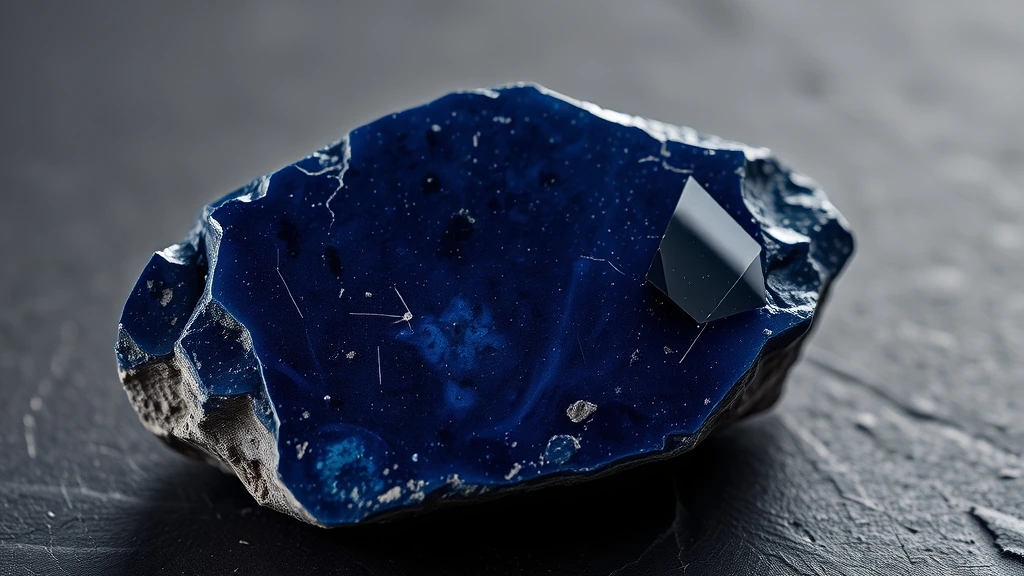
Sapphire belongs to the oxide mineral group, specifically the corundum family, which is defined by its robust aluminum oxide framework. This geological classification places it among the most durable and chemically stable minerals found in the Earth’s crust. Its formation typically occurs in metamorphic rocks, where high pressure and temperature conditions allow for the crystallization of these dense, hard structures.
What is Sapphire? Geological Overview & Definition
Sapphire is not a distinct mineral species but a gemological variety of corundum, distinguished by the absence of significant red chromophores. While ruby contains chromium, sapphires derive their colors from other trace elements like iron and titanium. This distinction is critical for accurate mineralogical identification and valuation in the gem trade. This precise mineralogical classification parallels the specificity seen in other gem groups, such as the Uvarovite Garnet, which is defined by its unique chromium-rich composition within the broader garnet family.
The stone forms primarily in metamorphic rocks such as schist and marble, as well as in igneous dikes. Its exceptional durability and luster have made it a symbol of royalty and wisdom throughout history. Understanding its geological origin helps gemologists assess authenticity and potential treatment history.
Sapphire Chemical Composition & Crystallographic Properties
Sapphire crystallizes in the trigonal crystal system, often exhibiting hexagonal bipyramidal or prismatic habits. Its lattice structure consists of alternating layers of aluminum and oxygen ions, creating a highly stable framework. This specific arrangement contributes to its high density and resistance to mechanical stress. While the standard blue variety relies on iron and titanium impurities within this stable lattice, the rare Padparadscha Sapphire achieves its distinctive pink-orange hue through trace amounts of vanadium and chromium, demonstrating the remarkable versatility of the corundum crystal structure.
The primary chemical formula is Al₂O₃, where trace cations substitute for aluminum ions in the lattice. These substitutions, particularly by iron and titanium, create color centers that absorb specific wavelengths of light. The precise concentration and type of these impurities determine the final hue of the gemstone. In comparative mineralogical collections, practitioners and geologists frequently study Chrysanthemum Stone alongside this crystal to appreciate their subtle energetic and structural differences.
Sapphire exhibits high chemical inertness, showing negligible sensitivity to common acids at room temperature. This stability makes it ideal for jewelry that requires long-term durability and resistance to environmental degradation. Its thermal behavior is also stable, with low thermal expansion ensuring structural integrity under varying temperatures.
| Property | Specification |
|---|---|
| Mineral Group | Oxides (Corundum Group) |
| Chemical Formula | Al₂O₃:Fe,Ti (Aluminum Oxide with Iron/Titanium traces) |
| Mohs Hardness | 9.0 |
| Crystal System | Trigonal (Hexagonal bipyramidal or prismatic corundum) |
| Specific Gravity (Density) | 3.98 – 4.06 |
| Refractive Index | 1.762 – 1.778 |
| Color & Optical Properties | Natural Sapphire color spectrum and optical dispersion |
| Primary Mining Localities | Sri Lanka, Madagascar, Myanmar, Australia, Kashmir |
| Water & Chemical Resistance | Very High (Fully resistant to water and standard detergents) |
| Chakra Alignment (Traditional) | Throat Chakra and Third Eye Chakra |
| Zodiac Affinity (Traditional) | Virgo, Libra, Sagittarius |
| Symbolic Meaning (Traditional) | Wisdom, royalty, fidelity, mental focus, and spiritual clarity |
Sapphire Varieties & Color Spectrum
Sapphire is the gem-quality variety of corundum, distinguished from ruby by the absence of significant red chromophores. The stone’s color arises from trace elements substituting for aluminum in the Al₂O₃ crystal lattice. Iron and titanium ions are the primary drivers of the classic blue hue, creating a complex interplay of absorption bands.
Royal Blue Sapphire
This prestigious variety originates primarily from the alluvial deposits of Ceylon (Sri Lanka) and Kashmir. The intense, velvety blue is attributed to specific ratios of iron and titanium impurities within the crystal structure. Kashmir sapphires exhibit a distinctive “silk” inclusion of rutile needles, which diffuses light to create a soft, satiny luster.
Padparadscha Sapphire
Often described as a sunset stone, this rare variety displays a unique blend of pink and orange hues. The color is caused by trace amounts of chromium and vanadium within the corundum matrix. True padparadscha stones are exceptionally scarce, with most high-quality material sourced from Sri Lanka and Madagascar.
Yellow Sapphire
Known as “Pukhraj” in Indian tradition, this variety features a vibrant golden-yellow color. The hue is produced by iron impurities that absorb blue and violet light from the visible spectrum. Major sources include Thailand, Myanmar, and Madagascar, where large, clean crystals are frequently recovered from alluvial gravels.
Green Sapphire
This lesser-known variety exhibits a range of green shades, from olive to emerald-like tones. The coloration results from a combination of iron and titanium or sometimes vanadium traces. Green sapphires are often found in the same deposits as blue varieties, particularly in Madagascar and Sri Lanka.
Pink Sapphire
Pink sapphires range from pale rose to intense fuchsia, depending on the concentration of chromium. High-grade stones often rival rubies in saturation but command lower prices due to market perception. Significant deposits exist in Madagascar, Sri Lanka, and Myanmar, where the stone is prized for its delicate elegance.
Color-Change Sapphire
This rare variety shifts hue under different light sources, typically from blue in daylight to purple in incandescent light. The effect is driven by the presence of chromium, iron, and titanium in specific proportions. These stones are highly sought after by collectors for their dynamic visual properties and geological uniqueness.
Where is Sapphire Found? Geological Mining & Extraction
Sapphires form in metamorphic rocks such as marble and schist, often associated with tectonic plate collisions. The primary host rocks are later eroded, transporting gem-quality crystals into alluvial deposits where they are easily accessible. This secondary occurrence allows for efficient recovery using gravity separation techniques in riverbeds.
Major mining regions include Madagascar, Sri Lanka, Myanmar, Thailand, and Kashmir. Madagascar has recently emerged as a dominant source, yielding large, high-quality crystals from alluvial gravels. Traditional panning and sluicing methods remain prevalent, supplemented by mechanized extraction in larger commercial operations.
Historical Significance & Cultural Lore of Sapphire
Ancient civilizations revered sapphire as a symbol of divine favor and protection, often associating it with the heavens. The Greeks believed the stone was a gift from the gods, while Roman emperors used it to signify royalty and power. Historical texts describe sapphires being set in crowns and religious artifacts to ward off evil spirits.
Archaeological findings reveal sapphires in Byzantine mosaics and medieval European jewelry, underscoring their enduring value. In Indian culture, the gem is linked to Jupiter, believed to bring wisdom and success to the wearer. This deep cultural resonance has sustained sapphire’s status as a premier gemstone throughout millennia.
Modern Uses & Jewelry Applications of Sapphire
Sapphires are prized for both their striking hue and exceptional durability, making them ideal for a wide range of lapidary work. Expert cutters shape the stone into faceted gems that maximize brilliance, while cabochon styles showcase deep, velvety colors in smooth domes. Ornamental carving also thrives, producing intricate cameos, intarsia, and decorative inlays for high‑end accessories.
- Brilliant round, oval, and cushion cuts for engagement rings
- Cabochon pendants highlighting rich, saturated blues or fancy colors
- Artistic carvings such as engraved seals, watch bezels, and ornamental plaques
Carat, Quality Grades & Value Factors of Sapphire
The market value of sapphire hinges on the classic 4Cs: Color, Clarity, Cut, and Carat weight. Color dominates pricing; vivid, saturated blues with even tone command premium prices, while fancy‑colored sapphires (pink, yellow, padparadscha) are evaluated on hue intensity and rarity. Clarity is assessed for visible inclusions; a clean, eye‑clean stone enhances brilliance, though some natural silk‑like inclusions are tolerated in high‑grade stones.
Cut quality influences light performance; precision faceting that respects the trigonal crystal symmetry yields optimal sparkle and fire. Carat weight is measured in metric carats (0.2 g), but larger stones are rarer and thus exponentially more valuable. Durability is a key commercial attribute: with a Mohs hardness of 9, sapphire resists scratching and is suitable for everyday wear in rings and bracelets. Industry grading follows GIA and IGI standards, which assign a comprehensive report covering color grade, clarity grade, cut grade, and measurements, ensuring transparent valuation across markets.
Zodiac and Astrological Lore of Sapphire
In Western astrology, sapphire is traditionally linked to Virgo, Libra, and Sagittarius, each sign drawing on the stone’s reputed ability to sharpen mental acuity and promote spiritual insight. Virgo benefits from sapphire’s grounding influence, Libra from its balance‑enhancing qualities, and Sagittarius from the stone’s encouragement of truth‑seeking and expansive vision.
Eastern traditions echo these themes, associating sapphire with the Throat Chakra and Third Eye Chakra, where it is believed to facilitate clear communication, inner wisdom, and heightened intuition. Across cultures, royalty and clergy have favored sapphire for its symbolism of fidelity, wisdom, and divine protection, embedding the gem in ceremonial crowns, regalia, and sacred objects.
How to Identify Real vs. Fake Sapphire
Artificial imitations range from low‑cost glass and cubic zirconia to high‑grade synthetic sapphire grown by the Verneuil or flux method. Dyed natural stones can mimic deep blues but often exhibit surface‑only coloration. Recognizing genuine sapphire requires careful observation of optical and physical properties that differ from these substitutes.
Practical At-Home Authenticity Tests
- Temperature Test (Thermal Feel): Natural sapphire feels cool to the touch and retains that coolness longer than glass or cubic zirconia, which warm quickly in the hand.
- Specific Gravity & Weight Test: Sapphire’s density (3.98‑4.06 g/cm³) makes it noticeably heavier than glass of similar size; a precise scale can confirm the expected weight.
- Scratch & Hardness Test (Mohs Comparison): Using a known 9‑hardness material (e.g., a quartz crystal) will not leave a scratch on sapphire, whereas glass or synthetic alternatives may show minor abrasions.
- Microscopic & Loupe Inspection (Internal Inclusions): Under 10×‑30× magnification, natural sapphire displays characteristic needle‑like or silk inclusions, while synthetic stones often show curved growth lines or gas bubbles; glass typically appears completely clear.
Sapphire Valuation Factors, Grading & Pricing
Market value is primarily driven by Color Saturation, which must exhibit intense, vivid hues without secondary overtones. Uniformity across the stone ensures visual consistency, while high optical clarity eliminates distracting inclusions. The natural luster of corundum further enhances perceived brilliance, making deep royal blues the most coveted shade.
Precise Carat Weight significantly influences pricing, as larger stones with exceptional quality command exponential premiums. Facet symmetry is critical for maximizing light return, adhering to rigorous lapidary standards. Professional gemologists apply the 4Cs framework, adjusting for cut precision and overall balance to determine final retail value.
Geographical Provenance Premium reflects the rarity of specific mining regions, such as Kashmir or Ceylon. Certified gem market value trends show that documented origin can increase worth by substantial margins. Reputable laboratories provide traceability, ensuring buyers receive authentic stones with verified historical and geological significance.
How to Clean and Care for Sapphire
Sapphire’s Mohs Hardness of 9.0 makes it exceptionally durable against daily wear and environmental exposure. The mineral is fully resistant to water and standard detergents, allowing for safe immersion during routine maintenance. This structural stability ensures that the crystal lattice remains intact under normal cleaning conditions without risk of dissolution.
For optimal maintenance, clean the gem using warm soapy water and a soft-bristled brush to remove accumulated oils. Ultrasonic cleaners should generally be avoided or used with extreme caution, as high-frequency vibrations can cause microscopic fissures. Always inspect for fractures before ultrasonic cleaning, as pre-existing cracks may expand under high-frequency vibrations.
Cleansing and Recharging Sapphire (Energetic Care)
Holistic practitioners often employ herbal smudging to clear perceived energetic stagnation from the stone. Passing the sapphire through the smoke of sage or palo santo is a gentle, non-invasive method. This dry approach respects the mineral’s physical integrity while aligning with traditional metaphysical practices for spiritual clarity.
Alternatively, resting the gem on a selenite charging slab under gentle moonlight allows for passive energy replenishment. This method avoids direct heat sources, which could potentially stress the crystal structure over time. Such dry, ambient exposure ensures the stone remains physically stable while undergoing its intended energetic reset.
Frequently Asked Questions About Sapphire
What is the chemical composition of sapphire?
Sapphire is essentially aluminum oxide (Al₂O₃) with trace amounts of iron and titanium. The corundum structure gives it a trigonal crystal system, and the Fe‑Ti impurities create the wide range of colors, while pure blue sapphires owe their hue to the delicate balance of these trace elements.
How hard is sapphire compared to other gemstones?
Sapphire rates a 9.0 on the Mohs hardness scale. This makes it one of the hardest natural gemstones, second only to diamond, and suitable for everyday wear without scratching most metals or other minerals. Its durability is a key factor in its popularity for rings and watches.
Is sapphire fully water‑resistant?
Yes, sapphire is very highly water‑resistant and tolerates standard detergents. It can be worn while swimming, showering, or in rain without risk of damage, because its dense Al₂O₃ lattice repels moisture and prevents absorption that would otherwise weaken the stone.
Can I clean my sapphire with an ultrasonic cleaner?
Untreated sapphires can safely be placed in an ultrasonic cleaner after a warm, soapy water soak. The gentle vibrations remove fine grime without harming the crystal, provided the stone is not heat‑treated or coated; a soft brush can be used to reach crevices before ultrasonic exposure.
Which zodiac signs are traditionally associated with sapphire?
Sapphire is linked to Virgo, Libra, and Sagittarius. These signs are believed to benefit from the stone’s stabilizing energy, which aligns with the gemstone’s historic use in royal regalia and its reputation for promoting wisdom and mental focus among those born under these constellations.
Which chakras does sapphire influence?
Sapphire resonates with the Throat Chakra and the Third Eye Chakra. Activation of these energy centers is said to enhance clear communication, intuitive insight, and spiritual clarity, echoing the stone’s traditional symbolism of royalty and fidelity in both personal and metaphysical contexts.
How can I tell if a sapphire is natural or lab‑grown?
Natural sapphires often display subtle growth zoning and inclusions visible under 10× magnification. Lab‑grown stones tend to have a more uniform internal structure and may show characteristic flux residues; a certified gemological report will specify the origin and any treatments applied.
What is the typical density range for sapphire, and why does it matter?
Sapphire’s specific gravity falls between 3.98 and 4.06. This relatively high density reflects its tightly packed corundum lattice, influencing how the stone feels in hand and aiding gemologists in distinguishing it from lighter look‑alikes such as quartz or topaz during identification.