
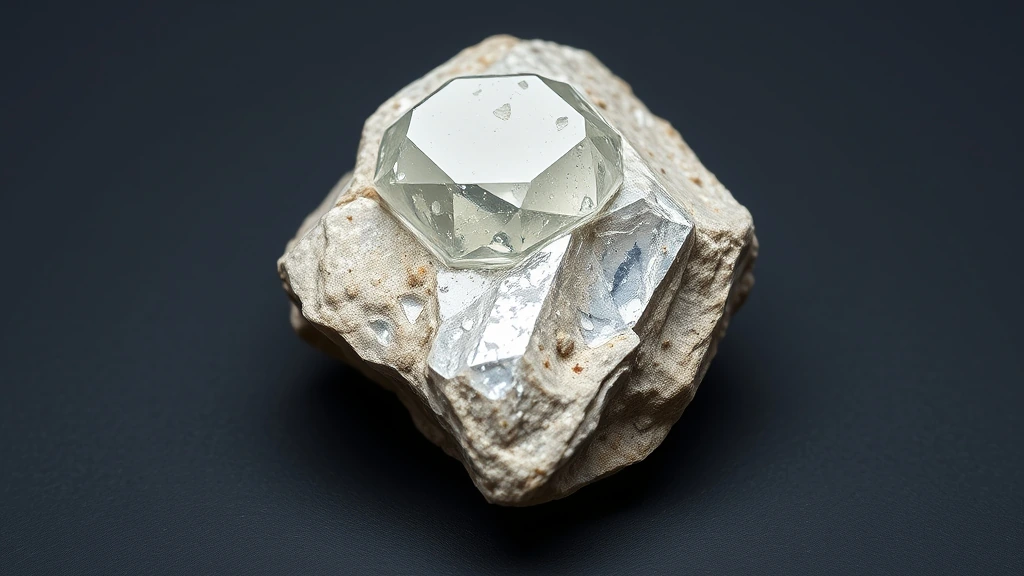
Diamonds form deep within the Earth’s mantle under pressures exceeding 45 kbar and temperatures of 900–1,300 °C. They belong to the Natural Mineral / Crystal group and are classified as a cubic crystal system mineral, crystallizing in the isometric lattice. Their extraordinary durability and optical brilliance have made them the benchmark gemstone in both industry and jewelry.
What is Diamond Gemstone? Geological Overview & Definition
Diamond is the mineralogical term for the crystalline form of carbon that occurs naturally in kimberlite and lamproite pipes. Its formation requires ultra‑high pressure conditions, which are later brought to the surface by volcanic eruptions, preserving the pristine crystal lattice.
In gemology, “diamond” refers to both the raw mineral and the cut stone used in adornments. The gemstone’s color spectrum is governed by trace impurities and structural defects, while its unrivaled hardness secures its status as the premier gemstone for cutting and industrial applications.
Diamond Gemstone Chemical Composition & Crystallographic Properties
Diamonds crystallize in the cubic crystal system, specifically the face‑centered cubic (fcc) lattice where each carbon atom is tetrahedrally bonded to four neighbors. This arrangement yields a tightly packed structure responsible for the mineral’s exceptional hardness and high density.
The ideal chemical formula is simply C, but minute amounts of nitrogen, boron, or hydrogen can substitute for carbon, creating cation substitution that produces yellow, blue, or pink hues. These impurity atoms occupy specific lattice sites, forming chromophore color centers that absorb particular wavelengths of light.
Diamonds are chemically inert to most acids; however, they can be oxidized at temperatures above 700 °C in the presence of oxygen. Their thermal conductivity is among the highest of any natural material, allowing rapid heat dissipation, a property exploited in electronic heat‑sink applications.
The refractive index of diamond is 2.418 at 500 nm, contributing to its characteristic brilliance and fire. Combined with its cubic symmetry, this high index produces strong dispersion, making diamond uniquely sparkling among gemstones.
| Property | Specification |
|---|---|
| Mineral Group | Natural Mineral / Crystal |
| Chemical Formula | Carbon |
| Mohs Hardness | 10 (defining mineral) |
| Crystal System | Cubic crystal system |
| Specific Gravity (Density) | 3.51 – 3.53 |
| Refractive Index | 2.418 (at 500 nm) |
| Color & Optical Properties | Natural Diamond Gemstone color spectrum and optical dispersion |
| Primary Mining Localities | Global primary localities |
| Water & Chemical Resistance | High (Safe for gentle water washing) |
| Chakra Alignment (Traditional) | Crown Chakra, Third Eye Chakra |
| Zodiac Affinity (Traditional) | Leo, Virgo |
| Symbolic Meaning (Traditional) | Clarity of mind, spiritual awakening, and inner strength |
Diamond Gemstone Varieties & Color Spectrum
White (Colorless) Diamond
Formed deep in the mantle at 140–190 km depth, colorless diamonds crystallize in the cubic system under high pressure‑high temperature (HPHT) conditions. Their hallmark is a lack of visible hue, high refractive index (2.418) and exceptional dispersion, which creates the famed “fire.” Inclusions are typically metallic iron‑nickel sulfides, and the stones are the most common yet still prized for their optical purity.
Yellow (Canary) Diamond
Yellow diamonds acquire their hue from nitrogen impurity clusters that absorb blue light, producing a warm golden tone. They develop in kimberlite pipes and often contain plate‑like nitrogen‑related inclusions visible under 10× magnification. High‑grade canary stones are rarer than colorless ones, and their market value rises sharply with intensity, especially for “fancy vivid” grades.
Blue (Fancy) Diamond
The iconic blue color stems from boron atoms substituting carbon in the lattice, a trace element that also renders the stone electrically conductive. Blue diamonds form in ancient, stable mantle domains and are frequently hosted in kimberlite or lamproite deposits. Their inclusions include silicate mineral fragments and rare metallic phases, making fine specimens exceptionally scarce and commanding premium prices.
Pink (Fancy) Diamond
Pink coloration is linked to plastic deformation of the crystal lattice during rapid ascent, creating lattice defects that selectively absorb green wavelengths. These diamonds are typically sourced from the Argyle mine in Australia, where high‑pressure shear zones produce the characteristic hue. Inclusions often consist of graphite lamellae and healed fractures, and the rarity of vivid pinks places them among the most coveted gemstones.
Green (Fancy) Diamond
Natural green diamonds acquire their hue through radiation‑induced vacancies that absorb red light, a process that can occur in the mantle or near the surface after exposure to uranium‑rich rocks. They are most famously mined in the Congo and Australia, where the crystals may display internal radiation tracks as inclusions. Because the color is usually uneven and surface‑only, high‑quality green stones are extremely rare and highly valued.
Brown (Champagne) Diamond
Brown diamonds owe their hue to lattice distortions and plastic deformation, often enhanced by irradiation over geological time. They form in the same deep‑mantle environments as other varieties but are abundant in the South African and Russian mining districts. Inclusions typically include metallic sulfides and silicate fragments, and while more common than other fancy colors, high‑clarity brown diamonds with uniform tone remain prized by collectors.
Where is Diamond Gemstone Found? Geological Mining & Extraction
Diamonds are primarily hosted in kimberlite and lamproite pipes, vertical volcanic conduits that transport mantle material to the surface. These pipes intersect ancient cratonic lithosphere, where high pressure stabilizes the carbon lattice; secondary alluvial deposits also concentrate diamonds through river and marine processes.
The world’s leading extraction regions include South Africa’s Witwatersrand Basin, Russia’s Yakutia (Siberian) deposits, Canada’s Northwest Territories, and the historic Argyle mine in Australia. Modern mining combines open‑pit and underground techniques, followed by rigorous X‑ray sorting and dense media separation to isolate gem‑quality stones from host rock.
Historical Significance & Cultural Lore of Diamond Gemstone
Ancient Indian texts describe diamonds as “the tears of the gods,” and archaeological finds from the Kashmir region show polished stones used in royal regalia as early as 4 thousand BCE. The Romans prized diamonds for their perceived invulnerability, embedding them in signet rings that symbolized power and eternal fidelity.
In medieval Europe, diamonds were believed to possess protective properties, warding off poison and enhancing clarity of thought; alchemists catalogued them alongside the four classical elements. Asian cultures, especially in China and Japan, regarded diamonds as symbols of purity and incorruptibility, incorporating them into Buddhist stupas and imperial jewelry, a reverence that endures in modern myth and marketing.
Modern Uses & Jewelry Applications of Diamond Gemstone
Diamonds are expertly lapidary‑cut to maximize brilliance, with the brilliant‑cut, princess, and emerald styles dominating contemporary rings and high‑end watches. Faceted stones dominate fine jewelry, while cabochon‑cut diamonds find a niche in Art‑Deco pendants and vintage brooches. Ornamental carving also produces intricate miniature sculptures for collectors.
- Brilliant‑cut diamonds for engagement rings and high‑visibility pieces
- Princess and emerald cuts for modern, angular designs
- Cabochon diamonds in vintage and Art‑Deco settings
- Carved diamond miniatures for ornamental art and luxury accessories
Carat, Quality Grades & Value Factors of Diamond
According to historical traditions and metaphysical lore, diamonds symbolize purity, invincibility, and the unbreakable spirit of the wearer. They are believed to amplify inner light, fostering clarity of thought and strengthening self‑confidence in challenging situations. The stone’s radiant energy is said to align the heart’s intentions with the material world, encouraging steadfastness and love.
Which Chakra and Zodiac Signs Align with Diamond Gemstone?
Diamond resonates most strongly with the Root Chakra, grounding ambition and providing a stable foundation for personal power. Simultaneously, it activates the Heart Chakra, enhancing emotional openness and compassionate connections. This dual‑chakra influence supports both security and love in daily life.
In astrology, diamond is the birthstone for Taurus, Gemini, and Leo. Taurus benefits from the stone’s stabilizing force, Gemini enjoys its mental clarity, and Leo experiences amplified charisma and leadership. These three signs share a common affinity for the diamond’s brilliance and durability, reinforcing their innate strengths.
How to Identify Real vs. Fake Diamond Gemstone
Artificial imitations such as cubic zirconia, synthetic glass, and dyed quartz often mimic a diamond’s sparkle but lack its physical properties. Synthetic diamonds, while chemically identical, can be distinguished by growth patterns and inclusions. Understanding these differences helps collectors and buyers avoid costly mistakes.
Practical At-Home Authenticity Tests
- Temperature Test (Thermal Feel): Real diamonds feel cold to the touch and retain that chill, whereas glassy imitations warm quickly in the hand.
- Specific Gravity & Weight Test: Using a precise scale, a genuine diamond’s density (~3.52 g/cm³) makes it noticeably heavier than a similarly sized cubic zirconia.
- Scratch & Hardness Test (Mohs Comparison): A diamond (Mohs 10) will not be scratched by a steel file, while most simulants will show surface marks.
- Microscopic & Loupe Inspection (Internal Inclusions): Under 10× magnification, natural diamonds reveal characteristic feather‑like or crystal inclusions, whereas synthetics display uniform growth lines and glass shows no inclusions.
Diamond Gemstone Valuation Factors, Grading & Pricing
Color Saturation remains the most decisive market driver. A vivid, evenly distributed hue—especially in the coveted D‑F range—adds premium value, while any undertone or zoning reduces price. Optical clarity and luster, measured by light return and fire, amplify the perceived richness of the color, creating a synergistic effect that buyers reward handsomely.
Carat Weight directly influences price per carat, but symmetry and inclusions moderate the curve. Well‑proportioned facets that reflect light uniformly enhance brilliance, allowing a slightly smaller stone to command a higher per‑carat rate than a larger, poorly cut counterpart. Matrix‑bound inclusions that are invisible to the naked eye are tolerated, whereas visible crystals or fractures cause sharp discounts.
Geographical Provenance Premium can add 5‑15 % to a diamond’s wholesale price when sourced from renowned mines such as those in South Africa, Russia, or Canada. Retail trends show a steady rise in demand for ethically mined stones, pushing certified provenance into a pricing lever. Market analysts also note that macro‑economic shifts—particularly fluctuations in luxury spending—affect both wholesale and retail valuations.
How to Clean and Care for Diamond Gemstone
Use warm soapy water and a soft cloth to gently remove surface grime; this method respects the diamond’s extreme hardness while preserving its natural luster. Rinse the stone with lukewarm water and pat dry with a lint‑free microfiber towel, ensuring no residue remains. Avoid ultrasonic cleaners entirely, as the rapid vibrations can induce micro‑fractures in the crystal lattice, compromising structural integrity.
Cleansing and Recharging Diamond Gemstone (Energetic Care)
Because diamond is chemically inert, dry energetic cleansing is safest. Pass the stone through a thin veil of smoke smudging—such as sage or palo santo—allowing the aromatic vapor to clear stagnant energy without introducing moisture.
Expose the diamond to moonlight or place it on a selenite plate overnight; the gentle lunar photons and the charged selenite surface replenish vibrational clarity while leaving the mineral untouched. This non‑physical approach respects both the gem’s physical resilience and its metaphysical traditions.
Frequently Asked Questions About Diamond Gemstone
Is diamond water‑resistant enough for everyday wear?
Yes, diamonds have high water resistance and can be gently washed. In practice, a soft cloth and warm, mildly soapy water safely remove oils and grime without harming the stone. Because diamonds are chemically inert carbon, routine exposure to water does not affect their brilliance or structural integrity.
Can I clean my diamond with an ultrasonic cleaner?
No, avoid ultrasonic cleaners; use warm soapy water and a soft cloth instead. Ultrasonic vibrations can create micro‑fractures in the crystal lattice, especially in inclusions or delicate settings. Gentle hand cleaning preserves the diamond’s hardness (10 on Mohs) and maintains its flawless appearance.
Which zodiac signs are traditionally associated with diamonds?
Diamonds are linked to Taurus, Gemini, and Leo. These signs are believed to benefit from the stone’s luminous energy, enhancing confidence and clarity. In astrological lore, the diamond’s brilliance mirrors the assertive and communicative traits of these fire and earth signs.
What chakras does diamond resonate with?
Diamond aligns with the Root Chakra and the Heart Chakra. The grounding vibration of the Root supports stability, while the Heart connection amplifies love and compassion. This dual resonance is thought to balance physical security with emotional openness, reflecting the stone’s inner luminescence.
How does diamond’s refractive index affect its sparkle?
Diamond’s refractive index is 2.418 at 500 nm, giving it exceptional brilliance. Light entering the stone bends sharply, creating intense dispersion and fire. This optical property, combined with its perfect cubic crystal system, makes diamonds uniquely radiant among gemstones.
Is diamond safe for everyday activities like cooking or gardening?
Yes, diamond’s Mohs hardness of 10 makes it virtually scratch‑proof for daily tasks. While it resists abrasion, extreme impacts can still cause chipping, so avoid hard blows. Routine exposure to oils, soils, or kitchen steam poses no risk to the stone’s integrity.
Does diamond’s density influence its feel on the finger?
Diamond has a relatively high density, giving it a solid, weighty feel. This density contributes to a sensation of permanence and luxury when set in jewelry. Despite its heft, the stone’s cubic lattice distributes stress evenly, reducing the chance of breakage under normal wear.
How can I tell if a diamond is genuine or a synthetic look‑alike?
Authentic diamonds exhibit characteristic fluorescence, thermal conductivity, and inclusion patterns under magnification. Certified labs use instruments like a diamond tester that measures heat flow, while a trained gemologist examines growth structures invisible in simulants. These scientific cues reliably differentiate natural diamonds from cubic zirconia or moissanite.