
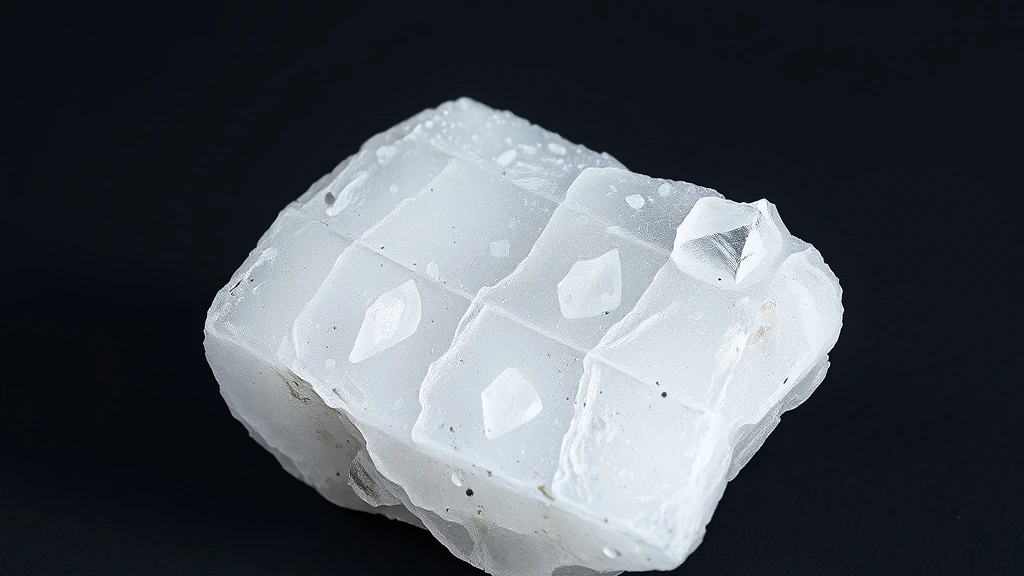
Selenite belongs to the sulfate mineral family, specifically the gypsum group, which crystallizes in the monoclinic system as prismatic to tabular crystals. Formed in evaporitic settings, it precipitates from calcium‑rich brines under low‑temperature conditions, often filling cavities or coating sedimentary layers as massive, fibrous sheets. Its translucency and ethereal glow have made it a favored material for both decorative art and metaphysical practices worldwide.
What is Selenite? Geological Overview & Definition
Selenite is the clear, glass‑like variety of gypsum distinguished by its monoclinic crystal symmetry and smooth, often sheet‑like habit. It typically occurs in evaporite basins, where the slow evaporation of seawater concentrates calcium and sulfate ions, allowing the mineral to precipitate as large, flexible plates. Selenite’s calming, translucent sheets echo the gentle, sky‑blue glow of Angelite, a stone equally prized for its soothing, celestial energy.
In the field, selenite can be identified by its perfect cleavage on {010}, producing thin, flexible sheets that readily split into translucent laminae. Its low hardness and specific gravity (2.31–2.33 g/cm³) differentiate it from other gypsum varieties such as satin‑white or fibrous “sulfur” gypsum. In comparative mineralogical collections, practitioners and geologists frequently study Blue Halite alongside this crystal to appreciate their subtle energetic and structural differences.
Selenite Chemical Composition & Crystallographic Properties
The ideal chemical composition of selenite is CaSO₄·2H₂O, a calcium sulfate dihydrate that incorporates two water molecules into its crystal lattice. These water molecules are held in well‑defined sites, contributing to the mineral’s softness and its ability to dehydrate to anhydrite when heated above 150 °C.
Selenite crystallizes in the monoclinic (prismatic/tabular) system, with lattice parameters that produce elongated, flattened crystals. The structure consists of layers of SO₄ tetrahedra linked to Ca²⁺ polyhedra, creating a framework that accommodates minor cation substitution, such as Mg²⁺ or Sr²⁺, without altering the overall symmetry. In comparative mineralogical collections, practitioners and geologists frequently study Blue Barite alongside this crystal to appreciate their subtle energetic and structural differences.
Because gypsum is a sulfate, it reacts readily with dilute acids, effervescing as the calcium sulfate dissolves and releases CO₂ from any carbonate impurities. This acid sensitivity is a diagnostic test in the laboratory, confirming the mineral’s identity when a fizz is observed.
Color in selenite is generally absent, but trace chromophore centers—often iron or manganese impurities—can impart faint hues ranging from pale yellow to pink. These color centers are weakly absorbed in the visible spectrum, preserving the stone’s characteristic translucency and allowing it to transmit light with a soft, ethereal glow.
Thermally, selenite loses its structural water in a stepwise dehydration process, first forming hemihydrite (bassanite) and ultimately converting to anhydrite at higher temperatures. This transformation is reversible under humid conditions, a property exploited in the restoration of historic plasterwork where controlled rehydration restores the original gypsum texture.
| Property | Specification |
|---|---|
| Mineral Group | Sulfates (Gypsum Family) |
| Chemical Formula | CaSO₄·2H₂O (Calcium Sulfate Dihydrate) |
| Mohs Hardness | 2.0 |
| Crystal System | Monoclinic (Prismatic / tabular crystals) |
| Specific Gravity (Density) | 2.31 – 2.33 |
| Refractive Index | 1.520 – 1.530 |
| Color & Optical Properties | Natural Selenite color spectrum and optical dispersion |
| Primary Mining Localities | Mexico (Naica), Morocco, USA, Spain |
| Water & Chemical Resistance | EXTREMELY SENSITIVE: Water Soluble! (Never submerge in water; Mohs 2) |
| Chakra Alignment (Traditional) | Crown Chakra and Soul Star Chakra |
| Zodiac Affinity (Traditional) | Taurus, Cancer, Pisces |
| Symbolic Meaning (Traditional) | Aura purification, higher vibrational clarity, and serene light |
Selenite Varieties & Color Spectrum
Clear Sheet Selenite
Formed in evaporitic basins where calcium sulfate precipitates from supersaturated brines, clear sheet selenite displays a glassy, translucent appearance. Thin, flexibly layered plates often contain microscopic fluid inclusions that scatter light, giving a subtle pearlescent sheen. While abundant in Morocco and the United States, flawless large sheets are relatively rare and prized by collectors.
Blue‑Gray Selenite (Marlite)
Marlite develops where trace amounts of iron and manganese substitute into the crystal lattice, imparting a delicate blue‑gray hue. It typically occurs as massive nodules within the gypsum beds of the Naica Mine, Mexico, where hydrothermal fluids promote fine‑grained fibrous textures. The coloration fades with exposure, making well‑preserved specimens highly sought after.
Pink‑Tinted Selenite (Rose Gypsum)
In arid regions of Spain and Iran, minute quantities of copper and organic matter create a soft pink tint in otherwise clear gypsum. The mineral forms as thin, flexible sheets that often exhibit curved growth bands visible under magnification. Pink‑tinged selenite is uncommon, and its subtle hue commands premium prices in the ornamental market.
Black Selenite (Gypsum Marble)
Black selenite arises from extensive carbonaceous inclusions and occasional graphite intergrowths, producing an opaque, deep‑gray to black appearance. It is typically mined from the massive gypsum deposits of the United Arab Emirates, where high‑pressure burial conditions facilitate the incorporation of organic debris. Due to its rarity and striking contrast, black selenite is a focal point in contemporary crystal art.
Orange‑Brown Selenite (Alabaster)
Alabaster forms when iron oxides and hydrocarbon residues stain the gypsum, yielding warm orange‑brown tones. These massive, fine‑grained blocks are quarried in the historic mines of Italy’s Carrara region, where centuries‑old extraction techniques preserve the stone’s smooth, satin finish. High‑quality alabaster is limited, making it a luxury material for sculpture and architecture.
Green‑Veined Selenite (Verdigris Gypsum)
Rare green veining appears when copper sulfide fluids percolate through gypsum layers, leaving delicate emerald‑like streaks. This variety is documented in the Taman Peninsula of Russia, where tectonic uplift exposes the mineral to oxidizing conditions. The striking veining and limited geographic occurrence render green‑veined selenite a collector’s gem.
Where is Selenite Found? Geological Mining & Extraction
Selenite typically occurs in evaporite sequences where thick gypsum beds overlay limestone or shale, often within arid basins such as the Sahara, the Great Basin of the United States, and the Arabian Peninsula. The mineral crystallizes in low‑temperature, high‑evaporation environments, producing the characteristic prismatic and tabular habits that define the monoclinic system.
Commercial extraction focuses on open‑pit mining of massive gypsum deposits in Morocco, Mexico’s Naica region, and the United Arab Emirates, where hydraulic splitting and careful shearing preserve the delicate sheets. After removal, the raw selenite is washed, sorted by translucency, and cut into slabs or polished blocks for use in crystal healing, décor, and high‑end sculpture.
Historical Significance & Cultural Lore of Selenite
Ancient Egyptians fashioned clear selenite into scarabs, amulets, and funerary inlays, believing the stone channeled lunar energy and protected the dead. In Mesopotamia, tablets of gypsum were inscribed with cuneiform, and the material’s softness made it ideal for early architectural plaster and ritual vessels.
In the classical world, Greek philosophers such as Theophrastus described selenite’s “soft glow,” linking it to the moon goddess Selene; medieval European alchemists prized it for aura purification and as a conduit for higher vibrational clarity. Across the Silk Road, traders carried blue‑gray selenite as a talisman for safe voyages, embedding the stone in a tapestry of myth that persists in modern crystal healing practices.
Modern Uses & Jewelry Applications of Selenite
Selenite’s translucency and low hardness make it a favorite for delicate lapidary work, though it demands careful handling to avoid fracture. Artisans often shape it into cabochon or shallow faceted pieces that showcase its soft glow, while larger slabs are carved into ornamental panels for interior design. Its ethereal appearance lends itself to both contemporary and spiritual jewelry collections.
- Cabochon pendants and earrings highlighting the stone’s milky sheen
- Shallow facets on rings that accentuate light play without stressing the crystal
- Hand‑carved wall hangings, lamp bases, and decorative bowls for ambient lighting
Metaphysical Properties & Traditional Meaning of Selenite
According to historical traditions and metaphysical lore, selenite is revered as a conduit for aura purification and the transmission of higher‑vibrational energy. It is believed to calm turbulent emotions, fostering a sense of inner serenity and mental clarity that supports meditation and intuitive work. Practitioners also attribute to it the ability to clear stagnant energy fields, promoting a gentle, luminous atmosphere in living spaces.
Which Chakra and Zodiac Signs Align with Selenite?
Selenite resonates most strongly with the Crown Chakra, facilitating connection to universal consciousness and spiritual insight. It also aligns with the Soul Star Chakra, a subtle energy center above the crown that amplifies soul purpose and divine guidance. Wearers often report heightened intuition and a feeling of lightness when the stone is placed near these chakras.
In astrology, selenite is traditionally linked to the signs Taurus, Cancer, and Pisces. These water‑earth and water‑sign energies are said to benefit from selenite’s calming influence, supporting emotional stability for Taurus, nurturing sensitivity for Cancer, and enhancing the dreamy imagination of Pisces.
How to Identify Real vs. Fake Selenite
Artificial imitations of selenite include clear synthetic glass, acrylic, and dyed gypsum that mimic its milky translucency but lack the stone’s characteristic softness and crystal habit. These substitutes often feel heavier, exhibit a uniform clarity, or display surface coatings that differ from natural selenite’s subtle internal striations. Recognizing these differences helps collectors avoid costly misidentifications.
Practical At-Home Authenticity Tests
- Temperature Test (Thermal Feel): Natural selenite feels cool to the touch and retains that coolness longer than glass or acrylic, which quickly warm to skin temperature.
- Specific Gravity & Weight Test: With a density of 2.31‑2.33 g/cm³, genuine selenite feels lighter than glass of similar size, which typically measures around 2.5 g/cm³.
- Scratch & Hardness Test (Mohs Comparison): A fingernail or copper coin will easily scratch selenite (Mohs 2), whereas glass (Mohs 5‑6) remains unmarked.
- Microscopic & Loupe Inspection (Internal Inclusions): Under 10× magnification, natural selenite shows fine, parallel growth lines and occasional tiny bubbles, while synthetic glass appears uniformly clear with no such textural features.
Selenite Valuation Factors, Grading & Pricing
Color saturation is the foremost market driver for selenite, with vivid translucency and a bright, inner glow commanding premium prices. Specimens that display a uniform, luminous sheen without clouding are prized by collectors and metaphysical retailers alike. Even subtle variations in hue can shift valuation by several percent in the wholesale arena.
Crystal size and weight, expressed in grams, dominate pricing structures, especially when comparing raw slabs to meticulously tumbled pieces. Larger, heftier shards that retain a flawless surface polish fetch higher per‑gram rates, while smaller, fragmented pieces are priced modestly. Natural matrix inclusions such as sand or clay can either enhance a rustic aesthetic or diminish value, depending on buyer preference.
Ethical sourcing and locality premium increasingly influence selenite’s market, with buyers favoring stones harvested from responsibly managed quarries in regions like Morocco or the United States. Provenance documentation that confirms minimal environmental impact and fair labor practices adds a tangible surcharge. Collectors often pay extra for pieces linked to historic mines or culturally significant sites, reflecting a blend of ethical and aesthetic considerations.
How to Clean and Care for Selenite
Never expose selenite to water or soak it in any liquid, as gypsum dissolves and loses its silky luster; the mineral’s Mohs hardness of 2 makes it especially vulnerable. Ultrasonic cleaners are strictly forbidden because the vibrations can fracture the delicate crystal lattice. The safest method is to gently dust the specimen with a completely dry, soft microfiber cloth or a camel‑hair brush, removing surface debris without abrasion. Store the stone in a low‑humidity environment, ideally within a sealed display case or a breathable fabric pouch, to prevent moisture absorption.
Cleansing and Recharging Selenite (Energetic Care)
For energetic maintenance, place the selenite on a dedicated selenite charging slab or a clean, dry wooden surface and allow it to rest under gentle moonlight for several hours; the subtle lunar energy is believed to refresh its vibrational field without heat. Herbal smudging with sage or cedar can also be employed, moving the smoke across the stone’s surface while ensuring the material remains dry and unaltered.
Alternatively, arrange the selenite in a quiet, undisturbed corner of a meditation space, allowing ambient room energy to circulate around it for a full day. This passive exposure helps clear any accumulated energetic residue while preserving the crystal’s structural integrity, aligning with both scientific caution and holistic practice.
Frequently Asked Questions About Selenite
Can I wear selenite jewelry in the shower?
Absolutely not, as selenite is water-soluble and will dissolve upon contact with liquid. The mineral’s Mohs hardness of 2.0 makes it highly vulnerable to moisture damage. Submerging it in shower water causes the crystal structure to break down rapidly. You must keep selenite completely dry to preserve its integrity.
How do I clean my selenite crystal safely?
Use only a dry, soft microfiber cloth to gently dust the surface. Because gypsum is water-soluble, you must never submerge it or use liquid cleaners. Ultrasonic cleaners are strictly forbidden as they cause irreversible damage. Simply wipe away dust with a dry cloth to maintain its silky luster without risk.
Is selenite safe to expose to rain or humidity?
No, prolonged exposure to rain or high humidity will degrade the crystal’s structure. The calcium sulfate dihydrate composition reacts with moisture, causing surface erosion and loss of translucency. Keep selenite stored in a dry environment away from windows. Avoid placing it in bathrooms or kitchens where steam accumulates.
Which zodiac signs are compatible with selenite?
Selenite resonates most strongly with Taurus, Cancer, and Pisces. These water and earth signs benefit from its aura purification properties. The stone’s gentle energy supports emotional balance for these individuals. It helps clear mental fog and promotes higher vibrational clarity in their daily lives.
Which chakras does selenite activate or balance?
Selenite primarily aligns with the Crown Chakra and Soul Star Chakra. It facilitates serene light and spiritual connection through these energy centers. The stone does not target lower chakras like the root or sacral. Its high-frequency vibration supports mental clarity and intuitive awareness exclusively.
Can I use an ultrasonic cleaner on selenite?
Never place selenite in an ultrasonic cleaner, as the vibration and water will destroy it. The monoclinic crystal system is fragile and susceptible to liquid immersion. Ultrasonic waves accelerate the dissolution of the gypsum structure. Always clean selenite manually with a dry, soft cloth to ensure longevity.
Why does my selenite look cloudy or dull?
Cloudiness often results from moisture exposure or physical abrasion due to its low hardness. Selenite has a Mohs hardness of 2.0, making it prone to scratching. If it was exposed to humidity, the surface may have eroded. Store it in a dry, padded pouch to prevent surface degradation and maintain clarity.
What is the chemical composition of selenite?
Selenite is composed of calcium sulfate dihydrate, with the formula CaSO₄·2H₂O. This monoclinic mineral features a refractive index between 1.520 and 1.530. Its density ranges from 2.31 to 2.33 g/cm³. Understanding this chemistry explains its water solubility and delicate physical properties.