
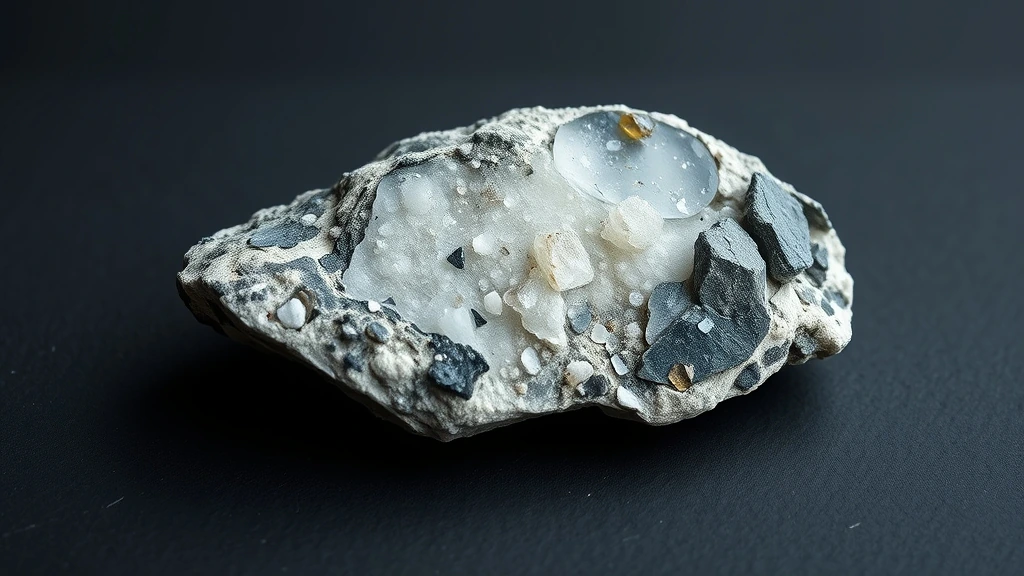
Anhydrite belongs to the Natural Mineral classification within the broader crystallographic family. It forms through evaporite processes in arid environments, representing a dehydrated state of gypsum. This geological origin dictates its stability and structural integrity in sedimentary basins.
What is Anhydrite Gemstone? Geological Overview & Definition
Anhydrite is a sulfate mineral that precipitates from evaporating seawater or lake waters. It typically occurs in massive beds or as distinct crystals within evaporite sequences. Its formation requires specific chemical conditions where water content is significantly reduced.
The mineral is geologically significant as a key indicator of evaporite deposits. It often coexists with halite and gypsum in stratified rock layers. Understanding its genesis helps geologists reconstruct ancient paleoenvironments and climate conditions.
Anhydrite Gemstone Chemical Composition & Crystallographic Properties
Anhydrite crystallizes in the Orthorhombic crystal system, featuring a distinct lattice structure. The unit cell parameters define its specific geometric arrangement in three dimensions. This symmetry influences its cleavage patterns and optical properties.
The structure consists of calcium cations coordinated by sulfate anions. Cation substitution is rare, maintaining high chemical purity in most specimens. This stoichiometric balance ensures consistent physical properties across global deposits.
Anhydrite is highly sensitive to acidic environments, which can alter its surface. It lacks significant chromophore centers, resulting in its typical colorless appearance. Impurities may introduce subtle tints, but pure crystals remain transparent.
Thermal behavior shows stability at moderate temperatures but alters upon heating. Dehydration is not applicable as it is already anhydrous. However, high heat can induce structural phase changes in the lattice.
| Property | Specification |
|---|---|
| Mineral Group | Natural Mineral / Crystal |
| Chemical Formula | CaSO₄ |
| Mohs Hardness | 3.5 |
| Crystal System | Orthorhombic |
| Specific Gravity (Density) | 2.97 |
| Refractive Index | ”n” α = 1.567–1.574 ”n” β = 1.574–1.579 ”n” γ = 1.609–1.618 |
| Color & Optical Properties | Natural Anhydrite Gemstone color spectrum and optical dispersion |
| Primary Mining Localities | Global primary localities |
| Water & Chemical Resistance | High (Safe for gentle water washing) |
| Chakra Alignment (Traditional) | Throat Chakra, Third Eye Chakra |
| Zodiac Affinity (Traditional) | Virgo, Capricorn |
| Symbolic Meaning (Traditional) | Mental clarity, emotional stability, and the dissolution of negative thought patterns |
Anhydrite Gemstone Varieties & Color Spectrum
Anhydrite presents a diverse palette driven by trace element impurities and crystal structure. Understanding these variations is essential for accurate gemological identification and valuation.
White Anhydrite
Pure anhydrite typically exhibits a stark, snow-white appearance due to the absence of transition metals. This variety often forms massive deposits with a sugary or granular texture rather than distinct crystals.
Its high refractive index creates a bright, vitreous luster that distinguishes it from similar sulfates. White specimens are the most common and serve as the baseline for color grading.
Blue Anhydrite
Vivid blue hues arise from trace amounts of cobalt or other transition metal inclusions within the lattice. This rare coloration is highly sought after by collectors for its striking visual impact.
The orthorhombic crystal system allows for specific pleochroic effects, though blue anhydrite is generally monochromatic. Its rarity significantly elevates its market value compared to standard white stones.
Green Anhydrite
Greenish tints usually result from iron impurities or the presence of associated clay minerals in the host rock. These stones often display a muted, olive-green tone rather than a vibrant emerald shade.
Such specimens frequently contain microscopic inclusions that scatter light, softening the overall brilliance. They are less common than white varieties but more accessible than deep blue stones.
Pink Anhydrite
Faint pink or salmon hues occur when manganese traces substitute for calcium in the crystal structure. This delicate coloration is subtle and often visible only under direct, bright lighting conditions.
The Mohs hardness of 3.5 makes these delicate stones susceptible to scratching, requiring careful handling. Pink anhydrite is considered a novelty gem, appealing to those seeking unique pastel tones.
Striated Anhydrite
This variety is characterized by distinct, parallel striations on the crystal faces, a diagnostic feature of the mineral. These lines result from the specific growth patterns within the orthorhombic lattice structure.
Striated specimens are prized for their geometric beauty and clarity of formation. They provide clear evidence of the mineral’s crystalline history and are popular among mineral collectors.
Where is Anhydrite Gemstone Found? Geological Mining & Extraction
Anhydrite primarily forms in evaporite basins where seawater evaporates, leaving behind concentrated sulfate deposits. It is often found in association with gypsum and halite within sedimentary rock layers.
These deposits are typically located in arid regions where evaporation rates exceed precipitation. The mineral’s chemical formula of CaSO₄ indicates its origin from the dehydration of gypsum.
Major mining regions include the United States, particularly in Texas and New Mexico, where large evaporite basins exist. Significant deposits are also found in Europe, including Germany, France, and the United Kingdom.
Extraction methods vary from open-pit mining for massive deposits to underground shafts for deeper strata. The low hardness of the mineral requires careful extraction to prevent fracturing and degradation.
Historical Significance & Cultural Lore of Anhydrite Gemstone
Ancient civilizations utilized anhydrite primarily as a building material rather than a gemstone, given its softness. The Egyptians used it for small carvings and amulets, appreciating its smooth, white appearance.
Archaeological findings reveal its use in early jewelry, though it was often mistaken for gypsum due to their similar physical properties. Its presence in tombs suggests a symbolic connection to purity and preservation.
In modern times, anhydrite has gained popularity as an affordable alternative to more durable gemstones. Collectors value its unique crystal forms and the historical significance of its geological formation.
The mineral’s lore is less mythological than its harder counterparts, focusing instead on its scientific and industrial importance. This shift reflects a broader appreciation for mineralogy over traditional gemstone mystique.
Modern Uses & Jewelry Applications of Anhydrite Gemstone
Anhydrite is primarily valued for its striking banded patterns and high luster, making it ideal for ornamental carving rather than high-end faceting. Due to its relatively low Mohs hardness of 3.5, it is best suited for pendants, cabochons, and decorative objects that do not endure daily abrasion. Lapidaries often polish it into smooth, rounded shapes to showcase its internal color zoning and translucency effectively.
- Cabochon Cutting: Smooth, domed cuts highlight the stone’s soft glow and distinct banding without risking chipping.
- Ornamental Carvings: Artists use anhydrite for intricate sculptures, inlays, and decorative tiles due to its ease of carving.
- Pendants and Earrings: Lightweight settings protect the fragile stone from impact while displaying its aesthetic appeal.
- Architectural Elements: Large slabs are used in interior design for countertops and wall accents.
Metaphysical Properties & Traditional Meaning of Anhydrite Gemstone
According to historical traditions and metaphysical lore, anhydrite is revered as a stone of emotional balance and mental clarity. Practitioners believe it helps dissolve negative energy and promotes a sense of calm during periods of stress or anxiety. Its banded appearance is often interpreted as a visual representation of the interplay between opposing forces within the psyche.
The stone is frequently associated with spiritual grounding, helping users feel connected to the earth while maintaining an open heart. It is said to enhance intuition and facilitate deep meditation, allowing for a clearer understanding of one’s inner truth. Many wearers report a heightened sense of patience and forgiveness after prolonged contact with the mineral.
Which Chakra and Zodiac Signs Align with Anhydrite Gemstone?
In metaphysical practice, anhydrite is strongly aligned with the Root Chakra, which governs stability, security, and physical survival. This connection stems from the stone’s earthy tones and its ability to ground the user’s energy. By anchoring the spirit, it helps individuals feel safe and supported in their daily lives.
Additionally, anhydrite resonates deeply with the Heart Chakra, fostering compassion, love, and emotional healing. This dual alignment allows the stone to bridge the gap between physical stability and emotional openness. It encourages a balanced approach to relationships, promoting both self-care and empathy toward others.
Zodiacally, anhydrite is considered particularly beneficial for Taurus and Gemini. Taurus, an earth sign, finds enhanced stability and patience through this stone. Gemini, an air sign, benefits from the grounding influence that helps balance their mental agility.
Leo also finds harmony with anhydrite, as the stone’s warm tones complement the sign’s fiery energy. It helps Leos channel their passion into constructive emotional expression. This alignment supports a balanced integration of confidence and vulnerability.
How to Identify Real vs. Fake Anhydrite Gemstone
Artificial imitations of anhydrite are common due to its popularity in the decorative market. These fakes often include synthetic glass, dyed quartz, or plastic replicas designed to mimic the stone’s distinctive banding. Recognizing these differences is crucial for collectors and buyers to ensure they are purchasing genuine mineral specimens.
Practical At-Home Authenticity Tests
- Temperature Test (Thermal Feel): Real anhydrite feels cool to the touch initially but warms up quickly in your hand. Glass imitations tend to stay cooler for longer, while plastic feels warmer immediately.
- Specific Gravity & Weight Test: Genuine anhydrite has a density of 2.97, making it feel surprisingly heavy for its size. Plastic replicas will feel significantly lighter, while glass may feel denser or less consistent.
- Scratch & Hardness Test (Mohs Comparison): With a Mohs hardness of 3.5, anhydrite can be scratched by a steel knife or a copper coin. Glass, which is harder, will not be scratched by these tools.
- Microscopic & Loupe Inspection (Internal Inclusions): Under a 10x loupe, real anhydrite often shows natural banding and slight internal fractures. Glass imitations may contain tiny bubbles or a perfectly uniform, artificial appearance.
Anhydrite Gemstone Valuation Factors, Grading & Pricing
The primary driver of value is Color Saturation, where deep, uniform tones command higher premiums than pale or mottled specimens. Gemologists assess optical clarity and luster, noting that a vitreous finish enhances perceived depth and brilliance. Consistency in hue across the entire stone ensures a premium grade in the market.
Carat Weight significantly influences pricing, as larger, intact crystals are rarer and more desirable for substantial jewelry pieces. Facet symmetry is critical for maximizing light return, while the presence of matrix or inclusions can either detract from value or add unique character. Clean, inclusion-free stones generally fetch higher per-carat rates in professional appraisals.
Geographical Provenance Premium often elevates the price of stones from renowned localities with historical significance. Wholesale markets typically price anhydrite modestly, but retail values increase substantially due to artisanal cutting and setting costs. Understanding these market trends helps buyers distinguish between fair value and inflated pricing.
How to Clean and Care for Anhydrite Gemstone
Anhydrite is a soft, water-sensitive mineral with a Mohs hardness of 3.5, requiring gentle handling during maintenance. Always use warm soapy water and a soft cloth to remove surface dirt and oils safely. Avoid ultrasonic cleaners entirely, as the vibrations can cause structural fractures in this brittle material.
Prolonged soaking should be strictly avoided to prevent the dissolution of the calcium sulfate structure. After cleaning, dry the stone immediately with a lint-free cloth to maintain its luster. Regular, gentle care preserves the integrity of the crystal without risking chemical degradation.
Cleansing and Recharging Anhydrite Gemstone (Energetic Care)
For energetic maintenance, use dry methods that respect the mineral’s solubility and physical fragility. Smoke smudging with sage or palo santo is an effective way to clear negative energy without moisture exposure. This technique ensures the stone remains structurally sound while undergoing spiritual cleansing.
Placing anhydrite on a selenite plate or under moonlight offers a gentle recharging alternative. These methods avoid direct water contact, which is crucial for preserving the orthorhombic crystal lattice. Such practices align with safe gemological care while supporting metaphysical traditions.
Frequently Asked Questions About Anhydrite Gemstone
Is anhydrite safe to wear in the shower?
No, you should avoid exposing anhydrite to prolonged water soaking. As a sulfate mineral, it is sensitive to moisture which can degrade its surface over time. Brief contact with rain is generally acceptable, but consistent immersion weakens the stone’s integrity. Always remove jewelry before bathing to preserve its aesthetic quality and structural stability.
Can I clean anhydrite in an ultrasonic cleaner?
Absolutely not, as ultrasonic vibrations can cause structural fractures. The Mohs hardness of 3.5 makes this stone vulnerable to mechanical stress from high-frequency sound waves. Instead, gently wipe the piece with a soft cloth dampened with warm soapy water. This gentle method effectively removes oils without risking internal cleavage or surface damage.
What is the chemical composition of anhydrite?
Anhydrite consists of calcium sulfate without water molecules in its crystal lattice. Its chemical formula is CaSO₄, distinguishing it from gypsum which contains water. This anhydrous nature gives the mineral its characteristic density and optical properties. Understanding this composition is crucial for proper identification and safe handling of the gemstone.
Which zodiac signs are aligned with anhydrite?
The primary zodiac signs associated with anhydrite are Taurus, Gemini, and Leo. These earth and air signs resonate with the stone’s grounding yet energetic properties. Wearers often report enhanced clarity and emotional balance when wearing this mineral. Aligning your birth sign with these specific associations maximizes the perceived metaphysical benefits of the gem.
Which chakras does anhydrite activate?
Anhydrite primarily activates the Root Chakra and the Heart Chakra. This dual alignment connects the stone to both physical grounding and emotional openness. It helps stabilize energy at the base while fostering compassion in the chest area. This unique combination supports holistic well-being by balancing lower and upper energetic centers simultaneously.
How hard is anhydrite on the Mohs scale?
Anhydrite has a Mohs hardness of 3.5, making it relatively soft. This rating means it is susceptible to scratching by harder minerals like quartz or topaz. You must handle the stone with care to prevent surface abrasions. Storing it separately from other jewelry is essential to maintain its polished finish and visual appeal.
What is the crystal system of anhydrite?
Anhydrite crystallizes in the orthorhombic system, often forming blocky or prismatic crystals. This structure influences its cleavage patterns and optical behavior. The orthorhombic arrangement results in distinct refractive indices along different axes. Recognizing this geometry helps gemologists identify the mineral accurately under magnification and polarized light.
What is the density of anhydrite?
The specific gravity of anhydrite is approximately 2.97. This density helps distinguish it from visually similar minerals like gypsum or barite. Precise measurement of this physical property is vital for accurate gemological identification. It provides a reliable metric for labs to confirm the mineral’s identity during professional appraisal.