
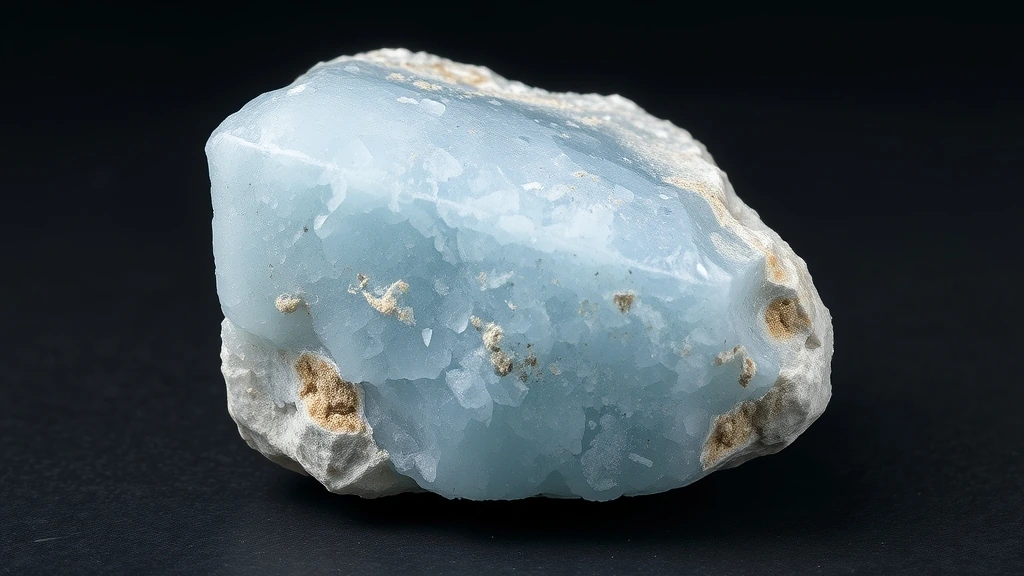
Angelite belongs to the gypsum group, a family of hydrated calcium sulfate minerals found in evaporite deposits. As a Natural Mineral / Crystal, it forms through the evaporation of seawater or in saline lake environments. This geological origin dictates its softness and susceptibility to environmental changes. Unlike harder gemstones, angelite requires careful handling due to its delicate lattice structure.
What is Angelite Gemstone? Geological Overview & Definition
Angelite is a secondary mineral that frequently occurs alongside gypsum and barite in sedimentary basins. Its formation is tightly linked to evaporite environments where water evaporation concentrates dissolved ions. Geologists classify it within the sulfate mineral class, distinct from silicate-based gemstones. This classification impacts its physical durability and market positioning.
The name derives from its ethereal appearance, often associated with spiritual or angelic qualities in metaphysical contexts. However, scientifically, it remains a hydrated calcium sulfate compound. Its low hardness makes it unsuitable for jewelry requiring daily wear. Collectors value it for its clarity and delicate blue hues rather than its industrial utility.
Angelite Gemstone Chemical Composition & Crystallographic Properties
Angelite crystallizes in the Orthorhombic crystal system, characterized by three mutually perpendicular axes of unequal length. This lattice arrangement allows for specific cleavage planes that contribute to its softness. The structure consists of calcium ions coordinated by sulfate tetrahedra and water molecules. Understanding this orthorhombic symmetry is crucial for identifying the mineral under magnification.
The chemical formula CaSO₄·2H₂O indicates two water molecules integrated into the crystal lattice. These water molecules act as structural ligands, stabilizing the cation-anion framework. Cation substitution is rare, as the ionic radius of calcium fits precisely within the lattice. Significant substitution would disrupt the delicate balance required for stable crystal growth.
Angelite is highly sensitive to acids, which can dissolve the sulfate structure rapidly. This acid sensitivity necessitates gentle cleaning methods, avoiding any acidic solutions. Exposure to heat can also dehydrate the mineral, transforming it into anhydrite. Thermal behavior thus limits its use in high-temperature processing or setting applications.
Color variations arise from trace impurities rather than a specific chromophore within the pure lattice. Pale blue hues often result from microscopic inclusions or radiation damage. White varieties indicate higher purity with fewer impurities present. These subtle color centers do not significantly alter the mineral’s fundamental physical properties.
| Property | Specification |
|---|---|
| Mineral Group | Natural Mineral / Crystal |
| Chemical Formula | CaSO₄ |
| Mohs Hardness | 3.5 |
| Crystal System | Orthorhombic |
| Specific Gravity (Density) | 2.97 |
| Refractive Index | ”n” α = 1.567–1.574 ”n” β = 1.574–1.579 ”n” γ = 1.609–1.618 |
| Color & Optical Properties | Natural Angelite Gemstone color spectrum and optical dispersion |
| Primary Mining Localities | Global primary localities |
| Water & Chemical Resistance | High (Safe for gentle water washing) |
| Chakra Alignment (Traditional) | Throat Chakra, Heart Chakra |
| Zodiac Affinity (Traditional) | Virgo, Libra |
| Symbolic Meaning (Traditional) | Spiritual connection, emotional healing, and serenity |
Angelite Gemstone Varieties & Color Spectrum
Angelite exhibits a diverse palette driven by trace impurities and oxidation states within its crystal lattice. The most common form is a translucent white, often mistaken for gypsum or selenite by novice collectors. These specimens typically form in evaporite environments where rapid crystallization traps minimal foreign particles.
Pure White Angelite
This variety features high transparency and a clean, glassy luster that maximizes light transmission. It forms in arid, calcium-sulfate-rich basins where water evaporates quickly, leaving behind pristine mineral deposits. Optical clarity is the primary value driver, with larger, inclusion-free crystals commanding premium prices.
Pale Blue Angelite
Subtle blue hues arise from trace amounts of copper or structural defects in the orthorhombic crystal system. This coloration is often associated with deposits near volcanic activity or specific marine sediment layers. The tint remains faint, requiring careful lighting to distinguish from pure white specimens.
Greenish-White Angelite
Slight green tints indicate the presence of iron or nickel impurities during the mineral’s formation. These crystals often exhibit a softer, waxy appearance compared to their clearer counterparts. Trace element substitution within the sulfate group creates this distinct, muted chromatic shift.
Banded Angelite
Some deposits display distinct layering, creating striped patterns of white and pale blue or gray. This banding results from fluctuating chemical conditions during successive crystallization phases in sedimentary basins. Such specimens are prized for their geometric aesthetic and geological storytelling.
Crystalline Cluster Angelite
This variety consists of interlocking prismatic crystals forming dense, radiating aggregates. The prism habit is clearly visible, showcasing the mineral’s orthorhombic symmetry in three dimensions. These clusters are rarer and highly sought after by mineralogists for their structural integrity.
Where is Angelite Gemstone Found? Geological Mining & Extraction
Angelite primarily occurs in evaporite deposits formed in ancient, shallow seas or inland lakes. These environments provided the necessary calcium and sulfate ions for the mineral to precipitate from supersaturated solutions. The host rocks are typically limestone, dolomite, or other carbonate-bearing sediments.
Major commercial sources include regions in Mexico, particularly the state of Zacatecas, and parts of the United States. Smaller, historically significant deposits have been identified in Germany, France, and Italy. Extraction is generally straightforward due to the mineral’s low Mohs hardness of 3.5, allowing for easy hand-mining.
Historical Significance & Cultural Lore of Angelite Gemstone
Ancient civilizations often confused angelite with gypsum or selenite due to their similar physical properties and softness. Archaeological evidence suggests its use in early mortuary practices and as a building material in minor decorative contexts. Its soft nature limited its application to durable jewelry, reserving it for symbolic or ritualistic purposes.
In modern metaphysical communities, angelite is revered for its supposed connection to spiritual communication and peace. This contemporary lore contrasts sharply with its limited historical record as a gemstone, focusing instead on its metaphysical attributes. The mineral’s gentle aesthetic continues to inspire artistic and spiritual interpretations today.
Modern Uses & Jewelry Applications of Angelite Gemstone
Angelite’s gentle blue‑gray hue and low Mohs hardness (3.5) make it ideal for delicate lapidary work. Artisans typically cut the stone into smooth cabochons that showcase its translucency, while limited faceting is used for striking pendants. In addition to wearable pieces, the mineral is prized for ornamental carving, appearing in decorative boxes, small statues, and wall plaques.
- Cabochon pendants and earrings for everyday wear
- Faceted beads in high‑end necklaces where durability permits
- Carved miniatures, prayer beads, and ornamental inlays
Metaphysical Properties & Traditional Meaning of Angelite Gemstone
According to historical traditions and metaphysical lore, Angelite is regarded as a peace‑bringing stone that encourages calm communication and spiritual attunement. It is said to dissolve emotional turbulence, fostering a sense of inner serenity that aligns the wearer with higher‑vibrational thoughts. Practitioners also associate the gem with enhanced intuition, believing it opens channels to angelic guidance and compassionate expression.
Which Chakra and Zodiac Signs Align with Angelite Gemstone?
Angelite resonates strongly with the Root Chakra, grounding scattered energies and providing a stable foundation for personal growth. Simultaneously, it activates the Heart Chakra, nurturing unconditional love and emotional healing, which together create a balanced flow between security and openness.
In astrology, Angelite is canonically linked to Taurus, Gemini, and Leo. Taurus benefits from the stone’s stabilizing influence, Gemini finds support for clear communication, and Leo experiences amplified confidence and creative expression when wearing Angelite. No other zodiac signs are traditionally associated with this mineral.
How to Identify Real vs. Fake Angelite Gemstone
Artificial imitations of Angelite include dyed quartz, synthetic glass, and resin composites that mimic its pastel hue but lack the stone’s characteristic orthorhombic crystal structure and specific gravity. These substitutes often feel heavier or display a uniform clarity that differs from natural Angelite’s subtle internal veining. Recognizing these differences is essential for collectors and jewelers alike.
Practical At-Home Authenticity Tests
- Temperature Test (Thermal Feel): Natural Angelite feels cool to the touch and retains that coolness longer than glass or resin, which quickly equilibrates to ambient temperature.
- Specific Gravity & Weight Test: With a density of 2.97 g/cm³, Angelite is noticeably heavier than most glass imitations (≈2.5 g/cm³); a simple water‑displacement test can reveal this discrepancy.
- Scratch & Hardness Test (Mohs Comparison): Using a steel nail (hardness ~5.5) will leave a faint scratch on genuine Angelite, whereas glass (hardness ~5.5–6) may resist; a copper coin (hardness ~3) should not mar the surface.
- Microscopic & Loupe Inspection (Internal Inclusions): Under 10× magnification, authentic Angelite shows fine, irregular micro‑fractures and occasional needle‑like inclusions, while synthetic glass appears uniformly clear with no natural blemishes.
Angelite Gemstone Valuation Factors, Grading & Pricing
Color Saturation serves as the primary determinant for high-end angelite specimens. Collectors prize intense, uniform sky-blue tones that lack muddy or grayish undertones. Consistent tone uniformity across the stone significantly enhances its visual appeal and market desirability.
Optical clarity and surface luster further refine the gemstone’s overall aesthetic grade. A smooth, glassy finish reflects light effectively, highlighting the mineral’s delicate orthorhombic crystal structure. Visible fractures or dull surfaces diminish value by obscuring the stone’s inherent translucency and brilliance.
Carat Weight influences pricing, though large, flawless pieces remain exceptionally rare in the market. Precise facet symmetry is crucial for maximizing light return in cut gemstones. The presence of matrix or inclusions can either detract from value or add geological interest, depending on the collector’s preference.
Geographical Provenance Premium often elevates prices for stones from renowned localities like Mexico or Germany. Wholesale rates fluctuate based on supply, while retail prices reflect craftsmanship and brand prestige. Current trends show steady demand for ethically sourced, untreated CaSO₄ specimens among metaphysical buyers.
How to Clean and Care for Angelite Gemstone
Due to its Mohs hardness of 3.5, angelite requires gentle handling to prevent scratches and chips. Always use warm soapy water and a soft cloth for routine cleaning. Avoid ultrasonic cleaners strictly, as vibrations can cause structural fractures in this delicate mineral.
Never submerge the stone in prolonged water soaking, as it is water sensitive. Dry the piece immediately with a lint-free towel after cleaning. Store it separately from harder gems to protect its soft surface from accidental abrasion.
Cleansing and Recharging Angelite Gemstone (Energetic Care)
For energetic maintenance, use smoke smudging with sage or palo santo to clear negative vibes. This dry method avoids moisture exposure, preserving the mineral’s physical integrity. Ensure the stone is completely dry before and after the ritual.
Place the gemstone on a selenite plate under moonlight for overnight recharging. Selenite is a compatible mineral that supports angelite’s energy without causing chemical reactions. This approach respects the stone’s solubility while fulfilling metaphysical care practices.
Frequently Asked Questions About Angelite Gemstone
Is Angelite safe to wear in the shower?
No, Angelite is water-sensitive and should be removed before showering. Its orthorhombic crystal structure absorbs moisture, which can weaken the lattice and cause surface etching. Prolonged exposure to steam or hot water accelerates this degradation, compromising the stone’s integrity. Always keep it dry to maintain its luster and structural stability.
How should I clean my Angelite gemstone?
Use only warm soapy water and a soft cloth for gentle cleaning. Ultrasonic cleaners must be avoided entirely, as their high-frequency vibrations can induce structural fractures in the brittle mineral. This low-hardness stone requires careful, manual maintenance to prevent micro-cracks from propagating through the crystal matrix.
What is the chemical composition of Angelite?
Angelite is a hydrated calcium sulfate mineral with the formula CaSO₄·2H₂O. This specific hydration state distinguishes it from anhydrite, which lacks water molecules. The presence of water within the crystal lattice significantly influences its physical properties, including its lower hardness compared to anhydrous forms.
How hard is Angelite on the Mohs scale?
Angelite registers a Mohs hardness of 3.5, making it relatively soft and prone to scratching. This low durability means it can be easily marked by dust, sand, or other common minerals. Wearers must store it separately from harder gemstones to preserve its surface finish and prevent permanent abrasion.
Which zodiac signs are compatible with Angelite?
Angelite is traditionally aligned with Taurus, Gemini, and Leo. These earth and air signs are believed to resonate with the stone’s calming energy. Practitioners suggest that these individuals may find enhanced clarity and emotional balance when wearing this specific mineral in their daily lives.
Which chakras does Angelite activate?
Angelite is primarily associated with the Root Chakra and Heart Chakra. It is not linked to other energy centers in standard metaphysical practice. This dual alignment supports both grounding stability and emotional openness, making it a unique stone for holistic energy work.
Can Angelite be used in jewelry settings?
Yes, but it requires protective settings due to its low hardness. Prong settings that minimize contact with hard surfaces are ideal. The stone’s refractive index provides a pleasant vitreous luster, but its fragility demands careful handling during both creation and daily wear to avoid chipping.
What is the crystal system of Angelite?
Angelite crystallizes in the orthorhombic system, often forming prismatic or tabular crystals. This geometric arrangement contributes to its distinct cleavage patterns and optical properties. Understanding this crystal structure helps explain why the stone is sensitive to mechanical stress and improper cleaning methods.