
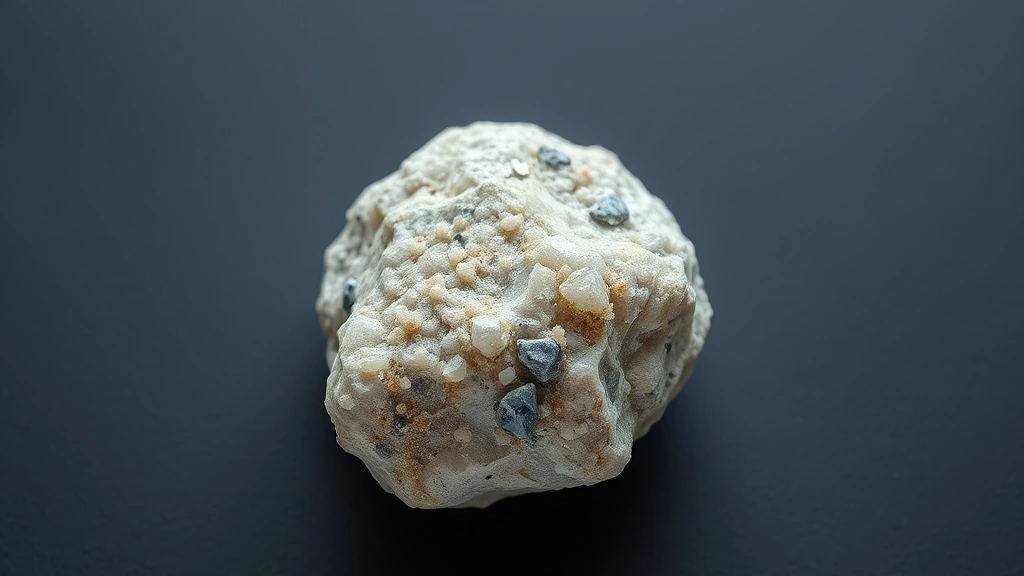
Zincite belongs to the natural mineral group and is classified as a hexagonal oxide crystal. Formed in high‑temperature, low‑oxygen environments such as zinc‑rich skarn deposits and volcanic fumaroles, it crystallizes as well‑formed hexagonal prisms or massive aggregates. Its rarity as a gem stems from limited large crystals, yet synthetic analogues have popularized its bright hues in jewelry. While zincite’s scarcity as a gem is often compared to other rare sulfides like Peacock Ore Bornite, its unique hexagonal oxide structure sets it apart from the complex sulfide formations found in copper-rich deposits.
What is Zincite? Geological Overview & Definition
Zincite is the mineralogical name for the naturally occurring form of zinc oxide, distinguished from its synthetic counterpart by crystal habit and impurity content. It typically occurs as hexagonal prisms or granular masses embedded in zinc‑bearing ore bodies, often associated with sphalerite, calcite, and barite.
Across ancient lapidary traditions, the striking red to orange shades of zincite were prized for decorative inlays, though its softness limited widespread use. Modern gemologists value it for its high refractive indices (nω = 2.013, nε = 2.029), which impart a brilliant fire when cut, despite its modest hardness. While zincite’s optical brilliance is distinct, collectors often pair its warm tones with the contrasting blue and green bands of Azurite Malachite to create visually dynamic inlay designs that echo historical lapidary practices.
Zincite Chemical Composition & Crystallographic Properties
The ideal formula of zincite is (Zn,Mn)O, reflecting the substitution of manganese for zinc within the wurtzite‑type lattice. This hexagonal crystal system features a P6₃mc space group, where each oxygen atom is tetrahedrally coordinated to zinc and manganese cations.
Cation substitution is the primary driver of color: higher Mn²⁺ concentrations shift the hue from pale orange to deep red, while trace Fe³⁺ can introduce brownish tones. These chromophore centers absorb specific wavelengths, producing the gemstone’s characteristic brilliance.
Zincite is chemically stable in neutral conditions but dissolves in strong acids, especially hydrochloric acid, due to the amphoteric nature of ZnO. Thermal treatment can enhance color saturation, as heating promotes Mn²⁺ migration to lattice sites that intensify red absorption.
The mineral’s density ranges from 5.64 to 5.68 g cm⁻³, and its hexagonal symmetry yields distinct optical birefringence, observable under polarized light. These combined properties make zincite a scientifically intriguing yet delicate gemstone for collectors and researchers alike.
| Property | Specification |
|---|---|
| Mineral Group | Natural Mineral / Crystal |
| Chemical Formula | (Zn,Mn)O |
| Mohs Hardness | 4 |
| Crystal System | Hexagonal crystal system |
| Specific Gravity (Density) | 5.64–5.68 |
| Refractive Index | n ω = 2.013, n ε = 2.029 |
| Color & Optical Properties | Natural Zincite color spectrum and optical dispersion |
| Primary Mining Localities | Global primary localities |
| Water & Chemical Resistance | Sensitive (Avoid prolonged water soaking) |
| Chakra Alignment (Traditional) | Crown Chakra (Sahasrara) |
| Zodiac Affinity (Traditional) | Aquarius, Gemini |
| Symbolic Meaning (Traditional) | Grounding, vitality and protection |
Zincite Varieties & Color Spectrum
Zincite displays distinct mineralogical characteristics across its geological varieties and structural habits. Gemologists evaluate these natural varieties based on crystal habit, trace chromophore concentrations, and visual luster.
Primary Natural Zincite
The benchmark natural variety exhibiting diagnostic color saturation and classic crystallographic symmetry.
Distinct Geological Morphs of Zincite
Secondary regional and structural varieties formed under localized geological temperature and pressure conditions.
Red Zincite
Formed in oxidized zinc ore bodies where manganese substitution intensifies the red hue, this variety crystallizes as hexagonal prisms within dolomite-hosted veins. Minute rutile inclusions create a subtle asterism, while the vivid scarlet color remains stable under UV light. Red zincite is most abundant in the Franklin, New Jersey district, yet gem-quality crystals are considered rare.
Orange‑Yellow Zincite
Developing in low‑temperature hydrothermal environments, orange‑yellow zincite incorporates trace iron and cobalt, shifting its hue toward amber. The crystals often exhibit a glassy luster and display faint growth striations on their faces. Notable deposits occur in the Zaire (now Democratic Republic of Congo) and in the Kalahari region of Namibia, where the stones are prized for their warm glow.
Green Zincite (Manganese‑Rich)
High manganese content replaces zinc in the lattice, producing a translucent emerald‑green coloration that can rival true emeralds in brilliance. These specimens typically form as tabular aggregates within sphalerite‑bearing host rocks, and they may contain microscopic pyrite inclusions that add a metallic sparkle. Green zincite is exceptionally scarce, with only a handful of documented finds from the Zinkgruvan mine in Sweden.
Brown Zincite (Manganese‑Dominated)
When manganese exceeds 30 % of the cation site, the mineral assumes a deep brown‑mahogany tone, often mottled with darker specks of galena. The crystals grow in massive, granular habit rather than well‑formed prisms, reflecting the high‑pressure conditions of the host lead‑zinc sulfide deposits. Brown zincite is primarily sourced from the Red Dog Mine in Alaska, where it is considered a collector’s curiosity rather than a commercial gemstone.
Purple‑Hue Zincite (Rare)
A rare chromatic variant, purple zincite arises from trace chromium and vanadium impurities that absorb specific wavelengths of light. The crystals display a faint pleochroic effect, shifting from violet to deep magenta when rotated under polarized light. Only a few specimens have been recorded from the Potosí region of Bolivia, making this hue one of the most coveted among mineralogical museums.
Where is Zincite Found? Geological Mining & Extraction
Zincite typically occurs as a secondary mineral in the oxidation zones of zinc‑rich ore deposits, especially within dolomite and limestone host rocks. It precipitates from circulating hydrothermal fluids that leach zinc and manganese, later crystallizing in open cavities and fissures where temperature drops below 200 °C.
Major extraction locales include the historic Franklin‑Humboldt district of New Jersey, the Zinkgruvan mine in Sweden, and the Red Dog Mine in Alaska. In each region, zincite is recovered as a by‑product of zinc and lead mining, often separated by hand‑sorting of heavy mineral concentrates before being polished for gem use.
Historical Significance & Cultural Lore of Zincite
Across ancient lapidary traditions, zincite’s vivid colors attracted the attention of Greco‑Roman artisans who incorporated red and orange specimens into mosaic inlays, believing the stone amplified vitality. Egyptian tombs from the New Kingdom contain small zincite shards set in amulets, suggesting a protective function linked to the Crown Chakra in later metaphysical interpretations.
In early Chinese mineral collections, green zincite was prized for its resemblance to jade and was occasionally ground into pigments for imperial lacquerware. Vedic texts reference a “bright red stone of the earth” that aligns with zincite’s red variety, attributing it to grounding and spiritual protection. Historical usage underscores zincite’s enduring allure across continents and epochs.
Modern Uses & Jewelry Applications of Zincite
Zincite is prized for its vivid orange‑red hue and moderate hardness, making it suitable for cabochon and faceted jewelry. Lapidary artisans cut it into smooth, polished cabochons for rings, pendants, and earrings, while faceted cuts accentuate its brilliance for high‑end pieces. The mineral’s relatively low hardness also allows it to be carved into ornamental sculptures and decorative panels, often used in architectural accents and garden ornaments.
- Cabochon rings, pendants, and earrings
- Faceted brooches and earrings
- Ornamental carvings for interior décor
Metaphysical Properties & Traditional Meaning of Zincite
According to historical traditions and metaphysical lore, zincite is believed to ground the wearer, fostering stability and resilience. Across ancient Mediterranean and Vedic lapidary lore, the stone is associated with vitality, encouraging physical strength and endurance. Its warm, fiery color is thought to stimulate emotional balance, helping to release frustration and promote calmness. In general metaphysical circles, zincite is also considered a protective stone, shielding against negative energies and enhancing personal power.
Which Chakra and Zodiac Signs Align with Zincite?
Zincite aligns with the Crown Chakra (Sahasrara), the center of spiritual awareness and connection to higher consciousness. This alignment suggests that wearing zincite may aid in meditation, spiritual insight, and the pursuit of enlightenment.
The stone is also associated with the zodiac signs Aquarius and Gemini. Aquarians are drawn to zincite’s innovative and forward‑thinking qualities, while Geminis appreciate its communicative and adaptable nature.
How to Identify Real vs. Fake Zincite
Artificial imitations of zincite often appear as synthetic glass or dyed quartz, lacking the mineral’s characteristic optical properties. Real zincite exhibits a distinct refractive index and a specific density range, whereas replicas may show different optical dispersion or a lighter feel.
Practical At-Home Authenticity Tests
- Temperature Test (Thermal Feel): Hold the stone in your hand; authentic zincite feels noticeably cooler than synthetic glass due to its higher thermal conductivity.
- Specific Gravity & Weight Test: Compare the stone’s weight to a known sample of similar size; zincite’s density (5.64–5.68 g/cm³) will make it noticeably heavier than glass or quartz.
- Scratch & Hardness Test (Mohs Comparison): Use a reference mineral of known hardness; zincite’s Mohs hardness of 4 will scratch materials harder than 4 but be scratched by softer ones, unlike many glass replicas.
- Microscopic & Loupe Inspection (Internal Inclusions): Under magnification, real zincite often shows fine, fibrous inclusions or trace manganese, whereas synthetic versions appear uniformly clear or display artificial striations.
Zincite Valuation Factors, Grading & Pricing
The market value of zincite is largely driven by color saturation. A deep, vivid orange‑red hue with minimal fading indicates high purity and desirable optical quality, while a muted or uneven tint reduces desirability. Collectors often seek specimens that display a natural energetic luster, as this suggests minimal surface alteration and preserves the mineral’s intrinsic vibrancy.
Crystal size and weight (grams) remain the primary metrics for grading. Larger, well‑formed crystals that retain their natural shape after minimal tumbling are prized, especially when the raw specimen shows minimal matrix inclusions. A polished piece that has been lightly tumbled to enhance surface clarity without compromising structural integrity commands a higher price than a heavily polished or heavily fractured sample of equivalent mass.
Ethical sourcing and locality premium play an increasingly significant role in both holistic and collector markets. Provenance from well‑documented, responsibly mined deposits—such as those in the Zambian Copperbelt or the Brazilian Minas Gerais region—adds value, as does a clear chain of custody that assures the absence of conflict minerals. Buyers are willing to pay a premium for specimens that can be traced to reputable, environmentally conscious sources.
How to Clean and Care for Zincite
To preserve zincite’s structural integrity, wipe the specimen briefly with a damp cloth and dry it immediately. This gentle method removes surface dust without introducing excess moisture that could lead to microfractures. Avoid ultrasonic cleaners or any prolonged exposure to water, as zincite’s hexagonal lattice is susceptible to stress cracking when wet.
Cleansing and Recharging Zincite (Energetic Care)
For energetic renewal, place the zincite under soft, indirect moonlight for several hours. The gentle illumination helps restore its natural vibrancy without subjecting the crystal to heat or direct sunlight, which could alter its lattice. Alternatively, resting the stone on a selenite charging slab allows subtle energetic alignment, as selenite’s conductive properties facilitate the transfer of positive energy. Herbal smudging with sage or palo santo can also be employed; the smoke should be kept at a safe distance to avoid any potential surface oxidation.
Frequently Asked Questions About Zincite
Zincite displays distinct mineralogical characteristics across its geological varieties and structural habits. Gemologists evaluate these natural varieties based on crystal habit, trace chromophore concentrations, and visual luster.
Primary Natural Zincite
The benchmark natural variety exhibiting diagnostic color saturation and classic crystallographic symmetry.
Distinct Geological Morphs of Zincite
Secondary regional and structural varieties formed under localized geological temperature and pressure conditions.
Is Zincite safe to wear in the shower?
No, Zincite is water-sensitive and should not be exposed to prolonged soaking. Its hexagonal crystal structure can degrade when subjected to constant moisture. Remove jewelry before bathing to preserve the stone’s luster and structural integrity.
How should I clean my Zincite jewelry?
Wipe the stone briefly with a damp cloth and dry it immediately. Avoid ultrasonic cleaners, as vibrations can cause structural fractures in the brittle material. Use a soft, dry microfiber cloth for routine maintenance to prevent surface scratching.
What is the Mohs hardness of Zincite?
Zincite has a Mohs hardness of 4, making it relatively soft and prone to scratching. Handle pieces with care to avoid abrasion from harder minerals or daily wear. Store items separately to maintain their polished surfaces and prevent damage.
Which zodiac signs are compatible with Zincite?
Zincite is traditionally aligned with Aquarius and Gemini in astrological lapidary practices. These air signs are said to resonate with the stone’s energetic properties. Wearers often select this mineral to enhance mental clarity and communicative vitality.
Which chakra does Zincite correspond to?
Zincite is associated with the Crown Chakra (Sahasrara) in metaphysical traditions. This alignment suggests a connection to higher consciousness and spiritual awareness. Practitioners use the stone to support grounding while accessing elevated states of perception.
What is the chemical composition of Zincite?
The primary chemical formula for Zincite is (Zn,Mn)O, indicating zinc oxide with manganese substitutions. This composition contributes to its characteristic reddish-brown or orange hues. Trace elements significantly influence the stone’s color variation and geological formation.
Can I use ultrasonic cleaners on Zincite?
No, you must avoid ultrasonic cleaners for Zincite to prevent structural fractures. The high-frequency vibrations can shatter the delicate hexagonal lattice of the mineral. Stick to gentle manual cleaning methods to ensure the long-term preservation of your gemstone.
What is the refractive index of Zincite?
Zincite exhibits a high refractive index with values of nω = 2.013 and nε = 2.029. This optical property gives the stone a distinct vitreous to sub-metallic luster. The high density and refractivity make it visually striking under direct lighting.