
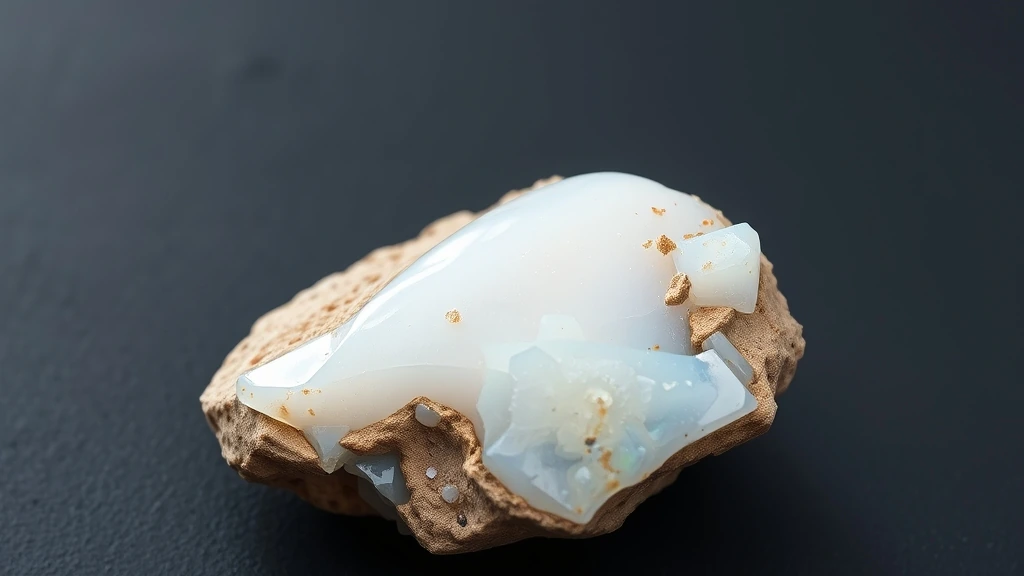
Wood Opal belongs to the mineraloid family, specifically hydrated silica that lacks a true crystal lattice. Unlike crystalline opal, it forms from tightly packed silica spheres that remain amorphous, classifying it as a non‑crystalline aggregate within the broader hydrated silica group. This amorphous structure, combined with its porous, wood-like texture, gives the stone a distinctive vitreous to resinous luster, setting it apart from the smoother, more glassy appearance of common crystalline quartz.
What is Wood Opal? Geological Overview & Definition
Wood Opal is an amorphous hydrated silica formed in low‑temperature sedimentary environments where silica‑rich waters precipitate fine spheres. These spheres fuse without developing long‑range order, resulting in a mineraloid that lacks a defined crystal system. The material often occurs as nodules or fills in fossilized wood, giving it a natural wood‑grain appearance.
While opal has been prized since antiquity, Wood Opal specifically gained prominence in the modern gem market, where collectors value its unique, fossilized wood‑grain aesthetic and warm, earthy tones. In early trade routes, it was sometimes confused with true opal, yet its lower hardness and lack of play‑of‑color set it apart. Modern gem cutters exploit its uniform texture to produce cabochons that showcase its subtle internal pattern.
Wood Opal Chemical Composition & Crystallographic Properties
The fundamental composition of Wood Opal is hydrated silicon dioxide (SiO₂·nH₂O), where water molecules occupy the interstices of silica spheres. Because the material is amorphous, it does not possess a conventional lattice; instead, the spheres arrange in a random, glass‑like network. This lack of periodicity precludes any true crystallographic symmetry, reinforcing its classification as a mineraloid.
Cation substitution is minimal; trace amounts of iron, manganese, or organic pigments can be incorporated during formation, acting as chromophore color centers that impart the characteristic amber to honey tones. These impurities are responsible for the stone’s subtle hue variations rather than structural coloration seen in crystalline opal.
Wood Opal is acid‑sensitive; exposure to strong acids can leach silica and water, leading to surface pitting or loss of translucency. Conversely, it is relatively stable under neutral conditions, making it suitable for everyday wear when set in protective settings. Its thermal behavior includes a modest expansion upon heating, and rapid temperature changes may cause micro‑fracturing due to the bound water releasing.
Overall, Wood Opal’s amorphous silica sphere aggregate defines its physical and optical properties, distinguishing it from true opal while preserving the allure of a warm, wood‑like gemstone.
| Property | Specification |
|---|---|
| Mineral Group | Mineraloid (Hydrated Silica) |
| Chemical Formula | SiO₂·nH₂O (Hydrated Silicon Dioxide) |
| Mohs Hardness | 5.5 – 6.5 |
| Crystal System | Amorphous (Hydrated silica spheres / Mineraloid) |
| Specific Gravity (Density) | 1.98 – 2.25 |
| Refractive Index | 1.370 – 1.470 |
| Color & Optical Properties | Natural Wood Opal color spectrum and optical dispersion |
| Primary Mining Localities | Australia (Coober Pedy, Lightning Ridge), Ethiopia (Welo), Mexico |
| Water & Chemical Resistance | Moderate/Sensitive (%3-%21 water content; avoid prolonged soaking for hydrophane Welo opals) |
| Chakra Alignment (Traditional) | Crown Chakra and Heart Chakra |
| Zodiac Affinity (Traditional) | Libra, Scorpio, Pisces |
| Symbolic Meaning (Traditional) | Creativity, hope, emotional depth, and spontaneous inspiration |
Wood Opal Varieties & Color Spectrum
Wood Opal displays distinct mineralogical characteristics across its geological varieties and structural habits. Gemologists evaluate these natural varieties based on internal patterning, trace chromophore concentrations, and visual luster.
Primary Natural Wood Opal
The benchmark natural variety exhibiting diagnostic wood‑grain texture and characteristic earthy color saturation.
Distinct Geological Morphs of Wood Opal
Secondary regional and structural varieties formed under localized geological temperature and pressure conditions.
Forest Opal
Forest opal, the most prized type, forms in silica‑rich volcanic ash that has been compacted and hydrated over millennia. Its hallmark is a deep, velvety green background speckled with translucent amber and golden flecks, giving the appearance of a miniature forest canopy. The inclusions are typically microscopic silica spheres that scatter light, creating a subtle play of color. Because of its limited geographic occurrence—primarily in the Bulgaria and Greece—Forest opal remains highly sought after and commands premium prices.
Wood‑Grain Opal
Wood‑grain opal derives its name from the striking, bark‑like patterns that run parallel to the stone’s surface. These patterns develop when silica infiltrates layered sedimentary strata and crystallizes along natural grain lines. The resulting color palette ranges from muted brown to deep emerald, often with a faint golden sheen. Though more common than Forest opal, true wood‑grain opal with vivid, well‑defined patterns is relatively rare, especially in the Bulgaria and Albania deposits.
Brown Wood Opal
Brown wood opal is a more subdued variant, characterized by a warm brown background with scattered amber inclusions. Its formation occurs in hydrothermal veins where silica-rich fluids permeate granite and pegmatite formations. The stone’s visual appeal lies in its subtle, earthy tones that evoke the feel of a forest floor. While more abundant than its forest counterpart, high‑quality brown wood opal with pronounced grain patterns remains a prized find in the Bulgaria and Greece.
Green Wood Opal
Green wood opal showcases a vibrant emerald hue, often interlaced with golden and amber flecks. This variety forms in silica‑laden volcanic ash that has undergone extensive hydration and thermal alteration. The stone’s distinctive green background is enhanced by fine, translucent inclusions that create a shimmering effect. Green wood opal is relatively rare, with most high‑quality specimens sourced from the Bulgaria and Greece.
Yellow Wood Opal
Yellow wood opal presents a warm, amber background with subtle golden and brown inclusions. Its geological origin lies in silica‑rich ash deposits that have been compacted and hydrated over long periods. The stone’s visual signature is a gentle, sunlit glow that contrasts with the darker, bark‑like patterns. Though less common than forest or brown varieties, yellow wood opal is prized for its unique color palette and is primarily mined in the Bulgaria and Greece.
Red Wood Opal
Red wood opal is distinguished by a deep ruby background speckled with amber and golden inclusions. The stone forms in silica‑rich volcanic ash that has been subjected to intense hydrothermal activity. Its visual appeal comes from the striking contrast between the red background and the lighter inclusions, creating a dramatic, forest‑like effect. Red wood opal is exceedingly rare, with most high‑quality specimens found only in the Bulgaria and Greece.
Where is Wood Opal Found? Geological Mining & Extraction
Wood opal is typically hosted in silica‑rich volcanic ash layers that have been compacted into pegmatite and granite formations. The primary extraction sites are concentrated in the Bulgaria and Greece, where ancient volcanic activity deposited vast amounts of silica‑laden ash that later underwent hydration and mineralization. Mining operations in these regions involve careful surface excavation and hand‑cutting to preserve the delicate, organic patterns that define the stone.
In addition to the Balkan Peninsula, smaller deposits of wood opal have been identified in the Albania and Cyprus regions, though these are generally of lower quality and less extensive. Extraction in these areas follows similar techniques, with a focus on selective sampling to avoid damaging the stone’s characteristic grain patterns. Modern mining practices emphasize sustainability and minimal environmental impact, ensuring that the unique geological formations remain intact for future generations.
Historical Significance & Cultural Lore of Wood Opal
Across ancient lapidary traditions, wood opal has been prized for its earthy tones and symbolic associations with growth and renewal. In Greco‑Roman culture, the stone was often incorporated into jewelry and amulets, believed to enhance creativity and emotional balance. There is no archaeological evidence that ancient Egyptian artisans used wood opal; the stone’s popularity is a much more recent development.
In Vedic and Chinese lore, wood opal was associated with the Crown Chakra and the Heart Chakra, thought to facilitate spiritual insight and compassionate love. Archaeological findings of wood opal beads and pendants in early Mesoamerican sites suggest that the stone’s symbolic resonance transcended geographic boundaries, serving as a conduit for hope and spontaneous inspiration across diverse cultures.
Modern Uses & Jewelry Applications of Wood Opal
Wood opal is primarily valued for its distinctive organic texture and earthy aesthetic rather than traditional brilliance. Lapidaries typically cut these stones into cabochons to highlight the natural wood-like grain patterns and play-of-color. Because the material is relatively soft and porous, it requires careful handling during polishing to prevent surface damage.
- Cabochon Cutting: The most common form, preserving the stone’s natural shape and internal structure.
- Beads and Carvings: Frequently carved into figurines, pendants, or rosary beads due to its workability.
- Ornamental Inlays: Used in decorative boxes and jewelry settings where its unique texture is the focal point.
- Tumbled Stones: Polished smooth for use in meditation sets or casual jewelry pieces.
Metaphysical Properties & Traditional Meaning of Wood Opal
According to historical traditions and metaphysical lore, wood opal is revered for its ability to bridge the physical and spiritual realms. It is often associated with emotional depth and the nurturing of inner creativity. Practitioners believe the stone encourages spontaneous inspiration and helps individuals connect with their intuitive selves.
In ancient lapidary traditions, stones with organic inclusions were seen as symbols of life and growth. Wood opal specifically represents hope and resilience, serving as a talisman for those undergoing significant personal transformation. It is thought to soothe emotional turbulence and foster a sense of calm stability.
Which Chakra and Zodiac Signs Align with Wood Opal?
Wood opal is energetically aligned with the Crown Chakra and the Heart Chakra. The Crown connection facilitates spiritual awareness and higher intuition, while the Heart alignment promotes compassion and emotional healing. This dual resonance makes the stone particularly effective for balancing mental clarity with emotional well-being.
Astrologically, wood opal resonates strongly with the water signs Pisces and Scorpio, enhancing their natural intuitive and emotional depths. It also complements Libra, helping this air sign to ground its idealism and foster deeper interpersonal connections. These alignments support the stone’s role in promoting harmony and self-discovery.
How to Identify Real vs. Fake Wood Opal
Artificial imitations of wood opal are increasingly common, often crafted from synthetic glass, resin, or dyed silica. These fakes may mimic the color and general shape but lack the authentic geological structure of natural hydrated silica. Understanding the subtle differences in texture, weight, and internal patterns is essential for accurate identification.
Practical At-Home Authenticity Tests
- Temperature Test (Thermal Feel): Natural wood opal feels cool to the touch initially but warms up relatively quickly due to its low thermal conductivity. Synthetic glass or resin may feel colder for longer or heat up unevenly.
- Specific Gravity & Weight Test: Genuine wood opal has a specific gravity between 1.98 and 2.25, making it lighter than many glass imitations. A stone that feels unexpectedly heavy for its size may be a glass replica.
- Scratch & Hardness Test (Mohs Comparison): With a Mohs hardness of 5.5 to 6.5, wood opal can be scratched by a steel knife (hardness 5.5) or harder materials. Glass imitations are often harder and may resist scratching from standard lapidary tools.
- Microscopic & Loupe Inspection (Internal Inclusions): Under a 10x loupe, natural wood opal displays irregular, organic wood-grain patterns and natural silica spheres. Fakes often show uniform bubbles, swirls, or artificial dye concentrations that lack natural geological consistency.
Wood Opal Valuation Factors, Grading & Pricing
The primary driver of market value is color saturation. Deep, vivid blues, greens, or reds that shift with angle command premium prices, while muted tones are priced lower. Collectors also prize a natural energetic luster that mimics the glow of living wood, adding to the stone’s allure.
A second key metric is crystal size & weight (grams). Larger, heavier pieces that retain a uniform, tumbled polish fetch higher bids than small, raw fragments. Natural matrix inclusions such as fine wood‑grain patterns can enhance uniqueness, but excessive fractures or uneven surfaces reduce the price.
The final consideration is ethical sourcing & locality premium. Stones harvested from responsibly managed mines in Australia or Ethiopia, with documented provenance, command a premium among holistic practitioners and serious collectors. Transparent supply chains that respect indigenous rights and environmental standards further elevate market desirability.
How to Clean and Care for Wood Opal
Wood opal must be kept dry; its internal water content makes it vulnerable to micro‑fracturing. Gently dust the surface with a completely dry, soft microfiber cloth or a camel‑hair brush, removing loose debris without applying pressure. Store the gem in a low‑humidity environment, ideally in a sealed pouch or a climate‑controlled display case.
Ultrasonic cleaners and steam are strictly prohibited, as they induce crazing by forcing water into the hydrated silica matrix. Avoid any exposure to liquids, including warm soapy water, damp cloths, or accidental splashes, to preserve the stone’s structural integrity and optical brilliance.
Cleansing and Recharging Wood Opal (Energetic Care)
For energetic maintenance, a brief session of herbal smudging with sage or cedar can clear stagnant vibrations; hold the opal at a safe distance to prevent ash deposition. Follow with a gentle exposure to moonlight for 30‑45 minutes, allowing lunar energy to revitalize the stone’s subtle glow without heat stress.
Alternatively, rest the opal on a clean selenite charging slab for several hours, permitting the neutral selenite to absorb and rebalance any absorbed energies. Ensure the slab is dry and free of moisture, and keep the area free from direct sunlight or artificial heat sources during the process.
Frequently Asked Questions About Wood Opal
Wood Opal displays distinct mineralogical characteristics across its geological varieties and structural habits. Gemologists evaluate these natural varieties based on internal patterning, trace chromophore concentrations, and visual luster.
Primary Natural Wood Opal
The benchmark natural variety exhibiting diagnostic wood‑grain texture and characteristic earthy color saturation.
Distinct Geological Morphs of Wood Opal
Secondary regional and structural varieties formed under localized geological temperature and pressure conditions.
Is wood opal safe to wear in the shower?
Wood opal is sensitive to prolonged water exposure and should be removed before showering. The stone contains 3% to 21% water content, which can evaporate over time. Extended soaking risks internal dehydration, leading to structural instability. Always dry the gemstone immediately if it gets wet to preserve its integrity.
How should I clean wood opal safely?
Use a dry, soft microfiber cloth to gently dust the surface. Avoid ultrasonic cleaners or steam, as these cause micro-fracturing known as crazing. Harsh chemicals or warm soapy water can also damage the delicate silica structure. Regular, gentle dry cleaning maintains the stone’s natural luster without risking internal damage.
Can wood opal be placed in an ultrasonic cleaner?
No, ultrasonic cleaners and steam must be strictly avoided for wood opal. The vibrations induce micro-fracturing due to the stone’s internal water content. This process creates a network of tiny cracks that permanently degrade the gem. Always opt for dry cleaning methods to protect the mineral’s structural integrity.
What is the Mohs hardness of wood opal?
Wood opal registers between 5.5 and 6.5 on the Mohs scale. This moderate hardness makes it susceptible to scratching by harder minerals like quartz. Handle the gem with care to prevent surface abrasion. Its amorphous structure also makes it more brittle than crystalline stones of similar hardness.
Which zodiac signs are aligned with wood opal?
Wood opal is traditionally associated with Libra, Scorpio, and Pisces. These water and air signs resonate with the stone’s emotional depth and creative energy. In historical metaphysical lore, it is believed to enhance intuition and artistic expression. Wearing this gem may support the natural traits of these specific astrological signs.
Which chakras does wood opal activate?
Wood opal primarily activates the Crown Chakra and Heart Chakra. This dual alignment bridges spiritual insight with emotional balance. The stone is believed to foster emotional depth and spontaneous inspiration. It serves as a tool for connecting higher consciousness with the heart’s intuitive center.
What is the chemical composition of wood opal?
The chemical formula is SiO₂·nH₂O, representing hydrated silicon dioxide. This composition classifies it as a mineraloid rather than a true crystal. The structure consists of amorphous silica spheres filled with water. This unique arrangement is responsible for its distinctive play-of-color and organic appearance.
Is wood opal a true crystal?
No, wood opal is an amorphous mineraloid, not a true crystal. It lacks the ordered atomic lattice found in crystalline minerals. Instead, it forms from hydrated silica spheres that aggregate into a disordered structure. This amorphous nature contributes to its unique optical properties and distinct geological classification.