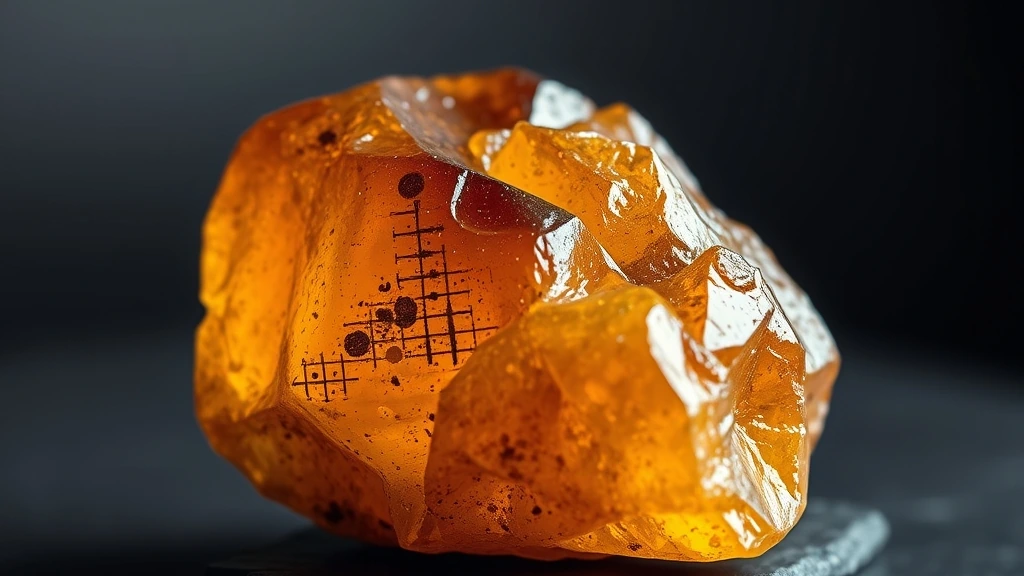
Amber is classified as a Natural Mineral / Crystal within the broader geological context of organic deposits. Unlike inorganic silicates, it originates from the polymerization of ancient coniferous tree sap. This unique origin places it in a distinct category among gemological materials. Its formation involves complex chemical changes over millions of years. Consequently, it serves as a vital fossil record of prehistoric ecosystems.
What is Amber Gemstone? Geological Overview & Definition
Amber forms when tree resin undergoes diagenesis over millions of years. This process transforms soft sap into a hard, durable organic material. It is not a mineral in the strict inorganic sense but a fossilized resin.
Geologists classify amber as an organic gemstone rather than a traditional mineral. It often contains inclusions like insects or plant matter. These inclusions provide critical evidence of ancient biodiversity. Understanding this distinction is crucial for accurate gemological identification.
Amber Gemstone Chemical Composition & Crystallographic Properties
Amber is amorphous, meaning it lacks a long-range ordered crystal lattice. It does not possess a defined crystal system like quartz or diamond. Instead, its atomic structure is disordered and random. This amorphous nature results from the rapid cooling and polymerization of resin.
The chemical composition is primarily an organic polymer, often represented by the empirical formula (C₉H₈O)ₙ. It consists of complex mixtures of terpenes and related compounds. There is no cation substitution as seen in silicate minerals. The structure is held together by covalent bonds within the polymer chains.
Amber is sensitive to strong acids and organic solvents. These substances can degrade the polymer structure over time. Its color arises from chromophore groups within the molecular structure. These groups absorb specific wavelengths of light, producing the characteristic amber hues.
Thermal behavior in amber is characterized by a low melting point. It softens and becomes viscous before fully liquefying. This property allows for traditional warm-water polishing techniques. Excessive heat can cause cracking or surface crazing in the stone.
| Property | Specification |
|---|---|
| Mineral Group | Natural Mineral / Crystal |
| Chemical Formula | Organic polymer (C₉H₈O)ₙ |
| Mohs Hardness | 2.0 – 2.5 |
| Crystal System | Amorphous |
| Specific Gravity (Density) | 1.05 – 1.10 |
| Refractive Index | 1.54 |
| Color & Optical Properties | Natural Amber Gemstone color spectrum and optical dispersion |
| Primary Mining Localities | Global primary localities |
| Water & Chemical Resistance | High (Safe for gentle water washing) |
| Chakra Alignment (Traditional) | Solar Plexus Chakra, Heart Chakra |
| Zodiac Affinity (Traditional) | Leo, Libra |
| Symbolic Meaning (Traditional) | Emotional healing, protection from negativity, and ancient wisdom |
Amber Gemstone Varieties & Color Spectrum
Amber is not a mineral but a fossilized resin, exhibiting a wide range of hues depending on its age and exposure to light. The most common variety is Baltic Amber, which ranges from pale yellow to deep orange. Its distinct succinic acid content gives it a unique electric charge when rubbed, a property known since antiquity.
Baltic Amber
Originating primarily from Poland and Russia, this variety is the most commercially significant in the global market. It often contains inclusions of ancient insects, plant matter, and even small vertebrates, providing invaluable paleontological data. The resin typically displays a warm, honey-like glow that intensifies under ultraviolet light.
Dominican Blue Amber
This rare variety is found exclusively in the Caribbean region, specifically in the Dominican Republic. It is prized for its blue fluorescence when exposed to ultraviolet light, a result of specific organic compounds. The matrix often appears greenish-yellow in daylight, shifting dramatically under artificial lighting conditions.
Burmese Amber
Sourced from Myanmar, this ancient variety can be over 99 million years old, making it one of the oldest known ambers. It frequently features fossilized insects and ferns, offering a glimpse into the Cretaceous period. The color palette spans from clear to dark brown, with high transparency being a key value driver.
Mexican Amber
Known for its vibrant red and orange tones, this variety is often treated with heat to enhance its color saturation. It typically lacks the complex inclusions found in Baltic or Burmese specimens, favoring a cleaner aesthetic. The density is slightly lower than other varieties, contributing to its lightweight feel during handling.
African Amber
Found in regions like Kenya and Tanzania, this variety is often darker and more opaque than its counterparts. It may exhibit greenish or brownish hues, resulting from different oxidation processes over millions of years. The organic polymer structure remains consistent, but the visual appeal is more subdued and earthy.
Where is Amber Gemstone Found? Geological Mining & Extraction
Amber deposits are typically located in sedimentary rock layers, particularly sandstone and shale, where ancient forests once thrived. The resin was buried by sediment, undergoing polymerization over millions of years to harden into stone. These geological formations protect the amber from weathering, preserving its delicate structure and inclusions.
Primary mining regions include the Baltic Sea coast, the Caribbean islands, and Southeast Asia. Extraction methods vary from open-pit mining to underwater dredging, depending on the depth of the deposit. Careful handling is required due to the gemstone’s low Mohs hardness, which makes it susceptible to scratching and breakage.
Historical Significance & Cultural Lore of Amber Gemstone
Ancient civilizations revered amber for its protective properties and association with the sun, often using it in jewelry and amulets. The Greeks believed it was the tears of the sun god Helios, while Romeans used it for medicinal purposes. Archaeological finds, such as the Amber Room, demonstrate its high status in royal courts across Europe.
Cultural lore often links amber to longevity and healing, with traditions spanning from Scandinavia to the Middle East. Its electrostatic properties were once thought to be magical, leading to its use in divination and spiritual rituals. Today, it remains a symbol of ancient wisdom and natural beauty in gemological circles.
Modern Uses & Jewelry Applications of Amber Gemstone
Lapidaries typically cut amber into smooth, polished cabochons to maximize its warm translucency and internal inclusions. Due to its low Mohs hardness of 2.0 to 2.5, faceting is rare and risks chipping during the polishing process. This organic gemstone is also extensively carved into intricate ornamental figures, beads, and religious icons.
- Cabochon Cutting: The standard method to showcase the stone’s refractive index of 1.54 and internal clarity.
- Ornamental Carving: Utilizes the material’s workability for detailed sculptures and decorative panels.
- Beadwork: Commonly strung into necklaces, taking advantage of its lightweight nature and vibrant coloration.
Metaphysical Uses & Origins of Amber
According to historical traditions and metaphysical lore, amber is revered as a stone of emotional healing and ancient wisdom. Practitioners believe it absorbs negative energy, serving as a protective talisman for the wearer. This organic resin is often associated with warmth, stability, and the preservation of life’s fleeting moments.
The gemstone’s golden hues are thought to stimulate creativity and personal power, fostering a deep sense of inner balance. It is frequently used in meditation to enhance intuition and connect the wearer with ancestral knowledge. These traditional beliefs highlight the stone’s role in promoting protection from negativity and spiritual clarity.
Which Chakra and Zodiac Signs Align with Amber Gemstone?
In esoteric practice, amber is primarily aligned with the Solar Plexus Chakra, the center of personal power and confidence. This connection stems from the stone’s warm, golden energy, which is believed to ignite inner strength and self-expression. It supports the wearer in overcoming fear and establishing a strong sense of identity.
Additionally, amber resonates deeply with the Heart Chakra, promoting compassion, emotional balance, and unconditional love. This duality allows the stone to bridge personal power with emotional vulnerability. It encourages the wearer to approach relationships with both confidence and genuine empathy.
Astrologically, amber is the traditional birthstone for Leo and Libra. For Leos, it amplifies their natural charisma and creative drive, reinforcing their leadership qualities. For Libras, it enhances their desire for harmony and balance, supporting diplomatic and social interactions.
How to Identify Real vs. Fake Amber Gemstone
Distinguishing genuine amber from artificial imitations requires careful observation of its physical properties. Common fakes include synthetic glass, plastic resins, and dyed copal, which often lack the natural inclusions of true amber. These replicas may mimic color but fail to replicate the stone’s unique thermal and optical characteristics.
Practical At-Home Authenticity Tests
- Temperature Test (Thermal Feel): Hold the stone in your palm for thirty seconds; genuine amber warms up quickly, while plastic or glass remains cool to the touch.
- Specific Gravity & Weight Test: Submerge the stone in a 1:1 saltwater solution; real amber with a density of 1.05–1.10 will float, whereas most glass imitations will sink.
- Scratch & Hardness Test (Mohs Comparison): Gently rub the stone against a fingernail; genuine amber, with a Mohs hardness of 2.0–2.5, may show faint marks, while harder fakes will not.
- Microscopic & Loupe Inspection (Internal Inclusions): Examine the stone under 10x magnification; natural amber contains fluid-filled bubbles and organic debris, while synthetic versions often show circular stress fractures or air bubbles.
Amber Gemstone Valuation Factors, Grading & Pricing
Market valuation primarily hinges on Color Saturation and overall tone uniformity. High-grade specimens exhibit deep, consistent hues without muddy or patchy variations. Additionally, optical clarity and surface luster significantly enhance the stone’s visual appeal and desirability.
Carat Weight directly influences pricing, as larger, flawless pieces are increasingly rare in the global market. Facet symmetry is crucial for maximizing light return and overall aesthetic balance. The presence of natural matrix or inclusions can either detract from value or add unique character.
Geographical Provenance Premium often elevates the price of amber from renowned sources like Baltic or Dominican regions. Wholesale prices fluctuate based on supply chain stability and raw material availability. Retail values typically reflect the craftsmanship and certification associated with the finished gemstone.
How to Clean and Care for Amber Gemstone
Due to its low Mohs Hardness of 2.0 to 2.5, amber requires gentle handling to prevent scratches. Always use warm soapy water and a soft cloth to remove surface oils and dust. This method effectively cleans the stone without risking structural damage or chemical degradation.
Strictly avoid ultrasonic cleaners, as the vibrations can cause internal fractures in this organic material. Prolonged water soaking should also be avoided to maintain the integrity of the polymer structure. Regular, gentle maintenance ensures the stone retains its natural luster and protective qualities over time.
Cleansing and Recharging Amber Gemstone (Energetic Care)
For energetic maintenance, utilize dry methods that respect the stone’s sensitivity to moisture and heat. Smoke smudging with sage or palo santo is an effective way to clear negative energy without physical contact. This technique aligns with the stone’s association with protection and ancient wisdom.
Alternatively, place the amber on a Selenite Plate or under moonlight for recharging. These methods allow the stone to absorb positive energy while remaining completely dry and safe. Such practices support the gemstone’s connection to the Solar Plexus and Heart Chakras.
Frequently Asked Questions About Amber Gemstone
Is amber safe to wear in the shower?
No, prolonged water exposure should be strictly avoided. As an organic polymer, amber is hygroscopic and sensitive to moisture. Extended soaking can cause the stone to swell, become cloudy, or develop internal fractures. Remove your jewelry before showering to preserve its structural integrity and luster.
How do I clean amber properly?
Use warm soapy water and a soft cloth for gentle cleaning. Never place amber in an ultrasonic cleaner, as the vibrations can cause structural fractures. The stone’s low Mohs hardness makes it vulnerable to abrasion. Dry it immediately with a lint-free cloth to prevent water spots from forming on the surface.
What is the chemical composition of amber?
Amber is an organic polymer with the formula (C₉H₈O)ₙ. It is not a mineral but a fossilized resin from ancient coniferous trees. This unique amorphous structure distinguishes it from crystalline gemstones. Its composition varies slightly based on the original tree species and age of the deposit.
Which zodiac signs are compatible with amber?
Amber is traditionally aligned with Leo and Libra. These signs resonate with the stone’s warm energy and protective qualities. In astrological gemology, amber is believed to enhance confidence for Leo and harmony for Libra. Wearing it may support personal balance and emotional stability for these individuals.
Which chakras does amber activate?
Amber primarily activates the Solar Plexus and Heart Chakras. It is believed to promote emotional healing and personal power. The stone’s warm tones are said to stimulate confidence and compassion. It does not primarily target the Root or Crown chakras in traditional metaphysical practice.
How hard is amber on the Mohs scale?
Amber has a low Mohs hardness of 2.0 to 2.5. This makes it significantly softer than quartz or topaz. It can be easily scratched by common household items like keys or coins. Store it separately in a soft pouch to prevent surface abrasion and maintain its polish.
What is the refractive index of amber?
Amber has a refractive index of 1.54. This optical property contributes to its characteristic warm, glowing appearance. It is lower than many silicate gemstones, resulting in less brilliance but unique internal inclusions. This index helps gemologists distinguish real amber from plastic imitations.
Is amber porous or amorphous?
Amber is an amorphous organic material, not a crystalline mineral. It lacks a defined crystal system due to its resinous origin. While not highly porous like opal, it can absorb oils and dirt over time. Regular gentle cleaning is essential to prevent the buildup of residues within its structure.