
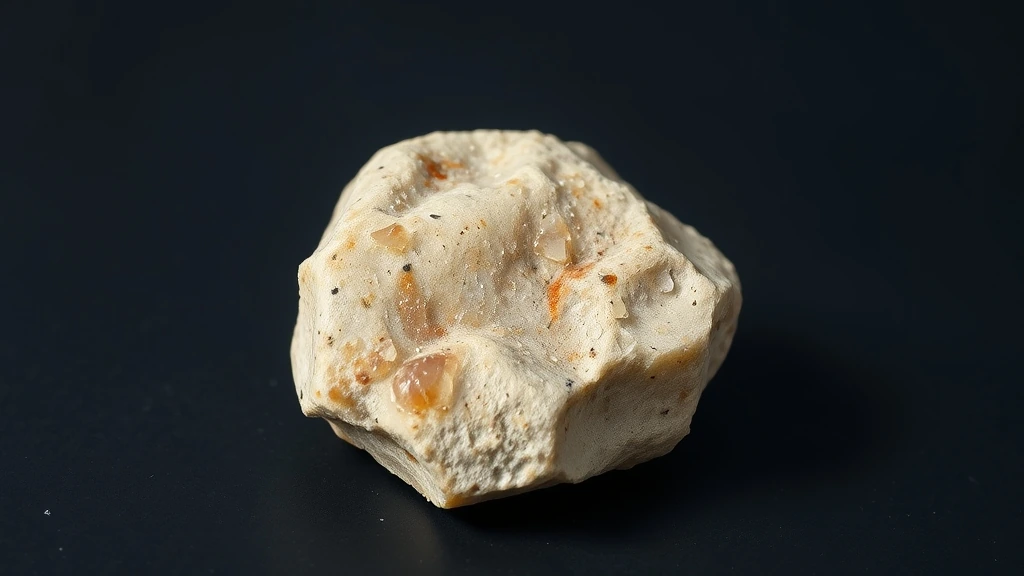
Sandstone belongs to the Natural Mineral / Crystal parent group, yet it is not a single mineral but an aggregate of microscopic crystals cemented together. Formed from the lithification of sand‑size particles in fluvial, aeolian, or marine settings, it records ancient depositional environments. Its polycrystalline texture ranges from aphanitic to granular, giving the stone a distinctive, rugged appearance prized in artisanal jewelry and metaphysical circles.
What is Sandstone Gemstone? Geological Overview & Definition
Sandstone gemstone is a sedimentary rock composed chiefly of tightly packed quartz grains bound by silica, calcite, or iron oxides. The interstitial matrix often includes feldspar, mica, and clay, which together create the stone’s characteristic speckled pattern and color variability.
In gemological terms, sandstone is classified as an aggregate gemstone rather than a single crystal, meaning its value derives from overall aesthetic and structural integrity. Its formation requires prolonged burial, compaction, and cementation, processes that lock in mineral inclusions and impart the grounding energy associated with the Root Chakra.
Sandstone Gemstone Chemical Composition & Crystallographic Properties
The stone’s crystal system is unequivocally Polycrystalline (Aphanitic to Granular), reflecting a mosaic of microscopic quartz, feldspar, and accessory minerals rather than a uniform lattice. Each quartz grain retains the trigonal quartz lattice, while feldspar grains exhibit monoclinic or triclinic symmetry, all embedded in a granular matrix.
Cation substitution occurs chiefly within the feldspar component, where K⁺, Na⁺, and Ca²⁺ replace one another, subtly shifting refractive indices and influencing color. Iron oxides acting as chromophore color centers impart reds, yellows, and browns, while clay minerals can introduce greenish or gray tones through manganese and titanium impurities.
Sandstone is moderately acid‑sensitive; dilute acids dissolve the calcite or silica cement, potentially loosening grain boundaries. However, the quartz framework remains chemically robust, preserving the stone’s overall hardness of 6.5–7.0 on the Mohs scale.
Thermally, sandstone exhibits low expansion, with quartz grains expanding ~5 × 10⁻⁶ °C⁻¹ and feldspar slightly higher, leading to minimal internal stress during heating. This stability allows the stone to withstand typical jewelry‑making processes, though rapid temperature changes can cause micro‑cracking along grain contacts.
| Property | Specification |
|---|---|
| Mineral Group | Natural Mineral / Crystal |
| Chemical Formula | Composite rock: Predominantly Quartz (SiO₂) with variable Feldspar (KAlSi₃O₈, NaAlSi₃O₈), Mica, and Clay minerals |
| Mohs Hardness | 6.5 – 7.0 |
| Crystal System | Polycrystalline (Aphanitic to Granular) |
| Specific Gravity (Density) | 2.4 – 2.9 |
| Refractive Index | 1.544 – 1.553 (Quartz component) |
| Color & Optical Properties | Natural Sandstone Gemstone color spectrum and optical dispersion |
| Primary Mining Localities | Global primary localities |
| Water & Chemical Resistance | High (Safe for gentle water washing) |
| Chakra Alignment (Traditional) | Root Chakra |
| Zodiac Affinity (Traditional) | Taurus, Virgo, Capricorn |
| Symbolic Meaning (Traditional) | Grounding, stability, and connection to the earth |
Sandstone Gemstone Varieties & Color Spectrum
Sandstone is a sedimentary rock composed of quartz grains cemented by silica, calcite, or iron oxide. While not a single mineral, its gem-quality specimens are valued for unique patterns and durability. The Mohs hardness of 6.5 to 7.0 makes it suitable for carvings and architectural inlays.
Red Sandstone
This variety derives its hue from hematite (Fe₂O₃) cementing the quartz grains. It is commonly found in arid regions where oxidation processes are prevalent. The deep rust tones signify high iron content and geological stability.
Green Sandstone
Distinctive green hues arise from chlorite or glauconite minerals replacing original feldspar components. This alteration process occurs during diagenesis in marine sedimentary environments. It is rarer than red varieties and often features a mottled appearance.
White Sandstone
Composed primarily of pure quartz (SiO₂) with minimal impurities, this type exhibits a bright, clean aesthetic. The refractive index of 1.544 to 1.553 contributes to its subtle luster. It is highly prized for classical architectural applications and ornamental carving.
Banded Sandstone
Characterized by alternating layers of different mineral compositions, this type displays striking polycrystalline banding. The distinct stripes result from varying sediment deposition rates over millions of years. These visual patterns make it a popular choice for decorative stone art.
Fossiliferous Sandstone
This variety contains preserved organic remains, such as shells or plant matter, within the matrix. The inclusions provide significant paleontological value alongside aesthetic appeal. It is often collected by enthusiasts for its educational and historical significance.
Where is Sandstone Gemstone Found? Geological Mining & Extraction
Sandstone deposits are typically located in sedimentary basins formed by ancient river systems and shallow seas. These regions provide the necessary pressure and time for grain cementation and lithification. Major extraction sites include the United States, India, and various European countries.
Mining operations often involve open-pit quarrying to extract large, uniform blocks for processing. The density of 2.4 to 2.9 g/cm³ ensures the material’s structural integrity during transport. Careful cutting is required to preserve the natural banding and color integrity of the stone.
Historical Significance & Cultural Lore of Sandstone Gemstone
Ancient civilizations, including the Egyptians and Romans, extensively used sandstone for monumental architecture. Its availability and workability made it ideal for temples, columns, and public structures. Archaeological sites worldwide reveal intricate carvings that have endured for millennia.
In esoteric traditions, sandstone is associated with the Root Chakra, promoting feelings of safety and stability. It is believed to enhance grounding and connection to the earth. This cultural lore continues to influence its use in modern metaphysical practices.
Modern Uses & Jewelry Applications of Sandstone Gemstone
Sandstone is cut into cabochons or modestly faceted stones, allowing its warm, earthy tones to shine in rings, pendants, and earrings. Lapidary artisans favor a gentle polish that highlights the granular quartz‑feldspar matrix without exposing fractures. The stone also serves ornamental carving for architectural accents, garden sculptures, and decorative panels.
- Cabochon pendants for grounding jewelry
- Faceted beads in beaded bracelets and necklaces
- Carved cameos and intaglios for heirloom pieces
- Architectural inlays in walls, floors, and fountains
Metaphysical Uses & Origins of Sandstone
According to historical traditions and metaphysical lore, sandstone embodies grounding energy that stabilizes the wearer’s aura and strengthens ties to the physical world. Its warm hues are believed to foster emotional resilience, encouraging patience and a steady heart during turbulent times. Practitioners cite its ability to absorb negative vibrations, promoting a sense of inner calm and confidence.
Which Chakra and Zodiac Signs Align with Sandstone Gemstone?
Sandstone resonates most strongly with the Root Chakra, the energy center governing survival, security, and our connection to the Earth. When placed on the base of the spine, it is said to amplify feelings of safety, encouraging a firm foundation for personal growth.
The stone’s astrological affinity is limited to the Earth signs of Taurus, Virgo, and Capricorn. These signs share sandstone’s emphasis on practicality, perseverance, and a methodical approach to life, making the gemstone a natural talisman for those born under these constellations.
How to Identify Real vs. Fake Sandstone Gemstone
Artificial imitations of sandstone include dyed natural stone, synthetic glass, and resin composites that mimic its granular appearance. These substitutes often lack the authentic density and refractive index of true sandstone and may feel unusually light or exhibit uniform coloration. Recognizing these differences helps collectors avoid costly misidentifications.
Practical At-Home Authenticity Tests
- Temperature Test (Thermal Feel): Genuine sandstone absorbs heat slowly and feels cool to the touch, whereas glass or resin warms quickly in the hand.
- Specific Gravity & Weight Test: Real sandstone weighs 2.4–2.9 g/cm³; a simple water displacement test can reveal a lighter, fake piece.
- Scratch & Hardness Test (Mohs Comparison): With a steel file (hardness ~5.5) a true sandstone resists scratching, while softer imitations show visible marks.
- Microscopic & Loupe Inspection (Internal Inclusions): Under 10× magnification, authentic sandstone displays a heterogeneous mix of quartz grains and feldspar, whereas synthetic glass appears uniformly smooth and free of inclusions.
Sandstone Gemstone Valuation Factors, Grading & Pricing
Market value hinges primarily on Color Saturation, where deep, uniform tones command higher premiums than pale or mottled specimens. Consistency in hue across the entire stone surface significantly enhances its aesthetic appeal and desirability. Additionally, a smooth, waxy luster indicates proper polishing and contributes to the overall perceived quality.
The Carat Weight of the specimen directly influences pricing, with larger, intact pieces being rarer and more valuable. Facet symmetry is critical for cut stones, as precise geometry maximizes light reflection and visual impact. However, the presence of distinct matrix inclusions or fossil fragments can either detract from value or add unique character, depending on collector preference.
Geographical Provenance Premium often elevates prices for stones from renowned mining regions with documented history. Wholesale markets typically offer lower margins, while retail prices reflect significant markups for curation and presentation. Current trends show steady demand for earthy, grounded stones, supporting stable long-term investment potential.
How to Clean and Care for Sandstone Gemstone
To maintain the integrity of your sandstone, always use warm soapy water and a soft, lint-free cloth for gentle surface cleaning. This method effectively removes dust and oils without introducing harsh chemicals that could degrade the binding matrix. Ensure the stone is thoroughly dried with a clean towel immediately after washing to prevent moisture retention.
You must strictly avoid ultrasonic cleaners, as the high-frequency vibrations can cause structural fractures in the polycrystalline rock structure. Sandstone is a composite material with variable density, making it susceptible to internal stress during aggressive cleaning. Regular, gentle maintenance preserves the stone’s natural luster and prevents long-term structural compromise.
Cleansing and Recharging Sandstone Gemstone (Energetic Care)
For energetic maintenance, utilize dry methods such as smoke smudging with sage or palo santo to clear stagnant energy. This approach respects the mineral’s sensitivity to moisture and avoids any risk of chemical interaction or water damage. The aromatic smoke is believed to purify the stone’s vibrational field effectively.
Alternatively, place the sandstone on a selenite plate under moonlight for several hours to restore its energetic balance. This passive recharging method leverages natural lunar energy without exposing the stone to physical stressors. Such practices align with traditional gemological care for earth-based, grounding stones.
Frequently Asked Questions About Sandstone Gemstone
Is sandstone safe to wear in the shower?
Yes, sandstone is water-resistant and safe for gentle exposure. The quartz matrix provides durability against moisture, making it suitable for brief contact. However, prolonged soaking may weaken the clay cement binding the grains together over time.
Can I clean sandstone in an ultrasonic cleaner?
No, you should avoid ultrasonic cleaners for this stone. High-frequency vibrations can cause structural fractures within the composite rock. Instead, use warm soapy water and a soft cloth to gently remove dirt and oils from the surface.
Which zodiac signs are aligned with sandstone?
Sandstone resonates with Taurus, Virgo, and Capricorn. These earth signs share the stone’s grounding properties and stability. Wearing this mineral can enhance their natural connection to practicality and earthly matters.
What chakra does sandstone activate?
Sandstone is primarily associated with the Root Chakra. This energy center governs stability, security, and physical survival. The stone’s earthy tones support grounding practices, helping to anchor your energy to the physical plane.
How hard is sandstone on the Mohs scale?
Sandstone typically rates between 6.5 and 7.0. This hardness is derived from its dominant quartz component, which is quite durable. However, the overall rock structure is less uniform than a single crystal, requiring careful handling.
What is the chemical composition of sandstone?
It is a composite rock of quartz, feldspar, and clay. The primary mineral is SiO₂, providing the stone’s structural integrity. Variable amounts of feldspar and mica contribute to its unique coloration and texture in gemological specimens.
Can sandstone be used in jewelry making?
Yes, it is popular for beads and pendants. Its polycrystalline nature allows for varied aesthetic patterns and colors. Jewelers often pair it with silver or gold to highlight its earthy and organic appearance in wearable art.
Does sandstone have a specific refractive index?
The quartz component exhibits an RI of 1.544 to 1.553. This optical property is consistent with standard silica minerals found in sandstone. Identifying the stone involves recognizing this range alongside its granular texture and density.