
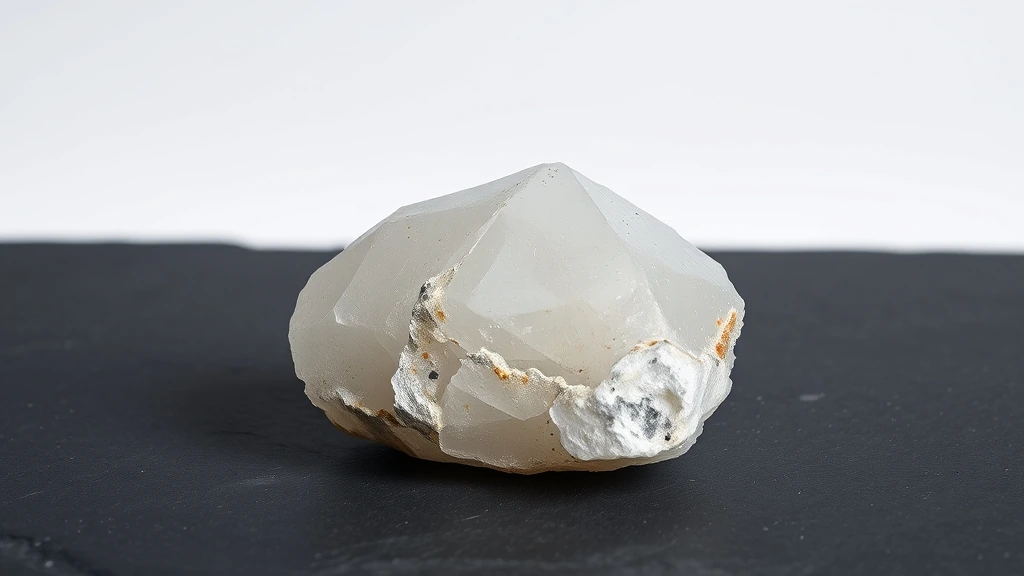
Calcite belongs to the Natural Mineral / Crystal group, representing a fundamental component of Earth’s crust. It forms through diverse geological processes, including sedimentary deposition and hydrothermal activity. As a primary constituent of limestone and marble, it plays a critical role in global carbon cycling. Its widespread occurrence makes it a key indicator in geological mapping and paleoclimate studies.
What is Calcite Gemstone? Geological Overview & Definition
Calcite is a polymorph of calcium carbonate, crystallizing in the trigonal system. It is the most common carbonate mineral, forming vast sedimentary deposits worldwide. Its rhombohedral habit is a diagnostic feature, often displaying cleavage planes that intersect at specific angles.
In gemology, high-clarity specimens are valued for their optical properties rather than durability. The stone’s softness limits its use in jewelry, favoring cabochons or carved pieces. Double refraction allows viewers to see doubled images through the crystal, a phenomenon unique to its anisotropic structure.
Calcite Gemstone Chemical Composition & Crystallographic Properties
The mineral crystallizes in the trigonal crystal system, featuring a hexagonal lattice structure. Its unit cell contains calcium and carbonate ions arranged in a specific geometric pattern. This arrangement dictates its physical properties, including perfect cleavage along three directions.
Chemically, calcite is sensitive to acids, reacting vigorously with dilute hydrochloric acid to release carbon dioxide. This acid sensitivity serves as a rapid field identification test. Cation substitution, such as magnesium replacing calcium, can alter the crystal’s lattice parameters and optical behavior.
Color variations arise from chromophore color centers and trace impurities like iron or manganese. These elements create distinct hues, from yellow to deep red, within the crystal lattice. Thermal behavior shows that calcite remains stable at low temperatures but decomposes at high heat.
Under intense heat, the mineral undergoes thermal decomposition, releasing carbon dioxide and leaving behind calcium oxide. This process is critical in industrial applications, such as cement production. Understanding these properties ensures proper handling and preservation of gem-quality specimens.
| Property | Specification |
|---|---|
| Mineral Group | Natural Mineral / Crystal |
| Chemical Formula | CaCO₃ |
| Mohs Hardness | 3 (defining mineral) |
| Crystal System | Trigonal |
| Specific Gravity (Density) | 2.71 |
| Refractive Index | ”n” ω = 1.640–1.660br ”n” ε = 1.486 |
| Color & Optical Properties | Natural Calcite Gemstone color spectrum and optical dispersion |
| Primary Mining Localities | Global primary localities |
| Water & Chemical Resistance | High (Safe for gentle water washing) |
| Chakra Alignment (Traditional) | Root Chakra, Sacral Chakra, Third Eye Chakra |
| Zodiac Affinity (Traditional) | Virgo, Capricorn, Pisces |
| Symbolic Meaning (Traditional) | Clarity, mental focus, and energetic cleansing |
Calcite Varieties & Comprehensive Sub-Types
Orange Calcite
This vibrant variety ranges from honey to bright orange, often displaying distinct banding morphology that reflects slow crystal growth in sedimentary environments. The coloration typically results from trace impurities, giving the stone a warm, energetic appearance prized by collectors. In metaphysical traditions, it is strongly associated with sacral chakra vitality and creative expression.
Blue Calcite
Characterized by a soft sky-blue hue, this variety often contains minor inclusions that diffuse light to create a gentle, ethereal glow. Geologically, it forms in similar carbonate-rich settings but gains its specific tint from subtle mineral substitutions within the CaCO₃ lattice. Lapidaries value its soothing aesthetic, which aligns with its reputed throat and third eye frequency.
Mangano Calcite (Pink Calcite)
Distinct for its pastel pink coloration, this variety owes its hue to manganese-bearing trace elements integrated into the crystal structure. It exhibits strong UV fluorescence, a key diagnostic feature that helps gemologists distinguish it from other pink carbonates. The stone is highly sought after for its gentle aesthetic and heart chakra associations.
Optical Calcite (Iceland Spar)
This exceptional variety appears as completely transparent rhombohedral crystals, primarily sourced from high-purity geological deposits in Iceland. Its most defining characteristic is extreme double refraction, a phenomenon where light splits into two distinct rays due to its birefringence. This optical property makes it invaluable for scientific instruments and advanced gemological analysis.
Green Calcite
Ranging from mint to emerald green, this variety is relatively rare and often found with clear, crisp banding patterns. The green tint arises from specific trace element substitutions, enhancing its visual appeal in polished cabochons. It is commercially valued for promoting emotional release and is frequently used in decorative lapidary work.
Gemologists differentiate these varieties primarily through spectroscopic analysis and visual inspection of color zoning patterns. While all share the same chemical formula, the specific trace elements and crystal clarity determine their market value and optical properties.
Where is Calcite Gemstone Found? Geological Mining & Extraction
Calcite is one of the most abundant minerals on Earth, typically found in sedimentary host rocks and marble deposits worldwide. Major commercial sources include Iceland, Mexico, and China, where large, high-quality crystals are extracted for both industrial and gemological use.
Extraction methods vary from open-pit mining in marble quarries to careful hand-picking in cave systems. The trigonal crystal system allows for the formation of large, well-defined rhombohedra that are ideal for cutting and polishing.
Historical Significance & Cultural Lore of Calcite Gemstone
Ancient civilizations, including the Greeks and Romans, valued calcite for its optical properties, using it in early lenses and scientific instruments. The name “Iceland Spar” itself reflects its historical importance in the development of optical physics and microscopy.
In various cultural traditions, calcite has been used for energetic cleansing and spiritual clarity, often placed in meditation spaces. Its enduring legacy in both science and spirituality underscores its unique position in mineral history.
Modern Uses & Jewelry Applications of Calcite Gemstone
Lapidaries value calcite for its high birefringence, which creates a unique double-image effect in cut stones. While its softness limits faceting, it excels in ornamental carving and architectural inlays.
- Cabochon Cutting: Smooth, domed surfaces highlight the stone’s internal cleavage planes without risking fracture.
- Ornamental Carving: Artists utilize its perfect rhombohedral cleavage to create intricate sculptures and decorative tiles.
- Jewelry Settings: Low-tension settings are essential to protect the stone from accidental impacts during wear.
Metaphysical Properties & Traditional Meaning of Calcite Gemstone
According to historical traditions and metaphysical lore, calcite is revered for its ability to promote mental clarity and energetic cleansing. Practitioners believe it helps dissolve mental blocks and enhances focus during meditation.
The stone is often associated with emotional resonance, aiding users in processing complex feelings. Its clear varieties are thought to amplify positive energy while filtering out negative influences.
Which Chakra and Zodiac Signs Align with Calcite Gemstone?
In metaphysical practice, calcite is primarily aligned with the Root Chakra and Sacral Chakra. These connections ground the user’s energy while stimulating creative flow and emotional stability.
Additionally, the stone resonates with the Third Eye Chakra, enhancing intuition and spiritual perception. Astrologically, it is considered a power stone for Virgo, Capricorn, and Pisces.
How to Identify Real vs. Fake Calcite Gemstone
Distinguishing genuine calcite from imitations requires attention to its physical properties, as synthetic glass and dyed replicas often mimic its appearance. Glass lacks the natural cleavage and specific optical behaviors found in true calcite specimens.
Practical At-Home Authenticity Tests
- Temperature Test (Thermal Feel): Genuine calcite feels cool to the touch initially, whereas plastic imitations warm up quickly due to lower thermal conductivity.
- Specific Gravity & Weight Test: Real calcite has a density of 2.71 g/cm³; it should feel heavier than plastic but lighter than many dense glass substitutes.
- Scratch & Hardness Test (Mohs Comparison): Calcite rates 3 on the Mohs scale, so it scratches easily with a copper coin but resists scratches from a fingernail.
- Microscopic & Loupe Inspection (Internal Inclusions): A 10x loupe reveals natural cleavage patterns and fluid inclusions, which are absent in perfectly clear synthetic glass.
Calcite Gemstone Valuation Factors, Grading & Pricing
Color Saturation is the primary driver of value in the calcite market. Collectors seek vivid, uniform hues without zoning or dull patches. High optical clarity and a distinct vitreous luster further enhance the stone’s visual appeal.
Carat Weight significantly impacts pricing, as large, flawless specimens are rare. Precise facet symmetry maximizes light return, while visible matrix or inclusions reduce overall value. Buyers should inspect for internal fractures that compromise structural integrity.
Geographical Provenance Premium applies to stones from renowned localities like Iceland or Switzerland. Wholesale prices vary widely, but retail margins reflect scarcity and aesthetic rarity. Market trends favor unique, high-transparency crystals for display purposes.
How to Clean and Care for Calcite Gemstone
Use warm soapy water and a soft cloth to gently remove surface dust. This method effectively cleans the stone without causing damage or stress. Always dry the gemstone thoroughly with a lint-free towel afterward.
Avoid ultrasonic cleaners entirely, as vibrations can cause structural fractures in this soft mineral. Do not use steam cleaners or harsh chemical solvents on calcite. Store pieces separately to prevent scratches from harder gemstones.
Cleansing and Recharging Calcite Gemstone (Energetic Care)
Employ smoke smudging with sage or palo santo to clear energetic stagnation. This dry method respects the mineral’s solubility and avoids moisture exposure. Allow the smoke to pass over the stone for several minutes.
Place the calcite on a selenite plate under moonlight for overnight recharging. This passive technique restores vibrational energy without physical contact or water. Ensure the stone is dry before returning it to storage.
Frequently Asked Questions About Calcite Gemstone
Is calcite safe to wear in the shower?
Yes, calcite is safe for gentle water washing due to its high water resistance. While it tolerates brief exposure, prolonged soaking can weaken the stone over time. Always dry it immediately after contact with water. This care preserves its crystal structure and luster.
Can I put calcite in an ultrasonic cleaner?
No, you must avoid ultrasonic cleaners to prevent structural fractures. The intense vibrations can shatter this relatively soft mineral. Instead, use warm soapy water and a soft cloth for cleaning. This gentle method ensures the stone remains intact and undamaged.
Which zodiac signs are aligned with calcite?
Calcite is energetically aligned with Virgo, Capricorn, and Pisces. These signs benefit from the stone’s clarity and mental focus properties. It supports their inherent traits of precision and intuition. Wearing calcite can enhance their natural astrological compatibility and balance.
What chakras does calcite activate?
Calcite primarily activates the Root, Sacral, and Third Eye Chakras. It helps ground energy while stimulating mental clarity and intuition. This multi-chakra connection supports both physical stability and spiritual insight. It is a versatile stone for energetic cleansing and alignment.
How hard is calcite on the Mohs scale?
Calcite has a Mohs hardness of 3, making it a defining mineral. This moderate softness means it scratches easily against harder materials. You should store it separately from diamonds or sapphires. Its trigonal crystal system also makes it prone to cleavage if handled roughly.
What is the chemical formula of calcite?
The chemical formula for calcite is CaCO₃, or calcium carbonate. This composition gives it its characteristic white or translucent appearance. It is a major component of limestone and marble. Understanding this mineralogical identity helps in proper identification and care.
Does calcite have a high refractive index?
Calcite exhibits strong birefringence with an nω of 1.640–1.660. This optical property causes light to split into two rays. It creates a distinctive double-image effect in transparent specimens. This optical anomaly is a key diagnostic feature for gemologists.
Is calcite good for mental clarity?
Yes, calcite is renowned for promoting mental focus and clarity. It is often used to clear mental fog and enhance concentration. Practitioners believe it aids in energetic cleansing and emotional balance. Its association with the Third Eye Chakra supports intuitive thinking.