
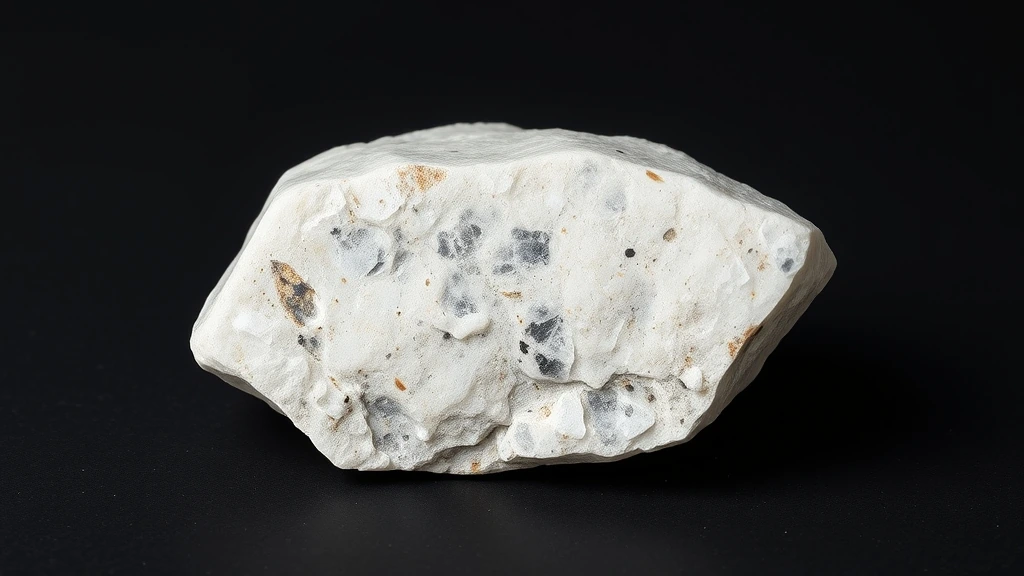
Limestone belongs to the Natural Mineral / Crystal group, representing a consolidated accumulation of carbonate minerals. It forms through biological or chemical precipitation in marine environments. Unlike single crystals, it is a polycrystalline aggregate. This geological classification distinguishes it from pure calcite specimens. Its structure reflects complex diagenetic processes over millions of years.
What is Limestone Gemstone? Geological Overview & Definition
Limestone is defined as a sedimentary carbonate rock formed from accumulated marine debris. It consists mainly of calcite, aragonite, or both minerals. The rock often contains fossils, clay, or quartz grains. This composition gives it a distinct granular texture.
In gemological contexts, limestone is valued for its polycrystalline aggregate nature. It lacks the uniformity of single-crystal gemstones. However, its earthy tones offer unique aesthetic appeal. Collectors prize specimens with visible fossil inclusions. These features highlight its biological origins.
Limestone Gemstone Chemical Composition & Crystallographic Properties
The primary mineral constituent is calcite, which crystallizes in the Trigonal crystal system. Its lattice structure features a hexagonal close-packed arrangement. This specific geometry dictates its physical properties. The trigonal axes are critical for optical behavior.
Calcite exhibits significant birefringence, splitting light into two rays. This property stems from its anisotropic lattice. The refractive index varies between 1.486 and 1.658. Such optical dispersion is a hallmark of this mineral.
The stone is highly sensitive to acid etching, reacting with dilute HCl. This chemical vulnerability confirms its carbonate identity. Impurities like iron oxides act as chromophores, creating yellow or brown hues. Manganese can introduce reddish tints into the matrix.
Thermal stability is moderate, with decomposition occurring at high temperatures. Heating releases carbon dioxide, leaving behind calcium oxide. This thermal behavior limits its use in high-heat applications. Proper storage prevents structural degradation from environmental stress.
| Property | Specification |
|---|---|
| Mineral Group | Natural Mineral / Crystal |
| Chemical Formula | CaCO₃ (Calcite) |
| Mohs Hardness | 3.0 |
| Crystal System | Trigonal |
| Specific Gravity (Density) | 2.65 – 2.71 |
| Refractive Index | 1.486 – 1.658 |
| Color & Optical Properties | Natural Limestone Gemstone color spectrum and optical dispersion |
| Primary Mining Localities | Global primary localities |
| Water & Chemical Resistance | High (Safe for gentle water washing) |
| Chakra Alignment (Traditional) | Root Chakra |
| Zodiac Affinity (Traditional) | Taurus, Virgo, Capricorn |
| Symbolic Meaning (Traditional) | Grounding, stability, and connection to the earth |
Limestone Gemstone Varieties & Color Spectrum
Limestone is a sedimentary rock composed primarily of calcium carbonate (CaCO₃), often containing minor impurities that dictate its visual character. While not a single mineral, it forms distinct gem-quality varieties through specific geological processes. These stones are valued for their earthy tones and organic textures rather than high brilliance.
Fossiliferous Limestone
This variety is characterized by abundant fossil inclusions, such as ammonites or brachiopods, preserved within the matrix. The fossils create striking visual contrast against the surrounding calcite or dolomite cement. Geologically, these deposits form in ancient marine environments where sedimentation occurred slowly over millions of years.
Oolitic Limestone
Oolitic limestone features tiny spherical grains called ooids, which form in shallow, warm, agitated waters. These grains range from 0.2 to 2 millimeters in diameter, creating a distinctive granular texture. The uniformity of these ooids makes this variety highly recognizable in cross-section.
Chalk
Chalk is a soft, white variety of limestone composed of microscopic coccoliths from marine algae. It lacks the coarse fossil structures found in other limestones, resulting in a smooth, powdery feel. This material is geologically young, typically dating to the Cretaceous period.
Marly Limestone
Marly limestone contains significant amounts of clay minerals mixed with calcium carbonate, giving it a duller luster. The presence of iron oxides often imparts yellow, red, or brown hues to the stone. This variety is less dense than pure calcite limestone due to the clay content.
Crystalline Limestone
Also known as micrite or fine-grained limestone, this variety consists of extremely fine calcite crystals. It often appears as a smooth, dense rock with minimal visible texture. Crystalline limestone can polish to a high sheen, making it suitable for ornamental use.
Dolomitic Limestone
This transitional rock contains both calcite and dolomite, resulting in a slightly higher hardness than pure limestone. The dolomite component often gives the stone a pinkish or grayish tint. It is more resistant to weathering than standard calcareous limestone.
Where is Limestone Gemstone Found? Geological Mining & Extraction
Limestone deposits are found globally within sedimentary basins formed by ancient seas and lakes. These rocks are typically extracted from open-pit quarries rather than deep underground mines. The primary host environments include shallow marine shelves where calcium carbonate accumulated over geological time.
Major extraction regions include the Cretaceous formations of Europe, the Permian basins of North America, and the Jurassic deposits of Asia. These areas provide vast quantities of high-quality limestone for both construction and gemological purposes. Mining operations focus on preserving the integrity of fossil inclusions and color bands.
Historical Significance & Cultural Lore of Limestone Gemstone
Ancient civilizations utilized limestone extensively for monumental architecture, including the pyramids of Egypt and temples of Mesoamerica. Beyond construction, polished limestone was used for creating seals, beads, and ritual objects. Its availability made it a foundational material for early human artistic expression.
In modern gemology, limestone is appreciated for its grounding properties and connection to the earth. Collectors value specimens with well-preserved fossils as tangible links to prehistoric life. This enduring legacy ensures limestone remains a significant subject in both geology and cultural studies.
Modern Uses & Jewelry Applications of Limestone Gemstone
Limestone is primarily processed through polishing and carving rather than faceting due to its low hardness. Lapidaries favor cabochon cuts to showcase its smooth, matte luster and subtle earthy tones. This stone is rarely used in high-end fine jewelry but remains popular in artisanal and spiritual accessories.
- Ornamental Carving: Ideal for intricate sculptures, beads, and pendants due to its workability.
- Cabochon Jewelry: Polished domes highlight natural patterns without risking chipping.
- Architectural Accents: Used in decorative tiles and interior design elements.
- Spiritual Tools: Commonly carved into wands, chime stones, and meditation aids.
Metaphysical Uses & Origins of Limestone
According to historical traditions and metaphysical lore, limestone is revered for its profound grounding energy. It is believed to anchor the wearer to the physical plane, fostering a sense of stability and security. Practitioners suggest it helps dissipate anxiety by connecting the user to the earth’s steady rhythm.
This stone is often associated with emotional resilience and patience. It is said to encourage practical thinking and help individuals navigate life’s challenges with calmness. By promoting a deep connection to nature, limestone supports a balanced and centered mindset during turbulent times.
Which Chakra and Zodiac Signs Align with Limestone Gemstone?
Limestone is canonically aligned with the Root Chakra, which governs survival, safety, and basic needs. This connection reflects the stone’s earthy composition and its ability to provide a sense of physical security. It helps stabilize the energy field, ensuring the wearer feels firmly planted and supported in their daily life.
In astrological practice, limestone resonates strongly with the earth signs: Taurus, Virgo, and Capricorn. These signs value structure, reliability, and tangible results, mirroring the stone’s steady and enduring nature. Wearing limestone can enhance the natural traits of these zodiac signs, amplifying their focus on practical stability and long-term planning.
How to Identify Real vs. Fake Limestone Gemstone
Artificial imitations of limestone often include synthetic glass or plastic dyed to mimic its earthy hues. These fakes may lack the natural crystalline structure and subtle variations found in genuine mineral samples. Understanding these distinctions is crucial for collectors and enthusiasts seeking authentic specimens.
Practical At-Home Authenticity Tests
- Temperature Test (Thermal Feel): Real limestone feels cool to the touch initially but warms up quickly in your hand. Synthetic glass or plastic may retain heat differently or feel uniformly warm.
- Specific Gravity & Weight Test: Genuine limestone has a density of 2.65 – 2.71. It should feel heavier than plastic imitations of the same size but lighter than dense glass.
- Scratch & Hardness Test (Mohs Comparison): With a Mohs hardness of 3.0, limestone can be scratched by a copper coin or a steel knife. If it resists scratching, it is likely a harder material like quartz or glass.
- Microscopic & Loupe Inspection (Internal Inclusions): Use a 10x loupe to look for natural crystalline textures or fossil fragments. Glass imitations often contain tiny, round air bubbles, which are not found in natural limestone.
Limestone Gemstone Valuation Factors, Grading & Pricing
Color Saturation significantly influences market desirability, with deep, uniform tones commanding higher premiums than pale or mottled specimens. Consistent tone across the entire stone indicates superior formation conditions and mineral purity. Additionally, high optical clarity and a distinct vitreous luster enhance the gem’s visual appeal and perceived quality.
Carat Weight plays a crucial role in pricing, as larger, flawless limestone pieces are rare and thus more valuable. Precise facet symmetry ensures optimal light reflection, maximizing the stone’s inherent brilliance and structural integrity. The presence of matrix patterns or mineral inclusions can either reduce value or add unique character, depending on collector preference.
Geographical Provenance Premium often elevates prices for stones from renowned historical or geological sites. Wholesale values typically range from modest to moderate, while retail prices reflect artisan craftsmanship and brand prestige. Market trends show steady demand for ethically sourced limestone, particularly in decorative and metaphysical jewelry sectors.
How to Clean and Care for Limestone Gemstone
Limestone is chemically sensitive and requires gentle handling to preserve its structural integrity over time. Always use warm soapy water and a soft cloth to remove surface dirt and oils safely. This method effectively cleans the stone without risking damage to its delicate crystalline structure or finish.
You must strictly avoid ultrasonic cleaners and steam cleaners, as these can cause catastrophic structural fractures. The low Mohs hardness of limestone makes it vulnerable to vibration and high-pressure water jets. Regular, gentle maintenance is essential to prevent etching and maintain the gemstone’s natural luster and appearance.
Cleansing and Recharging Limestone Gemstone (Energetic Care)
For energetic cleansing, utilize dry methods that respect the mineral’s solubility and fragility. Smoke smudging with sage or palo santo is an effective, non-invasive technique to clear stagnant energy. Ensure the stone is dry and away from direct heat sources during this process.
Alternatively, place the limestone on a selenite plate or expose it to moonlight for gentle recharging. These methods align with its association with the Root Chakra and earth energies. Avoid submerging the stone in water for extended periods to prevent potential dissolution or weakening.
Frequently Asked Questions About Limestone Gemstone
Is limestone safe to wear in the shower?
No, you should avoid prolonged water soaking with limestone jewelry. The stone is sensitive to moisture, which can weaken its structural integrity over time. Water resistance is limited, so remove it before bathing or swimming to prevent potential damage.
Can I clean limestone in an ultrasonic cleaner?
Absolutely not, as ultrasonic vibrations can cause structural fractures. Instead, use warm soapy water and a soft cloth for gentle cleaning. This method preserves the stone’s surface without risking the crystal lattice integrity that high-frequency sound waves might disrupt.
What is the chemical composition of limestone?
Limestone is primarily composed of calcium carbonate, or CaCO₃. This mineral is often found in the form of calcite, which defines its geological structure. Understanding this chemical formula is essential for proper care and identification of the stone.
Which zodiac signs are compatible with limestone?
Limestone is energetically aligned with Taurus, Virgo, and Capricorn. These earth signs resonate with the stone’s stabilizing properties. Wearing limestone can enhance the natural grounding energy associated with these specific astrological profiles.
Which chakra does limestone correspond to?
Limestone is specifically linked to the Root Chakra. This connection supports feelings of security and stability. It does not align with other chakras, making it a focused tool for earth energy and physical well-being.
How hard is limestone on the Mohs scale?
Limestone rates a 3.0 on the Mohs hardness scale. This indicates it is relatively soft and susceptible to scratching. You must handle it with care to avoid surface abrasions from harder materials or daily wear.
What is the crystal system of limestone?
Limestone typically exhibits a trigonal crystal system. This structure influences its optical properties and cleavage patterns. Recognizing the trigonal symmetry helps gemologists identify and categorize the mineral accurately in professional settings.
What is the refractive index of limestone?
Limestone has a refractive index ranging from 1.486 to 1.658. This value determines how light bends through the stone. The optical dispersion within this range contributes to its subtle luster and visual appeal in jewelry.