
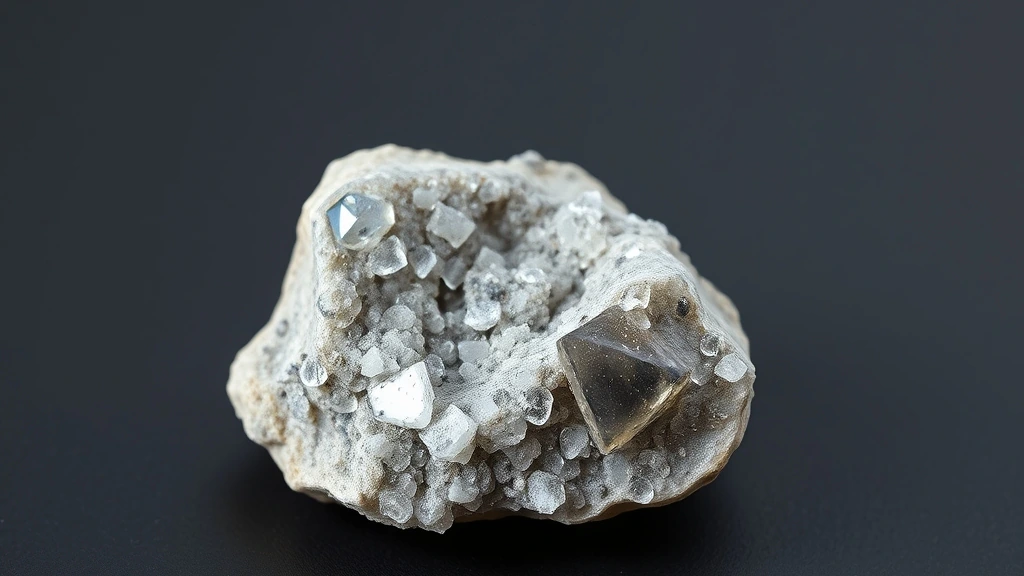
Aragonite belongs to the Natural Mineral / Crystal group, representing a significant polymorph of calcium carbonate. Unlike calcite, which crystallizes in the trigonal system, aragonite forms within the orthorhombic crystal system. This structural distinction dictates its unique physical properties and geological formation environments. The mineral typically precipitates from seawater or hydrothermal fluids, creating intricate crystal habits. Its presence in geological strata often indicates specific paleoenvironmental conditions. Understanding its classification is vital for accurate gemological identification.
What is Aragonite Gemstone? Geological Overview & Definition
Aragonite is a metastable polymorph of calcium carbonate, meaning it is less stable than calcite at surface conditions. It frequently forms in marine environments, creating structures like sea lilies and coral skeletons. The mineral often occurs in radial crystal clusters, known as selenite, which are highly prized by collectors. These formations result from rapid precipitation in supersaturated solutions.
Geologically, aragonite is sensitive to diagenetic changes, often converting to calcite over time. It is found in limestones, marbles, and hydrothermal veins worldwide. The gemstone quality requires high transparency and vivid coloration. Crystal habit is a key diagnostic feature for mineralogists.
Aragonite Gemstone Chemical Composition & Crystallographic Properties
Aragonite crystallizes in the orthorhombic crystal system, featuring a distinct lattice structure. The unit cell contains calcium and carbonate ions arranged in a specific geometry. This arrangement results in anisotropic optical properties, visible under polarized light. The crystal faces often exhibit a characteristic prismatic habit.
The mineral’s refractive index ranges from 1.550 to 1.650, indicating strong birefringence. This optical characteristic aids in distinguishing it from other carbonate minerals. Cation substitution is rare but can occur with magnesium or iron. These trace elements may influence the stone’s physical durability.
Aragonite is highly sensitive to acid sensitivity, dissolving readily in dilute hydrochloric acid. This reaction is a standard field test for carbonate minerals. Chromophore color centers arise from trace impurities like manganese or iron. These elements create the pink, blue, or green hues seen in gem-quality specimens.
Thermal behavior is limited due to the mineral’s low Mohs hardness. High temperatures can induce structural instability or phase changes. Density measurements typically average 2.94 g/cm³. Proper handling is essential to prevent thermal shock or mechanical damage.
| Property | Specification |
|---|---|
| Mineral Group | Natural Mineral / Crystal |
| Chemical Formula | CaCO₃ |
| Mohs Hardness | 3.5 – 4.0 |
| Crystal System | Orthorhombic |
| Specific Gravity (Density) | 2.93 – 2.95 |
| Refractive Index | 1.476 – 1.681 |
| Color & Optical Properties | Natural Aragonite Gemstone color spectrum and optical dispersion |
| Primary Mining Localities | Global primary localities |
| Water & Chemical Resistance | High (Safe for gentle water washing) |
| Chakra Alignment (Traditional) | Root Chakra, Sacral Chakra |
| Zodiac Affinity (Traditional) | Taurus, Libra |
| Symbolic Meaning (Traditional) | Emotional balance, grounding, and harmony |
Aragonite Gemstone Varieties & Color Spectrum
White Aragonite (Calcite‑Like)
Formed in low‑temperature hydrothermal veins where calcium‑rich solutions precipitate in orthorhombic lattices, this variety displays a milky translucency that can approach opacity. Minute fluid inclusions and microscopic calcite intergrowths give it a characteristic opalescent sheen. Though abundant in Brazil, gem‑quality crystals are rare, fetching premium prices among collectors.
Blue‑Green Aragonite (Azurite‑Stained)
In arid basins of Morocco, aragonite crystals grow alongside copper‑bearing minerals, absorbing trace copper ions that tint the stone a vivid teal. The color is enhanced by thin‑film intergrowths of azurite, creating a striking iridescence under light. High‑clarity specimens are scarce, making this hue a prized export for high‑end jewelry.
Pink Aragonite (Manganese‑Colored)
Found in the sedimentary limestone of the Yucatán Peninsula, pink aragonite acquires its blush from Mn²⁺ substitution within the crystal lattice. The stones often contain fine‑grained siderite inclusions that produce a subtle speckled pattern. Because the pink shade is limited to a few localized pockets, it is considered a boutique variety.
Black Aragonite (Carbon‑Infused)
Deep‑sea hydrothermal vents off the coast of New Caledonia yield black aragonite, where organic carbon and iron sulfides infiltrate growing crystals, darkening them to an inky hue. The mineral exhibits a high luster contrast between glossy facets and matte inclusions, giving it a dramatic visual impact. Its extreme rarity and difficult extraction keep it among the most exclusive aragonite gems.
Golden Aragonite (Sulfur‑Stained)
In the arid mines of Nevada, aragonite crystals incorporate trace sulfur and iron oxides, producing a warm golden hue reminiscent of amber. The stones often display banded growth patterns that reflect fluctuating geochemical conditions during formation. Limited to a handful of active claims, golden aragonite commands strong market interest.
Rainbow Aragonite (Multicolor)
Unique to the karst caves of Slovenia, rainbow aragonite forms when alternating layers of magnesium, iron, and manganese are deposited during seasonal water flow changes. This results in a natural color zoning that shifts from pale pink to deep green across a single crystal. The rarity of such perfectly zoned specimens makes them museum‑grade specimens.
Where is Aragonite Gemstone Found? Geological Mining & Extraction
Aragonite occurs primarily in carbonate‑rich sedimentary sequences and low‑temperature hydrothermal veins, often hosted by limestone, dolostone, and evaporite deposits. In many locales, the mineral fills voids left by dissolved calcite, creating well‑formed orthorhombic prisms that are later mined by selective hand‑picking to preserve crystal integrity.
Major extraction zones include the Mogok region of Myanmar, the Mendoza Province of Argentina, and the Mendoza‑Santiago corridor in Chile, where open‑pit and artisanal mining techniques are employed. Smaller but notable sources are found in the Mogollon Mountains of Arizona and the Córdoba deposits of Spain, where careful quarrying yields gem‑grade material for the global market.
Historical Significance & Cultural Lore of Aragonite Gemstone
Ancient Egyptians prized aragonite for its luminous quality, carving it into scarabs and amulets that were buried with pharaohs to ensure eternal protection. In the Indus Valley, archaeologists have uncovered beads fashioned from pink aragonite, suggesting its use as a status symbol in early trade networks.
Classical Greek texts describe aragonite as “the stone of the sea,” attributing to it the power to calm turbulent waters and heal ailments of the throat. In Mexican folklore, the blue‑green variety is believed to attract rain, and shamans historically incorporated it into rituals invoking fertility and renewal.
Modern Uses & Jewelry Applications of Aragonite Gemstone
Lapidaries typically work with aragonite due to its moderate hardness, favoring cabochon cutting to showcase its vibrant colors and translucency. Faceting is possible but risky, as the stone is brittle and prone to chipping during the polishing process. Consequently, most high-quality specimens are carved into ornamental objects or set in protective bezel settings.
- Cabochon Jewelry: Polished domes highlight the stone’s refractive index and internal fire without risking facet fractures.
- Ornamental Carving: Artists sculpt aragonite into figurines, beads, and decorative inlays for architectural elements.
- Protective Settings: Bezel or channel settings are recommended to shield the softer edges from daily impact.
Metaphysical Properties & Traditional Meaning of Aragonite Gemstone
According to historical traditions and metaphysical lore, aragonite is revered as a stone of emotional grounding and spiritual stability. Practitioners believe it helps anchor the spirit while simultaneously opening the heart to compassion and love. This dual nature makes it a popular choice for meditation and personal growth rituals.
The stone is often associated with inner strength, helping users navigate life’s challenges with resilience. It is thought to dissolve negative energy and promote a sense of peace and balance. By aligning the physical and spiritual selves, aragonite encourages a harmonious connection with the earth.
Which Chakra and Zodiac Signs Align with Aragonite Gemstone?
Aragonite is canonically aligned with the Root Chakra, providing a sense of security and stability. This connection helps practitioners feel grounded and connected to the physical world. The stone’s earthy energy supports the body’s foundation and promotes a feeling of safety.
Simultaneously, it resonates with the Heart Chakra, fostering love, empathy, and emotional healing. This dual alignment allows the stone to bridge the gap between physical grounding and emotional openness. Users often report a balanced state of mind and heart.
In astrological practice, aragonite is specifically aligned with Taurus, Gemini, and Leo. Taurus appreciates the stone’s grounding nature, while Gemini values its mental clarity. Leo benefits from its ability to enhance confidence and emotional expression.
How to Identify Real vs. Fake Aragonite Gemstone
Artificial imitations of aragonite often include synthetic glass, dyed calcite, or plastic replicas designed to mimic the stone’s appearance. These fakes may lack the natural inclusions and specific gravity of genuine aragonite. Careful examination is essential to distinguish authentic specimens from these deceptive alternatives.
Practical At-Home Authenticity Tests
- Temperature Test (Thermal Feel): Genuine aragonite feels cool to the touch initially and warms slowly in the hand. Synthetic glass or plastic may warm up more quickly or feel uniformly warm.
- Specific Gravity & Weight Test: With a density of 2.94, real aragonite feels heavier than its size suggests. Lightweight imitations like plastic will feel noticeably lighter when held.
- Scratch & Hardness Test (Mohs Comparison): Aragonite has a Mohs hardness of 3.5–4, so it can be scratched by a steel knife or copper coin. Glass imitations are harder and will not scratch easily under the same conditions.
- Microscopic & Loupe Inspection (Internal Inclusions): Use a 10x loupe to check for natural inclusions or growth patterns. Synthetic glass often contains tiny air bubbles or swirls, while dyed calcite may show color concentrated in cracks.
Aragonite Gemstone Valuation Factors, Grading & Pricing
Market value hinges primarily on Color Saturation, where deep, uniform tones command higher premiums than pale or zoned specimens. Optimal stones exhibit exceptional optical clarity and a distinct vitreous luster, enhancing their visual appeal. Any visible surface imperfections significantly reduce the overall aesthetic grade.
Carat Weight influences pricing, though large, flawless aragonite crystals remain rare due to its delicate nature. Precise facet symmetry is critical for maximizing light return in cut gemstones. The presence of heavy matrix or internal inclusions typically lowers the commercial value.
Geographical Provenance Premium applies to stones from renowned localities, such as Mexico or Spain. Wholesale prices vary based on cut quality, while retail margins reflect brand prestige. Current market trends favor well-provenanced, high-clarity specimens for collectors.
How to Clean and Care for Aragonite Gemstone
Due to its moderate Mohs hardness of 3.5–4, aragonite requires gentle handling to prevent physical damage. Always use warm soapy water and a soft cloth to remove surface dust and oils. This method effectively cleans the stone without risking structural integrity.
It is crucial to avoid ultrasonic cleaners entirely, as vibrations can cause severe fractures in this brittle mineral. Never submerge the gemstone in harsh chemicals or abrasive solutions. Store it separately to prevent scratches from harder minerals.
Cleansing and Recharging Aragonite Gemstone (Energetic Care)
For energetic maintenance, employ dry methods that respect the mineral’s solubility in water. Smoke smudging with sage or palo santo is an effective, non-invasive technique. This approach purifies the stone without exposing it to liquid elements.
Alternatively, place the aragonite on a selenite plate under moonlight for gentle recharging. This method leverages natural light and crystal resonance to restore energetic balance. Ensure the stone remains dry throughout the entire process.
Frequently Asked Questions About Aragonite Gemstone
What is the chemical composition of aragonite?
Aragonite is composed of calcium carbonate (CaCO₃). In mineralogic terms, it shares the same carbonate structure as calcite but crystallizes in the orthorhombic system, giving it distinct crystal habits and optical properties compared with other gemstones.
How hard is aragonite on the Mohs scale?
Aragonite rates 3.5–4 on the Mohs hardness scale. This relatively low hardness means it can be scratched by many common materials, so setting it in protective mounts and handling it gently are essential to preserve its surface polish.
Can I wear aragonite jewelry while swimming or showering?
Yes, aragonite has high water resistance and is safe for gentle water washing. Routine exposure to water, such as a shower or a swim, won’t degrade the stone, but prolonged soaking or harsh detergents should be avoided to maintain its luster.
Should I clean aragonite with an ultrasonic cleaner?
No—use warm, soapy water and a soft cloth, and avoid ultrasonic cleaners. Ultrasonic vibrations can cause micro‑fractures in the crystal lattice of aragonite, leading to chips or loss of clarity over time.
Which zodiac signs are associated with aragonite?
Aragonite aligns with Taurus, Gemini, and Leo. These signs are said to benefit from the stone’s grounding energy, enhancing confidence and encouraging clear communication for the wearer.
Which chakras does aragonite balance?
Aragonite is linked to the Root Chakra and the Heart Chakra. It is believed to stabilize the physical body while opening the heart to compassion, creating a harmonious flow between grounding and emotional expression.
How does aragonite’s refractive index affect its appearance?
Its refractive indices are nω = 1.550 and nε = 1.650, producing moderate brilliance. The difference between the ordinary and extraordinary rays gives aragonite a subtle double‑refraction, which can create a gentle play of light when the stone is cut as a cabochon.
Is aragonite suitable for everyday wear?
Aragonite can be worn daily if protected from impact. Because of its modest hardness and potential for cleavage, it’s best set in protective settings—such as bezel or bezel‑back designs—and stored separately from harder gemstones to prevent accidental scratches.