
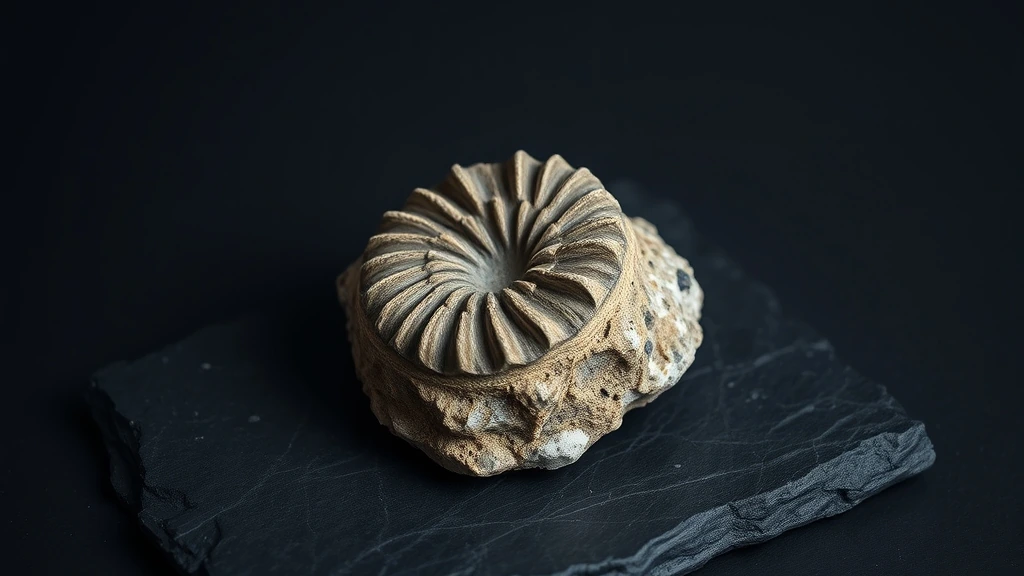
Crinoid fossils represent a unique intersection of paleontology and mineralogy, classified strictly within the Natural Mineral / Crystal group. These specimens are not synthetic but are the preserved skeletal elements of extinct echinoderms. They form when organic material is replaced by carbonate minerals over millions of years. This process creates intricate, three-dimensional structures that retain the original biological architecture. Consequently, they serve as tangible records of ancient oceanic ecosystems.
What is Crinoid Fossil Gemstone? Geological Overview & Definition
Crinoids are marine invertebrates belonging to the phylum Echinodermata, often referred to as sea lilies. Their skeletons consist of numerous small, articulated plates known as ossicles. When these animals died, their remains settled on the ocean floor and underwent permineralization. This geological process involves the infiltration of mineral-rich groundwater into the porous skeletal structure. Over time, the original organic material is completely replaced by inorganic carbonate crystals.
The resulting fossil gemstone preserves the delicate, branching morphology of the crinoid stem. This structure is highly valued by collectors for its intricate lattice geometry. Unlike typical gemstones, crinoids are valued for their paleontological significance and aesthetic complexity. They provide a direct physical link to the Paleozoic and Mesozoic eras. Understanding their formation is essential for accurate identification and valuation.
Crinoid Fossil Gemstone Chemical Composition & Crystallographic Properties
The primary mineral constituent is calcite (CaCO₃), which crystallizes in the Trigonal system. This crystal structure features a hexagonal prism with a rhombohedral termination. In some specimens, dolomite (CaMg(CO₃)₂) may replace or coexist with calcite. This substitution occurs when magnesium ions partially replace calcium ions within the lattice. The presence of dolomite can slightly alter the physical properties of the fossil.
The cation substitution of magnesium for calcium affects the density and refractive index. Calcite typically exhibits a density of 2.71, while dolomite ranges up to 2.85. The refractive index varies between 1.486 and 1.658 depending on the mineral phase. This optical anisotropy allows for the observation of strong birefringence under polarized light. Such properties are critical for distinguishing pure calcite from dolomitic varieties.
Crinoid fossils are highly sensitive to acidic environments due to their carbonate composition. Exposure to dilute hydrochloric acid results in vigorous effervescence as CO₂ is released. This acid sensitivity necessitates careful handling and storage away from corrosive substances. The material lacks significant chromophores, meaning colors arise from impurities or structural effects. Consequently, the stone remains optically stable under normal thermal conditions.
Thermal behavior is generally stable at room temperature, but extreme heat can cause cracking. The Trigonal lattice is susceptible to thermal shock due to its anisotropic expansion. Rapid temperature changes may induce micro-fractures along cleavage planes. Therefore, avoid sudden heating or cooling during cleaning or display. Proper care ensures the preservation of the fossil’s delicate structural integrity.
| Property | Specification |
|---|---|
| Mineral Group | Natural Mineral / Crystal |
| Chemical Formula | CaCO₃ (Calcite) or CaMg(CO₃)₂ (Dolomite) |
| Mohs Hardness | 3.0 – 4.0 |
| Crystal System | Trigonal |
| Specific Gravity (Density) | 2.71 – 2.85 |
| Refractive Index | 1.486 – 1.658 |
| Color & Optical Properties | Natural Crinoid Fossil Gemstone color spectrum and optical dispersion |
| Primary Mining Localities | Global primary localities |
| Water & Chemical Resistance | High (Safe for gentle water washing) |
| Chakra Alignment (Traditional) | Root Chakra, Sacral Chakra |
| Zodiac Affinity (Traditional) | Taurus, Virgo |
| Symbolic Meaning (Traditional) | Connection to ancestral wisdom, grounding, and evolutionary transformation |
Crinoid Fossil Gemstone Varieties & Color Spectrum
Crinoid fossils appear in diverse lithologies, primarily as calcite or dolomite replacements. These organic remnants transform into gem-quality material through selective diagenesis. The resulting stones exhibit distinct visual signatures based on their mineralogical composition.
Classic Calcite Crinoids
This variety features translucent to transparent calcite crystals with a vitreous luster. The stone often displays a pale yellow or honey-brown hue from trace impurities. Its trigonal crystal system allows for precise cleavage and optical clarity.
Dolomitic Crinoid Fossils
Dolomite-replaced crinoids typically present a matte, earthy finish with muted gray or beige tones. The CaMg(CO₃)₂ composition provides slightly higher hardness than pure calcite. These specimens are valued for their durable, stone-like appearance in jewelry settings.
Agatized Crinoid Fossils
In this rare morph, silica replaces the original carbonate structure entirely. The result is a banded or solid chalcedony matrix with exceptional durability. This variety often exhibits vibrant red, blue, or green colors from iron oxides.
Pyritized Crinoid Fossils
These specimens feature metallic pyrite replacing the skeletal elements, creating a striking gold-like sheen. The contrast between the organic form and metallic mineral is visually arresting. They are highly sought after for their unique, industrial aesthetic appeal.
Matrix Crinoid Fossils
Embedded in fine-grained limestone or shale, these fossils retain their original organic structure within a dark background. The high contrast makes the delicate stem segments highly visible. This variety is popular among collectors for its scientific and artistic value.
Polished Calcite Crinoids
Commercially polished specimens often display a smooth, glassy surface with enhanced refractive index properties. The polishing process reveals the intricate internal architecture of the crinoid stem. These pieces are commonly used in cabochon jewelry for their lustrous finish.
Where is Crinoid Fossil Gemstone Found? Geological Mining & Extraction
Crinoid fossils are predominantly extracted from Permian and Carboniferous sedimentary rock formations. These ancient marine environments provided ideal conditions for crinoid proliferation and subsequent fossilization. The host rocks are typically limestone, dolostone, or shale deposits.
Primary mining regions include the Czech Republic, particularly the Jihlava Basin, and parts of the United States. The Czech variety is renowned for its high-quality calcite replacements. Extraction involves careful quarrying and manual separation to preserve the delicate fossil structures.
Historical Significance & Cultural Lore of Crinoid Fossil Gemstone
Ancient civilizations often misidentified crinoid fossils as dragon eggs or petrified sea lilies. These beliefs fueled their use in talismans and protective amulets across Europe. The organic shape sparked rich folklore regarding marine deities and ancestral spirits.
Archaeological findings reveal crinoid fossils in medieval grave goods and decorative objects. They were valued for their perceived connection to the deep past and natural history. This enduring legacy highlights their role in early scientific curiosity and spiritual practice.
Modern Uses & Jewelry Applications of Crinoid Fossil Gemstone
Lapidaries primarily cut crinoid fossils into cabochons to preserve the intricate organic details of the stem segments. Due to their relatively low Mohs hardness of 3.0 to 4.0, these stones are best suited for protective settings like rings or pendants that minimize daily impact. The natural calcite or dolomite matrix provides a smooth, waxy luster that enhances the fossilized texture without requiring heavy polishing.
- Cabochon Cutting: The most common method, showcasing the cross-sectional view of the crinoid stem.
- Ornamental Carving: Skilled artisans carve small figurines or decorative inlays using the stone’s workable texture.
- Bead Stringing: Polished slices are strung into bracelets or necklaces, highlighting the concentric growth rings.
- Lapidary Lamps: Larger specimens are backlit to reveal the internal trigonal crystal structure and fossil patterns.
Metaphysical Uses & Origins of Crinoid Fossil
According to historical traditions and metaphysical lore, crinoid fossils symbolize a profound connection to ancestral wisdom and the deep time of Earth’s history. Practitioners believe that holding these stones facilitates a sense of grounding, linking the holder to the evolutionary roots of life. The stone is often associated with evolutionary transformation, encouraging personal growth through patience and long-term perspective.
Emotionally, the gentle energy of crinoid fossils is thought to promote stability during times of change. It serves as a reminder of resilience, as these ancient marine creatures survived significant geological shifts. This emotional resonance helps individuals feel anchored and connected to the natural world’s enduring cycles.
Which Chakra and Zodiac Signs Align with Crinoid Fossil Gemstone?
In esoteric practice, crinoid fossils are strongly aligned with the Root Chakra, which governs safety, stability, and physical survival. This alignment stems from the stone’s fossilized nature, representing a deep, unshakable connection to the Earth’s past. The Sacral Chakra is also activated, linking the stone to creativity and the flow of ancestral memories.
Astrologically, these stones resonate deeply with Taurus and Virgo. Taurus, an earth sign, appreciates the stone’s grounding and tangible qualities, while Virgo values its detail and connection to natural order. Both signs benefit from the grounding energy that crinoid fossils are believed to provide.
How to Identify Real vs. Fake Crinoid Fossil Gemstone
Artificial imitations of crinoid fossils often use synthetic glass or dyed replicas to mimic the natural appearance of calcite or dolomite. These fakes may lack the subtle variations in color and texture found in genuine specimens. Understanding the difference is crucial for collectors, as specific gravity and internal structure can reveal inconsistencies in mass-produced copies.
Practical At-Home Authenticity Tests
- Temperature Test (Thermal Feel): Genuine calcite or dolomite feels cool to the touch initially but warms quickly in the hand. Synthetic glass may feel colder for longer due to different thermal conductivity.
- Specific Gravity & Weight Test: Real crinoid fossils have a density of 2.71 – 2.85. If the stone feels significantly lighter or heavier than expected for its size, it may be a plastic or glass imitation.
- Scratch & Hardness Test (Mohs Comparison): With a Mohs hardness of 3.0 – 4.0, genuine stones can be scratched by a steel knife (hardness 5.5). If a knife cannot scratch the surface, it is likely a harder synthetic material.
- Microscopic & Loupe Inspection (Internal Inclusions): Use a 10x loupe to check for internal inclusions like air bubbles, which indicate glass. Genuine fossils show organic growth lines and natural mineral variations without trapped bubbles.
Crinoid Fossil Gemstone Valuation Factors, Grading & Pricing
Market value is primarily driven by Color Saturation and overall tone uniformity. Collectors prize specimens with consistent, deep hues that highlight the intricate skeletal structure. High optical clarity and a distinct waxy luster further enhance the stone’s visual appeal and desirability.
Carat Weight significantly influences pricing, though large specimens are rarer than small ones. Facet symmetry is less critical for fossils, but polished surfaces must be smooth and precise. The presence of surrounding matrix or mineral inclusions can either detract from value or add geological context.
Geographical Provenance Premium applies to stones from renowned fossil beds like the Jurassic Coast. Wholesale prices remain modest, but retail values rise for certified, well-preserved pieces. Market trends show steady demand from paleontology enthusiasts and unique jewelry collectors alike.
How to Clean and Care for Crinoid Fossil Gemstone
Due to its Trigonal crystal structure and moderate hardness, this stone requires gentle handling. Always use warm soapy water and a soft cloth to remove surface dust and oils. This method safely cleans the delicate fossilized structures without causing damage.
Strictly avoid ultrasonic cleaners and steamers, as vibrations can cause structural fractures. Prolonged water soaking is also discouraged to prevent potential weakening of the calcite or dolomite matrix. Regular, gentle maintenance preserves the stone’s integrity and aesthetic beauty over time.
Cleansing and Recharging Crinoid Fossil Gemstone (Energetic Care)
For energetic cleansing, utilize dry methods that respect the stone’s solubility in water. Smoke smudging with sage or palo santo is an effective way to clear stagnant energy. This approach avoids any risk of moisture damage to the fossilized material.
Moonlight exposure is another gentle method to recharge the stone’s vibrational frequency. Place the gemstone on a selenite plate during a full moon for optimal results. These dry techniques ensure the stone remains physically intact while restoring its energetic balance.
Frequently Asked Questions About Crinoid Fossil Gemstone
What is the primary chemical composition of crinoid fossils?
Crinoid fossils are primarily composed of calcite or dolomite minerals.
These ancient marine organisms built their skeletons from calcium carbonate, resulting in a trigonal crystal system. This specific mineralogical makeup determines their physical properties, including their Mohs hardness of 3.0 to 4.0.
How hard are crinoid fossils on the Mohs scale?
Crinoid fossils register between 3.0 and 4.0 on the Mohs hardness scale.
This moderate hardness means they are susceptible to scratching from harder minerals like quartz or topaz. You should store them separately from other gemstones to prevent surface abrasion and maintain their intricate fossilized details.
Can I wear crinoid fossils in the shower?
No, you should avoid prolonged water soaking with crinoid fossils.
While brief exposure to rain is generally harmless, extended immersion can compromise the structural integrity of the calcite matrix. To preserve the fossil’s delicate features, keep it dry and remove it before swimming or long baths.
Is it safe to use an ultrasonic cleaner?
You must never use an ultrasonic cleaner on crinoid fossils.
The high-frequency vibrations can cause severe structural fractures within the porous fossil material. Instead, clean them gently using warm soapy water and a soft cloth to ensure the surface remains intact and undamaged.
Which zodiac signs are compatible with crinoid fossils?
Crinoid fossils are energetically aligned with Taurus and Virgo.
These earth signs resonate with the fossil’s grounding properties and connection to ancestral wisdom. Wearing this stone may enhance stability and practical intuition for individuals born under these zodiac signs.
Which chakras does the crinoid fossil activate?
This stone primarily activates the Root Chakra and Sacral Chakra.
It supports deep grounding and emotional stability, linking the wearer to evolutionary transformation. By engaging these specific energy centers, the fossil promotes a sense of security and connection to ancestral heritage.
What is the refractive index of crinoid fossils?
The refractive index typically ranges from 1.486 to 1.658.
This optical property indicates how light travels through the calcite or dolomite structure. While not as brilliant as high-index gems, this range contributes to the stone’s unique, matte-to-satin luster and earthy aesthetic appeal.
How should I store crinoid fossils safely?
Store crinoid fossils in a soft pouch or separate jewelry box.
Because their Mohs hardness is relatively low, they can be easily scratched by harder gemstones. Keeping them isolated prevents physical damage and preserves the delicate fossilized patterns for long-term enjoyment and display.