
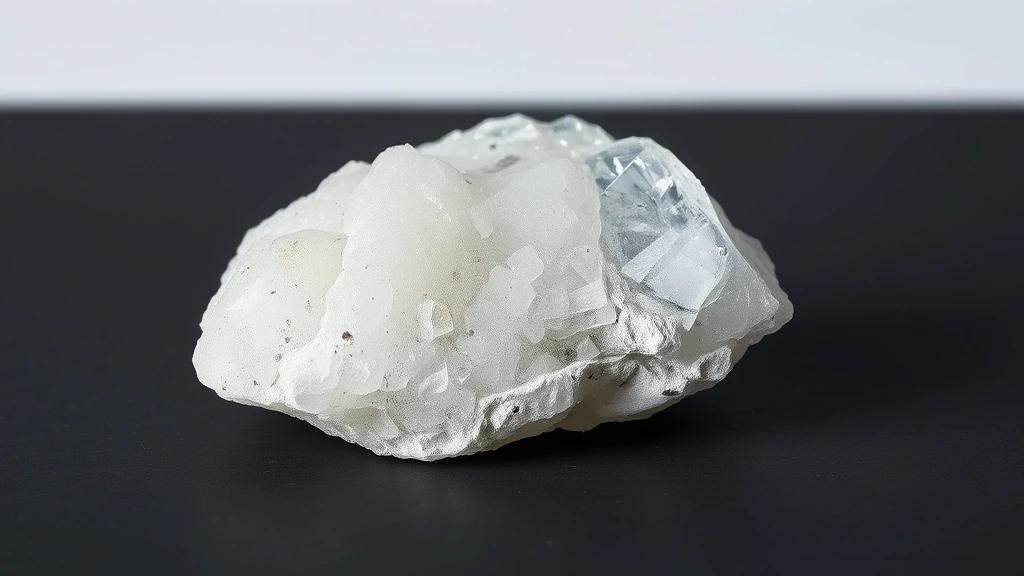
Iceland spar belongs to the calcite mineral group, representing a high-purity form of this ubiquitous natural crystal. As a natural mineral, it forms through hydrothermal processes and metamorphic activity, creating distinct rhombohedral structures. Its geological significance lies in its purity, which allows for unique optical phenomena not found in impure calcite varieties. This transparency distinguishes it from common limestone or marble, making it a prized specimen in mineralogy and optics.
What is Iceland Spar? Geological Overview & Definition
Iceland spar is defined as a transparent calcite variety, characterized by its exceptional clarity and lack of visible inclusions. It typically forms in granitic pegmatites or hydrothermal veins, where slow crystal growth permits the development of large, well-formed rhombohedral crystals. The name originates from its historical discovery in Iceland, where it was first utilized for its optical properties. While Iceland spar is prized for its optical purity, collectors often compare its crystalline structure to that of Yttrium Fluorite, a rare mineral that shares similar geometric formations but with distinct compositional differences.
Geologically, this mineral is classified within the carbonate group, sharing its fundamental structure with common limestone. However, its purity sets it apart, as it lacks the iron or manganese impurities that color other calcite varieties. This high degree of chemical homogeneity enables the stone to split into perfect geometric shapes, a property known as cleavage.
Iceland Spar Chemical Composition & Crystallographic Properties
The fundamental building block of Iceland spar is the calcium carbonate molecule, arranged in a trigonal crystal system. This specific lattice structure dictates the stone’s physical behavior, including its characteristic rhombohedral habit. The arrangement of ions creates a non-centrosymmetric environment, which is critical for its optical functions. While Iceland spar’s non-centrosymmetric lattice drives its unique optical phenomena, other calcium-rich minerals like Yellow Jade form in entirely different geological settings, highlighting the diverse ways nature arranges atomic structures to create distinct gemstone properties.
A defining feature of this mineral is its double refraction, or birefringence, caused by the anisotropic nature of its lattice. When light enters the crystal, it splits into two rays traveling at different speeds, creating a distinct visual duplication of objects seen through the stone. This phenomenon is a direct result of the trigonal symmetry and the specific orientation of the calcium and carbonate ions.
While chemically stable at room temperature, Iceland spar is sensitive to acidic environments, where it readily dissolves to release carbon dioxide. This acid sensitivity serves as a primary field test for identifying carbonate minerals. The stone does not exhibit significant chromophore color centers in its purest form, maintaining a colorless appearance unless trace impurities are present.
Thermal behavior in Iceland spar is marked by its relatively low melting point compared to silicate minerals. Under high heat, the carbonate structure breaks down, releasing volatile components and leaving behind a calcium oxide residue. This thermal instability reinforces its classification as a non-silicate mineral, distinct from the harder, more heat-resistant quartz family.
| Property | Specification |
|---|---|
| Mineral Group | Natural Mineral / Crystal |
| Mohs Hardness | 6.5 – 7.0 |
| Crystal System | Trigonal |
| Color & Optical Properties | Natural Iceland Spar color spectrum and optical dispersion |
| Primary Mining Localities | Global primary localities |
| Water & Chemical Resistance | High (Safe for gentle water washing) |
| Chakra Alignment (Traditional) | Throat Chakra (Vishuddha) |
| Zodiac Affinity (Traditional) | Taurus, Libra |
| Symbolic Meaning (Traditional) | Spiritual awareness and universal harmony |
Iceland Spar Varieties & Color Spectrum
Iceland Spar displays distinct mineralogical characteristics across its geological varieties and structural habits. Gemologists evaluate these natural varieties based on crystal habit, trace chromophore concentrations, and visual luster.
Primary Natural Iceland Spar
The benchmark natural variety exhibiting diagnostic color saturation and classic crystallographic symmetry.
Distinct Geological Morphs of Iceland Spar
Secondary regional and structural varieties formed under localized geological temperature and pressure conditions.
Clear Iceland Spar
Clear Iceland Spar forms in high‑temperature pegmatitic veins where silica‑rich fluids precipitate pure calcite crystals. The stones are typically free of visible inclusions, allowing a striking double‑refraction that splits images into twin shadows. Found most abundantly in Iceland’s volcanic basaltic terrains, this variety is prized for its optical clarity and is the benchmark for laboratory optics. Its relative abundance makes it the most commercially available form, yet flawless specimens remain valuable to collectors.
Milky (Opalescent) Iceland Spar
The milky morph develops when microscopic fluid inclusions of calcium carbonate or clay become trapped during crystal growth, scattering light into a soft opalescent veil. These crystals often display a faint sugar‑snow appearance that deepens under polarized light. Occurring chiefly in the high‑latitude pegmatites of Norway and Greenland, the milky version is less common than the clear type and is sought after for decorative lampwork. Its subtle translucency gives it a distinct aesthetic in metaphysical settings.
Blue‑Tinted Iceland Spar
Blue‑tinged specimens acquire their hue from trace amounts of iron(II) ions substituting for calcium within the calcite lattice, producing a delicate azure sheen. The coloration intensifies when the stone is viewed against a dark background, revealing a pleochroic shift between blue and near‑colorless zones. This variety is most frequently reported from the Kola Peninsula in Russia, where hydrothermal alteration introduces the necessary iron. Because the blue tint is rare and often uneven, these stones command premium prices among gem traders.
Yellow‑Brown Iceland Spar
Yellow‑brown Iceland Spar results from organic impurities and minute hematite inclusions that impart a warm, honey‑like tone. The crystals retain the classic calcite cleavage planes, yet their surface may exhibit a faint cathodoluminescent glow under UV light. Deposits in the Canadian Shield, especially in Labrador, yield this variety in modest quantities, making it a niche collector’s item. Its earthy hue is favored for jewelry that seeks a natural, sun‑kissed aesthetic.
Iceland Spar with Needle‑Like Inclusions
Some Iceland Spar crystals encapsulate needle‑shaped rutile or aragonite fibers, creating a striking linear pattern that runs parallel to the crystal’s c‑axis. These inclusions produce a chatoyancy effect, reminiscent of a cat’s eye, when the stone is rotated under light. Such specimens are primarily sourced from the volcanic islands of the Azores, where rapid cooling traps the mineral fibers. The rarity of well‑preserved needle inclusions elevates these stones to a high‑end market for both scientific study and ornamental carving.
Where is Iceland Spar Found? Geological Mining & Extraction
Iceland Spar is most commonly extracted from silica‑rich pegmatite dikes that intrude basaltic and granitic host rocks, where slow cooling allows large calcite crystals to develop. In Iceland, the most productive mines lie near the town of Húsavík, where open‑pit methods expose crystal‑bearing veins up to several meters in length. The ore is carefully split along natural cleavage planes to preserve the integrity of the transparent plates used in optical instruments.
Beyond Iceland, significant deposits occur in the Kola Peninsula (Russia), the Azores (Portugal), and the Labrador region of Canada, each featuring distinct impurity profiles that give rise to the color morphs described above. Modern extraction combines traditional hand‑sorting with mechanized crushing to separate the calcite from surrounding gangue, followed by flotation techniques that exploit the mineral’s low specific gravity. Environmental regulations now require reclamation of mined sites to protect the fragile volcanic and sub‑arctic ecosystems.
Historical Significance & Cultural Lore of Iceland Spar
Across ancient Greco‑Roman literature, Iceland Spar—known as calcite crystal—was valued for its ability to split images, leading philosophers such as Pliny the Elder to describe it as a “stone of seeing.” Archaeological finds from Roman glassblowing workshops contain fragments of the mineral, indicating its use as a lens for early magnification and fire‑starting tools. In Egyptian tombs, clear calcite amulets have been uncovered, suggesting a belief in the stone’s protective qualities against malevolent forces.
In Vedic and early Chinese alchemical texts, the crystal is associated with the Throat Chakra (Vishuddha), symbolizing clear communication and spiritual awareness. Scholars of the Renaissance replicated its double‑refraction to develop the first polarizing prisms, while 19th‑century physicists such as Armand Fizeau used Iceland Spar to demonstrate the speed of light. Throughout these traditions, the stone has been revered as a conduit for universal harmony, linking material science with metaphysical practice.
Modern Uses & Jewelry Applications of Iceland Spar
Iceland spar, a transparent variety of calcite, is prized for its exceptional birefringence, which creates a striking double‑refraction effect in finished pieces. Lapidary artisans often cut it into thin cabochons that showcase this optical play, while skilled faceters produce prismatic gems for high‑end necklaces. The stone is also carved into ornamental objects such as pendants, rosaries, and decorative inlays for luxury watches.
- Cabochon pendants that highlight the stone’s internal glow
- Faceted earrings and rings exploiting double‑refraction for sparkle
- Intricate carvings for ceremonial talismans and decorative panels
Metaphysical Properties & Traditional Meaning of Iceland Spar
According to historical traditions and metaphysical lore, Iceland spar is associated with clarity of thought and the opening of the Throat Chakra (Vishuddha), facilitating honest communication and self‑expression. Across ancient Mediterranean and Vedic lapidary traditions, the crystal has been regarded as a conduit for universal harmony, helping seekers align personal intentions with cosmic order. Its cool, luminous presence is said to calm emotional turbulence, encouraging inner peace and balanced relationships.
Which Chakra and Zodiac Signs Align with Iceland Spar?
In esoteric systems, Iceland spar resonates most strongly with the Throat Chakra (Vishuddha), supporting vocal confidence and the articulation of truth. Practitioners report that meditating with the stone amplifies the ability to convey ideas clearly, fostering both personal and collective understanding.
Astrologically, the stone is linked to Taurus and Libra, signifying stability, aesthetic appreciation, and harmonious partnership. Those born under these signs are believed to benefit from the stone’s grounding influence, which reinforces perseverance while encouraging balanced decision‑making.
How to Identify Real vs. Fake Iceland Spar
Artificial imitations of Iceland spar include high‑index glass, synthetic calcite, and dyed quartz that mimic its translucency but lack true birefringence. Synthetic glass often feels colder and shows no double‑refraction when viewed through a clear background. Dyed replicas may display uneven coloration and a lower hardness than natural calcite, making careful testing essential.
Practical At-Home Authenticity Tests
- Temperature Test (Thermal Feel): Natural Iceland spar feels cool to the touch and retains that coolness longer than glass, which quickly equilibrates with hand temperature.
- Specific Gravity & Weight Test: Calcite’s density (≈2.71 g/cm³) makes the stone noticeably heavier than glass of similar size; a simple water‑displacement test can reveal this difference.
- Scratch & Hardness Test (Mohs Comparison): With a Mohs hardness of 6.5–7, Iceland spar can scratch glass (hardness ~5.5) but will be scratched by a steel file (≈6.5); observe the resulting marks.
- Microscopic & Loupe Inspection (Internal Inclusions): Under 10× magnification, genuine Iceland spar shows characteristic striations and occasional tiny internal fractures, whereas glass appears uniformly smooth with no natural inclusions.
Iceland Spar Valuation Factors, Grading & Pricing
The first key determinant of value is color saturation. A vivid, translucent blue‑green hue with a natural energetic luster commands premium prices, while muted or heavily tinted specimens are priced lower. Collectors prize the visual vibrancy that reflects the mineral’s inherent clarity and purity.
The second factor centers on crystal size and weight (grams). Larger, well‑formed crystals that retain their raw shape or exhibit a high‑quality tumbled polish fetch higher market rates. Natural matrix inclusions, such as embedded quartz or mica, add character and can increase desirability, provided they do not compromise structural integrity.
Finally, ethical sourcing and locality premium play a decisive role in both holistic and collector circles. Provenance from responsible mines, especially those with documented environmental stewardship, attracts a premium. Specimens sourced from renowned localities—such as the Icelandic volcanic regions—often carry a higher price tag due to their historical and geological significance.
How to Clean and Care for Iceland Spar
Cleaning Iceland Spar should be performed with warm soapy water and a soft cloth. Gently wipe the surface to remove dust and oils, ensuring the cloth is damp but not soaking. Avoid ultrasonic cleaners, as the vibration can induce microfractures in the crystal lattice. After washing, allow the stone to air dry completely before storage.
Cleansing and Recharging Iceland Spar (Energetic Care)
To cleanse the energetic charge of Iceland Spar, place the stone in a gentle, dry environment such as a shaded room or under soft moonlight. Allow it to rest on a selenite charging slab or a clean, dry surface for several hours, ensuring no direct heat or intense sunlight contacts the crystal. This method preserves the mineral’s structural integrity while facilitating a subtle recharging of its vibrational energy.
Frequently Asked Questions About Iceland Spar
Iceland Spar displays distinct mineralogical characteristics across its geological varieties and structural habits. Gemologists evaluate these natural varieties based on crystal habit, trace chromophore concentrations, and visual luster.
Primary Natural Iceland Spar
The benchmark natural variety exhibiting diagnostic color saturation and classic crystallographic symmetry.
Distinct Geological Morphs of Iceland Spar
Secondary regional and structural varieties formed under localized geological temperature and pressure conditions.
What is Iceland Spar and how is it classified?
Iceland Spar is a transparent variety of quartz (SiO₂) that crystallizes in the trigonal system. Its clarity and refractive index make it popular for optical instruments and decorative objects. The mineral’s hardness ranges from 6.5 to 7.0 on the Mohs scale, giving it moderate resistance to scratching.
Is Iceland Spar safe to wash in the shower or with rainwater?
Yes, Iceland Spar can be gently washed with water. Its high water resistance allows it to withstand mild exposure to rain or shower spray without dissolving or flaking. However, avoid prolonged soaking or harsh chemicals that could alter its surface.
How should I clean Iceland Spar to avoid damage?
Use warm soapy water and a soft cloth, then dry with a microfiber towel. This method removes dust and fingerprints without stressing the crystal lattice. Avoid ultrasonic cleaners, as the vibration can induce microfractures in the quartz structure.
Can I use an ultrasonic cleaner on Iceland Spar?
No, ultrasonic cleaners should be avoided for Iceland Spar. The high-frequency vibrations can cause internal stresses that lead to cracks or fractures. Stick to gentle hand washing and dry polishing for best results.
Which zodiac signs are associated with Iceland Spar?
Iceland Spar is linked to Taurus and Libra. In astrological traditions, these signs emphasize balance, harmony, and the pursuit of beauty—qualities reflected in the stone’s clear, reflective appearance.
Which chakra does Iceland Spar correspond to?
Iceland Spar aligns with the Throat Chakra (Vishuddha). This chakra governs communication and self-expression, and the stone’s transparency is believed to enhance clarity of thought and speech.
Does Iceland Spar have any special metaphysical properties?
Iceland Spar is thought to promote spiritual awareness and universal harmony. In metaphysical lore, it is used to enhance clarity of intention and to facilitate peaceful communication, resonating with the Throat Chakra’s energy.
Is Iceland Spar suitable for jewelry that is worn daily?
Iceland Spar can be worn daily, but it should be protected from impact. While it is water-resistant, the crystal can still chip or crack if struck. A secure setting and occasional gentle cleaning will preserve its brilliance over time.