
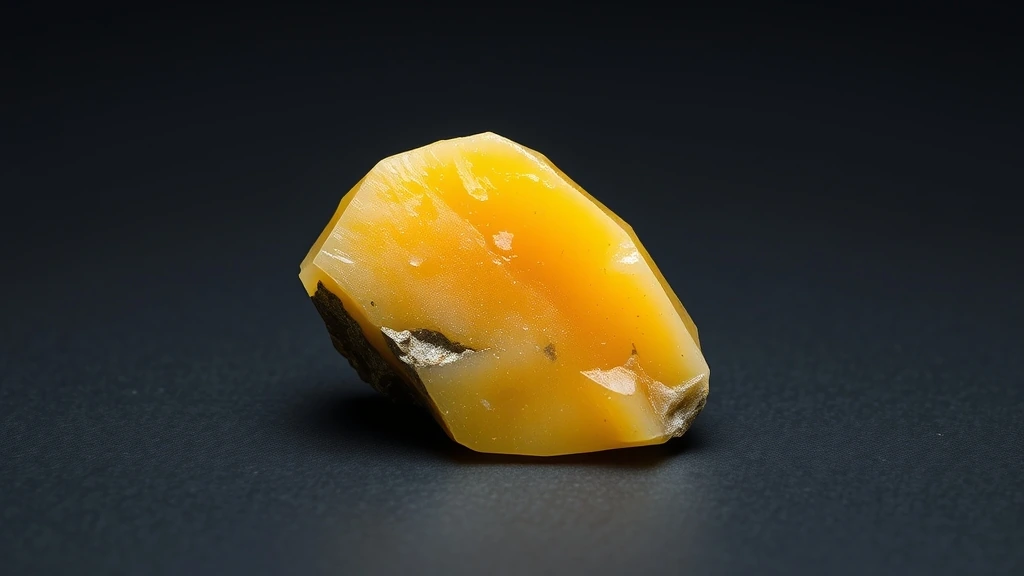
Yellow jade belongs to the Natural Mineral / Crystal group, specifically referring to impure varieties of nephrite or jadeite. These stones form through high-pressure metamorphic processes, creating dense, interlocking fibrous structures. Unlike pure gemstones, they often contain secondary minerals that influence their final aesthetic appearance.
What is Yellow Jade? Geological Overview & Definition
Yellow jade is not a distinct mineral species but a descriptive term for nephrite or jadeite with specific impurities. Nephrite consists primarily of tremolite-actinolite, while jadeite is a pyroxene variety. The yellow tint typically results from iron oxide inclusions or surface weathering effects.
Geologically, these stones form in ultramafic rocks subjected to extreme pressure and temperature. The fibrous interlocking crystals create exceptional toughness and resistance to fracture. This structural integrity allows for intricate carving without significant risk of breakage. While yellow jade’s durability stems from its fibrous crystal lattice, collectors often compare its resilience to the dense, chert-filled matrix of a Thunder Egg, which similarly withstands significant geological stress.
Yellow Jade Chemical Composition & Crystallographic Properties
The parent minerals exhibit a trigonal crystal system, characterized by a unique three-fold symmetry axis. This lattice arrangement contributes to the stone’s high density and optical properties. The fibrous habit of the crystals aligns along specific crystallographic directions. Interestingly, the serpentine group also includes Serpentinite, a metamorphic rock that shares similar fibrous structural characteristics but typically presents in distinct green hues rather than the yellow tones of jade.
Coloration stems from chromophore centers, primarily iron ions substituting within the silicate framework. These impurities absorb specific wavelengths of light, reflecting yellow hues to the observer. The concentration of these ions directly correlates with the intensity of the color.
Thermal behavior remains stable under standard lapidary conditions, though rapid temperature changes may cause stress. Acid sensitivity is low due to the robust silicate bond structure. Proper handling ensures the preservation of these delicate cation substitution patterns.
| Property | Specification |
|---|---|
| Mineral Group | Natural Mineral / Crystal |
| Mohs Hardness | 6.5 – 7.0 |
| Crystal System | Trigonal |
| Color & Optical Properties | Natural Yellow Jade color spectrum and optical dispersion |
| Primary Mining Localities | Global primary localities |
| Water & Chemical Resistance | High (Safe for gentle water washing) |
| Chakra Alignment (Traditional) | Sacral Chakra (Svadhishthana) |
| Zodiac Affinity (Traditional) | Gemini, Virgo |
| Symbolic Meaning (Traditional) | Creativity, motivation and self-confidence |
Yellow Jade Varieties & Color Spectrum
Yellow Jade displays distinct mineralogical characteristics across its geological varieties and structural habits. Gemologists evaluate these natural varieties based on crystal habit, trace chromophore concentrations, and visual luster.
Primary Natural Yellow Jade
The benchmark natural variety exhibiting diagnostic color saturation and classic crystallographic symmetry.
Distinct Geological Morphs of Yellow Jade
Secondary regional and structural varieties formed under localized geological temperature and pressure conditions.
Yellow Jadeite
Yellow jadeite originates from the Na₂SiO₃-rich, trigonal crystal system. Its hue ranges from pale lemon to deep amber, often exhibiting subtle veining of opaque brown or black inclusions. The mineral’s mohs hardness of 6.5–7.0 gives it a durable, slightly glossy finish. Yellow jadeite is relatively rare, prized for its vibrant color and fine grain.
Yellow Nephrite
Yellow nephrite forms in Mg₂SiO₄-based, orthorhombic structures, though it can crystallize in a trigonal lattice in some deposits. The stone displays a muted, buttery yellow tone with occasional white fibrous inclusions. Its density is lower than jadeite, giving it a lighter feel. Yellow nephrite is less common than its green counterpart, often sought after for its subtle warmth.
Yellow Beryl (Heliodor)
Heliodor, a beryl variety, crystallizes in the hexagonal system and exhibits a bright, translucent yellow. The gemstone may contain black inclusions that create a “flame” effect in polished facets. Heliodor’s mohs hardness of 7.5–8.0 makes it suitable for fine jewelry. Though not a true jade, its historical use as a “yellow jade” in some cultures underscores its visual similarity.
Yellow Jade from the Yunnan Province
Yunnan jade, a local trade variety, is typically a nephrite with a warm, honey‑yellow tone. It often contains black specks and a characteristic “fish eye” texture. The stone’s crystal habit is fibrous, giving it a slightly translucent appearance. Yunnan yellow jade is moderately rare, prized in regional markets for its distinctive color.
Yellow Jade from the Kachin State, Myanmar
Myanmar’s Kachin State yields jadeite with a striking golden hue. The stone frequently shows black veining and a fine, silky luster. Its density is high, contributing to a substantial weight. This variety is highly sought after by collectors, making it one of the most valuable yellow jade types.
Yellow Jade from the Sierra Nevada, California
In the Sierra Nevada, nephrite can appear in a pale, buttery yellow. The stone often contains white fibrous inclusions and a subtle crystalline texture. Its mohs hardness of 6.5–7.0 allows for intricate carving. Though less common than green nephrite, this variety is prized for its gentle hue.
Where is Yellow Jade Found? Geological Mining & Extraction
Yellow jade typically occurs in pegmatitic intrusions associated with granitic bodies. These pegmatites host Na₂SiO₃ or Mg₂SiO₄ crystals that develop under slow cooling, allowing large, well‑formed grains to form. Extraction focuses on regions with exposed pegmatite veins, such as the Yunnan Province in China, Kachin State in Myanmar, and the Sierra Nevada in the United States. Mining methods range from open‑pit quarrying to selective hand‑picking, with a growing emphasis on sustainable practices to preserve fragile geological formations.
Historical Significance & Cultural Lore of Yellow Jade
Across ancient Greco-Roman and Egyptian cultures, yellow jadeite was prized for its luminous color and believed to embody the sun’s vitality. Artifacts such as Egyptian amulets and Roman cameos feature yellow jade, underscoring its symbolic association with solar power and fertility. In Chinese tradition, yellow jade was linked to the earth element and used in ceremonial objects to convey authority and prosperity. The Vedic texts also reference yellow jade as a stone of creative inspiration, aligning with its modern esoteric associations of motivation and self‑confidence.
Modern Uses & Jewelry Applications of Yellow Jade
Yellow Jade is a versatile gemstone used in various lapidary applications, including cabochon cutting and faceted jewelry. Its vibrant yellow color makes it an attractive choice for ornamental carvings and decorative objects. Some common uses of Yellow Jade include:
- Pendants and rings featuring cabochon-cut stones
- Faceted Yellow Jade used in earrings and brooches
- Ornamental carvings, such as figurines and decorative boxes
Metaphysical Properties & Traditional Meaning of Yellow Jade
According to historical traditions and metaphysical lore, Yellow Jade is believed to possess symbolic properties that promote emotional resonance and spiritual growth. Across ancient lapidary traditions, Yellow Jade is thought to embody creativity, motivation, and self-confidence. In Vedic and Mediterranean traditions, Yellow Jade is associated with positive energy and balance.
Which Chakra and Zodiac Signs Align with Yellow Jade?
Yellow Jade is aligned with the Sacral Chakra (Svadhishthana), which is believed to govern creativity, passion, and inspiration. This alignment is thought to enhance the stone’s metaphysical properties and promote emotional balance.
The canonical zodiac signs associated with Yellow Jade are Gemini and Virgo. These signs are believed to resonate with the stone’s energetic properties, making it a suitable choice for individuals born under these signs. The alignment of Yellow Jade with Gemini and Virgo is thought to amplify its motivational and confidence-boosting effects.
Metaphysical Properties & Traditional Meaning of Yellow Jade (continued)
In historical metaphysical lore, Yellow Jade is believed to possess healing properties that can help balance the body and mind. Its vibrational energy is thought to promote harmony and well-being, making it a popular choice for meditation and spiritual practices.
How to Identify Real vs. Fake Yellow Jade
Yellow Jade can be imitated using artificial materials, such as synthetic glass or dyed replicas. These imitations can be difficult to distinguish from genuine Yellow Jade, making it essential to perform authenticity tests. Artificial imitations often lack the inclusions and imperfections found in natural Yellow Jade.
Practical At-Home Authenticity Tests
To verify the authenticity of Yellow Jade, you can perform the following tests:
- Temperature Test (Thermal Feel): Genuine Yellow Jade tends to feel cool to the touch, while artificial imitations may feel warmer or more neutral.
- Specific Gravity & Weight Test: Yellow Jade has a specific gravity of around 3.3-3.4, which can be measured using a density kit. Genuine Yellow Jade will feel heavier than artificial imitations.
- Scratch & Hardness Test (Mohs Comparison): Yellow Jade has a Mohs hardness of 6.5-7.0, which can be tested using a scratch kit. Genuine Yellow Jade will resist scratching, while artificial imitations may scratch more easily.
- Microscopic & Loupe Inspection (Internal Inclusions): Genuine Yellow Jade often contains inclusions, such as jadeite or chromite, which can be visible under magnification. Artificial imitations may lack these inclusions or have more uniform patterns.
Yellow Jade Valuation Factors, Grading & Pricing
The value of Yellow Jade is significantly influenced by its Color Saturation, with more vibrant and evenly colored specimens commanding higher prices. Visual vibrancy and natural energetic luster also play a crucial role in determining the stone’s value. The overall aesthetic appeal of the Yellow Jade is a key factor in its market valuation.
The Crystal Size & Weight (Grams) of Yellow Jade is another important factor in determining its value, with larger and heavier specimens generally being more valuable. The quality of the polish, whether raw or tumbled, and the presence of natural matrix inclusions can also impact the stone’s value. The size and weight of the crystal, combined with its polish quality, contribute to its overall value.
In holistic and collector markets, Ethical Sourcing & Locality Premium can significantly impact the value of Yellow Jade. Specimens sourced from reputable and sustainable sources may command a premium price, while those with uncertain or questionable provenance may be valued lower. The locality and sourcing of the Yellow Jade can greatly influence its market value and desirability.
How to Clean and Care for Yellow Jade
To clean Yellow Jade, use warm soapy water and a soft cloth, gently wiping away any dirt or debris. Avoid using ultrasonic cleaners, as they can cause structural fractures and damage the stone. This method is safe and effective for cleaning Yellow Jade, and it helps to preserve the stone’s natural beauty.
Cleansing and Recharging Yellow Jade (Energetic Care)
Yellow Jade can be cleansed and recharged using safe and gentle methods, such as herbal smudging or gentle moonlight exposure. These methods help to restore the stone’s natural energy and promote its metaphysical properties. By placing the Yellow Jade on a selenite charging slab, it can absorb the slab’s cleansing energy and become rejuvenated.
To further cleanse and recharge Yellow Jade, it can be left to rest in a peaceful and calm environment, allowing it to absorb the surrounding energy. Gentle moonlight exposure can also help to recharge the stone, and it can be placed on a windowsill or outside during a full moon to maximize its exposure. This method is safe and effective, and it helps to maintain the stone’s natural balance and harmony.
Frequently Asked Questions About Yellow Jade
Yellow Jade displays distinct mineralogical characteristics across its geological varieties and structural habits. Gemologists evaluate these natural varieties based on crystal habit, trace chromophore concentrations, and visual luster.
Primary Natural Yellow Jade
The benchmark natural variety exhibiting diagnostic color saturation and classic crystallographic symmetry.
Distinct Geological Morphs of Yellow Jade
Secondary regional and structural varieties formed under localized geological temperature and pressure conditions.
Is Yellow Jade suitable for everyday wear?
Yes, it is durable enough for daily wear. With a Mohs hardness of 6.5 – 7.0, Yellow Jade can withstand normal wear and tear, making it a great choice for jewelry.
Can Yellow Jade be worn in the shower?
It is safe for gentle water washing. Yellow Jade has high water resistance, allowing it to be worn in the shower without worrying about damage from water exposure.
How do I clean my Yellow Jade jewelry?
Use warm soapy water and a soft cloth. Avoid using harsh chemicals or abrasive materials, and never use an ultrasonic cleaner, as it can cause structural fractures.
Is Yellow Jade associated with any zodiac signs?
Yes, it is associated with Gemini and Virgo. These two zodiac signs are believed to be aligned with the energies of Yellow Jade, making it a great choice for individuals born under these signs.
Which chakra is Yellow Jade associated with?
It is associated with the Sacral Chakra (Svadhishthana). This chakra is linked to creativity, motivation, and self-confidence, making Yellow Jade a great choice for those seeking to balance these energies.
Can I use an ultrasonic cleaner to clean my Yellow Jade?
No, it is not recommended. Using an ultrasonic cleaner can cause structural fractures in the Yellow Jade, damaging its appearance and integrity.
Is Yellow Jade a good choice for someone looking to boost their creativity?
Yes, it is believed to enhance creativity. Yellow Jade is associated with the Sacral Chakra, which is linked to creativity, motivation, and self-confidence, making it a great choice for artists and individuals seeking inspiration.
How do I store my Yellow Jade jewelry to keep it safe?
Store it in a cool, dry place, away from direct sunlight. Avoid exposing Yellow Jade to extreme temperatures or harsh chemicals, and store it separately from other jewelry to prevent scratching or damage.