
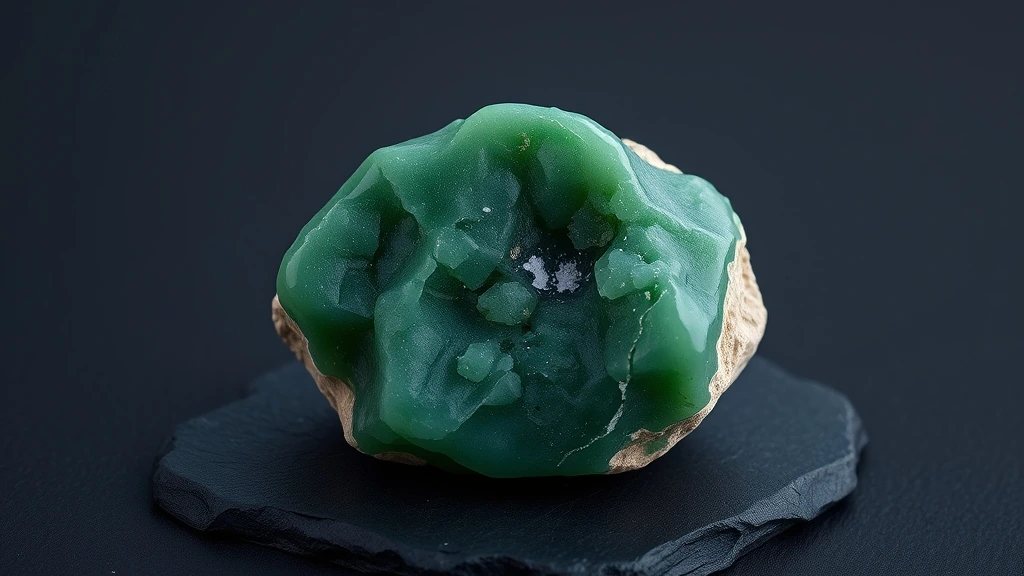
Jadeite belongs to the pyroxene group of silicate minerals, forming through high-pressure metamorphism in tectonic collision zones. As a natural mineral crystal, it represents a distinct geological entity separate from nephrite, sharing only the cultural designation of “jade.” Its formation requires specific geochemical conditions that favor the stability of the jadeite structure over other pyroxenes.
What is Jadeite Gemstone? Geological Overview & Definition
Jadeite is defined as a monoclinic pyroxene that occurs in metamorphic rocks, typically within ophiolite complexes. Unlike nephrite, which is a fibrous aggregate of actinolite, jadeite consists of interlocking crystal grains that provide its characteristic toughness. This structural arrangement allows the stone to withstand significant impact without shattering, a key property for lapidaries.
The term “jadeite” distinguishes this specific mineral species from the broader cultural category of jade. Geologically, it forms under ultrahigh-pressure conditions, often associated with subduction zones where oceanic crust is forced deep into the mantle. This unique origin contributes to its rarity and the high value placed on gem-quality specimens in the global market.
Jadeite Gemstone Chemical Composition & Crystallographic Properties
Jadeite crystallizes in the monoclinic system, characterized by a specific lattice arrangement that influences its optical properties. The unit cell parameters define its crystallographic symmetry, which is essential for accurate identification and grading. This structure results in a refractive index ranging from 1.654 to 1.693, contributing to its high luster and brilliance.
The primary chemical composition is NaAlSi₂O₆, though minor substitutions of iron for aluminum can occur. These cation substitutions slightly alter the density, which typically ranges from 3.24 to 3.43 g/cm³. The presence of trace elements can also affect the stone’s stability and long-term durability in various environmental conditions.
Color in jadeite is primarily driven by chromophore centers, specifically trace amounts of chromium or iron. These impurities create the iconic green shades, with Cr³⁺ ions responsible for the most desirable vivid tones. The intensity of the color depends on the concentration and distribution of these color centers within the crystal lattice.
Jadeite exhibits moderate thermal stability, though extreme heat can cause structural degradation or color fading. It is generally resistant to weak acids but may react with strong hydrofluoric acid. Understanding these thermal behaviors is crucial for proper care and maintenance of jadeite jewelry to preserve its aesthetic and structural integrity.
| Property | Specification |
|---|---|
| Mineral Group | Natural Mineral / Crystal |
| Chemical Formula | NaAlSi₂ O₆ or Na(Al,Fe³⁺ )Si₂ O₆ |
| Mohs Hardness | 6.5–7 |
| Crystal System | Monoclinic |
| Specific Gravity (Density) | 3.24 to 3.43 |
| Refractive Index | nα = 1.654 – 1.673 nβ = 1.659 – 1.679 nγ = 1.667 – 1.693 |
| Color & Optical Properties | Natural Jadeite Gemstone color spectrum and optical dispersion |
| Primary Mining Localities | Global primary localities |
| Water & Chemical Resistance | High (Safe for gentle water washing) |
| Chakra Alignment (Traditional) | Heart Chakra |
| Zodiac Affinity (Traditional) | Taurus, Cancer, Capricorn |
| Symbolic Meaning (Traditional) | Emotional balance, harmony, and protection |
Jade Varieties & Comprehensive Sub-Types
Jadeite
Jadeite is a sodium-rich pyroxene mineral that forms under high-pressure metamorphic conditions, typically within subduction zones. Its vibrant imperial green hue stems from trace chromium impurities, while other varieties display lavender or red tones. Gemologists value its translucent quality and distinct banding morphology, which often results from fluid flow during crystallization.
In the global market, jadeite commands the highest prices due to its rarity and vivid color saturation. The stone exhibits a Mohs hardness of 6.5–7, making it durable for jewelry but requiring careful cutting. Inclusions such as white “rice grain” spots are common and serve as natural identifiers against synthetic imitations.
Nephrite
Nephrite is an interlocking aggregate of tremolite-actinolite amphiboles, forming a dense, fibrous structure that resists splitting. This unique microstructure grants it exceptional fracture toughness, allowing it to withstand significant impact without shattering. Its surface typically displays a characteristic oily luster rather than the glassy sheen seen in pyroxene jades.
The color spectrum ranges from deep spinach green to pale mutton-fat white, with the latter being highly prized in traditional Asian markets. Unlike jadeite, nephrite lacks distinct crystal faces, appearing as a massive, homogeneous rock. Its lower density and softer nature make it easier to carve into intricate figurative art.
Omphacite Jade
Omphacite is a dark green pyroxene closely related to jadeite, often found in eclogite facies metamorphic rocks. It shares the monoclinic crystal system with jadeite but typically exhibits a deeper, less vibrant green shade. This variety is less common in high-end jewelry but remains significant in mineralogical collections.
Gemologists appreciate omphacite for its suitability in fine carving and polished cabochons, where its deep color provides a striking contrast. While it lacks the intense saturation of imperial jadeite, its structural integrity supports detailed artistic work. Trade status remains niche, with most material directed toward artisanal sculpture rather than faceted gemstones.
In lapidary practice, gemologists differentiate these varieties primarily through refractive index measurements and specific gravity tests. Jadeite and omphacite share similar optical properties, while nephrite exhibits distinctly lower density and birefringence. Understanding these mineralogical distinctions ensures accurate identification and valuation in the gem trade.
Where is Jadeite Gemstone Found? Geological Mining & Extraction
Jadeite deposits are predominantly found in metamorphic belts associated with tectonic plate collisions, particularly in Myanmar, Guatemala, and Japan. The primary host rocks are often eclogites or high-pressure schists, where intense pressure transforms basaltic rocks into jadeite. These geological settings are rare, limiting the global supply of high-quality gem material.
Extraction typically involves open-pit mining or small-scale alluvial panning, depending on the deposit type. In Myanmar, the Kayah State remains the world’s most significant source of imperial green jadeite. Rigorous geological surveys are essential to locate viable veins within the complex host rock matrix.
Historical Significance & Cultural Lore of Jadeite Gemstone
For millennia, jade has symbolized virtue, purity, and eternal life in ancient Chinese civilization. Archaeological artifacts from the Neolithic Yangshao culture reveal sophisticated carving techniques used to create ritual vessels and ornaments. These objects were reserved for the elite, reflecting the stone’s profound cultural significance and spiritual power.
Beyond Asia, jadeite played a crucial role in Mesoamerican cultures, where it was valued as a sacred material. The Maya and Aztec civilizations crafted intricate masks and jewelry from this stone, associating it with rain and fertility. Its enduring legacy continues to influence modern gemological standards and cultural appreciation today.
Modern Uses & Jewelry Applications of Jadeite Gemstone
Jadeite is primarily valued for its rich color and durability, making it a staple in high-end jewelry and ornamental arts. Lapidaries often prefer cabochon cuts to showcase the stone’s translucency and waxy luster without risking fractures during faceting. For intricate designs, master carvers utilize the mineral’s toughness to create detailed figurines and ceremonial objects.
- Cabochon Jewelry: Smooth, domed cuts highlight the refractive index and internal “jadeite effect.”
- Faceted Stones: Rare, high-clarity pieces are cut into brilliant or step facets for rings.
- Ornamental Carving: Traditional Chinese and Burmese artisans carve beads, bangles, and statues.
- Architectural Inlays: Large slabs are used for decorative panels in luxury interiors.
Metaphysical Properties & Traditional Meaning of Jadeite Gemstone
According to historical traditions and metaphysical lore, jadeite is revered as a stone of harmony and protection. Practitioners believe it fosters emotional balance and shields the wearer from negative energies. The gem is often associated with emotional resilience, helping individuals navigate life’s challenges with grace.
In modern crystal healing, jadeite is thought to promote spiritual growth and clarity of mind. It is frequently used in meditation to center the energy body and enhance intuition. This deep connection to inner peace makes it a popular choice for those seeking stability.
Which Chakra and Zodiac Signs Align with Jadeite Gemstone?
Jadeite is canonically aligned with the Root Chakra and the Heart Chakra. The Root connection grounds the wearer, providing a sense of security and physical vitality. Simultaneously, the Heart alignment encourages compassion, love, and emotional healing. This dual resonance supports both physical stability and spiritual openness.
Astrologically, jadeite is most compatible with Taurus, Gemini, and Leo. Taurus appreciates the stone’s earthy stability, while Gemini benefits from its communicative clarity. Leo resonates with the gem’s vibrant energy and protective qualities. These signs find their personal attributes amplified by the jadeite’s metaphysical properties.
How to Identify Real vs. Fake Jadeite Gemstone
Distinguishing genuine jadeite from imitations requires careful observation, as many substitutes mimic its appearance. Common fakes include synthetic glass, dyed quartzite, and polymer composites. These alternatives often lack the natural inclusion patterns and specific gravity of authentic jadeite.
Practical At-Home Authenticity Tests
- Temperature Test (Thermal Feel): Genuine jadeite feels cool to the touch initially due to its high thermal conductivity. It warms up slowly compared to glass or plastic, which become room temperature almost instantly.
- Specific Gravity & Weight Test: Real jadeite has a density of 3.24 to 3.43, making it feel significantly heavier than glass or quartz of the same size. A hydrostatic weighing kit can confirm this specific gravity accurately.
- Scratch & Hardness Test (Mohs Comparison): With a Mohs hardness of 6.5–7, jadeite can scratch glass (hardness 5.5). However, it should not be easily scratched by a steel knife (hardness 5.5).
- Microscopic & Loupe Inspection (Internal Inclusions): Use a 10x loupe to look for natural “jittery” inclusions or color zoning. Glass imitations often contain circular bubbles, while dyed stones show color concentrated in surface cracks.
Jadeite Gemstone Valuation Factors, Grading & Pricing
The most critical determinant of value is Color Saturation, specifically the vivid green hue known as “Imperial Jade.” Experts assess tone uniformity across the stone to ensure no dull or patchy areas diminish its appeal. High optical clarity and a distinct vitreous luster further elevate the gem’s desirability in the premium market.
Carat Weight significantly influences pricing, as large, flawless jadeite stones are exceptionally rare in nature. Facet symmetry and cut quality impact light reflection, though many high-value pieces remain carved cabochons. The presence of matrix or visible inclusions generally reduces the overall valuation of the specimen.
Geographical Provenance Premium plays a major role, with stones from Myanmar commanding the highest prices globally. Wholesale values fluctuate based on supply chain stability and regional demand trends. Retail prices often reflect significant markups over wholesale rates for certified, high-grade material.
How to Clean and Care for Jadeite Gemstone
To maintain the integrity of your jadeite, always use warm soapy water and a soft, lint-free cloth for gentle cleaning. This method effectively removes surface oils and dust without risking damage to the stone’s structure. Ensure the water is lukewarm to avoid any thermal shock to the mineral lattice.
You must strictly avoid ultrasonic cleaners as they can induce structural fractures within the jadeite. The stone’s monoclinic crystal system makes it susceptible to stress from high-frequency vibrations. Regularly inspect the piece for any new cracks or chips after handling to ensure long-term durability.
Cleansing and Recharging Jadeite Gemstone (Energetic Care)
For energetic maintenance, place the stone on a selenite plate overnight to absorb negative energies safely. This dry method respects the mineral’s physical properties while promoting a sense of renewal. Avoid submerging the stone in salt water, as prolonged exposure can degrade its surface finish.
Alternatively, you may use smoke smudging with sage or palo santo to clear the stone’s energy field. This technique involves wafting the smoke around the gem without direct contact. Finally, exposing the jadeite to gentle moonlight is a popular, non-invasive way to recharge its vibrational qualities.
Frequently Asked Questions About Jadeite Gemstone
Is jadeite safe to wear in the shower?
Yes, jadeite is safe for gentle water exposure during daily activities. Its high water resistance allows it to withstand brief contact with shower water without damage. However, prolonged soaking or exposure to harsh soaps should be avoided to maintain its luster. Always dry the stone thoroughly after washing to prevent any potential surface residue buildup.
Can I clean jadeite in an ultrasonic cleaner?
No, you should strictly avoid using ultrasonic cleaners on jadeite. The high-frequency vibrations can induce structural fractures within the stone’s complex crystal lattice. Instead, use warm soapy water and a soft cloth for gentle cleaning. This method effectively removes oils and dirt while preserving the integrity of the gemstone.
Which zodiac signs are compatible with jadeite?
Jadeite is astrologically aligned with Taurus, Gemini, and Leo. These signs are believed to resonate with the stone’s stabilizing and protective energies. Wearing jadeite may enhance personal attributes associated with these constellations. Many practitioners recommend this gemstone for individuals seeking balance and clarity in their daily lives.
Which chakras does jadeite activate?
Jadeite primarily activates the Heart Chakra. This dual alignment connects physical grounding with emotional well-being. It helps balance the energy flow between these two vital centers. This makes it a powerful stone for meditation and spiritual healing practices.
What is the chemical formula of jadeite?
The primary chemical formula for jadeite is NaAlSi₂O₆. This composition defines it as a pyroxene mineral distinct from nephrite. Trace elements like iron can substitute for aluminum, altering the stone’s color. Understanding this formula helps distinguish genuine jadeite from other similar-looking green minerals.
How hard is jadeite on the Mohs scale?
Jadeite measures between 6.5 and 7 on the Mohs hardness scale. This makes it durable enough for rings and bracelets. However, it is still susceptible to scratching from harder minerals like diamond. Proper care is essential to maintain the stone’s polished surface over time.
What is the crystal system of jadeite?
Jadeite crystallizes in the Monoclinic system. This structure influences its cleavage and fracture patterns. The monoclinic arrangement contributes to the stone’s characteristic luster and optical properties. Knowing this helps gemologists identify and evaluate the quality of raw jadeite specimens.
What is the refractive index of jadeite?
Jadeite has a refractive index ranging from 1.654 to 1.693. This high value indicates strong light reflection and brilliance. It is a key diagnostic property for distinguishing jadeite from glass or other imitations. Gemologists use this measurement to verify the authenticity of the gemstone.