
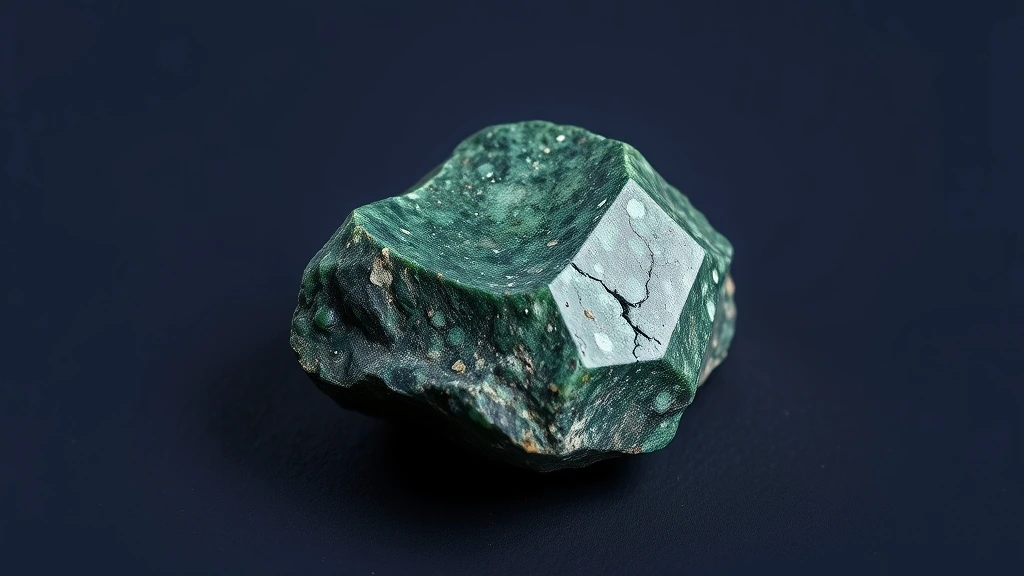
Serpentine belongs to the broader natural mineral / crystal group and is classified as a silicate of the phyllosilicate subclass. It forms in metamorphic environments where ultramafic rocks undergo serpentinization, a process that alters peridotite and dunite into fibrous or massive aggregates. The mineral’s layered structure imparts a characteristic silky luster and a tendency to cleave along basal planes. Though often used as a gemstone, its low hardness and susceptibility to acids limit its use in high‑wear jewelry.
What is Serpentine? Geological Overview & Definition
Serpentine describes a suite of closely related phyllosilicate minerals that share a common sheet‑like crystal architecture. These minerals typically occur in serpentinized mantle peridotites, where hydrothermal fluids introduce hydroxyl groups and promote the transformation of olivine and pyroxene.
The term also encompasses a range of varieties—such as chrysotile, antigorite, and lizardite—each distinguished by subtle differences in layer stacking and water content. All members retain the core Mg‑Si‑O‑OH chemistry, yet their physical expressions (fibrous, massive, or nodular) differ markedly.
Serpentine Chemical Composition & Crystallographic Properties
The idealized formula Mg₃Si₂O₅(OH)₄ reflects a trio of magnesium cations coordinated to silicate sheets and interlayer hydroxyl groups. In natural specimens, Fe²⁺ and occasionally Ni²⁺ can substitute for Mg²⁺, producing darker hues and influencing magnetic susceptibility.
Serpentine crystallizes in the monoclinic system, with a single two‑fold axis and a distinct β angle deviating from 90°, yielding a slightly skewed lattice. Antigorite, the most common monoclinic polytype, displays a corrugated sheet structure that accommodates strain during metamorphism.
Acid sensitivity is a hallmark of serpentine; dilute hydrochloric acid reacts with the hydroxyl layers, releasing Mg²⁺ ions and producing effervescence. This reaction is a diagnostic field test distinguishing serpentine from chemically similar minerals such as talc.
Color in serpentine arises from trace transition‑metal chromophores, chiefly Fe³⁺, which generate green to brown tones through crystal‑field absorption. Upon heating above 600 °C, serpentine dehydrates, converting to forsterite and silica, a transformation that explains its use as a source of magnesium in industrial processes.
| Property | Specification |
|---|---|
| Mineral Group | Natural Mineral / Crystal |
| Chemical Formula | Mg₃Si₂O₅(OH)₄ |
| Mohs Hardness | 2.5 – 4.0 |
| Crystal System | Monoclinic |
| Specific Gravity (Density) | 2.55 – 2.65 |
| Refractive Index | 1.560 – 1.580 |
| Color & Optical Properties | Natural Serpentine color spectrum and optical dispersion |
| Primary Mining Localities | Global primary localities |
| Water & Chemical Resistance | Sensitive (Avoid prolonged water soaking) |
| Chakra Alignment (Traditional) | Heart Chakra, Root Chakra |
| Zodiac Affinity (Traditional) | Taurus, Virgo, Cancer |
| Symbolic Meaning (Traditional) | Emotional healing, nurturing, and grounding |
Serpentine Varieties & Color Spectrum
Chrysotile
Formed in ultramafic serpentinized peridotites, chrysotile fibers grow as flexible, hair‑like aggregates. The mineral often incorporates iron‑rich inclusions that lend a pale green to yellow hue, while the fibrous texture distinguishes it from massive serpentine. Though abundant in mining waste, gem‑quality chrysotile is rare, prized for its silky luster in high‑end jewelry.
Antigorite
Antigorite crystallizes in the metamorphic zones of subduction zones where Mg‑rich fluids alter peridotite. Its sheets display a characteristic waxy sheen and range from deep emerald to olive‑brown, frequently banded with mica or chlorite. Large, transparent plates are uncommon, making fine‑cut antigorite a collector’s treasure.
Lizardite
Lizardite develops in low‑temperature hydrothermal veins, producing compact, granular masses. The variety exhibits a bright, almost neon apple‑green color, sometimes speckled with black magnetite inclusions that enhance its visual depth. Because it forms in limited locales such as Madagascar, gem‑grade lizardite commands premium prices.
Serpentinized Jadeite (Jade Serpentine)
In the Philippines and Myanmar, jadeite undergoes serpentinization, yielding a dense, translucent jade‑like stone with a buttery green to blue‑gray palette. The material retains jadeite’s toughness while displaying fine, needle‑like inclusions that create a subtle chatoyancy. Its rarity stems from the narrow geological window where jadeite and serpentine coexist.
New Caledonian Serpentine (Verdite)
Verdite originates from the ultramafic complexes of New Caledonia, where prolonged weathering produces a vivid emerald‑green stone with occasional black veining. The mineral’s high silica content imparts a smooth polish, making it a favorite for cabochons and ornamental carvings. Limited quarry access keeps Verdite among the most sought‑after serpentine gems.
Tanzanian Serpentine (Kyanite‑Streaked)
Found in the Tanzanian Rift, this serpentine incorporates fine kyanite fibers, giving a striking blue‑green streak across a creamy matrix. The intergrowth of silicate minerals creates a unique iridescent effect under light, prized by designers for its exotic appearance. Its extraction is constrained by remote mining sites, adding to its exclusivity.
Where is Serpentine Found? Geological Mining & Extraction
Serpentine occurs predominantly within ultramafic mantle rocks such as peridotite and dunite, where hydrothermal alteration replaces olivine and pyroxene. These deposits are often hosted in tectonic settings like ophiolite belts, where serpentinization produces massive sheets and fibrous veins that can be mined via open‑pit or underground methods.
Major commercial sources include the Ural Mountains (Russia), Madagascar, New Caledonia, and the Philippines, each offering distinct color morphs tied to local geology. Extraction typically involves crushing serpentine‑rich ore, followed by gravity separation and hand‑sorting to isolate gem‑quality material, while strict environmental regulations govern waste management in these sensitive regions.
Historical Significance & Cultural Lore of Serpentine
Ancient Mesopotamians fashioned serpentine into cylinder seals and amulets, believing the stone’s green hue symbolized fertility and renewal. In Egypt, serpentine beads adorned royal tombs, and the material was associated with the god Osiris, who embodied rebirth and the afterlife.
In the Greco‑Roman world, serpentine was carved into cameos and intaglios, prized for its workability and perceived protective qualities. Asian cultures, especially in China and Japan, used serpentine for ritual vessels, linking its earthy energy to grounding and emotional healing—a belief that persists in contemporary metaphysical practices.
Modern Uses & Jewelry Applications of Serpentine
Serpentine’s soft texture and vibrant green hues make it a favorite for cabochon cutting and ornamental carving. Lapidaries often polish the stone into smooth, rounded shapes to highlight its waxy luster and intricate banding patterns. Because it is relatively easy to work with, artisans frequently use it for detailed sculptures and decorative inlays.
- Cabochons: The most common cut, showcasing the stone’s natural color gradients and smooth surface.
- Ornamental Carvings: Used for small figurines, beads, and decorative panels due to its workability.
- Faceted Gems: Rarely faceted due to low hardness, but occasionally cut for unique, low-profile designs.
- Architectural Elements: Historically used in flooring and wall cladding for its durability and aesthetic appeal.
Metaphysical Properties & Traditional Meaning of Serpentine
According to historical traditions and metaphysical lore, serpentine is revered for its emotional healing and nurturing qualities. Practitioners believe the stone fosters a sense of calm and helps individuals process deep-seated emotional traumas. It is often associated with grounding, helping to anchor the spirit to the physical realm.
The stone’s symbolic significance extends to personal growth and self-acceptance. Many believe it encourages spiritual attributes of compassion and patience, aiding in the development of a balanced mindset. Its presence in meditation practices is thought to enhance intuition and promote a harmonious connection with nature.
Which Chakra and Zodiac Signs Align with Serpentine?
Serpentine is canonically aligned with the Heart Chakra, promoting love, compassion, and emotional balance. It also resonates deeply with the Root Chakra, providing a sense of security and stability. This dual alignment supports both emotional well-being and physical grounding.
In astrological traditions, serpentine is specifically linked to Taurus, Virgo, and Cancer. These earth and water signs are believed to benefit from the stone’s nurturing energy. Taurus finds stability, Virgo gains clarity, and Cancer experiences emotional soothing through this gemstone.
How to Identify Real vs. Fake Serpentine
Artificial imitations of serpentine are common, including synthetic glass, dyed quartz, and plastic replicas. These fakes often mimic the stone’s green color but lack its natural texture and weight. Understanding the differences is crucial for collectors and buyers to avoid purchasing counterfeit materials.
Practical At-Home Authenticity Tests
- Temperature Test (Thermal Feel): Real serpentine feels cool to the touch initially and warms up slowly. Glass or plastic imitations may feel warmer or heat up more quickly due to different thermal conductivity.
- Specific Gravity & Weight Test: Genuine serpentine has a density of 2.55–2.65. It should feel heavier than plastic or lightweight glass of the same size. Compare it with a known authentic stone for accuracy.
- Scratch & Hardness Test (Mohs Comparison): With a Mohs hardness of 2.5–4.0, serpentine can be scratched by a steel knife or a copper coin. Harder fakes like quartz will not scratch easily under these conditions.
- Microscopic & Loupe Inspection (Internal Inclusions): Use a 10x loupe to examine the stone. Real serpentine often shows natural banding, inclusions, or slight imperfections. Glass may contain bubbles, while plastic may have a uniform, artificial appearance.
Serpentine Valuation Factors, Grading & Pricing
Color saturation drives market demand, with vivid greens and deep mottled patterns commanding premium prices. Collectors prize stones that display a natural, even luster without artificial enhancement, as the visual vibrancy signals minimal treatment. A well‑balanced hue range, from apple‑green to olive, often reflects higher geological rarity and thus higher valuation.
Crystal size and weight, expressed in grams, are the primary quantitative metrics for pricing. Larger, intact specimens with minimal fractures fetch higher rates, especially when the surface is expertly tumbled to a high polish that showcases the mineral’s silky sheen. Natural matrix inclusions, such as serpentine‑veined quartz, can add character but may reduce value if they compromise structural integrity.
Ethical sourcing and locality premium increasingly influence both holistic and collector markets. Stones mined under fair‑trade practices in regions like New Zealand or the Balkans attract buyers willing to pay extra for provenance that guarantees environmental stewardship and community benefit. Provenance documentation and transparent supply chains add a layer of trust that can elevate a piece’s market price.
How to Clean and Care for Serpentine
Gently wipe the surface with a lightly dampened cloth, then immediately dry with a soft, lint‑free microfiber towel to prevent moisture absorption. Avoid prolonged soaking, as serpentine is moisture‑sensitive and prolonged exposure can weaken its structure. Ultrasonic cleaners must not be used, because the vibrations can cause micro‑fractures in the crystal lattice. Store the gemstone in a low‑humidity environment, away from direct contact with liquids or excessive heat.
Cleansing and Recharging Serpentine (Energetic Care)
For energetic maintenance, place the stone in a clean, dry area and expose it to gentle moonlight for several hours, allowing lunar energy to refresh its vibrational field without heat stress. Alternatively, a brief session of herbal smudging with sage or cedar can clear stagnant energies, provided the smoke is light and the stone is not directly wetted.
Resting the serpentine on a selenite charging slab offers a non‑thermal method to harmonize its frequencies, as selenite’s own lattice gently imparts balanced energy. Ensure the slab is dry and free of moisture, and limit exposure to a few minutes each week to maintain the stone’s structural integrity while supporting its emotional healing properties.
Frequently Asked Questions About Serpentine
Is serpentine safe to wear in the shower?
No, serpentine is water-sensitive and should not be exposed to prolonged soaking. The mineral’s layered structure can absorb moisture, leading to potential structural weakening over time. Always remove serpentine jewelry before showering or swimming to preserve its integrity.
How should I clean my serpentine jewelry?
Wipe the stone briefly with a damp cloth and dry it immediately. Avoid using ultrasonic cleaners, as the vibrations can cause structural fractures in this softer mineral. Gentle, dry maintenance with a microfiber cloth is the safest long-term care method.
What is the Mohs hardness of serpentine?
Serpentine has a Mohs hardness ranging from 2.5 to 4.0, making it relatively soft and prone to scratching. This low durability means it should be stored separately from harder gemstones to prevent surface damage during daily wear or storage.
Which zodiac signs are aligned with serpentine?
Serpentine is traditionally associated with Taurus, Virgo, and Cancer in astrological practices. These earth and water signs are believed to resonate with the stone’s grounding and nurturing energies, enhancing emotional stability and connection to the earth.
What chakras does serpentine activate?
This stone is primarily linked to the Heart Chakra and Root Chakra. It is used to promote emotional healing and grounding, helping to balance feelings of love with a stable, secure foundation in daily life and spiritual practice.
Can I use an ultrasonic cleaner on serpentine?
No, you must avoid ultrasonic cleaners for serpentine. The high-frequency vibrations can induce structural fractures due to the mineral’s inherent brittleness and low hardness. Stick to gentle wiping with a damp cloth for all cleaning needs.
What is the chemical formula of serpentine?
The primary chemical formula is Mg₃Si₂O₅(OH)₄, representing a hydrated magnesium silicate. This composition contributes to its characteristic green color and monoclinic crystal system, distinguishing it from other similar-looking green gemstones in the market.
Is serpentine a durable for daily wear?
Serpentine is moderately durable but requires careful handling due to its low hardness and water sensitivity. While suitable for occasional wear, it is best reserved for special occasions to minimize exposure to impacts, water, and abrasive surfaces.