
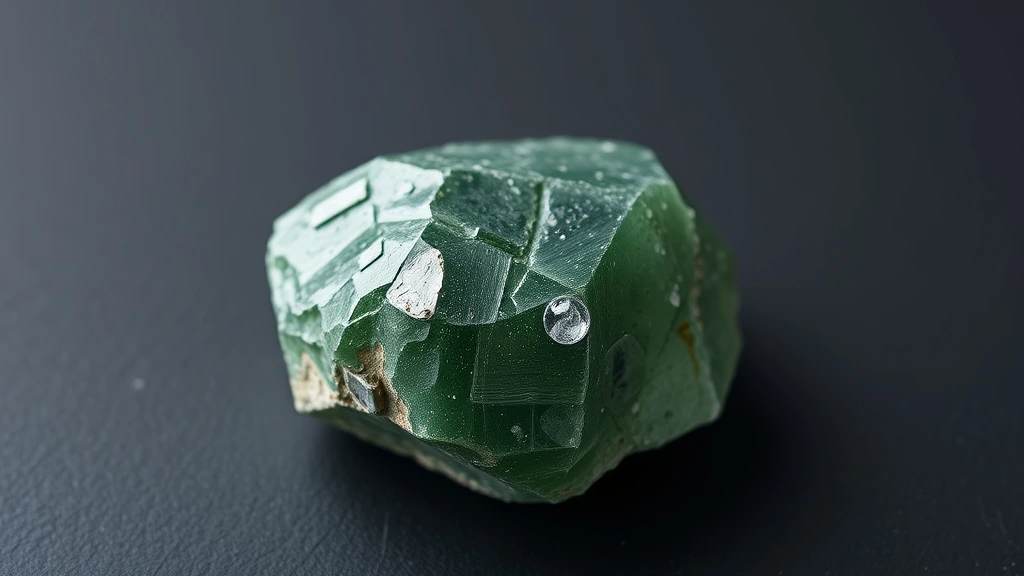
Chlorite belongs to the Natural Mineral / Crystal classification, specifically within the phyllosilicate supergroup. It forms through the low-temperature alteration of mafic minerals in metamorphic and sedimentary environments. This geological origin contributes to its soft, platy texture and widespread occurrence globally.
What is Chlorite Gemstone? Geological Overview & Definition
Chlorite is primarily found in low-grade metamorphic rocks, where it replaces primary minerals like biotite or pyroxene. This metamorphic transformation occurs under specific pressure and temperature conditions, resulting in the characteristic green hue. Gem-quality specimens are rare, typically occurring as well-formed crystals or massive aggregates.
As a phyllosilicate, chlorite exhibits perfect basal cleavage, allowing it to split into thin, flexible sheets. This structural feature significantly impacts its durability and suitability for jewelry cutting. Most gemstone varieties, such as chlorite-chrysotile, form in serpentinized ultramafic rocks, adding complexity to their geological provenance.
Chlorite Gemstone Chemical Composition & Crystallographic Properties
The crystal system for this specific classification is Amorphous / Cryptocrystalline, indicating a lack of long-range atomic order. Unlike well-crystallized minerals, these forms consist of extremely fine-grained aggregates that appear uniform to the naked eye. This structure prevents the formation of distinct, large crystal faces typically seen in macrocrystalline varieties.
The lattice structure involves a 2:1:1 arrangement of tetrahedral and octahedral sheets, linked by interlayer cations. Cation substitution within the octahedral sites, particularly involving iron and magnesium, heavily influences the mineral’s physical properties. These substitutions create charge imbalances that are compensated by interlayer ions like potassium or calcium.
Chlorite is highly sensitive to acidic environments, which can degrade its structural integrity over time. The primary chromophore responsible for its green color is iron in the ferrous state, occupying specific octahedral positions. Thermal behavior is generally stable at room temperature, but high heat can dehydrate the structure, leading to irreversible structural changes.
| Property | Specification |
|---|---|
| Mineral Group | Natural Mineral / Crystal |
| Chemical Formula | Complex group; general formula (Mg,Fe,Al)₃(Al,Si)₄O₁₀(OH)₈ |
| Mohs Hardness | 2.0 – 2.5 |
| Crystal System | Monoclinic |
| Specific Gravity (Density) | 2.6 – 3.0 |
| Refractive Index | 1.58 – 1.63 |
| Color & Optical Properties | Natural Chlorite Gemstone color spectrum and optical dispersion |
| Primary Mining Localities | Global primary localities |
| Water & Chemical Resistance | High (Safe for gentle water washing) |
| Chakra Alignment (Traditional) | Heart Chakra, Root Chakra |
| Zodiac Affinity (Traditional) | Taurus, Virgo, Capricorn |
| Symbolic Meaning (Traditional) | Grounding, emotional stability, and connection to nature |
Chlorite Gemstone Varieties & Color Spectrum
Chlorite is not a single mineral but a group of sheet silicates with complex chemical structures. The most common species include clinochlore, ripidolite, and pycnochlorite, each with distinct crystal habits. Understanding these differences is crucial for accurate gemological identification and valuation.
Clinochlore
Clinochlore is the most prevalent chlorite species found in gem-quality deposits worldwide. It typically exhibits a translucent green hue with a distinct pearly luster on cleavage surfaces. This variety often forms in low-temperature metamorphic environments, resulting in fine-grained aggregates.
Its visual signature includes a soft, waxy appearance that distinguishes it from other green gemstones. Inclusions of quartz or feldspar are common, adding texture to the stone’s interior. High-grade clinochlore is rare, as most specimens are too opaque for faceting.
Ripidolite
Ripidolite is a magnesium-rich chlorite variety known for its bright, apple-green coloration. It frequently occurs in hydrothermal veins associated with tin and tungsten ore deposits. This mineral often displays a vitreous to pearly luster, enhancing its aesthetic appeal.
The crystal structure of ripidolite allows for excellent cleavage, which can complicate cutting processes. Gem-quality pieces are typically small and may contain minor inclusions of mica or quartz. Its rarity makes it a sought-after specimen among mineral collectors.
Pycnochlorite
Pycnochlorite is a rare, high-iron chlorite variety characterized by a deep, dark green color. It forms under specific pressure conditions, often in association with garnet and staurolite. This variety is distinguished by its high density and hardness compared to other chlorites.
Visual examination reveals a glassy luster and a lack of prominent cleavage planes. Inclusions are minimal, contributing to its exceptional clarity in larger specimens. Due to its scarcity, pycnochlorite is primarily valued by serious mineral collectors rather than the jewelry market.
Sudoite
Sudoite is a calcium-rich chlorite that appears in a pale, yellowish-green shade. It is commonly found in marble deposits where chlorite has replaced original carbonate minerals. This variety often exhibits a fibrous or foliated texture, giving it a unique visual character.
The stone’s low hardness makes it susceptible to scratching during wear and handling. Inclusions of calcite or dolomite are frequent, reflecting its metamorphic origin. Sudoite is rarely cut into faceted gems due to its structural fragility and opacity.
Tephroite
Tephroite is a manganese-rich chlorite variety that displays a distinctive brownish-green color. It forms in iron-rich metamorphic rocks, often alongside biotite and hornblende. This mineral is characterized by its high density and strong magnetic properties.
Its visual appearance is often opaque, limiting its use in transparent gemstone applications. Inclusions of hematite or magnetite are common, contributing to its dark coloration. Tephroite is primarily of scientific interest due to its role in understanding metamorphic processes.
Where is Chlorite Gemstone Found? Geological Mining & Extraction
Chlorite primarily forms in low-grade metamorphic rocks such as schists, phyllites, and greenschists. These environments provide the necessary pressure and temperature conditions for chlorite crystallization. The mineral often replaces original silicate or carbonate minerals during regional metamorphism.
Primary extraction regions include the Appalachian Mountains in the United States and the Ural Mountains in Russia. These areas host significant deposits of chlorite-rich schists and pegmatites. Mining operations focus on identifying high-quality, translucent specimens for gemological use.
Historical Significance & Cultural Lore of Chlorite Gemstone
Ancient civilizations rarely utilized chlorite as a primary gemstone due to its softness and opacity. However, polished chlorite slabs were occasionally used in decorative arts and religious artifacts. The mineral’s green color symbolized fertility and renewal in various ancient cultures.
Archaeological evidence suggests limited use in Mesopotamian and Egyptian jewelry, often as inlays. These artifacts demonstrate early appreciation for the mineral’s aesthetic qualities despite its durability limitations. Modern interest in chlorite has revived its cultural significance in alternative healing practices.
Modern Uses & Jewelry Applications of Chlorite Gemstone
Chlorite’s soft nature limits its use to protective settings, favoring cabochon cuts that highlight its silky luster and translucency. Lapidaries often select thick, clean specimens to maximize durability while preserving the stone’s characteristic green hue. This approach ensures the gemstone retains its aesthetic appeal without excessive risk of chipping during everyday wear.
- Cabochon Jewelry: Ideal for pendants and rings, this cut smooths the surface to enhance the mineral’s natural glow.
- Ornamental Carvings: Skilled artisans sculpt chlorite into intricate figurines, taking advantage of its relative ease of carving.
- Beads and Carvings: Smaller pieces are frequently polished into beads for necklaces or carved into decorative objects.
Safety & Mineral Profile of Chlorite
Safe handling and physical stability
Chlorite is a phyllosilicate that is typically soft (Mohs 2–3) and highly friable. When handled, it should be kept dry and protected from mechanical abrasion, as the mineral can crumble or release fine dust that may irritate the respiratory tract. The dust is not chemically hazardous, but prolonged inhalation of any fine particulate can cause irritation of the lungs. Chlorite does not contain significant concentrations of heavy metals such as lead or cadmium, so it poses no toxic risk when stored or displayed. Its low hardness and tendency to flake make it unsuitable for jewelry or everyday wear; it is best appreciated as a collector display or educational specimen.
Scientific, educational, and mineralogical significance
Chlorite is a key indicator of low‑grade metamorphic processes and fluid activity in the Earth’s crust. Its layered structure and variable composition (Mg, Fe, Al, and sometimes K) provide insight into the conditions of metamorphism and the role of water in mineral transformation. In museum collections, chlorite specimens illustrate the diversity of phyllosilicates and the importance of structural chemistry in mineral classification. Researchers study chlorite to understand metamorphic zoning, the evolution of greenstone belts, and the geochemical cycling of iron and magnesium in subduction zones.
Mineralogical Group and Planetary Lore of Chlorite
Chlorite belongs to the chlorite group, a family of sheet silicates that includes antigorite, lizardite, and chrysotile. Historically, the mineral was first described in the early 19th century from the greenstone belts of Norway and the Alps, where it occurs as fine‑grained, greenish‑black layers within metamorphosed mafic rocks. According to early mineralogists, chlorite was often confused with mica due to its flaky appearance, but its distinct cleavage and lack of a metallic luster helped differentiate it.
In lapidary texts, chlorite has been referred to as “green mica” or “greenstone” and was sometimes prized for its ornamental green hue. Although it does not possess any planetary symbolism in modern astronomy, the mineral’s green color has occasionally been associated with the planet Earth’s verdant landscapes in symbolic mineral collections. The name “chlorite” derives from the Greek *chloros*, meaning “green,” reflecting its most characteristic visual trait.
How to Identify Real vs. Fake Chlorite Gemstone
Because chlorite is a relatively soft and common mineral, it is frequently imitated by synthetic glass or dyed quartz to mimic its green appearance. Artificial replicas often lack the natural inclusions and subtle color variations found in genuine specimens. Understanding these differences is crucial for collectors and buyers to avoid purchasing low-quality or fraudulent items.
Practical At-Home Authenticity Tests
- Temperature Test (Thermal Feel): Genuine chlorite feels cool to the touch initially but warms up relatively quickly. Synthetic glass imitations often retain their coolness longer or feel distinctly different in thermal conductivity.
- Specific Gravity & Weight Test: Chlorite has a lower density than many other green gemstones. A genuine piece will feel lighter in the hand compared to a similarly sized piece of jade or glass.
- Scratch & Hardness Test (Mohs Comparison): Chlorite rates between 2 and 3 on the Mohs scale, making it quite soft. A steel knife or even a fingernail may leave a mark on a fake, but genuine chlorite will scratch easily with a copper coin.
- Microscopic & Loupe Inspection (Internal Inclusions): Use a 10x loupe to look for natural inclusions and mineral traces. Genuine chlorite often shows tiny, irregular inclusions, whereas synthetic glass may contain bubbles or look unnaturally perfect.
Chlorite Gemstone Valuation Factors, Grading & Pricing
The primary driver of market value is Color Saturation, specifically the intensity of the green hue. Collectors prize deep, vivid emerald or olive tones over pale or muddy shades. Uniform tone across the entire stone significantly enhances its aesthetic appeal and desirability. High optical clarity and a distinct vitreous luster further elevate the gemstone’s overall grade.
Carat Weight plays a critical role, as larger, flawless specimens are exceptionally rare in the market. Precise facet symmetry ensures optimal light reflection, maximizing the stone’s visual brilliance and depth. The presence of matrix material or internal inclusions can either detract from value or add unique character, depending on the specific market segment.
Geographical Provenance Premium often dictates the final price, with stones from renowned localities commanding higher rates. Wholesale prices typically remain modest, but retail values increase significantly for certified, high-quality pieces. Current market trends show steady demand for ethically sourced, untreated chlorite specimens among collectors.
How to Clean and Care for Chlorite Gemstone
To maintain the integrity of your chlorite, always use warm soapy water and a soft, lint-free cloth. Gently wipe the surface to remove dust and oils without applying excessive pressure. This gentle approach preserves the stone’s natural luster and prevents surface abrasion during routine maintenance.
It is crucial to avoid ultrasonic cleaners entirely, as they can cause structural fractures in this mineral. Chlorite’s layered crystal structure makes it susceptible to vibration-induced damage that standard cleaning methods do not pose. Always allow the stone to air dry completely before storing it in a padded jewelry box.
Cleansing and Recharging Chlorite Gemstone (Energetic Care)
For energetic maintenance, utilize smoke smudging with sage or palo santo to clear stagnant energy. Hold the stone above the smoke for a few minutes without direct contact with the flame. This dry method respects the mineral’s physical structure while addressing metaphysical cleansing practices.
Alternatively, place the gemstone on a selenite plate under moonlight for recharging. This passive technique avoids any moisture or heat that could compromise the stone’s stability. Ensure the environment is dry to prevent any potential moisture absorption during the overnight process.
Frequently Asked Questions About Chlorite Gemstone
Is chlorite safe to wear in the shower?
Yes, chlorite is generally safe for gentle water exposure. The mineral possesses high water resistance, making it suitable for brief contact with water during daily activities. However, prolonged immersion should be avoided to preserve the stone’s luster and structural integrity.
Can I use an ultrasonic cleaner on chlorite?
No, you should avoid ultrasonic cleaners entirely. The intense vibrations can cause structural fractures in the mineral’s delicate lattice. Instead, clean your chlorite using warm soapy water and a soft cloth to ensure safety.
Which zodiac signs are compatible with chlorite?
Chlorite is most aligned with Taurus, Gemini, and Leo. These signs resonate with the stone’s grounding and balancing energies. Wearing chlorite can enhance personal traits associated with these zodiac alignments, promoting stability and creative expression.
What chakras does chlorite activate?
Chlorite primarily activates the Heart Chakra, Root Chakra. This dual connection helps bridge physical stability with emotional well-being. It supports chakra balancing by grounding the wearer while fostering compassion and inner peace.
What is the chemical formula of chlorite?
Chlorite is a group of phyllosilicate minerals with complex formulas. The general structure involves layered silicate sheets, often represented as Mg₃Al₂(Si₃Al)O₁₀(OH)₈. Specific varieties like ripidolite or clinochlore may vary slightly in their exact cation composition.
How hard is chlorite on the Mohs scale?
Chlorite typically ranges from 2 to 3 on the Mohs scale. This makes it a relatively soft gemstone that is susceptible to scratching. You must handle it with care to prevent surface damage from harder materials like quartz or topaz.
What color variations exist in chlorite?
Chlorite most commonly appears in shades of green. The color intensity depends on the specific iron and magnesium content within the crystal structure. Some specimens may exhibit brownish or yellowish tints, while others display a vibrant, deep green hue.
Does chlorite have significant metaphysical properties?
Yes, it is valued for its grounding and protective qualities. Practitioners believe it helps absorb negative energy and promotes emotional stability. Its association with the Root and Heart Chakras makes it popular for meditation and personal growth practices.