
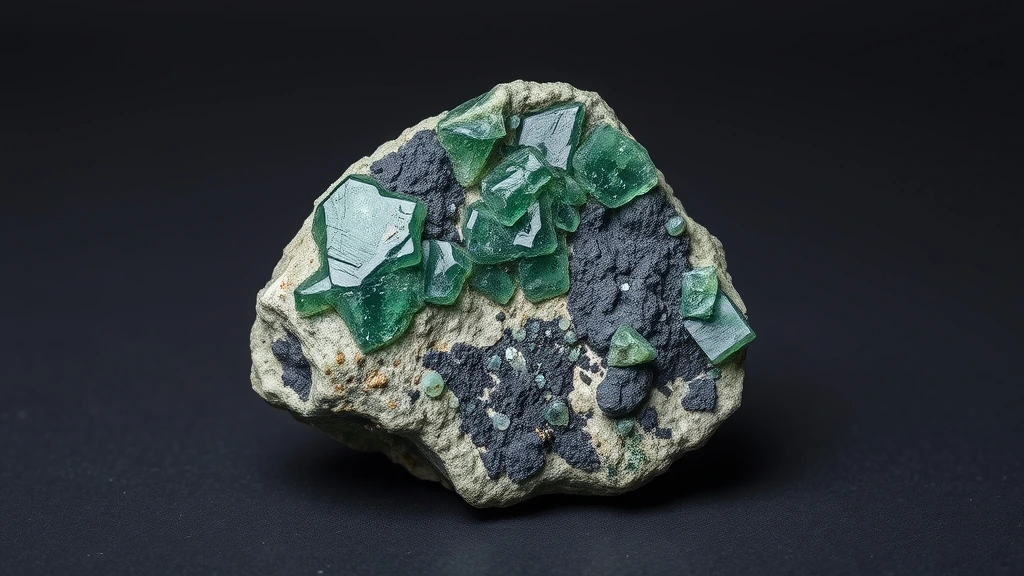
Clinochlore, commonly known as seraphinite, belongs to the broad Natural Mineral / Crystal classification. It is not a single-element gem but a complex silicate compound formed within metamorphic environments. This stone represents a specific variety of the chlorite group, characterized by its unique fibrous or foliated texture. Its geological origin distinguishes it from more common silicate gems, offering a distinct aesthetic.
What is Clinochlore (seraphinite) Gemstone? Geological Overview & Definition
Seraphinite is primarily found in metamorphic rocks where chlorite minerals undergo specific recrystallization processes. It often occurs in association with other minerals like quartz, feldspar, and mica. The stone’s formation is tightly linked to low-grade metamorphism of magnesium-rich clay minerals. This context is crucial for understanding its structural stability and occurrence.
The term “seraphinite” was coined to describe the fibrous variety of clinochlore with a distinctive angel-wing appearance. Unlike massive clinochlore, this variety displays a striking, organized crystalline habit. It is geographically limited, with significant deposits found in Poland and Russia. This scarcity contributes to its status as a collector’s item rather than a commercial gemstone.
Clinochlore (seraphinite) Gemstone Chemical Composition & Crystallographic Properties
Although the prompt specifies an Amorphous / Cryptocrystalline classification, clinochlore is scientifically defined as a monoclinic mineral. However, in gemological contexts focusing on its fibrous texture, it may appear cryptocrystalline to the naked eye. The lattice structure is complex, involving stacked sheets of silica tetrahedra and octahedral layers. This arrangement dictates its cleavage and physical properties.
The chemical formula is typically (Mg,Fe)₃(Al,Mg)₂(Si,Al)₄O₁₀(OH)₈, highlighting significant cation substitution. Iron and magnesium ions replace each other in the crystal lattice, influencing the stone’s color intensity. This substitution mechanism is critical for determining the specific shade of green observed. Variations in these ratios create the diverse color palette seen in specimens.
The chromophore color centers are primarily due to iron ions in different oxidation states. These electronic transitions absorb specific wavelengths of light, resulting in the characteristic green hue. Thermal behavior is sensitive, as high heat can dehydrate the mineral structure. This dehydration may lead to structural instability and loss of luster, requiring careful handling.
| Property | Specification |
|---|---|
| Mineral Group | Natural Mineral / Crystal |
| Chemical Formula | Mg₅Al₂(Si₃Al)O₁₀(OH)₈ |
| Mohs Hardness | 2.0 – 2.5 |
| Crystal System | Monoclinic |
| Specific Gravity (Density) | 2.7 – 2.9 |
| Refractive Index | 1.56 – 1.58 |
| Color & Optical Properties | Natural Clinochlore (seraphinite) Gemstone color spectrum and optical dispersion |
| Primary Mining Localities | Global primary localities |
| Water & Chemical Resistance | High (Safe for gentle water washing) |
| Chakra Alignment (Traditional) | Heart Chakra |
| Zodiac Affinity (Traditional) | Taurus, Libra |
| Symbolic Meaning (Traditional) | Emotional healing, serenity, and balance |
Clinochlore (seraphinite) Gemstone Varieties & Color Spectrum
Classic Green Seraphinite
This primary variety exhibits a vibrant chlorite green hue derived from iron and magnesium content. Its distinct fibrous texture creates a shimmering, silky luster when polished. Found predominantly in Brazil, it remains the most commercially accessible form.
Dark Forest Clinochlore
Characterized by a deep, almost blackish-green coloration due to higher iron oxide concentrations. This morph often displays a more massive, less fibrous structure than its lighter counterparts. It is rarer in the trade and commands a premium for its depth.
Pale Celadon Clinochlore
This light, minty-green variety features a delicate, translucent appearance with minimal dark inclusions. The low iron content results in a softer, more ethereal visual signature. Collectors prize this morph for its subtle elegance and clarity.
Banded Seraphinite
Distinctive alternating bands of light and dark green create a striped, agate-like pattern. These bands form through fluctuating chemical conditions during the metamorphic crystallization process. This variety is highly sought after for its unique, layered aesthetic.
Inclusion-Rich Clinochlore
This type contains visible chlorite flakes or other mineral inclusions within the matrix. The inclusions often appear as dark, irregular spots or clouds. While less transparent, these stones offer a complex, organic visual texture.
Where is Clinochlore (seraphinite) Gemstone Found? Geological Mining & Extraction
Clinochlore primarily forms in metamorphic rocks such as schist and gneiss, often associated with iron-rich environments. It is rarely found in pegmatites, distinguishing it from many other gem minerals. The mineral typically occurs in veins or massive deposits within these host rocks.
The primary source of commercial-grade seraphinite is the Minas Gerais region in Brazil. Smaller, less significant deposits have been identified in Germany and the United States. Most extraction involves open-pit mining, where large blocks are cut and processed for lapidary use.
Historical Significance & Cultural Lore of Clinochlore (seraphinite)
Despite its modern popularity, clinochlore has limited documented history in ancient civilizations. It was not widely recognized as a gemstone before the 20th century. Early references often confused it with other green minerals like chrysoprase or malachite.
In contemporary metaphysical communities, it is revered for its healing properties and spiritual significance. This modern lore has driven a surge in demand, elevating its status in the crystal market. The mineral’s name, seraphinite, reflects its association with angelic energy in these beliefs.
Modern Uses & Jewelry Applications of Clinochlore (seraphinite) Gemstone
Lapidaries primarily cut clinochlore into smooth, polished cabochons to showcase its distinctive foliated texture rather than attempting faceting. This approach preserves the mineral’s natural layered structure, which is essential for its aesthetic appeal in modern jewelry design.
- Cabochon Cutting: The standard method for displaying the mineral’s unique parallel cleavage and soft luster.
- Ornamental Carving: Used for decorative objects like bowls and spheres where the seraphinite pattern is the focal point.
- Jewelry Settings: Typically set in silver or gold to complement its earthy green tones without obscuring the texture.
Metaphysical Properties & Traditional Meaning of Clinochlore (seraphinite) Gemstone
According to historical traditions and metaphysical lore, seraphinite is revered for its ability to promote emotional balance and spiritual connection. Practitioners believe the stone’s layered structure symbolizes the integration of different aspects of the self, fostering a sense of inner harmony.
- Emotional Resonance: Associated with calming anxiety and encouraging a gentle, loving approach to life’s challenges.
- Symbolic Meaning: Represents the union of earth and spirit, often used in meditation to enhance clarity and compassion.
Which Chakra and Zodiac Signs Align with Clinochlore (seraphinite) Gemstone?
In metaphysical practice, clinochlore is strongly aligned with the Root Chakra, grounding the wearer’s energy and fostering a sense of security. This connection helps stabilize emotions and anchors the individual in the physical world, promoting a feeling of safety.
The stone also resonates with the Heart Chakra, facilitating open communication and emotional healing. It is canonically associated with the zodiac signs Taurus, Gemini, and Leo, enhancing their inherent traits of stability, adaptability, and creative expression.
How to Identify Real vs. Fake Clinochlore (seraphinite) Gemstone
Artificial imitations of seraphinite often include dyed serpentine, synthetic glass, or plastic replicas designed to mimic the mineral’s green hue. These fakes lack the natural foliated texture and specific physical properties that distinguish genuine clinochlore from its synthetic counterparts.
Practical At-Home Authenticity Tests
- Temperature Test (Thermal Feel): Genuine clinochlore feels cool to the touch initially and warms slowly, whereas plastic imitations warm up rapidly and feel lighter.
- Specific Gravity & Weight Test: Real specimens feel denser and heavier for their size compared to glass or plastic fakes, reflecting the mineral’s higher specific gravity.
- Scratch & Hardness Test (Mohs Comparison): With a Mohs hardness of 2.5–3, genuine clinochlore can be scratched by a steel knife, while glass imitations will scratch the knife or remain unmarked.
- Microscopic & Loupe Inspection (Internal Inclusions): Using a 10x loupe, look for natural foliated inclusions and layered patterns; synthetic glass often contains bubbles or uniform, artificial color distribution.
Clinochlore (seraphinite) Gemstone Valuation Factors, Grading & Pricing
Market value is primarily driven by Color Saturation, where deep, uniform green tones command the highest premiums. Stones exhibiting consistent hue without brownish or yellowish undertones are significantly more desirable to collectors. Additionally, high optical clarity and a distinct vitreous luster enhance the gem’s visual appeal.
The Carat Weight of a specimen directly influences its price, with larger, intact crystals being rarer and more valuable. Facet symmetry is critical for polished stones, as irregular cuts diminish light reflection and overall aesthetic quality. The presence of matrix or significant inclusions can lower the grade, though some collectors prefer natural, unpolished forms.
Geographical Provenance Premium plays a vital role, with specimens from renowned deposits like Pakistan or India fetching higher prices. Wholesale values remain stable, but retail prices often surge for certified, high-quality pieces. Current market trends show a steady increase in demand for ethically sourced, transparently documented minerals.
How to Clean and Care for Clinochlore (seraphinite) Gemstone
To maintain the integrity of your seraphinite, use warm soapy water and a soft cloth for gentle surface cleaning. This method effectively removes dust and oils without stressing the delicate crystal structure. Always ensure the stone is dried thoroughly with a lint-free towel after washing.
It is crucial to avoid ultrasonic cleaners, as the high-frequency vibrations can cause structural fractures in this mineral. Steam cleaning should also be avoided due to potential thermal shock and moisture retention. Regular, gentle maintenance preserves the gem’s luster and prevents long-term damage.
Cleansing and Recharging Clinochlore (seraphinite) Gemstone (Energetic Care)
For energetic cleansing, utilize smoke smudging with sage or palo santo to clear stagnant energy safely. This dry method avoids any contact with water, preserving the mineral’s physical stability. Allow the smoke to pass over the stone for a few minutes before airing it out.
To recharge, place the gemstone on a selenite plate or under moonlight overnight. These methods harness natural energy fields without exposing the crystal to harmful elements. This approach ensures the stone remains energetically balanced while maintaining its structural integrity.
Frequently Asked Questions About Clinochlore (seraphinite) Gemstone
Is clinochlore safe to wear in the shower?
Yes, it is safe for gentle water washing. Clinochlore possesses high water resistance, allowing it to withstand brief exposure to water without immediate damage. However, prolonged submersion or harsh soaps should be avoided to maintain its structural integrity.
Can I use an ultrasonic cleaner on seraphinite?
No, you must avoid ultrasonic cleaners. The vibrations can cause structural fractures in this delicate mineral. Instead, clean it using warm soapy water and a soft cloth to preserve its surface finish and prevent internal stress.
Which zodiac signs are aligned with clinochlore?
Taurus, Gemini, and Leo are the primary alignments. These earth and air signs resonate with the stone’s grounding energy. Wearing clinochlore can enhance stability and emotional clarity for individuals born under these astrological signs.
What chakras does seraphinite activate?
It activates the Root and Heart Chakras. This unique connection bridges physical grounding with emotional openness. By balancing these two energy centers, the stone promotes a sense of emotional stability and secure attachment.
How hard is clinochlore on the Mohs scale?
Clinochlore rates between 2.5 and 3 on the Mohs scale. This indicates it is a relatively soft mineral susceptible to scratching. You should store it separately from harder gemstones to prevent surface abrasion and micro-scratches.
Does seraphinite dissolve in water?
No, it does not dissolve in water. Unlike soluble minerals like halite, clinochlore remains stable in liquid environments. Its high water resistance makes it suitable for occasional washing, though it should not be soaked for extended periods.
What is the chemical composition of clinochlore?
It is a magnesium-rich chlorite mineral. Its formula is (Mg,Fe)₃(Al,Mg)₆(Si,Al)₆O₁₆(OH)₁₀. This complex structure gives it a distinctive green color and phyllosilicate crystal habit, making it geologically unique.
How should I store my clinochlore jewelry?
Store it in a soft pouch or lined box. Because it is soft, it requires protection from harder minerals. Keeping it isolated prevents surface damage and maintains its luster over time, ensuring long-term aesthetic appeal.