
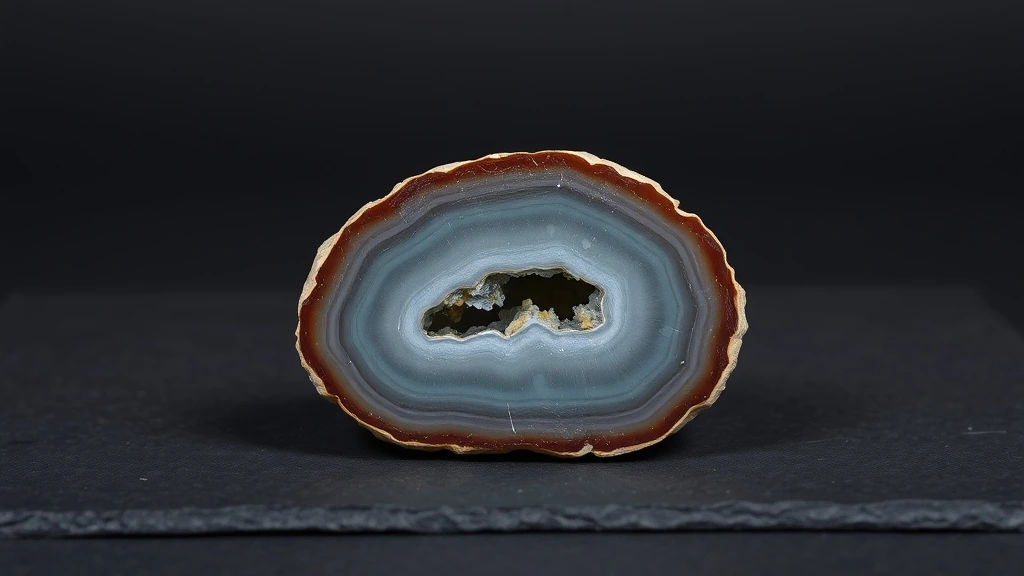
Agate belongs to the Silicates supergroup, specifically classified as a Chalcedony variety. It forms through the slow precipitation of silica-rich solutions within volcanic or sedimentary rock cavities. This process creates dense, microcrystalline structures that lack the visible grain of macrocrystalline quartz. The resulting stone is a cryptocrystalline fibrous aggregate, where individual crystals are too small to be seen without magnification. This unique formation allows for the complex, parallel banding that distinguishes agate from other quartz varieties.
What is Agate Gemstone? Geological Overview & Definition
Agate is defined as a banded variety of chalcedony, characterized by its distinct, parallel layers of silica. These bands form as silica gel precipitates in concentric layers within geodes or vugs. The banded structure results from periodic changes in impurity concentration during the slow geological growth process. This layering creates the stone’s signature aesthetic, ranging from subtle tonal shifts to high-contrast patterns.
Geologically, agate is a secondary mineral that fills voids in host rocks like basalt or sandstone. It often forms in hydrothermal veins where hot, silica-rich fluids cool and crystallize over millions of years. The stone’s fibrous texture provides exceptional toughness, resisting fracture better than many other gemstones. This structural integrity makes it a preferred material for carvings and durable jewelry pieces.
Agate Gemstone Chemical Composition & Crystallographic Properties
The fundamental crystal system of agate is Trigonal, derived from its parent mineral, alpha-quartz. However, agate exists as a microcrystalline aggregate, meaning it lacks a single, large crystal lattice. Instead, it comprises countless tiny, interlocking fibers that align in parallel bands. This cryptocrystalline structure gives the stone its characteristic waxy luster and high density, typically ranging from 2.60 to 2.64 g/cm³.
Chemically, agate is pure SiO₂, but its colors arise from trace chromophore impurities. Iron oxides produce reds and browns, while manganese can create purples or blacks. The cation substitution is minimal, as the silica tetrahedra form a highly stable, continuous framework. This purity ensures the stone remains chemically inert and resistant to most common acids, making it highly stable for long-term preservation.
Thermal behavior in agate is generally stable, but rapid temperature changes can cause thermal shock. Because the stone is a dense aggregate of tiny crystals, it does not expand uniformly like a single crystal. This can lead to internal stress and potential fracturing if heated unevenly. Gemologists recommend gentle cleaning methods to avoid damaging the delicate fibrous bonds that hold the bands together.
| Property | Specification |
|---|---|
| Mineral Group | Silicates (Chalcedony / Cryptocrystalline Quartz) |
| Chemical Formula | SiO₂ (Silicon Dioxide) |
| Mohs Hardness | 6.5–7 |
| Crystal System | Trigonal (Microcrystalline / Cryptocrystalline fibrous aggregates) |
| Specific Gravity (Density) | 2.60–2.64 |
| Refractive Index | 1.530-1.543 |
| Color & Optical Properties | Natural Agate Gemstone color spectrum and optical dispersion |
| Primary Mining Localities | Brazil, Uruguay, Turkey, India, Madagascar |
| Water & Chemical Resistance | High (Safe for gentle warm water and mild soap; avoid harsh acids and chlorine) |
| Chakra Alignment (Traditional) | Root Chakra and Sacral Chakra |
| Zodiac Affinity (Traditional) | Gemini, Virgo, Taurus |
| Symbolic Meaning (Traditional) | Grounding, emotional balance, physical endurance, and protection |
Agate Varieties & Comprehensive Sub-Types
Blue Lace Agate
This variety displays delicate sky-blue and white undulating bands formed by microscopic chalcedony fibers. The unique coloration results from light diffraction within these fine structural layers. It is highly sought after in the metaphysical market for its gentle calming properties.
Moss Agate
Characterized by translucent chalcedony, this stone contains green hornblende or chlorite inclusions. These dendritic patterns resemble botanical moss or foliage, creating a natural landscape within the gem. Historically, it served as a powerful agricultural and grounding talisman.
Fire Agate
This rare volcanic formation exhibits a striking iridescent Schiller effect caused by alternating micro-layers. The interplay of iron oxide and silica creates fiery flashes of red, orange, and gold. Primary sources include specific volcanic regions in Mexico and Arizona.
Botswana Agate
Formed in prehistoric basaltic lavas, this agate features ultrafine concentric banding in subtle pastel shades. Colors range from soft grey and peach to salmon and lilac. Its exceptionally dense banding structure makes it highly prized for precision lapidary work.
Dendritic Agate
This variety showcases dramatic black or brown fern-like branching structures within a milky-white matrix. These patterns are composed of manganese and iron oxides precipitating from water. Lapidaries value these stones for their scenic, landscape-like visual appeal.
Crazy Lace Agate
Known as the “Laughter Stone,” this Mexican agate features intricate twisting multicolored ribbons. The zig-zag patterns display high iron pigmentation in yellow, red, and orange hues. Its chaotic yet beautiful structure distinguishes it from other banded agates.
Tree Agate
This opaque white chalcedony contains deep green chlorite dendrites resembling tree foliage. Unlike Moss Agate, its solid non-translucent base provides a stark contrast to the inclusions. It is often carved to highlight the natural “tree” formations.
Flower Agate
A rare Madagascar find, this stone contains opaque 3D chalcedony inclusions resembling blooming petals. These floral shapes are embedded in a soft pink-to-caramel translucent matrix. The three-dimensional nature of the inclusions makes it a collector’s gem.
Modern Uses & Jewelry Applications of Agate Gemstone
Agate is predominantly cut into cabochons to showcase its distinctive banding patterns and translucency. Lapidaries often polish these domed stones to enhance the visual depth of the internal layers. Faceted cuts are rarer, reserved for highly transparent specimens where brilliance is the primary goal.
- Cabochon Jewelry: Ideal for rings, pendants, and earrings, highlighting natural color zoning.
- Ornamental Carving: Used for intaglio seals, cameos, and decorative architectural elements.
- Beads & Carvings: Popular in artisan jewelry for its durability and varied aesthetic appeal.
Metaphysical Properties & Traditional Meaning of Agate Gemstone
According to historical traditions and metaphysical lore, agate is revered as a stone of emotional stability and grounding energy. Practitioners believe it helps balance the body’s physical and spiritual energies during times of stress. It is often associated with protection, shielding the wearer from negative influences.
The stone is also linked to patience and endurance, encouraging a calm mindset in chaotic situations. Many cultures view agate as a talisman for travelers, ensuring safe passage and steady footing. Its banded structure symbolizes the interconnectedness of life’s cycles and the importance of maintaining inner peace.
Which Chakra and Zodiac Signs Align with Agate Gemstone?
In chakra theory, agate is primarily aligned with the Root Chakra and the Sacral Chakra. The Root Chakra connection provides a sense of security and physical grounding. Meanwhile, the Sacral Chakra alignment supports creative flow and emotional balance within the body.
Astrologically, agate resonates strongly with Gemini, Virgo, and Taurus. These earth and air signs benefit from the stone’s stabilizing properties. It helps Gemini manage mental restlessness, supports Virgo’s need for order, and enhances Taurus’s natural connection to the earth.
How to Identify Real vs. Fake Agate Gemstone
Distinguishing natural agate from imitations requires attention to subtle physical characteristics and internal structures. Common fakes include synthetic glass, dyed chalcedony, and plastic replicas designed to mimic banding. Glass often appears too uniform, while dyed stones may show color concentrated in cracks.
Practical At-Home Authenticity Tests
- Temperature Test (Thermal Feel): Real agate feels cool to the touch initially and warms slowly. Glass or plastic may feel warmer immediately or heat up faster under direct sunlight.
- Specific Gravity & Weight Test: Agate has a density of 2.60–2.64 g/cm³. It should feel heavier than plastic or lightweight glass of the same size.
- Scratch & Hardness Test (Mohs Comparison): With a hardness of 6.5–7, agate can scratch glass but will not be scratched by a steel knife. If a knife scratches the stone, it is likely a softer imitation.
- Microscopic & Loupe Inspection (Internal Inclusions): Use a 10x loupe to check for natural banding and tiny mineral inclusions. Glass often contains circular bubbles, while natural agate shows irregular, organic patterns.
Agate Gemstone Valuation Factors, Grading & Pricing
Market value is primarily driven by Color Saturation and tone uniformity across the stone. High-grade specimens exhibit vibrant, consistent hues without muddy or patchy areas. Additionally, optical clarity and a polished luster significantly enhance the gem’s visual appeal.
Carat Weight influences pricing, though agates are often valued by size rather than strict weight. Facet symmetry is critical for cabochons, ensuring smooth, even contours that maximize light reflection. The presence of distinct matrix patterns or inclusions can either elevate or diminish value depending on aesthetic preference.
Geographical Provenance Premium often applies to rare localities like Brazil or India, commanding higher wholesale prices. Retail market trends show steady demand for unique banded patterns and high-polish finishes. Investors should monitor auction results for historic or exceptionally large specimens to gauge current value.
How to Clean and Care for Agate Gemstone
For routine maintenance, warm soapy water is the ideal cleaning method for solid agates. Gently scrub the surface with a soft brush to remove dust and oils without damaging the finish. Rinse thoroughly with clean water and dry immediately with a lint-free cloth.
You must avoid ultrasonic cleaners if the specimen is dyed, heavily fractured, or treated. These devices can cause dye leaching or worsen existing cracks, leading to permanent damage. Always inspect the stone for stability before selecting any cleaning method.
Cleansing and Recharging Agate Gemstone (Energetic Care)
Since agate is a stable silicon dioxide mineral, it tolerates dry energetic cleansing methods well. Smoke smudging with sage or palo santo is a popular technique to clear stagnant energy. This dry approach avoids moisture exposure, preserving the stone’s structural integrity.
Placing the gem on a selenite plate or under moonlight offers a gentle recharging alternative. These methods rely on ambient energy rather than physical contact or liquid immersion. Always ensure the stone is completely dry before storing it in a soft pouch.
Frequently Asked Questions About Agate Gemstone
Is agate safe to wear in the shower?
Yes, agate is highly water-resistant and safe for gentle warm water exposure. The stone’s dense structure allows it to withstand mild soap and routine washing without damage. However, you should avoid harsh chemicals like chlorine or strong acids found in some cleaning products.
Can I put agate in an ultrasonic cleaner?
Use warm soapy water instead, as ultrasonic cleaners can damage treated stones. Solid, untreated agates generally tolerate gentle cleaning, but vibrations may crack fractured specimens. If your agate is dyed or heavily treated, avoid ultrasonic cleaning entirely to preserve its integrity and color stability.
What is the chemical composition of agate?
Agate is composed of silicon dioxide (SiO₂), the same mineral as quartz. This chemical formula defines its identity as a cryptocrystalline variety of quartz. Its structure consists of microscopic interlocking crystals that create the stone’s characteristic hardness and durability.
How hard is agate on the Mohs scale?
Agate rates between 6.5 and 7 on the Mohs hardness scale. This makes it significantly harder than most common gemstones, offering excellent resistance to scratching during daily wear. Its durability ensures that polished surfaces remain lustrous over time with proper care.
Which zodiac signs are associated with agate?
Agate is traditionally aligned with Gemini, Virgo, and Taurus. These earth and air signs are believed to resonate with the stone’s grounding properties. Wearing agate is thought to enhance stability and clarity for individuals born under these astrological signs.
Which chakras does agate activate?
Agate primarily activates the Root Chakra and Sacral Chakra. These energy centers govern physical stability and creative flow, respectively. The stone’s earthy tones are believed to support balance and grounding within these specific chakra systems.
What is the refractive index of agate?
Agate has a refractive index ranging from 1.530 to 1.543. This optical property determines how light bends as it passes through the stone. It contributes to the gem’s subtle luster and ability to reflect light softly rather than sparkling intensely.
How should I clean my agate jewelry?
Soak the piece in warm soapy water and wipe it with a soft cloth. This gentle method removes oils and dirt without risking damage to the stone. Avoid abrasive materials that could scratch the surface or compromise any delicate inclusions within the gem.