
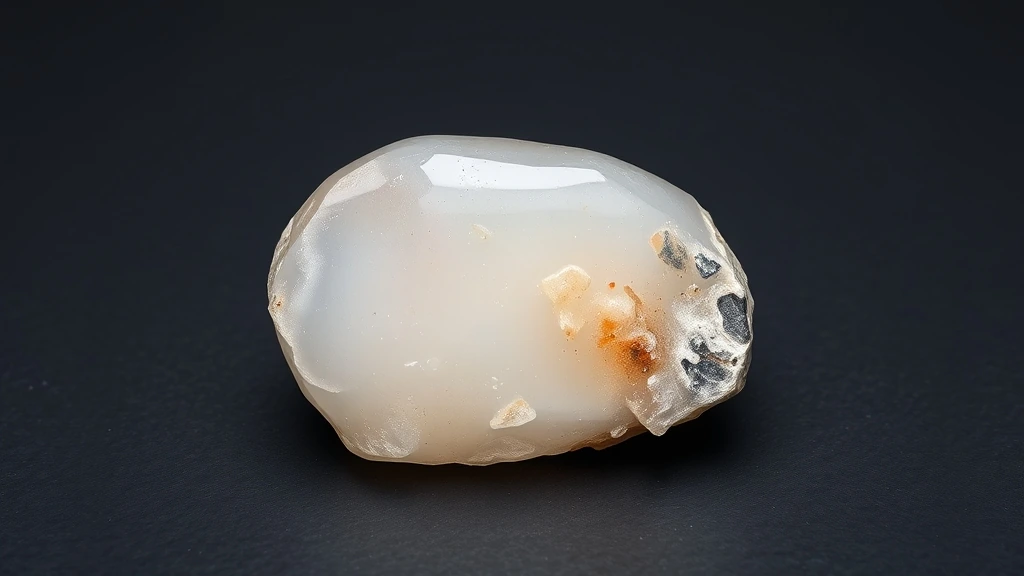
Chalcedony belongs to the Natural Mineral / Crystal group, specifically as a microcrystalline form of silica. Unlike macrocrystalline quartz, its structure consists of extremely fine interlocking crystals. This unique texture gives the stone its characteristic waxy luster and opacity. Geologically, it forms in cavities and veins, often displaying banding patterns. Its durability makes it a versatile material for carvings and jewelry.
What is Chalcedony Gemstone? Geological Overview & Definition
Chalcedony is technically a cryptocrystalline aggregate of quartz, meaning its individual crystals are too small to be seen without magnification. This microstructure distinguishes it from macrocrystalline quartz, which features visible, distinct crystal faces. The stone typically forms in hydrothermal veins or as nodules within volcanic rocks. Its formation process involves the slow precipitation of silica-rich solutions over millions of years.
The term “chalcedony” originates from the ancient Greek word *chalkedon*, referring to a specific location in Asia Minor. In gemology, it serves as a parent category for several well-known gemstones. Varieties like carnelian, sardonyx, and chrysoprase fall under this umbrella. Understanding this classification helps gemologists identify the stone’s specific impurities and formation history.
Chalcedony Gemstone Chemical Composition & Crystallographic Properties
The fundamental building block of chalcedony is silicon dioxide (SiO₂), arranged in a Hexagonal crystal family lattice. Although the bulk stone appears amorphous, it is composed of countless microscopic hexagonal prisms. This structural arrangement provides the stone with its characteristic isotropic optical properties. The tight packing of silica tetrahedra contributes to its high density and mechanical strength.
Trace elements act as chromophores, introducing color variations into the otherwise colorless silica matrix. For instance, iron oxides can produce red or yellow hues, while nickel may create green tones. These impurities substitute for silicon atoms within the crystal lattice, altering light absorption. The specific cation substitution patterns determine the final gemological color.
Chalcedony exhibits moderate thermal stability, though rapid temperature changes can cause fracturing. It is generally resistant to most weak acids, but prolonged exposure to strong hydrofluoric acid will dissolve the silica structure. The refractive index ranges from 1.530 to 1.543, resulting in a low luster compared to higher-index gems. This optical behavior is consistent across the hexagonal crystal system.
The stone’s Mohs hardness of 6–7 makes it suitable for everyday jewelry use. However, its microcrystalline nature can make it susceptible to chipping along cleavage planes. Proper care involves avoiding ultrasonic cleaners that might exploit these internal weaknesses. Maintaining its integrity requires gentle cleaning and storage away from harder minerals.
| Property | Specification |
|---|---|
| Mineral Group | Natural Mineral / Crystal |
| Chemical Formula | SiO₂ (Cryptocrystalline Quartz) |
| Mohs Hardness | 6–7 |
| Crystal System | Hexagonal crystal family |
| Specific Gravity (Density) | 2.59–2.61 |
| Refractive Index | 1.530 – 1.543 |
| Color & Optical Properties | Natural Chalcedony Gemstone color spectrum and optical dispersion |
| Primary Mining Localities | Global primary localities |
| Water & Chemical Resistance | High (Safe for gentle water washing) |
| Chakra Alignment (Traditional) | Heart Chakra, Throat Chakra |
| Zodiac Affinity (Traditional) | Taurus, Libra |
| Symbolic Meaning (Traditional) | Emotional stability, calmness, and mental clarity |
Chalcedony Gemstone Varieties & Color Spectrum
Chalcedony is a cryptocrystalline form of quartz that exhibits a wide spectrum of colors due to trace impurities. Its hexagonal crystal family structure allows for diverse geological formations worldwide. Understanding these varieties is crucial for accurate gemological identification and valuation.
Sardo (Red Chalcedony)
Sardo derives its deep red to brownish-red hue from iron oxide inclusions within the silica matrix. This variety is highly prized in ancient jewelry and often displays a Mohs hardness of 6–7. Its uniform coloration makes it distinct from banded agates.
Prase (Green Chalcedony)
Prase features a soft, apple-green color caused by fine particles of chlorite or other green minerals. It is valued for its calming aesthetic and consistent refractive index between 1.530 and 1.543. This variety is frequently used in carvings and beads.
Sardonyx (Banded Chalcedony)
Sardonyx consists of alternating bands of sardo (red) and chalcedony (white or gray). The distinct banding pattern results from periodic changes in mineral deposition during formation. This density of 2.59–2.61 g/cm³ contributes to its durability. It is highly sought after for intaglio carving.
Calcedon (Blue-Grey Chalcedony)
Calcedon typically presents a pale blue, gray, or greenish tint with a waxy luster. Its subtle coloration is often attributed to microscopic bubbles or trace elements. This variety is common in decorative arts and architectural applications.
Chrysoprase (Yellow-Green Chalcedony)
Chrysoprase is distinguished by its vibrant yellow-green color, caused by nickel impurities in the silica. It is rarer than common chalcedony and commands a higher market price. Its chemical formula remains SiO₂, but the nickel content alters its optical properties.
Where is Chalcedony Gemstone Found? Geological Mining & Extraction
Chalcedony typically forms in hydrothermal veins, cavities in volcanic rocks, and pegmatites. These deposits often occur in regions with significant geological activity and fluid movement. The mineral’s formation is closely linked to silica-rich solutions cooling slowly.
Major mining regions include Brazil, India, Madagascar, and the United States. Brazil is renowned for high-quality sardonyx and carnelian, while India produces abundant prase and chrysoprase. Extraction methods vary from open-pit mining to careful hand-picking in veins.
Historical Significance & Cultural Lore of Chalcedony Gemstone
Ancient civilizations, including the Greeks and Romans, revered chalcedony for its protective and healing properties. It was frequently used in seals, amulets, and religious artifacts across the Mediterranean. The stone was believed to bring peace and calm to its wearer.
Archaeological findings reveal chalcedony carvings dating back thousands of years, highlighting its enduring cultural value. In esoteric traditions, it is associated with the Heart Chakra and Throat Chakra, promoting emotional stability. This legacy continues to influence modern gemological appreciation and metaphysical practices.
Modern Uses & Jewelry Applications of Chalcedony Gemstone
Chalcedony’s waxy luster and uniform texture make it a premier material for intricate lapidary work. Lapidaries primarily cut this stone into smooth cabochons to maximize its subtle translucency and color depth. Its moderate hardness allows for detailed ornamental carving, including cameos and intaglios that have been prized since antiquity.
- Cabochon Cutting: The most common form, showcasing the stone’s soft glow and internal banding patterns without faceting.
- Ornamental Carving: Ideal for sculpting detailed figures, religious icons, and decorative inlays due to its workability.
- Faceted Jewelry: Occasionally faceted for smaller pieces, though the lack of brilliance makes cabochons the industry standard.
- Architectural Ornamentation: Used in mosaics and tile work for its durability and consistent aesthetic appeal.
Metaphysical Properties & Traditional Meaning of Chalcedony Gemstone
According to historical traditions and metaphysical lore, chalcedony is revered as a stone of profound emotional stability. Ancient healers believed it could soothe the nervous system and promote a state of calmness during turbulent times. This gemstone is often associated with mental clarity, helping the wearer maintain focus and rational thought.
- Emotional Balance: Traditionally used to mitigate anger, anxiety, and emotional volatility.
- Mental Clarity: Believed to enhance concentration and clear mental fog or confusion.
- Calmness: A protective stone that encourages patience and gentle communication in stressful situations.
Which Chakra and Zodiac Signs Align with Chalcedony Gemstone?
In chakra theory, chalcedony resonates most strongly with the Heart Chakra, fostering compassion and emotional healing. It also aligns with the Throat Chakra, supporting clear, honest, and non-aggressive communication. This dual alignment makes it a powerful tool for balancing emotional expression with verbal articulation.
Astrologically, this gemstone is canonically aligned with Taurus and Libra. For Taurus, it reinforces their natural desire for stability and security. For Libra, it enhances their innate need for harmony and balanced relationships. These zodiac signs find particular resonance with the stone’s calming and stabilizing energy.
How to Identify Real vs. Fake Chalcedony Gemstone
Distinguishing natural chalcedony from artificial imitations requires attention to material properties and visual cues. Common fakes include synthetic glass, dyed quartz, and plastic replicas that mimic the stone’s waxy appearance. Understanding these differences is crucial for ensuring authenticity in gemstone purchases.
Practical At-Home Authenticity Tests
- Temperature Test (Thermal Feel): Real chalcedony feels distinctly cool to the touch initially and warms slowly. Glass and plastic imitations often feel room temperature immediately or heat up much faster.
- Specific Gravity & Weight Test: Genuine chalcedony has a density of 2.59–2.61 g/cm³. It should feel heavier than similarly sized glass or plastic stones, which are typically lighter.
- Scratch & Hardness Test (Mohs Comparison): With a Mohs hardness of 6–7, real chalcedony will scratch glass (hardness 5.5) but will not be scratched by a steel knife (hardness 5.5).
- Microscopic & Loupe Inspection (Internal Inclusions): Use a 10x loupe to check for natural inclusions or banding. Glass often contains circular bubbles, while plastic may show flow lines or lack natural texture.
Chalcedony Gemstone Valuation Factors, Grading & Pricing
Market value hinges primarily on Color Saturation and tone uniformity across the stone. High-grade specimens exhibit deep, consistent hues without mottling or banding interruptions. Optical clarity and a vitreous luster further enhance desirability for collectors.
Carat Weight significantly influences pricing, as larger flawless pieces are exceedingly rare in this variety. Facet symmetry must be precise to maximize light return and visual appeal. The presence of matrix patterns or inclusions can either detract from value or add unique character.
Geographical Provenance Premium often elevates prices for stones from renowned mining regions. Wholesale markets reflect steady demand, while retail prices include significant margins for craftsmanship. Understanding these trends helps buyers assess fair market value accurately.
How to Clean and Care for Chalcedony Gemstone
To maintain your chalcedony, use warm soapy water and a soft cloth for gentle cleaning. This method safely removes oils and dust without damaging the surface. Always rinse thoroughly and dry with a lint-free towel to prevent water spots.
Strictly avoid ultrasonic cleaners, as vibrations can cause structural fractures in the microcrystalline structure. Steam cleaning is also discouraged due to potential thermal shock risks. Regular, gentle maintenance preserves the stone’s integrity and brilliance over time.
Cleansing and Recharging Chalcedony Gemstone (Energetic Care)
For energetic cleansing, use smoke smudging with sage or palo santo to clear stagnant energy. This dry method respects the mineral’s physical stability while addressing metaphysical needs. Ensure the stone is dry before performing any smudging rituals.
Place the gemstone on a selenite plate or under moonlight for recharging. These methods align with the stone’s association with emotional stability and calmness. Avoid submerging the piece in water during these energetic practices to maintain its luster.
Frequently Asked Questions About Chalcedony Gemstone
Is chalcedony safe to wear in the shower?
Yes, chalcedony is highly water-resistant and safe for gentle exposure. You can comfortably wear it during daily activities involving water. However, avoid harsh chemicals found in some soaps. This durability makes it an excellent choice for everyday jewelry.
Can I clean chalcedony in an ultrasonic cleaner?
No, you should strictly avoid ultrasonic cleaners for this stone. The high-frequency vibrations can cause structural fractures in the microcrystalline structure. Instead, use warm soapy water and a soft cloth. This gentle method preserves the integrity of the gemstone.
What is the chemical composition of chalcedony?
Chalcedony is a variety of quartz with the formula SiO₂. It consists of intergrown microscopic crystals of quartz and moganite. This unique structure gives it a waxy luster. Understanding this composition helps in proper identification and care.
Which zodiac signs are associated with chalcedony?
Chalcedony is traditionally linked to Taurus and Libra. These earth and air signs benefit from its grounding properties. It is believed to enhance stability and balance. Wearing it may align with your astrological birth chart.
What chakras does chalcedony activate?
It primarily activates the Heart Chakra and Throat Chakra. This dual alignment supports emotional healing and clear communication. It helps bridge feelings with expression. This makes it valuable for meditation and spiritual practices.
How hard is chalcedony on the Mohs scale?
Chalcedony rates between 6 and 7 on the Mohs scale. This indicates good resistance to scratching from common materials. It is durable enough for rings and bracelets. However, it is still softer than topaz or diamond.
What is the typical refractive index of chalcedony?
The refractive index ranges from 1.530 to 1.543. This optical property helps gemologists distinguish it from other stones. It contributes to the stone’s subtle luster. Accurate measurement ensures proper identification in laboratory settings.
Does chalcedony have a specific crystal system?
It belongs to the hexagonal crystal family. Although it often appears massive, its internal structure is hexagonal. This classification is crucial for crystallographic analysis. It shares this system with other quartz varieties.