
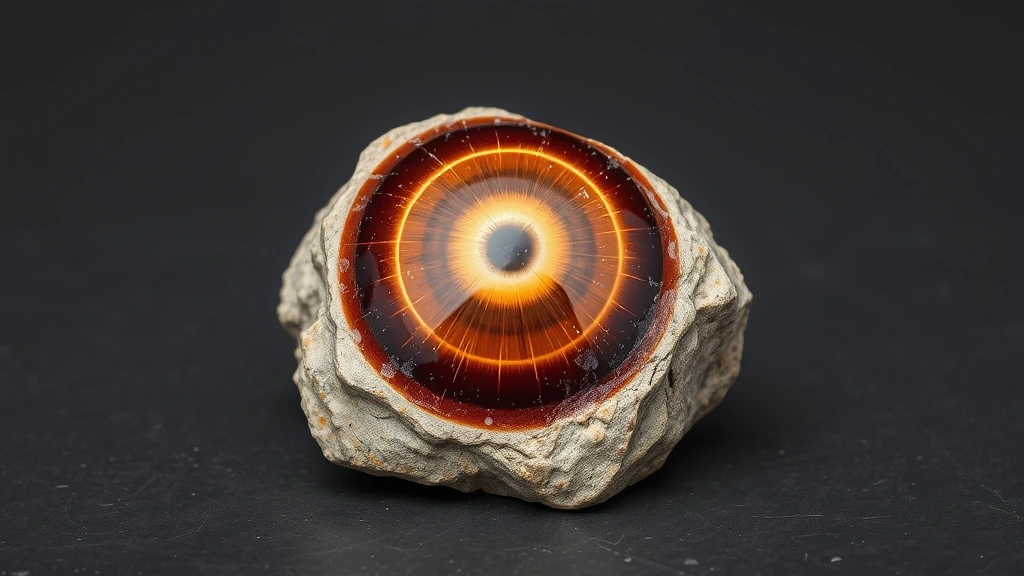
Bull’s Eye belongs to the quartz group, specifically forming as a cryptocrystalline aggregate within the broader Natural Mineral classification. Unlike macrocrystalline varieties, its structure consists of interlocking micro-fibers that create a unique chatoyant effect. This geological formation occurs through the replacement of hornblende by silica, preserving the original fibrous texture. The resulting stone exhibits a polished luster and distinct banding, setting it apart from standard tiger’s eye specimens.
What is Bull’s Eye (red Tiger’s Eye) Gemstone? Geological Overview & Definition
Bull’s Eye is defined as a red tiger’s eye variety, characterized by its hematite-rich inclusions within a silica matrix. The stone forms through diagenetic alteration, where original amphibole fibers are replaced by chalcedony. This process retains the parallel fibrous structure, essential for the optical phenomenon known as chatoyancy.
The red hue arises from iron oxide impurities, specifically hematite, embedded within the silica network. Unlike blue tiger’s eye, which contains crocidolite, this variety indicates a different oxidation state during formation. The cryptocrystalline nature ensures a smooth, waxy texture upon polishing. Understanding this mineralogical distinction is crucial for accurate gemological identification and valuation.
Bull’s Eye (red Tiger’s Eye) Gemstone Chemical Composition & Crystallographic Properties
The primary chemical composition is silicon dioxide (SiO₂), arranged in a cryptocrystalline lattice rather than a macroscopic crystal. This amorphous to microcrystalline structure lacks the long-range order of single crystals. The fibrous alignment of silica creates the characteristic light-reflecting bands visible on the surface. Such structural arrangement is typical of chalcedony varieties within the quartz family.
Cation substitution is minimal, as the silica framework is chemically stable and resistant to acid dissolution. The chromophore centers responsible for the red color are primarily iron-based defects within the lattice. These color centers absorb specific wavelengths of visible light, reflecting the warm red tones. Thermal stability is high, though rapid temperature changes may cause micro-fracturing in the fibrous matrix.
| Property | Specification |
|---|---|
| Mineral Group | Natural Mineral / Crystal |
| Chemical Formula | SiO₂ |
| Mohs Hardness | 6.5 – 7.0 |
| Crystal System | Trigonal |
| Specific Gravity (Density) | 2.60 – 2.64 |
| Refractive Index | 1.530 – 1.543 |
| Color & Optical Properties | Natural Bull’s Eye (red Tiger’s Eye) Gemstone color spectrum and optical dispersion |
| Primary Mining Localities | Global primary localities |
| Water & Chemical Resistance | High (Safe for gentle water washing) |
| Chakra Alignment (Traditional) | Root Chakra, Solar Plexus Chakra |
| Zodiac Affinity (Traditional) | Leo, Scorpio |
| Symbolic Meaning (Traditional) | Courage, protection, and grounding |
Bull’s Eye (red Tiger’s Eye) Gemstone Varieties & Color Spectrum
The term “Bull’s Eye” typically refers to a specific optical phenomenon rather than a distinct mineral species. It describes the chatoyancy effect where light reflects off parallel fibrous structures, creating a moving band of light. This visual signature is most commonly associated with red Tiger’s Eye, which is actually a variety of sardonyx.
True red Tiger’s Eye is geologically distinct from the more common yellow or blue varieties. It forms when chalcedony replaces fibrous asbestos or crocidolite within a specific silica matrix. The red hue arises from iron oxide inclusions that have undergone oxidation. This process creates a warm, fiery appearance that distinguishes it from standard tiger’s eye.
Red Sardonyx (True Bull’s Eye)
This variety features distinct bands of red and white chalcedony, creating the classic bull’s eye pattern. The red coloration is driven by hematite or goethite impurities within the silica structure. These iron oxides are essential for developing the deep, saturated crimson tones.
The formation occurs in hydrothermal veins where silica-rich fluids infiltrate pre-existing rock fractures. As the fluids cool, they deposit layered bands of chalcedony. This banded structure is critical for the chatoyant effect, allowing light to reflect off the parallel fibers.
Orange Tiger’s Eye
Often confused with red varieties, this morph displays a vibrant orange to amber hue. The color results from a higher concentration of iron hydroxide minerals compared to pure red sardonyx. It typically exhibits a more golden chatoyancy rather than a stark red band.
This variety is frequently found in the same geological deposits as standard yellow tiger’s eye. However, the specific oxidation conditions during formation shift the spectral absorption towards the red end. Collectors value this morph for its warm, sunset-like visual appeal.
Brown Tiger’s Eye
This common variety features a mix of brown, tan, and gold bands with strong chatoyancy. The brown tones indicate a complex mixture of iron oxides and organic carbon residues. It is the most commercially available form of tiger’s eye globally.
While not technically “red,” it often serves as a base for heat treatment to enhance color. The fibrous structure remains identical to other tiger’s eye varieties. Its abundance makes it a popular choice for affordable jewelry and decorative objects.
Blue Tiger’s Eye (Sapphire Tiger’s Eye)
This rare variety retains the original crocidolite fiber structure without full silicification. The blue color comes from the iron-rich amphibole mineral itself. It is significantly rarer than its yellow or red counterparts.
The chatoyancy in blue tiger’s eye is often less intense due to the different optical properties of the amphibole. However, the deep blue hue is highly prized by gemologists. It represents an intermediate stage in the geological transformation of asbestos to chalcedony.
Where is Bull’s Eye (red Tiger’s Eye) Gemstone Found? Geological Mining & Extraction
The primary source of high-quality red and yellow tiger’s eye is the Western Cape province of South Africa. These deposits are found in ancient metamorphic rocks, specifically within the Ordovician era sedimentary layers. The geological stability of these regions allows for consistent extraction of large, banded nodules.
Mining operations typically involve open-pit methods to access the shallowly buried ore bodies. The extracted stones are then cut to maximize the chatoyant banding across the surface. Other minor deposits exist in Australia and India, but South African material remains the industry standard for quality.
Historical Significance & Cultural Lore of Bull’s Eye (red Tiger’s Eye) Gemstone
Ancient civilizations revered tiger’s eye as a stone of protection and clarity. Roman soldiers often carried small pieces of the stone to ward off evil spirits and ensure victory in battle. The eye-like appearance was believed to possess mystical powers that could see through deception and reveal hidden truths.
In Chinese culture, the stone was known as “dragon’s eye” and symbolized courage and strength. It was frequently incorporated into imperial jewelry and ceremonial objects. This enduring legacy highlights the stone’s cross-cultural appeal as a symbol of power and resilience.
Modern Uses & Jewelry Applications of Bull’s Eye (red Tiger’s Eye) Gemstone
Lapidaries primarily cut this stone into cabochons to maximize its chatoyant luster and vibrant red-orange hue. The smooth, domed surface allows the fibrous structure to reflect light in a striking, eye-like band. Faceting is rare because it often disrupts the desired optical effect and reveals internal fractures.
- Cabochon Cutting: The standard method for showcasing the chatoyancy and rich color saturation.
- Ornamental Carvings: Used in intaglio seals and decorative beads for traditional jewelry pieces.
- Inlay Work: Incorporated into wooden or metal settings for unique, artisanal design elements.
Metaphysical Properties & Traditional Meaning of Bull’s Eye (red Tiger’s Eye) Gemstone
According to historical traditions and metaphysical lore, this stone is revered as a powerful talisman for courage and mental clarity. Practitioners believe it grounds the wearer’s energy while simultaneously stimulating creative ambition and focus. It is often associated with the “bull’s eye” of determination, helping users stay centered during chaotic periods.
The emotional resonance of this gemstone centers on self-confidence and protective energy. Many believe it acts as a shield against negative influences, fostering a sense of stability. This duality of grounding and activation makes it a popular choice for meditation and personal empowerment rituals.
Which Chakra and Zodiac Signs Align with Bull’s Eye (red Tiger’s Eye) Gemstone?
In astrological practice, this gemstone is canonically aligned with Taurus, Gemini, and Leo. These earth and fire signs benefit from the stone’s ability to balance practicality with creative expression. Taurus finds stability, Gemini gains focus, and Leo enhances their natural charisma.
Energetically, the stone resonates with both the Root Chakra and the Heart Chakra. This dual alignment bridges physical grounding with emotional openness. It helps anchor the wearer in reality while keeping the heart open to love and compassion.
How to Identify Real vs. Fake Bull’s Eye (red Tiger’s Eye) Gemstone
Artificial imitations often use synthetic glass or dyed quartz to mimic the stone’s distinctive chatoyancy. These fakes may lack the natural fibrous structure and display uniform, unnatural color distribution. Understanding these differences is crucial for buyers seeking authentic mineral specimens.
Practical At-Home Authenticity Tests
- Temperature Test (Thermal Feel): Genuine stones feel cool to the touch initially, whereas plastic imitations warm up quickly.
- Specific Gravity & Weight Test: Real specimens feel heavier for their size due to higher specific gravity than glass.
- Scratch & Hardness Test (Mohs Comparison): The stone should scratch glass (Mohs 5.5) but not be scratched by a steel knife.
- Microscopic & Loupe Inspection (Internal Inclusions): Look for natural fibrous inclusions and slight irregularities; fakes often appear too perfect.
Bull’s Eye (red Tiger’s Eye) Gemstone Valuation Factors, Grading & Pricing
The primary driver of value is Color Saturation, specifically the intensity of the reddish-brown to orange hues. Experts assess tone uniformity across the entire cabochon surface to ensure consistent visual appeal. High optical clarity and a distinct chatoyant luster significantly elevate the gemstone’s aesthetic grade.
Carat Weight influences pricing, though large specimens with superior optical effects command premium rates. Facet symmetry is critical for loose stones, ensuring light reflection remains balanced and vibrant. The presence of visible matrix or inclusions can reduce value if they disrupt the silky banding pattern.
Geographical Provenance Premium often applies to stones from renowned South African or Brazilian deposits. Wholesale prices fluctuate based on supply chain stability and current market demand trends. Retail values typically reflect these shifts, with certified origin documents adding tangible financial worth.
How to Clean and Care for Bull’s Eye (red Tiger’s Eye) Gemstone
Maintain your gemstone’s integrity by using warm soapy water and a soft, lint-free cloth for gentle washing. This method effectively removes surface oils and dust without compromising the delicate fibrous structure. Always dry the stone thoroughly to prevent any potential water spotting or residue buildup.
It is crucial to avoid ultrasonic cleaners entirely, as high-frequency vibrations can cause structural fractures in the quartz matrix. Never submerge the stone in harsh chemical solutions or abrasive cleaning agents. Regular, gentle care preserves the chatoyancy and ensures long-term durability of the gem.
Cleansing and Recharging Bull’s Eye (red Tiger’s Eye) Gemstone (Energetic Care)
For energetic maintenance, utilize safe dry methods such as smoke smudging with sage or palo santo. These techniques purify the stone’s energy field without exposing it to moisture or physical stress. Ensure the smoke circulates around the gemstone for a few minutes to complete the process.
Alternatively, place the stone on a selenite plate or under moonlight for passive recharging. This approach leverages natural ambient energy to restore vibrancy without risking physical damage. Always store the gemstone separately to prevent scratches from harder minerals.
Frequently Asked Questions About Bull’s Eye (red Tiger’s Eye) Gemstone
Is Bull’s Eye safe to wear in the shower?
Yes, it is safe for gentle water washing. The stone possesses high water resistance, making it suitable for brief exposure to shower water. However, avoid prolonged soaking or harsh soaps that might degrade any metallic inclusions. Always pat it dry immediately after exposure to maintain its natural luster and structural integrity.
Can I clean Bull’s Eye in an ultrasonic cleaner?
No, you must avoid ultrasonic cleaners. These devices create intense vibrations that can cause structural fractures in the fibrous quartz matrix. Instead, use warm soapy water and a soft cloth for gentle cleaning. This method effectively removes dirt without risking damage to the delicate chatoyant bands or surface polish.
Which zodiac signs are compatible with Bull’s Eye?
It aligns with Taurus, Gemini, and Leo. These signs resonate with the stone’s grounding energy and fiery hue. Taurus appreciates its stability, while Gemini and Leo connect with its dynamic vibrancy. Wearing this gemstone can enhance personal traits associated with these astrological profiles, promoting balance and confidence in daily life.
Which chakras does Bull’s Eye activate?
It primarily activates the Root and Heart Chakras. The red hue connects to the Root Chakra, fostering security and stability. Simultaneously, its warm tones stimulate the Heart Chakra, encouraging emotional openness. This dual alignment allows the stone to bridge physical grounding with emotional vitality, creating a harmonious energetic balance.
What is the mineral composition of Bull’s Eye?
It is a variety of quartz containing iron oxides. The distinctive red color results from hematite inclusions replacing the original crocidolite fibers. This substitution process creates the unique chatoyancy seen in the stone. Understanding this composition helps explain its durability and the origin of its striking reddish-brown appearance.
How should I store Bull’s Eye jewelry?
Store it in a soft pouch or separate compartment. Although durable, the stone can scratch softer gems like opal or pearl. Keep it away from direct sunlight to prevent potential color fading over time. Proper storage protects the chatoyant bands from physical impact and maintains the stone’s aesthetic appeal for years.
Is Bull’s Eye a good gift for beginners?
Yes, it is an excellent starter gemstone. Its high durability makes it resistant to everyday wear and tear. The stone requires minimal maintenance, needing only occasional gentle cleaning. This accessibility makes it a practical and meaningful gift for those new to gemology or crystal healing practices.
Can Bull’s Eye be worn in salt water?
It is generally safe for brief exposure. The quartz structure resists dissolution in salt water, unlike porous stones. However, prolonged immersion may affect any metal settings attached to the jewelry. Rinse the piece with fresh water afterward to remove mineral residue and protect the structural integrity of the stone.