
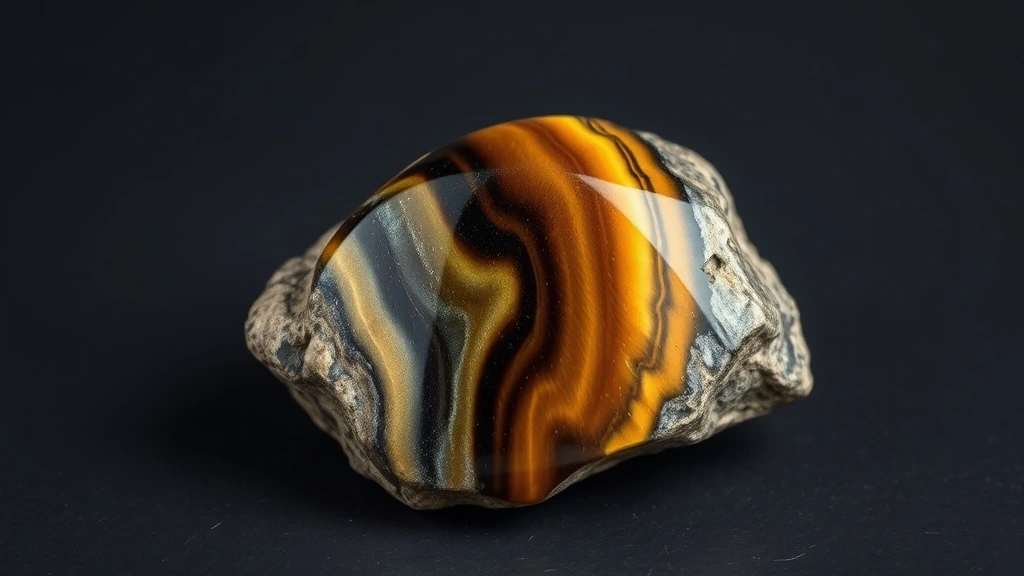
Tiger’s Eye belongs to the Natural Mineral / Crystal group, specifically as a cryptocrystalline silica aggregate. It forms through the replacement of crocidolite asbestos by silica, creating a unique fibrous structure. This geological process results in a stone that is both visually striking and structurally robust. Its formation occurs primarily in metamorphic environments where heat and pressure alter mineral compositions. Understanding this origin is crucial for accurate gemological identification and valuation.
What is Tiger’s Eye Gemstone? Geological Overview & Definition
Tiger’s Eye is defined as a chalcedony variety characterized by its chatoyancy, a lustrous optical effect. This phenomenon occurs when light reflects off the parallel silica fibers within the stone. The result is a moving band of light that resembles a cat’s eye. This property distinguishes it from other opaque gemstones.
The stone typically exhibits a color spectrum ranging from golden yellow to deep brown. These hues are derived from the iron oxides present in the original asbestos fibers. The cryptocrystalline quartz matrix binds these fibers tightly together. This structural integrity ensures the stone remains stable during cutting and polishing.
Tiger’s Eye Gemstone Chemical Composition & Crystallographic Properties
The primary mineral component is silicon dioxide (SiO₂), which crystallizes in the Trigonal system. This crystal system dictates the specific lattice arrangement of the quartz matrix. The fibrous inclusions are composed of limonite, an iron oxide hydroxide. These inclusions are responsible for the stone’s distinctive brown and gold colors.
The refractive index of Tiger’s Eye ranges from 1.544 to 1.553, typical for quartz. Its density falls between 2.64 and 2.71 g/cm³, reflecting the mixed composition. The stone is generally resistant to acids, though prolonged exposure can affect the surface luster. This chemical stability makes it suitable for everyday wear in jewelry settings.
Thermal behavior indicates that Tiger’s Eye is relatively stable under normal conditions. However, extreme heat can potentially alter the chromophore centers within the iron oxides. This may lead to slight color shifts or surface crazing. Proper care is essential to maintain the stone’s optical and aesthetic qualities over time.
| Property | Specification |
|---|---|
| Mineral Group | Natural Mineral / Crystal |
| Chemical Formula | SiO₂ (Quartz matrix with limonite fibers) |
| Mohs Hardness | 6.5–7 |
| Crystal System | Trigonal |
| Specific Gravity (Density) | 2.64–2.71 |
| Refractive Index | 1.544–1.553 |
| Color & Optical Properties | Natural Tiger’s Eye Gemstone color spectrum and optical dispersion |
| Primary Mining Localities | Global primary localities |
| Water & Chemical Resistance | High (Safe for gentle water washing) |
| Chakra Alignment (Traditional) | Root Chakra |
| Zodiac Affinity (Traditional) | Leo, Virgo |
| Symbolic Meaning (Traditional) | Courage, clarity, and protection |
Tiger’s Eye Gemstone Varieties & Color Spectrum
Tiger’s eye is primarily a chatoyant gemstone, characterized by its silky luster and banded patterns. The classic variety features golden-brown hues that shift to amber under light. This effect arises from the replacement of crocidolite fibers by chalcedony, creating a unique optical phenomenon.
Golden Tiger’s Eye
This is the most common and commercially valued variety, displaying rich golden-brown and honey tones. The chatoyancy is typically strong, with a distinct cat’s-eye effect that moves across the surface. It forms when silica replaces blue crocidolite fibers, preserving their fibrous structure.
Honey Tiger’s Eye
Honey tiger’s eye exhibits warmer, more translucent amber and orange shades compared to the standard golden type. These stones often possess a higher degree of clarity and a softer, glowing appearance. The color intensity depends on the specific oxidation state of the iron impurities within the matrix.
Red Tiger’s Eye
Also known as red hawk’s eye, this variety features deep rust, brick, or maroon colors. The reddish hue results from a higher concentration of hematite or goethite inclusions replacing the original asbestiform fibers. It is less common than golden varieties and often commands a premium price.
Black Tiger’s Eye
This rare morph displays dark charcoal to jet-black bands with a subtle sheen. The coloration is caused by the presence of carbonaceous material or unaltered crocidolite fibers that have not fully replaced by silica. It is frequently mistaken for black onyx but lacks the uniform opacity of that mineral.
Blue Hawk’s Eye
While technically a precursor to tiger’s eye, blue hawk’s eye is traded as a distinct gemstone variety. It consists of unaltered or partially altered crocidolite fibers, retaining their original blue color. This variety is significantly rarer and more fragile than the silica-replaced tiger’s eye.
Where is Tiger’s Eye Gemstone Found? Geological Mining & Extraction
Tiger’s eye forms in metamorphic environments where silica-rich fluids replace asbestos fibers. The primary host rocks are quartzite and shale, often associated with ancient sedimentary basins. These geological processes occur over millions of years, creating the characteristic banded structures.
South Africa is the world’s leading producer, particularly from the Transvaal region. Other significant sources include Australia, Brazil, and India, where deposits are found in pegmatite dikes. Mining operations typically involve open-pit extraction, followed by careful cutting to maximize the chatoyant effect.
Historical Significance & Cultural Lore of Tiger’s Eye Gemstone
Ancient civilizations revered tiger’s eye as a stone of protection and courage. Roman soldiers carried small pieces into battle, believing it would shield them from harm. In Egyptian tombs, scarabs carved from this stone symbolized the sun god Ra’s protective gaze.
Medieval European alchemists associated the gem with clarity and mental focus. They believed it could dispel negative energy and enhance intuition. Today, it remains a popular choice for jewelry, valued for its striking visual appeal and enduring cultural significance.
Modern Uses & Jewelry Applications of Tiger’s Eye Gemstone
Lapidaries primarily cut Tiger’s Eye as cabochons to maximize its distinctive chatoyancy, a shimmering optical effect known as the “cat’s eye” phenomenon. This smooth, domed shape allows the limonite fibers to reflect light in a single, moving band, creating a dynamic visual appeal. Faceted cuts are rare and less popular because they disrupt the continuous flow of the fibrous structure.
- Rings and Bracelets: The most common setting, showcasing the stone’s warm, golden-brown hues.
- Pendants and Earrings: Often paired with gold or bronze metals to complement its earthy tones.
- Ornamental Carvings: Used in larger blocks for decorative boxes, vases, and architectural inlays.
- Watch Faces: Frequently used in luxury timepieces for its durability and unique luster.
Metaphysical Properties & Traditional Meaning of Tiger’s Eye Gemstone
According to historical traditions and metaphysical lore, Tiger’s Eye is revered as a stone of courage and mental clarity. Practitioners believe it helps the wearer overcome fear and anxiety by grounding their energy. This gemstone is often associated with protection, acting as a shield against negative influences.
The stone’s fiery yet grounded nature encourages clarity in decision-making and boosts self-confidence. It is believed to balance the mind and body, promoting a sense of stability. Many users report feeling more focused and empowered when wearing this gemstone.
Which Chakra and Zodiac Signs Align with Tiger’s Eye Gemstone?
Tiger’s Eye is canonically aligned with the Root Chakra, the energy center located at the base of the spine. This connection supports feelings of safety, security, and physical vitality. By grounding the wearer, the stone helps anchor spiritual energy to the earth.
In astrological practice, this gemstone is specifically recommended for Leo and Virgo. Leos benefit from its grounding properties, which balance their fiery nature. Virgos appreciate its clarity, which enhances their analytical and detail-oriented traits.
How to Identify Real vs. Fake Tiger’s Eye Gemstone
Artificial imitations of Tiger’s Eye are common, often made from synthetic glass or dyed quartz. These fakes may mimic the color but lack the natural fibrous structure. Some replicas use plastic resins or even painted wood to simulate the chatoyant effect.
Practical At-Home Authenticity Tests
- Temperature Test (Thermal Feel): Real Tiger’s Eye feels cool to the touch and warms slowly. Glass imitations often feel warmer initially or heat up much faster.
- Specific Gravity & Weight Test: Genuine stones have a density of 2.64–2.71. They feel heavier than their size suggests compared to lighter glass or plastic copies.
- Scratch & Hardness Test (Mohs Comparison): With a Mohs hardness of 6.5–7, real Tiger’s Eye can scratch glass. It will not be scratched by a steel knife blade.
- Microscopic & Loupe Inspection (Internal Inclusions): Use a 10x loupe to look for natural limonite fibers. Fakes often show bubbles, swirls, or an overly uniform pattern.
Tiger’s Eye Gemstone Valuation Factors, Grading & Pricing
Market value hinges primarily on Color Saturation, where deep, golden-brown hues command the highest premiums. Uniform tone across the stone ensures visual consistency and enhances aesthetic appeal. Additionally, high optical clarity and a sharp chatoyant luster significantly elevate the gemstone’s desirability.
Carat Weight directly influences pricing, with larger specimens exhibiting rarer optical effects fetching higher bids. Precise facet symmetry maximizes light return, while the absence of visible matrix inclusions preserves structural integrity. Stones with heavy iron oxide inclusions often suffer from reduced market value due to perceived imperfections.
Geographical Provenance Premium plays a critical role, as stones from renowned South African mines often carry a status advantage. Current wholesale trends show steady demand, while retail prices reflect significant markups for certified pieces. Buyers should expect tiered pricing structures based on these combined quality and origin metrics.
How to Clean and Care for Tiger’s Eye Gemstone
For routine maintenance, immerse the stone in warm soapy water to dissolve surface oils and dust. Gently agitate the water and use a soft cloth to wipe away any remaining residue without scratching the surface. This gentle approach preserves the delicate chatoyancy and prevents damage to the quartz matrix.
Strictly avoid using ultrasonic cleaners, as vibrations can induce structural fractures within the fibrous mineral structure. The interlocking fibers of limonite and quartz are susceptible to stress, making mechanical agitation dangerous. Always allow the gemstone to air dry naturally before storing it in a protective pouch.
Cleansing and Recharging Tiger’s Eye Gemstone (Energetic Care)
Safe energetic cleansing relies on dry methods that respect the mineral’s physical stability. Smoke smudging with sage or palo santo is an effective traditional practice for clearing perceived negative energies. This non-invasive technique avoids moisture exposure, ensuring the stone’s structural integrity remains completely uncompromised.
Alternatively, place the gemstone on a selenite plate or under moonlight for overnight recharging. These methods align with the stone’s association with the Root Chakra, promoting grounding and stability. Ensure the environment is dry to prevent any potential moisture-related degradation of the surface.
Frequently Asked Questions About Tiger’s Eye Gemstone
What is the chemical composition of Tiger’s Eye?
Tiger’s Eye is primarily composed of silicon dioxide (SiO₂) with embedded limonite fibers. This unique structure creates its characteristic chatoyant luster, often referred to as the “cat’s eye” effect. The quartz matrix provides durability, while the iron oxide fibers contribute to the rich golden-brown coloration.
How hard is Tiger’s Eye on the Mohs scale?
Tiger’s Eye rates between 6.5 and 7 on the Mohs hardness scale. This makes it a durable gemstone suitable for everyday jewelry, including rings and bracelets. It can withstand minor scratches from dust or sand, though it is still susceptible to damage from harder minerals like diamond or topaz.
Can I wear Tiger’s Eye in the shower?
Yes, Tiger’s Eye is safe for gentle water washing and shower exposure. As a variety of quartz, it has high water resistance and will not dissolve or degrade when wet. However, avoid exposing it to harsh chemicals or extreme temperature changes, which could potentially affect the limonite fibers within the stone.
Is Tiger’s Eye safe to clean in an ultrasonic cleaner?
No, you should avoid using ultrasonic cleaners for Tiger’s Eye. The vibrations can cause structural fractures due to the fibrous nature of the stone. Instead, use warm soapy water and a soft cloth for gentle cleaning. This method effectively removes oils and dirt without risking internal damage to the gemstone.
Which zodiac signs are associated with Tiger’s Eye?
Tiger’s Eye is traditionally aligned with the zodiac signs Leo and Virgo. These earth and fire signs benefit from the stone’s grounding properties and its association with courage. Wearing this gemstone is believed to enhance clarity and protection for individuals born under these astrological influences.
Which chakra does Tiger’s Eye correspond to?
Tiger’s Eye is primarily associated with the Root Chakra. This energy center is located at the base of the spine and governs feelings of security and stability. The stone’s earthy tones and grounding nature help balance this chakra, promoting a sense of courage and physical vitality.
What is the crystal system of Tiger’s Eye?
Tiger’s Eye belongs to the trigonal crystal system. This classification reflects its underlying quartz structure, which forms hexagonal prisms with pyramidal terminations. The trigonal symmetry is a key gemological identifier, distinguishing it from other fibrous minerals that may appear similar to the untrained eye.
What is the refractive index of Tiger’s Eye?
The refractive index of Tiger’s Eye ranges from 1.544 to 1.553. This optical property determines how light bends as it enters the stone, contributing to its visual appeal. Combined with its density of 2.64–2.71, these metrics help gemologists accurately identify and grade the quality of the gemstone.