
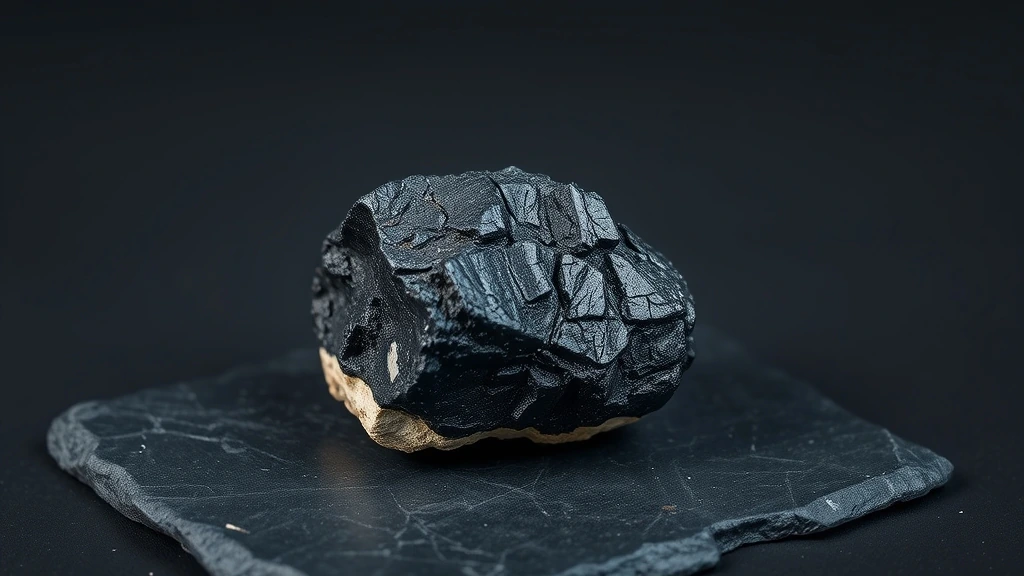
Goethite belongs to the Natural Mineral / Crystal group and is classified as an orthorhombic oxide‑hydroxide. It forms as a secondary product of weathering iron‑rich rocks, often coating veins, nodules, or filling cavities in sedimentary and metamorphic settings. Its dense, iron‑rich composition gives it a specific gravity of 3.3–4.3, while its opaque to sub‑translucent luster adds depth to carved cabochons and beads.
What is Goethite Gemstone? Geological Overview & Definition
Goethite is a secondary iron mineral that precipitates from oxidizing groundwater, replacing primary sulfides such as pyrite. In gem form, it is prized for its warm, earthy hues that range from honey‑yellow to deep rust, often displaying a subtle chatoyancy when cut as a cabochon.
The gemstone is harvested from alluvial deposits, iron‑rich laterites, and weathered ore bodies worldwide. Because it forms in orthorhombic crystals, natural crystals are rare; most gem material is fibrous, massive, or botryoidal, which is then shaped for ornamental use.
Goethite Gemstone Chemical Composition & Crystallographic Properties
The ideal formula is FeO(OH), reflecting its status as an α‑iron oxyhydroxide. Minor cation substitution—commonly Mn³⁺, Al³⁺, or Ti⁴⁺—can tweak its hue, producing brighter yellows or deeper reds. Its orthorhombic lattice consists of three mutually perpendicular axes of unequal length, yielding prismatic or tabular habits in rare crystal specimens.
Goethite’s structure is built from edge‑sharing FeO₆ octahedra that form infinite chains along the b‑axis, linked by hydrogen‑bonded hydroxyl groups. This arrangement makes the mineral acid‑sensitive; exposure to strong acids can dissolve the Fe–OH bonds, altering surface luster and color.
Color in goethite arises from charge‑transfer transitions between Fe²⁺ and Fe³⁺ ions, creating the characteristic yellow‑orange palette. Heat treatment above 300 °C can dehydrate the hydroxyl groups, partially converting goethite to hematite (α‑Fe₂O₃) and darkening the stone, a process sometimes employed to enhance depth.
Thermally, goethite is stable up to about 250 °C; beyond this, it loses structural water and may recrystallize. This dehydration is reversible only under hydrothermal conditions, so gem cutters must avoid prolonged high‑temperature exposure to preserve the stone’s original hue and translucency.
| Property | Specification |
|---|---|
| Mineral Group | Natural Mineral / Crystal |
| Chemical Formula | α-Iron |
| Mohs Hardness | 5.0–5.5 |
| Crystal System | Orthorhombic |
| Specific Gravity (Density) | 3.3–4.3 |
| Refractive Index | Opaque to sub-translucent |
| Color & Optical Properties | Natural Goethite Gemstone color spectrum and optical dispersion |
| Primary Mining Localities | Global primary localities |
| Water & Chemical Resistance | High (Safe for gentle water washing) |
| Chakra Alignment (Traditional) | Root Chakra |
| Zodiac Affinity (Traditional) | Taurus, Virgo, Capricorn |
| Symbolic Meaning (Traditional) | Grounding, stability, and connection to the earth |
Goethite Gemstone Varieties & Color Spectrum
Goethite presents a diverse array of visual characteristics, primarily defined by its iron oxide content. The mineral typically exhibits earthy tones ranging from yellow-brown to deep black. Its orthorhombic crystal system often results in prismatic or fibrous habit formations. These structural traits significantly influence how light interacts with the stone’s surface.
Botryoidal Goethite
This variety forms rounded, grape-like clusters known as botryoidal aggregates. It commonly develops in cave systems where iron-rich waters precipitate over time. The surface often displays a velvety texture due to fine crystalline growth. Collectors prize these specimens for their organic, sculptural appearance.
Limonite-Goethite Mixture
Often confused with pure goethite, this form is a hydrous iron oxide mixture. It frequently appears as a yellow-brown coating on other minerals or rocks. The color intensity depends on the specific hydration levels present. This variety is abundant in weathered iron ore deposits worldwide.
Black Goethite
Found in high-temperature metamorphic environments, this morph appears as a deep, opaque black. It is distinguished by its high specific gravity and dense crystalline structure. The dark coloration results from minimal impurities and tight packing. This rare form is highly sought after by mineralogists.
Fibrous Goethite
Characterized by needle-like or hair-like crystal growths, this variety is known as ferric oxide fibrous. It often forms in association with quartz or other silicate minerals. The delicate structure makes it fragile and difficult to extract intact. Its rarity adds significant value to high-quality specimens.
Earthy Goethite
This common form appears as a massive, non-crystalline aggregate of fine particles. It is frequently found in laterite soils and bauxite deposits. The texture is typically rough and granular to the touch. While less valuable as a gem, it is crucial for industrial applications.
Where is Goethite Gemstone Found? Geological Mining & Extraction
Goethite primarily forms in oxidized zones of iron ore deposits and hydrothermal veins. It is frequently associated with quartz, hematite, and other iron-bearing minerals. These deposits are often located in regions with significant geological uplift. The mineral’s stability allows it to persist in surface environments.
Major extraction sites include the Pilbara region in Australia and parts of Europe. In Australia, goethite is mined alongside other iron oxides for industrial use. European deposits, particularly in Germany and France, yield high-quality mineral specimens. These locations provide the raw material for both industrial and collector markets.
Historical Significance & Cultural Lore of Goethite Gemstone
Ancient civilizations utilized goethite primarily as a source of iron oxide pigment. The mineral was ground into powder to create durable red and yellow ochres. These pigments were essential for cave paintings and ceremonial body art. The ease of extraction made it a staple material for early artists.
Archaeological evidence reveals goethite’s use in ritualistic and decorative contexts. Artifacts from the Neolithic era often contain traces of this mineral. Its association with earth and stability reinforced its spiritual significance. This enduring legacy continues to influence modern metaphysical practices.
Modern Uses & Jewelry Applications of Goethite Gemstone
Goethite is favoured by lapidaries for its earthy brown‑gold hue and moderate Mohs hardness (5–5.5), which allows both cabochon polishing and limited faceting without excessive fracture risk. Artisans often set the stone in silver or bronze settings to accentuate its warm tone, while collectors prize ornamental carvings that showcase its orthorhombic crystal habit.
- Cabochon pendants and beads for boho‑style necklaces
- Faceted earrings or rings when a polished surface is achievable
- Ornamental carvings such as mini‑talismanic figures or inlay work for decorative boxes
Safety & Mineral Profile of Goethite
Safe Handling and Physical Stability
Goethite is a relatively soft mineral (Mohs hardness 5–5.5) and exhibits a fibrous or needle‑like habit that can break easily under mechanical stress. It is non‑radioactive but contains iron, which can oxidize to form iron oxides and release fine dust that may irritate the respiratory tract if inhaled. The mineral is stable in neutral to slightly acidic environments; exposure to strong acids or bases can dissolve it, and prolonged contact with water can promote the growth of microbial biofilms on its surface. Because of its softness, tendency to fracture, and potential for dust generation, goethite is best displayed in a sealed, low‑impact mounting rather than used as a jewelry stone. Collectors should handle specimens with gloves and avoid prolonged skin contact, especially when the mineral is freshly broken or in powdered form.
Scientific and Educational Significance
Goethite plays a pivotal role in the study of weathering processes, soil formation, and iron cycling in the environment. Its presence in soil profiles and sedimentary rocks provides insights into paleoclimatic conditions and diagenetic pathways. In museum collections, goethite specimens are valuable for demonstrating mineral‑to‑mineral transformations, such as the conversion of hematite to goethite under oxidizing conditions. Researchers also use goethite as a model system for studying surface chemistry, adsorption of contaminants, and the kinetics of iron oxidation. Its distinctive pale yellow to brown coloration and fibrous texture make it an excellent educational tool for illustrating mineral identification techniques, including streak testing, magnetic susceptibility, and optical microscopy.
Mineralogical Group and Planetary Lore of Goethite
Goethite belongs to the oxohydroxide group of iron minerals, closely related to hematite and magnetite. Historically, it was first described in the early 19th century by the German mineralogist Johann Friedrich Ludwig in the iron-rich deposits of the Harz Mountains. Early mineralogists noted its fibrous habit and classified it under the broader category of “iron oxides.” According to early lapidary texts, goethite was sometimes mistaken for “yellow iron” due to its color, and it was occasionally used in ornamental carvings, though its softness limited its practical applications. In planetary geology, goethite has been detected in Martian soil samples returned by the Curiosity rover, indicating past aqueous activity and the presence of iron‑rich environments on Mars. This extraterrestrial occurrence underscores goethite’s importance as a marker of water‑mediated mineralization both on Earth and beyond.
How to Identify Real vs. Fake Goethite Gemstone
Artificial imitations of Goethite include dyed quartz, synthetic glass, and resin composites that mimic its brown‑gold coloration but lack the mineral’s characteristic density and magnetic response. Such replicas often feel lighter, display uniform colour without natural streaks, and may exhibit a glassy luster rather than Goethite’s muted metallic sheen.
Practical At-Home Authenticity Tests
- Temperature Test (Thermal Feel): Real Goethite feels cool to the touch and retains that coolness longer than glass or plastic imitations, which quickly warm to skin temperature.
- Specific Gravity & Weight Test: Using a simple water displacement method, authentic Goethite (SG ≈ 3.3–4.3) will feel noticeably heavier than quartz or glass of the same size.
- Scratch & Hardness Test (Mohs Comparison): A steel nail (hardness ~5.5) will lightly scratch Goethite but not damage harder gemstones; a glass shard (hardness ~5.5) will leave a faint mark, whereas true Goethite resists deeper scratches.
- Microscopic & Loupe Inspection (Internal Inclusions): Under 10× magnification, genuine Goethite shows fine, irregular inclusions and occasional needle‑like iron oxide crystals, while synthetic glass appears uniformly clear with no natural fracture patterns.
Goethite Gemstone Valuation Factors, Grading & Pricing
Color Saturation serves as the primary driver of aesthetic appeal in this earthy mineral. Collectors prize specimens exhibiting a deep, uniform brown tone with minimal variation. High-quality pieces often display a distinct resinous or metallic luster that enhances their visual depth.
Carat Weight significantly influences the final market price, particularly for large, unfractured specimens. Facet symmetry is less critical here than in transparent gems, but overall shape matters. The presence of matrix or inclusions can either detract from value or add unique geological character.
Geographical Provenance Premium often elevates the status of rare finds from specific mining regions. Wholesale prices remain modest, while retail values rise for certified, high-clarity stones. Market trends show steady demand among collectors seeking durable, earth-toned gemstones.
How to Clean and Care for Goethite Gemstone
Use warm soapy water and a soft cloth to gently remove surface dust and oils. This method effectively maintains the stone’s luster without risking damage to its structure. Always dry the gemstone thoroughly with a lint-free towel after washing.
Avoid ultrasonic cleaners to prevent structural fractures within the orthorhombic crystal lattice. The moderate hardness of 5.0–5.5 makes goethite susceptible to vibration-induced stress. Handle the stone with care to preserve its integrity over time.
Cleansing and Recharging Goethite Gemstone (Energetic Care)
For energetic maintenance, place the stone on a selenite plate overnight to absorb negative energies. This dry method respects the mineral’s physical limitations while supporting its metaphysical properties. Smoke smudging with sage or palo santo is another safe, non-invasive option.
Moonlight exposure is a gentle way to recharge the stone’s vibrational frequency. These dry techniques ensure the goethite remains protected from moisture and mechanical stress. Regular, mindful care sustains both its physical beauty and spiritual resonance.
Frequently Asked Questions About Goethite Gemstone
What is the chemical composition of Goethite?
Goethite is an iron oxide mineral with the formula α-FeO(OH). It belongs to the orthorhombic crystal system, giving it a distinct structural identity. Its density ranges from 3.3 to 4.3 g/cm³, making it noticeably heavy for its size. This high specific gravity helps distinguish it visually from lighter earthy minerals.
How hard is Goethite on the Mohs scale?
Goethite rates between 5.0 and 5.5 on the Mohs hardness scale. This places it in the mid-range, similar to apatite or fluorite. While durable enough for casual jewelry, it is softer than quartz or topaz. You should avoid contact with harder materials to prevent surface abrasion or micro-scratches during daily wear.
Is Goethite safe to wear in the shower?
Yes, Goethite has high water resistance and is safe for gentle washing. It does not dissolve or degrade when exposed to water, unlike selenite or halite. However, prolonged exposure to hot water or harsh soaps may dull its surface over time. Always dry it thoroughly with a soft cloth after water contact to maintain its luster.
Can I clean Goethite in an ultrasonic cleaner?
No, you must avoid ultrasonic cleaners to prevent structural fractures. The high-frequency vibrations can exploit natural cleavage planes or internal inclusions. Instead, use warm soapy water and a soft cloth for gentle cleaning. This method preserves the mineral’s integrity and prevents mechanical stress on the crystal lattice.
Which zodiac signs are aligned with Goethite?
Goethite is traditionally aligned with Taurus, Virgo, and Capricorn. These earth signs resonate with the mineral’s grounding and stabilizing properties. Its connection to the physical realm supports their inherent desire for security. Wearing Goethite can enhance the natural earth element energy associated with these astrological signs.
Which chakra does Goethite activate?
Goethite is primarily associated with the Root Chakra. This energy center governs feelings of safety, stability, and physical well-being. It helps anchor your energy to the earth, promoting a sense of groundedness. The mineral’s heavy, earthy nature supports Root Chakra balance without conflicting with higher energy centers.
What is the crystal system of Goethite?
Goethite crystallizes in the orthorhombic crystal system. This structure often results in prismatic or tabular crystal habits. It may also form as massive, botryoidal, or fibrous aggregates. Understanding its orthorhombic symmetry helps identify it under magnification and distinguishes it from isometric or hexagonal minerals.
Is Goethite opaque or translucent?
Goethite is typically opaque to sub-translucent. Its iron-rich composition absorbs most light, preventing significant transmission. Thin sections may appear translucent, but standard gem cuts remain opaque. This property makes it valued for its earthy color and texture rather than brilliance or fire.