
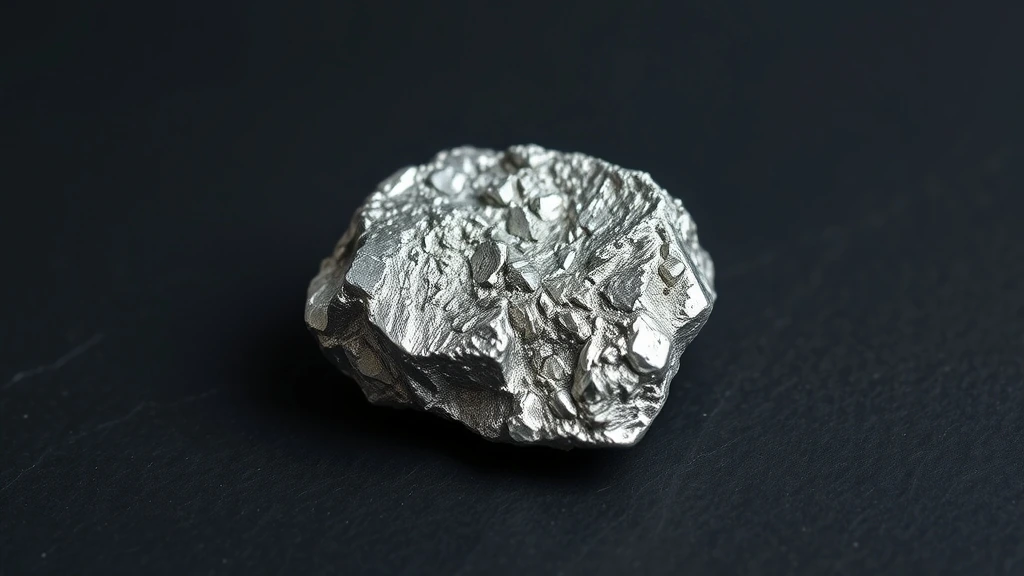
Pyrite belongs to the natural mineral group of native sulfide crystals, classified unequivocally within the cubic crystal system. Formed in hydrothermal veins, sedimentary layers, and metamorphic rocks, it crystallizes as well‑defined cubes or pyritohedra, reflecting its isometric lattice. Though often called “fool’s gold,” its mineralogical identity is distinct from gold, with a dense, metallic composition that resists weathering under most surface conditions. In comparative mineralogical collections, practitioners and geologists frequently study Tetrahedrite alongside this crystal to appreciate their subtle energetic and structural differences.
What is Pyrite? Geological Overview & Definition
Pyrite is a iron sulfide mineral (FeS₂) that occurs worldwide in igneous, sedimentary, and metamorphic environments. It commonly precipitates from sulfur‑rich fluids, filling fractures and replacing organic matter, creating massive aggregates or well‑formed crystals. Pyrite’s bright metallic sheen often invites comparison to the similarly lustrous but distinctly reddish Cuprite, a copper oxide mineral that can be found in the same hydrothermal veins.
In the field, pyrite is recognized by its brassy‑yellow color, conchoidal fracture, and characteristic metallic luster. Its name derives from the Greek “pyr” meaning fire, referencing the sparks it emits when struck against steel—a property linked to its high electrical conductivity. In comparative mineralogical collections, practitioners and geologists frequently study Arsenopyrite alongside this crystal to appreciate their subtle energetic and structural differences.
Pyrite Chemical Composition & Crystallographic Properties
The mineral’s cubic (isometric) crystal system yields a lattice where each unit cell contains four Fe atoms coordinated by eight S₂⁻ pairs, producing the classic “pyrite structure.” This arrangement gives rise to a high density of 4.95–5.10 g/cm³ and a refractive index ranging from 2.0 to 2.9, contributing to its brilliant metallic sheen. In comparative mineralogical collections, practitioners and geologists frequently study Snake Stone Serpentine Echer alongside this crystal to appreciate their subtle energetic and structural differences.
While the ideal formula is FeS₂, minor cation substitution can occur, with trace nickel, cobalt, or copper replacing iron in the lattice, subtly altering color and magnetic response. Such substitutions are typically below 1 % but are detectable by electron microprobe analysis. In comparative mineralogical collections, practitioners and geologists frequently study Healer S Gold alongside this crystal to appreciate their subtle energetic and structural differences.
Pyrite is acid sensitive; exposure to oxidizing acids can generate sulfuric acid and iron sulfate, leading to surface alteration and the formation of iron oxides. This reaction underlies the environmental concern of acid mine drainage where pyrite‑rich ores are exposed to water and oxygen.
Thermally, pyrite is stable up to about 600 °C, beyond which it decomposes to pyrrhotite (Fe₁₋ₓS) and releases sulfur vapor. This transformation is accompanied by a color shift from metallic gold to a darker, more opaque hue, reflecting changes in the chromophore color centers that govern its visual properties.
| Property | Specification |
|---|---|
| Mineral Group | Natural Mineral / Crystal |
| Chemical Formula | FeS₂ |
| Mohs Hardness | 6–6.5 |
| Crystal System | Cubic (crystal system) |
| Specific Gravity (Density) | 4.95–5.10 |
| Refractive Index | 2.0 – 2.9 |
| Color & Optical Properties | Natural Pyrite color spectrum and optical dispersion |
| Primary Mining Localities | Global primary localities |
| Water & Chemical Resistance | High (Safe for gentle water washing) |
| Chakra Alignment (Traditional) | Root Chakra, Sacral Chakra |
| Zodiac Affinity (Traditional) | Aries, Taurus, Virgo, Scorpio |
| Symbolic Meaning (Traditional) | Protection, abundance, and willpower |
Pyrite Varieties & Color Spectrum
Pyrite exhibits a distinct metallic luster that ranges from pale brass-yellow to deep bronze, depending on surface oxidation. The cubic crystal habit is the most common form, though octahedral and dodecahedral structures also occur naturally. These geometric shapes result from the mineral’s isometric crystal system, which allows for symmetrical growth in three dimensions.
Classic Spanish Pyrite
Originating primarily from Navas de Maderuelo in Spain, this variety is renowned for its large, well-formed cubic crystals. The specimens often display a bright, unweathered brass-yellow color that resists tarnishing for decades. This regional type remains the benchmark for collectors seeking pristine geometric integrity and high visual clarity.
Mexican “Fool’s Gold”
Frequently found in the state of Guanajuato, this variety typically occurs as massive nodules or botryoidal aggregates. It often contains subtle sulfur inclusions that create a slightly duller, olive-tinged appearance compared to Spanish stones. The massive habit makes it ideal for tumbled gemstones and rough display pieces rather than faceting.
Botryoidal Pyrite
This rare morphological form resembles grape clusters or cauliflower heads, formed through precipitation from hydrothermal fluids. The surface texture is highly irregular, creating complex light refraction patterns that mimic organic growth. Such specimens are prized for their unique textural contrast against standard cubic formations.
Pyrite with Chalcopyrite
Often found in association with copper deposits, this variety features intergrown chalcopyrite crystals that exhibit a distinct greenish-gold hue. The intergrowth structure creates a striking visual dichotomy between the two sulfide minerals. This combination is geologically significant as it indicates specific redox conditions during mineralization.
Weathered Pyrite
Exposure to moisture and oxygen causes pyrite to oxidize, forming limonite coatings that appear brown or rust-colored. While often considered flawed, these specimens display intricate weathering patterns that highlight the original crystal geometry. Collectors value these pieces for their patina and the geological history they represent.
Where is Pyrite Found? Geological Mining & Extraction
Pyrite is an extremely common mineral, occurring in sedimentary, igneous, and metamorphic rocks worldwide. It frequently forms in hydrothermal veins and as a replacement mineral in coal seams and shale deposits. The mineral’s stability allows it to survive significant geological transport, making it a ubiquitous component of many ore bodies.
Major commercial deposits are located in Spain, Mexico, the United States, and China, where it is often extracted as a byproduct of copper and gold mining. The Navas de Maderuelo mine in Spain remains the premier source for large, high-quality crystals. Extraction methods typically involve open-pit mining, followed by careful selection to preserve the crystal integrity of the most valuable specimens.
Historical Significance & Cultural Lore of Pyrite
Ancient civilizations, including the Romans and Greeks, valued pyrite for its metallic luster and durability, often using it as a substitute for gold. Archaeological evidence reveals its use in ornamental jewelry and as a component in early strike-iron mechanisms for fire-starting. The mineral’s association with the element sulfur linked it to concepts of transformation and alchemical power.
In modern esoteric traditions, pyrite is revered as a stone of protection and abundance, believed to shield the wearer from negative energies. Its connection to the Root Chakra grounds practitioners, while its association with the Sacral Chakra enhances creative willpower. This enduring legacy ensures its continued popularity in both metaphysical and gemological contexts.
Modern Uses & Jewelry Applications of Pyrite
Pyrite’s metallic luster and high Mohs hardness (6–6.5) make it a durable candidate for durable jewelry components. Lapidaries typically cut it into faceted stones or smooth cabochons to maximize its reflective surface area. Due to its brittleness, cutting requires precise pressure control to prevent fracturing along cleavage planes.
- Faceted Cuts: Standard brilliant or step cuts are used to enhance the stone’s natural refractive index (2.0–2.9), creating a brilliant metallic sparkle.
- Cabochons: Polished domes are popular for pendants and rings, showcasing the stone’s uniform golden-bronze color without risking sharp edges.
- Ornamental Carving: Skilled carvers use pyrite for decorative inlays, cameos, and architectural accents, leveraging its resistance to weathering and corrosion.
Safety & Mineral Profile of Pyrite
Pyrite is chemically stable under normal atmospheric conditions but can oxidize to form iron sulfates when exposed to moisture and air over long periods. This process, known as “pyrite disease,” can cause structural degradation in large specimens. Handlers should wear gloves to prevent sulfur residue from staining skin or clothing.
It is primarily valued as a collector mineral for scientific study and specimen display rather than for therapeutic purposes. While historical texts associate it with various metaphysical properties, modern gemology emphasizes its physical and chemical characteristics. Safety protocols focus on preventing inhalation of fine pyrite dust, which can irritate the respiratory system.
Mineralogical Group and Planetary Lore of Pyrite
Pyrite belongs to the isometric crystal system and is often referred to as “fool’s gold” due to its resemblance to native gold. It is a common mineral found in sedimentary, igneous, and metamorphic rocks. Its cubic crystal structure and distinct cleavage distinguish it from other sulfide minerals.
Traditional lore has linked pyrite to the planet Mars, associating it with strength, protection, and willpower. These associations stem from its fiery color and association with fire-making tools in ancient cultures. Modern scientific understanding, however, prioritizes its geological formation and mineralogical properties over astrological alignments.
How to Identify Real vs. Fake Pyrite
Artificial imitations of pyrite include synthetic glass, dyed quartz, and metal-coated stones. These fakes often lack the natural inclusions and crystal structure of genuine pyrite. Identifying real pyrite requires careful examination of its physical properties and luster.
Practical At-Home Authenticity Tests
- Temperature Test (Thermal Feel): Genuine pyrite feels cool to the touch initially due to its high thermal conductivity. It warms up slowly compared to plastic or glass imitations, which may feel warmer or cooler depending on their composition.
- Specific Gravity & Weight Test: Pyrite has a high specific gravity (4.95–5.10), making it significantly heavier than similarly sized glass or quartz stones. A genuine pyrite piece will feel dense and substantial in the hand.
- Scratch & Hardness Test (Mohs Comparison): With a Mohs hardness of 6–6.5, pyrite can scratch glass (hardness 5.5) but will not be scratched by a steel nail (hardness 5.5). Fakes like glass may scratch more easily or leave a different type of mark.
- Microscopic & Loupe Inspection (Internal Inclusions): Use a 10x loupe to examine the stone for natural inclusions, crystal faces, or surface imperfections. Genuine pyrite often shows subtle growth patterns or minor flaws, whereas synthetic glass may appear too perfect or contain air bubbles.
Pyrite Valuation Factors, Grading & Pricing
Specimen Aesthetic Quality is the primary driver of market value, focusing on the luster and color of the surface. High-grade pyrite exhibits a brilliant, mirror-like metallic sheen that reflects light with exceptional clarity. Collectors prize specimens that display a uniform golden-bronze hue without dull patches or oxidation.
Rarity & Specimen Dimensions (Centimeters/Grams) significantly influence pricing, particularly for large, intact crystal clusters. The physical size of the specimen, measured in centimeters and grams, correlates directly with its desirability among serious collectors. Any handling damage, such as chipped edges or broken faces, drastically reduces the overall valuation.
Mineralogical Provenance & Locality Value plays a crucial role in scientific and museum-grade acquisitions. Specimens from historically significant mining districts often command premium prices due to their geological context. Documented origin certificates further enhance credibility and value in the high-end collector market.
How to Clean and Care for Pyrite
To maintain the integrity of pyrite, use warm soapy water and a soft cloth for gentle surface cleaning. This method effectively removes dust and oils without introducing abrasive friction that could scratch the metallic surface. Always ensure the cloth is damp, not soaking wet, to minimize prolonged moisture contact.
It is critical to avoid ultrasonic cleaners entirely, as the high-frequency vibrations can induce structural fractures in the crystal lattice. Pyrite is naturally brittle, and sonic energy can propagate micro-cracks that lead to catastrophic failure. Store specimens in a dry environment to prevent long-term oxidation and tarnishing.
Cleansing and Recharging Pyrite (Energetic Care)
For holistic maintenance, practitioners often employ herbal smudging with sage or palo santo to clear stagnant energies. This dry method allows the aromatic smoke to circulate around the specimen without introducing moisture or heat. It is a safe, non-invasive technique that respects the physical stability of the mineral structure.
Alternatively, resting the stone on a selenite charging slab overnight under moonlight is a popular recharging practice. This approach leverages ambient light and natural energy fields without exposing the pyrite to direct intense sunlight. Such gentle methods ensure the crystal lattice remains undisturbed while fulfilling energetic care protocols.
Frequently Asked Questions About Pyrite
Is pyrite safe to wear in the shower?
Yes, pyrite can be exposed to gentle water without damage. Its metallic luster and cubic habit remain stable because the mineral exhibits high water resistance, allowing safe rinsing. However, prolonged soaking or harsh detergents may accelerate surface oxidation, so a quick rinse and gentle drying are recommended.
How should I clean my pyrite jewelry?
Clean pyrite with warm soapy water and a soft cloth, avoiding ultrasonic devices. The mineral’s Mohs hardness of 6–6.5 tolerates mild cleaning, but ultrasonic vibrations can create micro‑fractures in the crystal lattice. After washing, pat dry with a lint‑free cloth to preserve its shine.
Can ultrasonic cleaners be used on pyrite?
No, ultrasonic cleaners should be avoided for pyrite. The high‑frequency vibrations can induce structural fractures in the cubic crystals, compromising both appearance and durability. Stick to manual cleaning methods to maintain the stone’s integrity over time.
What zodiac signs are associated with pyrite?
Pyrite aligns with Aries, Taurus, Virgo, and Scorpio. These signs are traditionally linked to the stone’s energetic themes of protection, abundance, and willpower, reflecting the mineral’s bold, metallic character and its historical use as a talisman for success.
Which chakras does pyrite influence?
The Root Chakra and Sacral Chakra are the primary centers for pyrite. Activation of the Root Chakra grounds personal energy, while the Sacral Chakra enhances creativity and vitality, resonating with the stone’s reputation for fostering financial prosperity and confidence.
Is pyrite suitable for everyday wear?
Yes, pyrite’s hardness and density make it durable for daily use. With a specific gravity of 4.95–5.10, it resists scratches better than many softer gemstones. Nonetheless, avoid exposure to strong acids or chlorine, which can tarnish its metallic sheen over time.
Does pyrite change color when exposed to light?
Pyrite retains its characteristic brass‑gold hue under normal lighting conditions. Unlike some sulfide minerals, it does not undergo significant photo‑induced color change, though prolonged exposure to high humidity may promote surface oxidation, resulting in a thin iridescent tarnish that can be polished away.
Can pyrite be used in metaphysical practices?
Absolutely; pyrite is prized for its metaphysical properties. Practitioners cite its ability to amplify protection, attract abundance, and strengthen willpower, making it a popular focus stone during meditation or ritual work aimed at grounding and manifesting material goals.