
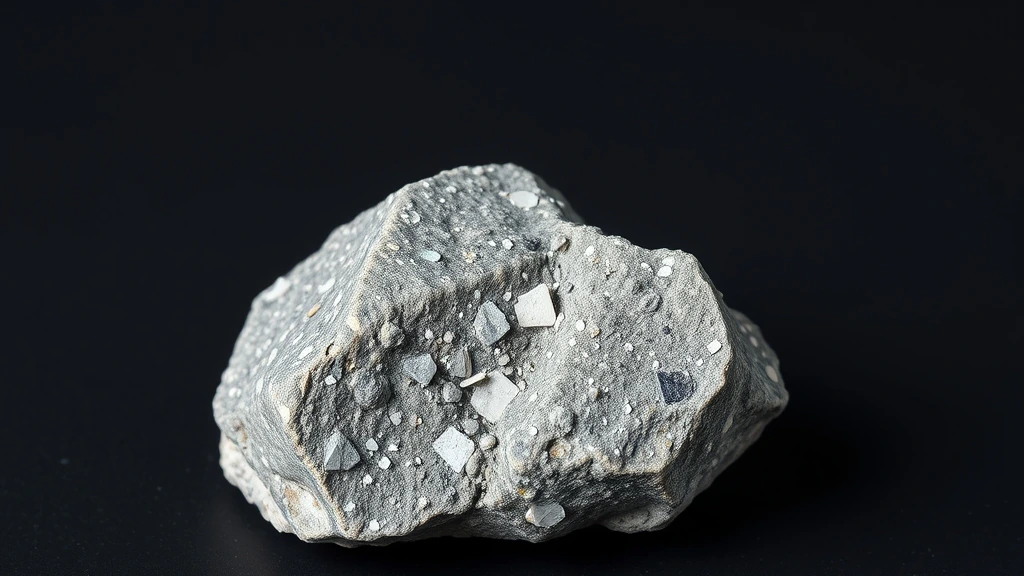
Tetrahedrite belongs to the sulfosalt family and is classified as a natural mineral/crystal rather than a rock or organic aggregate. It forms in hydrothermal veins associated with copper, lead, and zinc deposits, crystallizing from high‑temperature, sulfur‑rich fluids. Its occurrence is worldwide, from the Andes to the Appalachian belt, where it frequently coexists with argentite, chalcopyrite, and sphalerite. The mineral’s metallic luster and high specific gravity (≈4.97) have attracted both collectors and lapidaries seeking a gemstone with distinctive reflectivity.
What is Tetrahedrite? Geological Overview & Definition
Tetrahedrite is a cubic sulfosalt mineral composed principally of copper, antimony, and sulfur, often incorporating trace silver, zinc, or iron. The name derives from its tetrahedral crystal habit, though well‑developed cubes are rare in hand specimens. Its formation reflects the cooling of ore‑forming fluids in fissures, where temperature and sulfur activity dictate its stability.
In the field, tetrahedrite appears as massive, granular aggregates or as sub‑metallic crystals with a characteristic bronze‑gray to violet‑black sheen. The mineral’s metallic luster and high density make it readily distinguishable from other sulfides. It is a primary ore of copper and antimony, and its silver content can be economically significant in certain deposits.
Tetrahedrite Chemical Composition & Crystallographic Properties
The crystal system of tetrahedrite is unequivocally Cubic (crystal system), belonging to the space group *I‑43m*. Its unit cell contains a framework of sulfur atoms forming a face‑centered cubic lattice, within which copper and antimony occupy tetrahedral sites. This ordered arrangement yields the mineral’s isometric symmetry and contributes to its robust hardness.
Cation substitution is extensive: Cu⁺, Sb³⁺, Fe²⁺, Zn²⁺, and Ag⁺ can replace one another, producing a solid‑solution series that spans from pure tetrahedrite to tennantite (arsenian analogue). Such variability explains the wide color palette, as different trace elements act as chromophore centers that absorb specific wavelengths of light.
Tetrahedrite is chemically sensitive to acidic environments; exposure to strong acids can leach copper and antimony, altering surface reflectivity and potentially destabilizing the lattice. Conversely, it remains stable under neutral to mildly alkaline conditions, a factor considered when cleaning or setting the gemstone.
Thermally, tetrahedrite exhibits a reversible phase transition near 300 °C, where the lattice expands slightly before decomposing at higher temperatures into copper sulfide and antimony oxide phases. This behavior is crucial for gem cutters, who must avoid excessive heat during polishing to preserve the stone’s structural integrity and metallic luster.
| Property | Specification |
|---|---|
| Mineral Group | Natural Mineral / Crystal |
| Mohs Hardness | 6.5 – 7.0 |
| Crystal System | Cubic (crystal system) |
| Specific Gravity (Density) | 4.97 |
| Refractive Index | n greater than 2.72 |
| Color & Optical Properties | Natural Tetrahedrite color spectrum and optical dispersion |
| Primary Mining Localities | Global primary localities |
| Water & Chemical Resistance | High (Safe for gentle water washing) |
| Chakra Alignment (Traditional) | Root Chakra, Sacral Chakra |
| Zodiac Affinity (Traditional) | Taurus, Scorpio |
| Symbolic Meaning (Traditional) | Grounding, protection against negativity, and transformation |
Tetrahedrite Varieties & Color Spectrum
Argentian Tetrahedrite
Formed in hydrothermal veins intersecting sphalerite‑rich host rocks, this variety displays a metallic silver‑gray matrix streaked with iridescent blues. Microscopic inclusions of chalcopyrite give a subtle greenish sheen, distinguishing it from ordinary specimens. Found primarily in the Argentine Andes, it is considered moderately rare due to limited mining output.
Antimony‑Rich Tetrahedrite (Stibnite‑Tinted)
Developing in high‑temperature epithermal systems, antimony substitutes for copper, producing a darker, almost black surface with a faint violet luster. The presence of stibnite micro‑inclusions creates a characteristic sparkle under direct light. This variety is chiefly sourced from the Potosí region of Bolivia and is prized by collectors for its unique hue and scarcity.
Copper‑Dominant Tetrahedrite (Copper‑Red)
In oxidizing environments, copper enrichment yields a striking copper‑red to reddish‑brown coloration, often accompanied by thin, plate‑like malachite veins. The mineral’s metallic luster remains, but the red tint is most evident on freshly broken surfaces. Major localities include the Carlin Trend in Nevada, where the variety is relatively abundant yet still valued for gem‑cutting.
Zinc‑Enriched Tetrahedrite (Zinc‑Blue)
Zinc substitution imparts a deep blue to indigo tone, especially when the crystal is polished to a high gloss. Tiny zincite crystals may be visible as bright inclusions, enhancing its visual complexity. This form is predominantly mined in the Sudbury Basin of Canada and is considered a specialty item in the gemstone market.
Sulfur‑Stained Tetrahedrite (Golden‑Yellow)
Formed in low‑temperature, sulfur‑rich hydrothermal veins, this variety exhibits a golden‑yellow surface caused by fine pyrite and elemental sulfur coatings. The metallic sheen is softened by a matte finish, giving it a distinctive antique appearance. Found in the Kola Peninsula of Russia, it is among the rarer color morphs, often sought after by mineral enthusiasts.
Regional Trade Variety: “Mendoza Silver”
A commercial grade from Argentina’s Mendoza Province, this tetrahedrite is prized for its uniform silver‑gray color and high reflectivity, making it a popular material for ornamental metalwork. The ore typically contains minor silver and lead, enhancing its economic value. While not as visually exotic as other varieties, its consistent quality ensures steady demand in the global market.
Where is Tetrahedrite Found? Geological Mining & Extraction
Tetrahedrite occurs chiefly in medium‑grade hydrothermal vein systems, where it crystallizes alongside sulfides such as galena, sphalerite, and chalcopyrite. These veins cut through host rocks ranging from granite to metamorphic schist, and the mineral often fills fissures and breccia zones, creating massive, ore‑grade deposits.
Major extraction sites include the Carlin Trend (Nevada, USA), the Potosí mining district (Bolivia), the Sudbury Basin (Ontario, Canada), and the Argentine Andes. In each region, mining employs both open‑pit and underground methods, with ore crushing and flotation processes used to concentrate the tetrahedrite mineral before smelting.
Historical Significance & Cultural Lore of Tetrahedrite
Ancient Andean cultures mined tetrahedrite for its silver content, fashioning it into ceremonial jewelry and trade goods that symbolized wealth and status. Archaeological sites in Peru and Bolivia have yielded tetrahedrite beads and inlays, indicating its early use in ornamental art and as a medium of exchange.
In folklore, tetrahedrite is associated with grounding and protection, believed to shield the wearer from negative energies while facilitating personal transformation. Traditional healers in Turkey and the Balkans have incorporated the stone into talismans for the root and sacral chakras, reflecting its enduring esoteric reputation.
Modern Uses & Jewelry Applications of Tetrahedrite
Tetrahedrite presents unique challenges for lapidaries due to its brittle nature and high specific gravity. While its deep metallic luster is striking, the mineral’s tendency to fracture along cleavage planes limits its suitability for large, high-value faceted gems. Consequently, most commercial applications focus on smaller, durable pieces where the stone’s density provides a satisfying tactile weight.
- Cabochon Cutting: Preferred for its smooth, domed surfaces that highlight the stone’s metallic luster without risking sharp facet edges.
- Ornamental Carving: Used in decorative objects where the stone’s dark, iridescent sheen contrasts with lighter settings.
- Beaded Jewelry: Commonly strung into bracelets or necklaces, leveraging its high density for a substantial feel on the wrist.
Safety & Mineral Profile of Tetrahedrite
Handling tetrahedrite requires standard mineralogical precautions, as it contains copper, silver, and antimony elements. While stable in dry conditions, prolonged exposure to moisture can lead to surface oxidation, forming a dull patina over time. It is essential to recognize this material primarily as a collector mineral valued for its scientific study and specimen display rather than crystal healing.
Historical metaphysical lore exists, but modern gemological standards emphasize epistemic caution regarding such claims. Safety remains the priority, ensuring that handling protocols focus on preventing skin contact with potential heavy metal residues. The stone’s primary value lies in its crystallographic structure and geological significance.
Mineralogical Group and Planetary Lore of Tetrahedrite
Tetrahedrite belongs to the tetrahedrite-tennantite series, a complex copper-iron-arsenic-sulfide mineral group. Its cubic crystal system often produces distinctive octahedral or dodecahedral forms, which are highly prized by mineral collectors. This classification underscores its role in understanding hydrothermal vein deposits and ore formation processes.
Traditional planetary lore associates this dark, metallic stone with Taurus and Scorpio, reflecting themes of grounding and transformation. However, these esoteric connections lack scientific basis and should be viewed strictly as cultural folklore. Modern appreciation centers on its mineralogical rarity and aesthetic complexity within geological collections.
How to Identify Real vs. Fake Tetrahedrite
Artificial imitations of tetrahedrite are rare but possible, often involving synthetic glass or dyed replicas designed to mimic its dark metallic appearance. These fakes typically lack the natural internal inclusions and specific gravity of the genuine mineral. Distinguishing real specimens requires careful attention to physical properties that cannot be easily replicated in laboratory settings.
Practical At-Home Authenticity Tests
- Temperature Test (Thermal Feel): Genuine tetrahedrite feels noticeably cold to the touch initially due to its high thermal conductivity, warming up slower than plastic or glass imitations.
- Specific Gravity & Weight Test: The stone feels significantly heavier than its size suggests, with a specific gravity of approximately 4.97, distinguishing it from lighter synthetic materials.
- Scratch & Hardness Test (Mohs Comparison): With a Mohs hardness of 6.5 to 7.0, real tetrahedrite will scratch glass but may be scratched by a steel knife tip, unlike softer fakes.
- Microscopic & Loupe Inspection (Internal Inclusions): A 10x loupe reveals natural fractures and mineral inclusions, whereas synthetic glass often shows bubbles or swirl patterns indicative of manufacturing.
Tetrahedrite Valuation Factors, Grading & Pricing
Market value hinges primarily on Specimen Aesthetic Quality, where lustrous, metallic surfaces command premium prices. Collectors seek specimens with well-defined crystal faces and minimal surface oxidation or tarnish. The presence of a clean, undamaged matrix significantly enhances the overall visual appeal of the piece.
Rarity & Specimen Dimensions play a critical role in determining final auction or retail pricing. Intact crystal clusters measuring several centimeters in length are far more valuable than small, fragmented samples. Buyers strictly penalize specimens exhibiting handling damage, such as chipped edges or broken terminations.
Mineralogical Provenance & Locality Value often dictates the ceiling price for high-end scientific collections. Specimens from historically significant mines, such as those in Mexico or the United States, carry substantial prestige. Museum-grade pieces from these renowned localities attract serious institutional buyers and dedicated private collectors.
How to Clean and Care for Tetrahedrite
Tetrahedrite possesses a Mohs hardness of 6.5 to 7.0, making it durable enough for gentle cleaning procedures. You should use warm soapy water and a soft cloth to remove surface dust and grime effectively. This method safely preserves the metallic luster without causing abrasive wear to the crystal faces.
It is imperative to avoid ultrasonic cleaners entirely when maintaining this mineral. The high-frequency vibrations can induce structural fractures within the crystal lattice, causing irreversible damage. Always dry the specimen thoroughly with a lint-free cloth after washing to prevent water spots.
Cleansing and Recharging Tetrahedrite (Energetic Care)
For holistic energetic maintenance, practitioners often employ herbal smudging with sage or palo santo to clear stagnant energy. This dry method respects the mineral’s physical integrity while addressing metaphysical concerns. Alternatively, resting the specimen on a selenite charging slab allows for passive energy renewal without physical contact.
Gentle exposure to moonlight is another safe practice for recharging tetrahedrite’s vibrational frequency. This approach avoids the thermal stress that direct sunlight or heat sources would impose on the crystal structure. These methods ensure the stone remains energetically balanced while preserving its scientific and aesthetic value.
Frequently Asked Questions About Tetrahedrite
Is tetrahedrite safe to wear in the shower?
Yes, it tolerates gentle water exposure. The mineral’s high water resistance allows brief contact with water, such as a shower or light rain, without degrading its surface. However, prolonged soaking should be avoided to prevent any potential leaching of copper‑rich inclusions.
How should I clean tetrahedrite jewelry?
Use warm soapy water and a soft cloth, then dry gently. This method removes oils and light grime while preserving the stone’s cubic crystal lattice. Avoid abrasive pads; a microfiber cloth will prevent scratching the polished facets.
Can I use an ultrasonic cleaner on tetrahedrite?
No, ultrasonic cleaning is not recommended. The rapid vibrations can cause micro‑fractures in the relatively brittle copper‑antimony sulfide structure, leading to loss of brilliance or even breakage. Hand cleaning remains the safest approach.
What is the hardness of tetrahedrite on the Mohs scale?
It ranges from 6.5 to 7.0. This hardness makes the gemstone suitable for everyday wear, yet it is still softer than quartz, so care should be taken to avoid contact with harder materials that could cause scratches.
Which zodiac signs are associated with tetrahedrite?
Taurus and Scorpio are the aligned signs. In astrological tradition, these signs are believed to benefit from the stone’s grounding energy, enhancing stability for Taurus and transformative power for Scorpio.
Which chakras does tetrahedrite balance?
Root Chakra and Sacral Chakra. The stone is said to promote grounding and creative flow, supporting the body’s foundational energy centers and aiding in emotional transformation.
Does tetrahedrite have a high refractive index?
Yes, its refractive index exceeds 2.72. This unusually high value contributes to the stone’s strong luster and brilliance, making it attractive for faceted gems despite its metallic hue.
What is the typical density of tetrahedrite?
Approximately 4.97 g/cm³. The relatively high specific gravity reflects the mineral’s copper‑rich composition, a useful diagnostic property for gemologists distinguishing it from lighter sulfide minerals.