
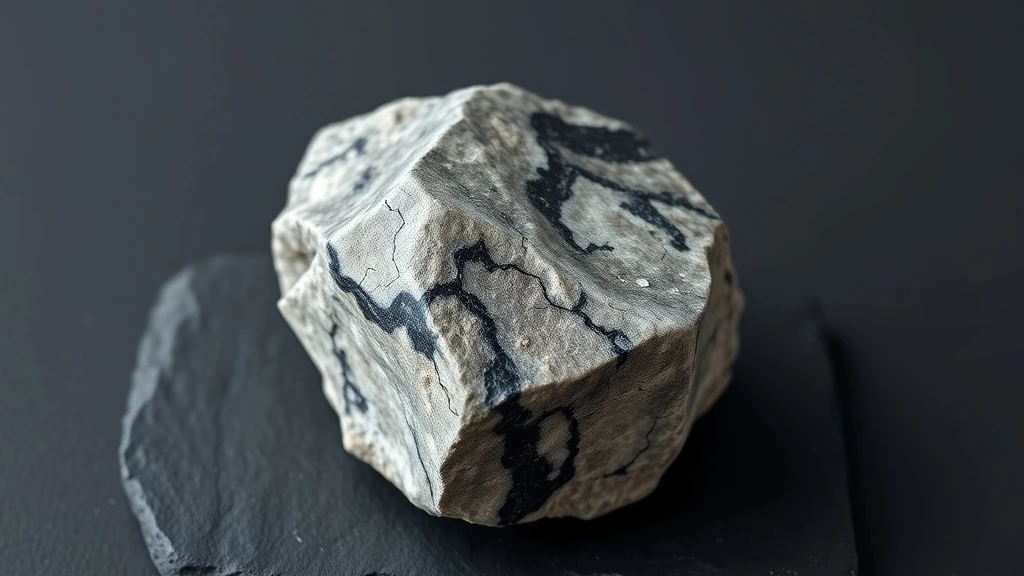
Snake Stone is a member of the serpentine mineral group, a series of hydrous magnesium silicates that crystallize in the monoclinic system. These minerals form through the metamorphic alteration of ultramafic rocks, typically in tectonic settings where seawater interacts with peridotite. The resulting lizardite, antigorite, and chrysotile varieties share a common layered structure but differ in their degree of twinning and water content. As a natural mineral, Snake Stone is prized both for its ornamental qualities and its historical use in lapidary art across Mediterranean and Asian cultures.
What is Snake Stone (serpentine Echer)? Geological Overview & Definition
Snake Stone is a hydrous magnesium silicate that belongs to the serpentine group, which includes lizardite, antigorite, and chrysotile. It forms by the low‑temperature alteration of peridotite in subduction zones, where seawater infiltrates the mantle wedge and introduces hydroxyl groups into the crystal lattice. The stone’s characteristic green to olive coloration results from trace iron and manganese impurities that create subtle color centers within the silicate framework. In ancient lapidary traditions, serpentines were valued for their smooth, waxy luster and were often carved into amulets or decorative panels.
Snake Stone (serpentine Echer) Chemical Composition & Crystallographic Properties
The mineral crystallizes in the monoclinic system, with lattice parameters that allow for a layered arrangement of SiO₄ tetrahedra and MgO octahedra. Each unit cell contains two independent magnesium sites, one of which can be partially substituted by iron or aluminum, leading to variations in density and refractive index. Snake Stone is moderately acid‑sensitive; dilute hydrochloric acid dissolves it slowly, revealing its hydroxyl groups. Chromophore color centers arise from Fe²⁺/Fe³⁺ pairs, producing the green to brownish hues observed in natural specimens. Thermal treatment above 300 °C removes structural water, transforming lizardite into antigorite and eventually into the anhydrous mineral antigorite, which exhibits a higher hardness and reduced luster.
| Property | Specification |
|---|---|
| Mineral Group | Natural Mineral / Crystal |
| Chemical Formula | Mg₃Si₂O₅(OH)₄ (Lizardite) / Mg₃Si₂O₅(OH)₄ (Antigorite) |
| Mohs Hardness | 2.5 – 4.0 |
| Crystal System | Monoclinic |
| Specific Gravity (Density) | 2.50 – 2.60 |
| Refractive Index | 1.430 – 1.570 |
| Color & Optical Properties | Natural Snake Stone (serpentine Echer) color spectrum and optical dispersion |
| Primary Mining Localities | Global primary localities |
| Water & Chemical Resistance | Sensitive (Avoid prolonged water soaking) |
| Chakra Alignment (Traditional) | Heart Chakra, Root Chakra |
| Zodiac Affinity (Traditional) | Taurus, Virgo, Scorpio |
| Symbolic Meaning (Traditional) | Protection, grounding, and emotional stability |
Snake Stone (serpentine Echer) Varieties & Color Spectrum
Lizardite
Lizardite is the most common member of the serpentine group, forming in low‑temperature metamorphic environments such as serpentinite shears. Its green hue ranges from pale mint to deep forest, often displaying subtle white veining from quartz or calcite inclusions. The mineral’s fibrous texture gives it a silky sheen, while its low hardness (2.5–3.0 on Mohs) makes it susceptible to surface wear, adding to its rarity in polished form. In comparative mineralogical collections, practitioners and geologists frequently study Black Jade alongside this crystal to appreciate their subtle energetic and structural differences.
Antigorite
Antigorite crystallizes in the monoclinic system and is typically found in high‑pressure, low‑temperature metamorphic zones. Its dark green to black coloration is accentuated by black specks of mica or pyrite, creating a dramatic contrast. The mineral’s characteristic layered structure often produces a “flaky” appearance, and its relative scarcity in polished specimens makes it prized among collectors. In comparative mineralogical collections, practitioners and geologists frequently study Moss Opal alongside this crystal to appreciate their subtle energetic and structural differences.
Chrysotile (Serpentine Fibers)
Chrysotile, the fibrous form of serpentine, is distinguished by its white to pale green fibrous bundles. These fibers form in hydrothermal veins and are often intergrown with calcite or dolomite. While chrysotile is abundant in raw form, its fibrous nature limits its use in jewelry, rendering polished specimens exceptionally rare.
Green Serpentine (Muscovite‑Rich)
This variety contains high concentrations of muscovite, giving it a bright green luster with silver mica flakes visible under magnification. The mineral typically forms in metamorphosed ultramafic rocks where fluid infiltration introduces potassium. Its vivid color and distinct mica inclusions make it a sought‑after choice for ornamental carvings.
Black Serpentine (Pyrite‑Infused)
Black serpentine is characterized by a deep black matrix interspersed with pyrite or galena inclusions, producing a metallic sheen. It forms in hydrothermal alteration zones where sulfur‑rich fluids deposit pyrite. Due to its intense color and the difficulty of extracting it without damage, black serpentine remains a rare gem.
Brown Serpentine (Iron‑Rich)
Iron enrichment imparts a brownish‑green tone to this variety, often accompanied by iron oxide inclusions that create a subtle rusty patina. It is typically found in serpentinite altered by hydrothermal fluids rich in iron. The mineral’s unique hue and relative scarcity in polished form add to its desirability among lapidaries.
Where is Snake Stone (serpentine Echer) Found? Geological Mining & Extraction
Snake stone is predominantly extracted from serpentinite complexes and ultramafic pegmatites, where metamorphic processes convert peridotite into serpentine minerals. Major global sources include the Kola Peninsula in Russia, the Balkans (particularly Serbia and Bosnia), and the Carpathian region of Romania, each yielding distinct color morphs.
In the United States, notable deposits occur in the Gulf Coast of Texas and the Appalachian fold belt, where hydrothermal alteration has produced high‑quality lizardite and antigorite. Extraction typically involves open‑pit or underground mining, followed by careful hand‑sorting to preserve the delicate crystal structure and avoid surface weathering.
Historical Significance & Cultural Lore of Snake Stone (serpentine Echer)
Across ancient Greco‑Roman lapidary traditions, serpentine was prized for its earthy green and used in decorative panels and small figurines, often symbolizing fertility and renewal. In Egyptian tombs, serpentine carvings were incorporated into amulets believed to ward off evil, reflecting the stone’s protective associations.
Chinese artisans employed serpentine in jade‑like sculptures, valuing its smooth texture and subtle color variations for imperial regalia. Vedic texts reference serpentine as a stone of grounding and emotional stability, linking it to the root and heart chakras in metaphysical lore. These diverse cultural uses underscore serpentine’s enduring appeal across civilizations.
Modern Uses & Jewelry Applications of Snake Stone (serpentine Echer)
Snake stone is prized for its soft yet resilient nature, making it ideal for cabochon and faceted cuts that highlight its subtle green hues and silky luster. Artisans often carve it into ornamental pieces such as pendants, rings, and brooches, exploiting its ability to take a polished finish without cracking. The mineral’s low hardness also allows intricate detailing in sculptural jewelry, while its natural translucency lends a gentle glow to engraved designs.
- Cabochon cuts emphasize the stone’s smooth surface and internal translucency.
- Faceted cuts accentuate the mineral’s subtle refractive index variations.
- Ornamental carvings showcase delicate patterns and symbolic motifs.
- Jewelry settings often pair snake stone with complementary metals like gold or silver to enhance its earthy tone.
Metaphysical Properties & Traditional Meaning of Snake Stone (serpentine Echer)
According to historical traditions and metaphysical lore, snake stone has long been associated with protection and grounding. In ancient Mediterranean lapidary practices, it was believed to shield the wearer from negative energies while fostering emotional stability. Vedic texts describe the stone as a conduit for balancing the Heart Chakra and Root Chakra, encouraging both compassion and rootedness. Across early archaeological records, snake stone is frequently linked to themes of renewal and transformation, reflecting its serpentine name and the regenerative qualities of the serpent in myth.
Which Chakra and Zodiac Signs Align with Snake Stone (serpentine Echer)?
The stone’s energetic profile aligns specifically with the Heart Chakra, promoting love and emotional healing, and the Root Chakra, fostering a sense of safety and stability. Its metaphysical resonance is most potent for individuals born under the zodiac signs Taurus, Virgo, and Scorpio, who are traditionally associated with earthy grounding and transformative growth.
How to Identify Real vs. Fake Snake Stone (serpentine Echer)
Artificial imitations of snake stone are commonly produced from dyed glass, polymer composites, or synthetic serpentine analogues. These replicas often lack the mineral’s characteristic internal fibrous structure and may exhibit inconsistent color saturation or a glassy sheen that betrays their non‑natural origin.
Practical At-Home Authenticity Tests
- Temperature Test (Thermal Feel): Hold the stone in your hand; real serpentine feels cool to the touch due to its low thermal conductivity, whereas glass imitates a warmer sensation.
- Specific Gravity & Weight Test: Compare the stone’s weight to a known sample of similar size; real serpentine typically has a specific gravity between 2.50 and 2.60, lighter than glass.
- Scratch & Hardness Test (Mohs Comparison): Use a reference mineral (e.g., quartz, 7 on Mohs) to test hardness; real serpentine will scratch softer materials (2.5–4) but be scratched by harder stones.
- Microscopic & Loupe Inspection (Internal Inclusions): Examine under a loupe for natural fibrous inclusions or subtle veining; synthetic replicas often display uniform, glass‑like textures without internal structure.
Snake Stone (serpentine Echer) Valuation Factors, Grading & Pricing
The market value of snake stone hinges first on color saturation. A deep, vivid green with subtle undertones of blue or yellow signals a high degree of natural luster, which collectors prize for its visual vibrancy and perceived energetic potency. Stones with muted or uneven hues command lower prices, as they lack the striking visual appeal that drives premium demand.
Second, crystal size and weight measured in grams directly influences pricing. Larger, heavier specimens—especially those that retain their raw, unpolished surface—are valued higher than smaller, tumbled pieces. Natural matrix inclusions, such as mineral veins or fossilized plant matter, add character and can increase a stone’s desirability, provided they do not obscure the overall aesthetic.
Finally, ethical sourcing and locality premium play a decisive role in both holistic and collector markets. Stones extracted from responsibly managed deposits, with transparent supply chains, attract a premium. Provenance from renowned serpentinite localities, such as the serpentine belts of the Alps or the volcanic regions of the Pacific, further enhances market value by assuring authenticity and historical significance.
How to Clean and Care for Snake Stone (serpentine Echer)
To preserve the structural integrity of snake stone, wipe the surface briefly with a damp cloth and dry immediately. Avoid prolonged water exposure, ultrasonic cleaners, or any form of mechanical agitation that could induce microfractures. Store the stone in a low‑humidity environment, away from direct contact with liquids, to prevent potential moisture‑induced weakening of the mineral lattice.
Cleansing and Recharging Snake Stone (serpentine Echer) (Energetic Care)
For energetic renewal, place the stone under gentle moonlight for several hours; the soft, indirect illumination helps cleanse without stressing the crystal structure. Alternatively, rest the stone on a selenite charging slab, allowing the conductive surface to transfer subtle vibrational energy safely. Herbal smudging with sage or palo santo can be employed to clear residual energies, but the stone should remain dry throughout the process. Avoid any form of heat, intense sunlight, or direct flame, as these conditions can alter the mineral’s natural properties and compromise its integrity.
Frequently Asked Questions About Snake Stone (serpentine Echer)
What is the chemical composition of Snake Stone?
Snake Stone is composed of the serpentine group minerals lizardite or antigorite, with the formula Mg₃Si₂O₅(OH)₄. This magnesium silicate forms in a monoclinic crystal system, giving the stone its characteristic green to gray hues and fibrous texture. The mineral’s low hardness (2.5–4.0 on Mohs) makes it delicate but visually striking.
Is Snake Stone safe to wear in the shower or during swimming?
No, Snake Stone is water‑sensitive and should not be exposed to prolonged soaking. Moisture can cause swelling, surface cracking, or internal fractures. Keep the stone dry and remove it before showering, swimming, or any activity that involves extended contact with water.
How should I clean my Snake Stone jewelry?
Wipe it briefly with a damp microfiber cloth and dry immediately; avoid ultrasonic cleaners. The stone’s fibrous structure is prone to micro‑fractures when subjected to vibration or prolonged wetting. Light, dry brushing or gentle wiping preserves its integrity and luster.
Can I use soap or detergents to clean Snake Stone?
No, soap or detergent is not recommended for cleaning Snake Stone. These substances can leave residues that attract dust or may chemically interact with the mineral’s surface. Stick to a dry microfiber cloth or a soft brush for routine dust removal.
Which zodiac signs are associated with Snake Stone?
Snake Stone is traditionally linked to Taurus, Virgo, and Scorpio. These signs are believed to resonate with the stone’s grounding and protective energies, enhancing emotional balance and stability for their bearers.
Which chakras does Snake Stone influence?
Snake Stone is said to align with the Heart Chakra and Root Chakra. Its soothing green tones and grounding properties are thought to support emotional healing and a stable sense of belonging, fostering both inner peace and physical rootedness.
Does Snake Stone have any protective or grounding properties?
Yes, Snake Stone is reputed to offer protection, grounding, and emotional stability. Across ancient lapidary traditions, it has been used to shield against negative energies and to stabilize mood, making it a favored choice for those seeking emotional equilibrium.
What should I avoid when caring for Snake Stone?
Avoid prolonged water exposure, ultrasonic cleaning, and harsh chemicals. These factors can compromise the stone’s structural integrity. Instead, use gentle, dry cleaning methods and store the stone in a dry, cushioned environment to maintain its natural beauty.