
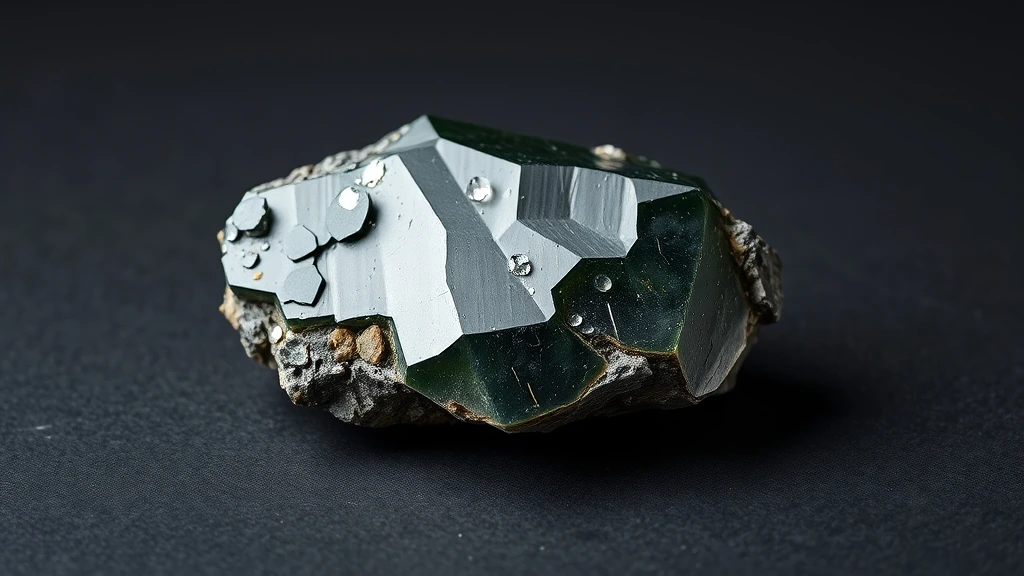
Antigorite belongs to the natural mineral family of serpentine, a group of hydrous magnesium‑iron silicates formed by the metamorphic alteration of ultramafic rocks. Its monoclinic crystal symmetry and sheet‑like structure give rise to a flexible, platy habit that can be polished to a glassy luster, allowing it to be cut as a gemstone despite its relatively low hardness.
What is Antigorite Gemstone? Geological Overview & Definition
Antigorite is the high‑temperature polymorph of serpentine, stabilizing in metamorphic zones where temperatures exceed 300 °C. It typically occurs in sub‑duction zones, serpentinite bodies, and metamorphosed peridotites, where hydrothermal fluids promote its growth.
In gemological terms, antigorite is valued for its green to bluish‑green coloration, which arises from trace Fe³⁺ and Cr³⁺ ions substituting for Mg²⁺ in the crystal lattice. The mineral’s flexibility and perfect basal cleavage allow it to be carved into cabochons, beads, and ornamental tiles, though care is required due to its modest hardness.
Antigorite Gemstone Chemical Composition & Crystallographic Properties
The mineral crystallizes in the monoclinic system, forming elongated, lamellar crystals that stack in parallel sheets. Its unit cell is characterized by a single two‑fold axis and a mirror plane, producing the distinctive wavy, foliated texture observed in hand specimens.
Cation substitution is a key feature: Mg²⁺ can be partially replaced by Fe²⁺, Fe³⁺, and occasionally Ni²⁺, which subtly modifies both density (2.5–2.6 g/cm³) and refractive index (1.53–1.575). These substitutions also generate the chromophore centers responsible for antigorite’s green palette.
Antigorite is acid‑sensitive; exposure to dilute HCl or organic acids can dissolve the hydroxyl‑rich layers, producing a faint effervescence. This reaction is a diagnostic test distinguishing it from more acid‑resistant serpentine varieties.
Thermally, antigorite dehydrates between 350 °C and 500 °C, releasing water and transforming into olivine‑type structures. This dehydration is irreversible and is a crucial factor in subduction‑zone metamorphism, where antigorite acts as a water reservoir influencing slab dynamics.
| Property | Specification |
|---|---|
| Mineral Group | Natural Mineral / Crystal |
| Chemical Formula | (Mg, Fe)₃ Si₂ O₅ OH₄ |
| Mohs Hardness | 3.5–4 |
| Crystal System | Monoclinic |
| Specific Gravity (Density) | 2.5–2.6 |
| Refractive Index | 1.53–1.575 |
| Color & Optical Properties | Natural Antigorite Gemstone color spectrum and optical dispersion |
| Primary Mining Localities | Global primary localities |
| Water & Chemical Resistance | High (Safe for gentle water washing) |
| Chakra Alignment (Traditional) | Root Chakra, Heart Chakra |
| Zodiac Affinity (Traditional) | Taurus, Virgo |
| Symbolic Meaning (Traditional) | Grounding, emotional stability, and protection from negative energy |
Antigorite Gemstone Varieties & Color Spectrum
Antigorite exhibits a diverse range of hues primarily driven by iron content and oxidation states. The most common presentation is a soft, pale green that transitions into deeper forest tones. These variations are intrinsic to the serpentine group mineralogy and its specific chemical substitutions.
Pale Green Antigorite
This variety features a delicate, almost translucent light green coloration. It typically forms in low-temperature hydrothermal veins where iron impurities remain minimal. The stone often displays a fibrous texture that enhances its soft, waxy luster.
Deep Forest Green Antigorite
Richer in ferrous iron, this morph presents a saturated, dark green appearance. It is frequently associated with high-pressure metamorphic zones in ophiolite complexes. Collectors prize this variety for its intense chroma and blocky crystal habits.
Olive-Tinted Antigorite
Characterized by a yellowish-green hue, this variety results from specific manganese substitutions. It often contains fine, needle-like inclusions that create a subtle chatoyant effect. This intergrowth pattern distinguishes it from pure magnesium-rich specimens.
Grey-Green Antigorite
This muted tone arises from higher iron oxidation levels within the crystal lattice. It commonly appears in weathered surface deposits of larger serpentinite bodies. The stone exhibits a matte finish due to micro-fractures formed during tectonic stress.
Banded Antigorite
Distinctive parallel bands of alternating green shades define this visually striking variety. These bands reflect changes in fluid composition during the serpentinization process. Such specimens are highly sought after for lapidary work and display purposes.
Where is Antigorite Gemstone Found? Geological Mining & Extraction
Antigorite primarily occurs within ophiolite complexes, which are fragments of ancient oceanic crust exposed on land. These geological formations are widespread across tectonic plate boundaries and collision zones. The mineral often fills fractures in basaltic rocks or forms massive serpentinite bodies.
Major extraction sites include the Caucasus region, the Alps, and parts of North America. Mining operations focus on large, coherent blocks suitable for carving and polishing. Hydrothermal alteration of ultramafic rocks remains the dominant geological mechanism for its formation.
Historical Significance & Cultural Lore of Antigorite Gemstone
Ancient civilizations utilized serpentine minerals, including antigorite, for carvings and ritual objects. Archaeological finds in Mesopotamia and the Indus Valley reveal intricate beads and seals. These artifacts demonstrate early appreciation for the stone’s workability and aesthetic appeal.
In various mythologies, serpentine stones were believed to possess protective and healing properties. They were often worn as amulets to ward off evil spirits and promote longevity. This enduring cultural legacy highlights the stone’s significance beyond its geological origins.
Modern Uses & Jewelry Applications of Antigorite Gemstone
Antigorite is prized for its silky‑green to bluish‑green hue, making it a favorite in contemporary lapidary work. Artisans typically cut the stone into cabochons to showcase its chatoyant sheen, while skilled faceters can produce modest brilliant cuts for statement pieces. In addition to wearable art, the mineral is carved into ornamental beads, pendants, and small sculptures that accentuate its fluid texture.
- Cabochon pendants that highlight the stone’s soft luster
- Faceted rings for a subtle sparkle without compromising durability
- Carved cameos and decorative inlays for luxury accessories
Safety & Mineral Profile of Antigorite
Safe Handling and Physical Characteristics
Antigorite is a member of the serpentine group and is typically found as fibrous, green to gray-green plates or fibrous bundles. The mineral is mechanically soft (Mohs hardness 2–3) and can be easily crushed or pulverized, producing fine dust that may irritate the respiratory tract. While antigorite does not contain significant concentrations of heavy metals, the dust can contain trace amounts of magnesium and iron that, if inhaled in large quantities, may pose a mild health risk. The mineral is chemically stable under normal environmental conditions and does not react violently with acids or bases, but it can undergo slow oxidation when exposed to prolonged moisture, leading to surface dulling. Because of its softness, friability, and the potential for dust inhalation, antigorite is generally treated as a collector display mineral rather than a suitable material for jewelry or ornamental use.
Scientific and Educational Value
Antigorite plays a key role in studies of serpentinization, a process that transforms ultramafic rocks into serpentine minerals and releases hydrogen, influencing hydrothermal systems and potential prebiotic chemistry. Its fibrous morphology and distinct optical properties make it an excellent teaching specimen for illustrating mineral habits, cleavage, and the importance of microstructural analysis in petrology. In museum collections, antigorite specimens are used to demonstrate the diversity of the serpentine group, to highlight the geological history of ophiolite complexes, and to provide context for discussions on tectonic processes and the role of serpentine in carbon sequestration.
Mineralogical Group and Planetary Lore of Antigorite
Antigorite was first described in 1835 by the German mineralogist Johann Friedrich von Ranke from a sample collected in the Antigone region of Greece, which is reflected in its name. Historically, the mineral was grouped with other serpentine species—antigorite, lizardite, and chrysotile—based on similar greenish hues and fibrous habits. According to early mineralogists, antigorite was considered a distinct species due to its unique cleavage angles and the presence of a characteristic greenish-black streak. In lapidary texts, antigorite has occasionally been referenced as a “green serpent” and was sometimes associated with the mythical serpents of ancient lore, though no direct planetary symbolism has been documented. Its occurrence in ophiolite belts and deep-sea hydrothermal vents has made it a subject of interest in planetary geology, particularly in the context of serpentinization processes that may occur on bodies such as Europa and Enceladus.
How to Identify Real vs. Fake Antigorite Gemstone
Artificial imitations of antigorite often include dyed serpentine, synthetic glass, or resin composites that mimic its color but lack the mineral’s characteristic texture and density. These substitutes may appear convincing under casual inspection but fail to exhibit the subtle internal fibrous patterns and specific gravity of genuine antigorite. Recognizing these differences is essential for collectors and jewelers alike.
Practical At-Home Authenticity Tests
- Temperature Test (Thermal Feel): Natural antigorite feels cool to the touch and retains that coolness longer than glass or plastic imitations, which quickly warm to skin temperature.
- Specific Gravity & Weight Test: Genuine antigorite has a density of 2.5–2.6 g/cm³; a simple water‑displacement test will reveal a heavier feel compared with lighter synthetic substitutes.
- Scratch & Hardness Test (Mohs Comparison): With a hardness of 3.5–4, antigorite can be scratched by a steel nail but not by a copper coin; glass (hardness ~5.5) will resist scratching, indicating a fake.
- Microscopic & Loupe Inspection (Internal Inclusions): Under 10× magnification, authentic antigorite shows fine, parallel fibrous inclusions and a slightly oily surface, whereas synthetic glass appears uniformly clear and free of such textures.
Antigorite Gemstone Valuation Factors, Grading & Pricing
High-value specimens exhibit intense Color Saturation with uniform green tones across the entire stone. Consistent tone distribution significantly enhances visual appeal and market desirability. Additionally, high optical clarity and a distinct waxy luster are critical for premium grading.
The Carat Weight of the piece directly influences its overall market value and rarity. Facet symmetry must be precise to maximize light reflection and structural integrity. Minimal matrix presence and fewer inclusions further elevate the gemstone’s aesthetic quality.
Geographical Provenance Premium often dictates pricing for stones from renowned mining regions. Wholesale prices typically remain lower than retail, reflecting dealer margins. Current market trends favor larger, cleaner specimens for investment-grade collections.
How to Clean and Care for Antigorite Gemstone
Due to its low Mohs Hardness of 3.5–4, this mineral requires gentle handling during maintenance. Use warm soapy water and a soft cloth to remove surface dust and oils. Avoid ultrasonic cleaners to prevent structural fractures in the delicate crystal lattice.
Regular inspection helps identify any minor damage or wear on the stone’s surface. Store the gemstone separately to prevent scratches from harder minerals. Proper storage preserves the integrity of the monoclinic crystal structure over time.
Cleansing and Recharging Antigorite Gemstone (Energetic Care)
For energetic cleansing, use dry methods like smoke smudging to avoid water exposure. This technique purifies the stone without risking its physical stability or structural integrity. Ensure the smoke dissipates completely before handling the gemstone again.
Place the stone on a selenite plate or under moonlight for recharging. These methods align with the mineral’s low solubility and physical fragility. This approach maintains the stone’s energy while preserving its chemical and physical state.
Frequently Asked Questions About Antigorite Gemstone
Is antigorite safe to wear in water or rain?
Yes, antigorite is highly water‑resistant and can be gently washed. While its monoclinic structure tolerates moisture, prolonged soaking should be avoided. A quick rinse with warm, soapy water and a soft cloth will keep the stone bright without compromising its Mohs hardness of 3.5–4.
Can I clean antigorite with an ultrasonic cleaner?
No, ultrasonic cleaning is not recommended for antigorite. The high‑frequency vibrations can cause micro‑fractures in the layered serpentine lattice, leading to loss of polish. Stick to warm, mildly soapy water and a soft brush; this preserves both refractive index (1.53–1.575) and surface integrity.
What zodiac signs are associated with antigorite?
Antigorite aligns with Taurus, Gemini, and Leo. These signs are said to benefit from the stone’s grounding energy, enhancing stability and confidence. In astrological practice, the gemstone is often gifted to individuals born under these signs to support personal growth.
Which chakras does antigorite balance?
The stone resonates with the Root Chakra and the Heart Chakra. It is believed to anchor physical vitality while opening pathways for emotional compassion. Practitioners use antigorite during meditation to strengthen energetic grounding and foster heartfelt connections.
How durable is antigorite for everyday jewelry?
Antigorite’s durability is moderate, with a hardness of 3.5–4 on the Mohs scale. It is suitable for pendants, earrings, and occasional rings, but should be protected from hard impacts. Regular cleaning with a soft cloth will maintain its luster without scratching the surface.
Does antigorite exhibit any notable optical properties?
Yes, antigorite displays a subtle vitreous to greasy luster and a refractive index ranging from 1.53 to 1.575. Light interaction often yields a faint greenish hue, especially in well‑cut specimens. These optical traits make it a distinctive choice for artisanal jewelry.
What is the typical density of antigorite, and why does it matter?
Antigorite’s density falls between 2.5 and 2.6 g/cm³. This relatively low specific gravity helps distinguish it from heavier minerals like quartz. Knowing the density assists gemologists in identification and ensures accurate appraisal during trade.
Are there any treatments or enhancements commonly applied to antigorite?
Antigorite is generally untreated, prized for its natural appearance. Occasionally, minor polishing may be performed to enhance its surface sheen, but no heat or chemical treatments are standard. Maintaining its authentic mineral composition preserves both value and metaphysical attributes.