
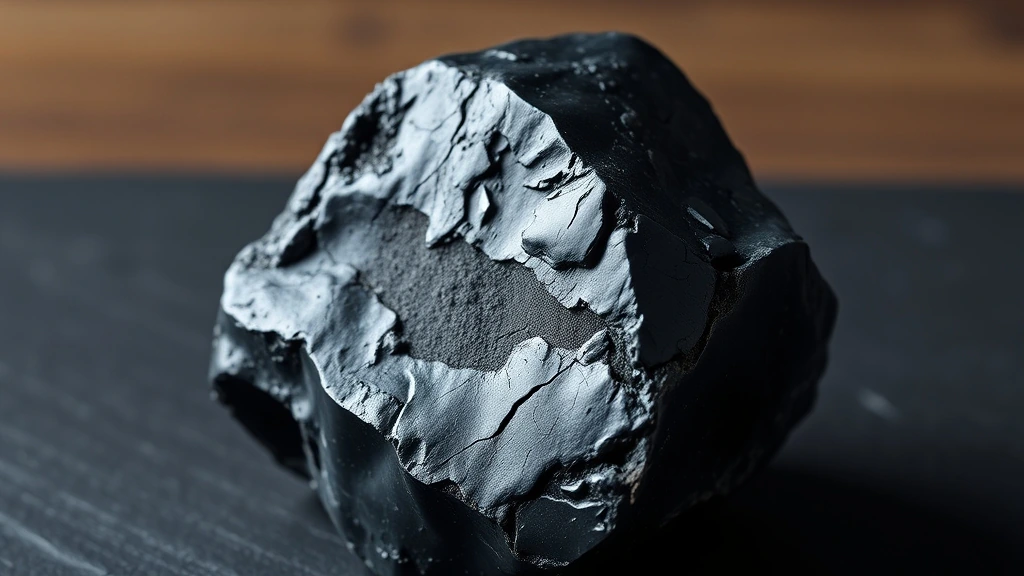
Black jade belongs to the broader jade family, a natural mineral prized for its toughness and cultural significance across continents. Geologically it is classified either as the monoclinic pyroxene jadeite or the triclinic amphibole nephrite, each forming under distinct pressure‑temperature regimes in subduction zones. These two polymorphs share a common jade heritage yet differ fundamentally in crystal chemistry and structural symmetry, a distinction that underpins their varied appearances and uses.
What is Black Jade? Geological Overview & Definition
Black jade refers to the darkest members of the jade family, where color is imparted by trace chromophore elements such as iron and manganese within the crystal lattice. In jadeite, the black hue arises from Fe³⁺ substituting for Al³⁺, while in nephrite, Fe²⁺ and Fe³⁺ replace Mg²⁺ in the amphibole sheets, creating an opaque, lustrous surface prized by artisans.
Both varieties are metamorphic aggregates formed in high‑pressure, low‑temperature environments typical of subduction‑related serpentinite and jadeite‑bearing schist. Jadeite crystallizes from sodium‑rich melts in the mantle wedge, whereas nephrite grows as interlocking fibrous amphibole fibers in serpentinite talc‑rich zones, giving each a distinctive toughness and workability.
Black Jade Chemical Composition & Crystallographic Properties
Jadeite black jade adopts a monoclinic crystal system (space group C2/c), where SiO₄ tetrahedra polymerize into single chains along the [010] direction. The structure accommodates Na⁺, Al³⁺, and Si⁴⁺ in octahedral sites, with Fe³⁺ entering as a chromophore that absorbs visible light, producing the deep black shade. Its lattice parameters contract slightly with increasing Fe content, subtly affecting density and refractive index.
Nephrite black jade, by contrast, is triclinic (space group P-1), composed of double‑chain amphibole units that interlock to form a fibrous aggregate. The formula Ca₂(Mg,Fe)₅Si₈O₂₂(OH)₂ reflects extensive cation substitution of Fe²⁺/Fe³⁺ for Mg²⁺, which not only darkens the mineral but also enhances its hardness. The hydroxyl groups render nephrite mildly acid‑sensitive, so prolonged exposure to strong acids can leach calcium and weaken the structure.
Both jadeite and nephrite display a refractive index between 1.60 and 1.66, and their specific gravity ranges from 2.90 to 3.35, consistent with the presence of heavy transition metals. Thermal treatment above 600 °C can induce oxidation of Fe²⁺ to Fe³⁺, deepening the black color, while rapid cooling may cause micro‑fracturing, underscoring the need for careful handling during gem cutting.
| Property | Specification |
|---|---|
| Mineral Group | Natural Mineral / Crystal |
| Chemical Formula | NaAlSi₂O₆ (Jadeite) or Ca₂(Mg,Fe)₅Si₈O₂₂(OH)₂ (Nephrite) |
| Mohs Hardness | 6.0 – 7.0 |
| Crystal System | Monoclinic (Jadeite) or Triclinic (Nephrite) |
| Specific Gravity (Density) | 2.90 – 3.35 |
| Refractive Index | 1.60 – 1.66 |
| Color & Optical Properties | Natural Black Jade color spectrum and optical dispersion |
| Primary Mining Localities | Global primary localities |
| Water & Chemical Resistance | High (Safe for gentle water washing) |
| Chakra Alignment (Traditional) | Root Chakra, Heart Chakra |
| Zodiac Affinity (Traditional) | Capricorn, Scorpio |
| Symbolic Meaning (Traditional) | Grounding, protection, and emotional stability |
Black Jade Varieties & Color Spectrum
True black jade is a rare geological phenomenon within the nephrite and jadeite families, distinguished by its deep opacity. Most commercial “black jade” is actually dyed or treated nephrite, making authentic specimens highly sought after by collectors. Understanding the distinction between natural color morphs and artificial treatments is essential for accurate valuation.
Imperial Black Nephrite
This variety originates from high-pressure metamorphic zones where nephrite forms with dense, interlocking fibrous structures. The intense black hue results from trace amounts of magnetite or other iron-bearing minerals dispersed throughout the matrix. Its triclinic crystal system creates a tough, durable stone that resists fracture during carving.
Dark Green Jadeite
Often mistaken for black, this jadeite variety features a very dark green body that appears black under low light conditions. The color stems from high concentrations of chromium or iron impurities within the monoclinic lattice structure. It exhibits a characteristic vitreous luster and high refractive index, distinguishing it from softer nephrite counterparts.
Black Onyx (Misidentified)
While not true jade, onyx is frequently sold as “black jade” in the commercial market due to its similar appearance. This chalcedony variety consists of banded silica with a hardness of 6.5 to 7 on the Mohs scale. Its uniform black color comes from carbonaceous inclusions or iron oxides, offering a glassy finish rather than the waxy sheen of true jade.
Dyed Nephrite
The most common “black jade” in trade is nephrite that has undergone chemical dyeing to achieve a uniform dark tone. This process involves heating the stone to open pores, allowing dye molecules to penetrate the fibrous structure. Identifying these stones requires checking for dye pooling in crack networks or uneven color distribution under magnification.
Black Obsidian (Misidentified)
Volcanic glass is another common substitute, characterized by its amorphous structure and conchoidal fracture patterns. Unlike crystalline jade, obsidian lacks a defined crystal system and breaks with sharp, glassy edges. Its refractive index is lower, and it feels lighter than true jadeite or nephrite of equivalent size.
Where is Black Jade Found? Geological Mining & Extraction
Authentic black nephrite is primarily extracted from metamorphic deposits in Canada, New Zealand, and Russia, where ultramafic rocks have undergone intense pressure. These regions host serpentinite bodies that transform into jadeite or nephrite through hydrothermal alteration. Mining operations focus on open-pit extraction to access large, coherent blocks suitable for carving.
Jadeite deposits, including dark green varieties, are found in Myanmar, Guatemala, and Japan, often within granitic pegmatites or marble contact zones. The hardness and toughness of these stones require specialized diamond-tipped tools for cutting and polishing. Geological surveys indicate that high-quality black jadeite is significantly rarer than its nephrite counterparts.
Historical Significance & Cultural Lore of Black Jade
In ancient Chinese civilization, jade was revered as a symbol of virtue, with dark varieties associated with protection and earthly stability. Archaeological artifacts from the Shang Dynasty reveal intricate carvings of nephrite used in ritualistic contexts and burial goods. The stone’s durability allowed it to survive millennia, preserving the artistic and spiritual values of its creators.
Across ancient Greco-Roman and Egyptian traditions, dark green and black stones were valued for their perceived grounding properties and connection to the underworld. Egyptian artisans carved amulets from dark nephrite to ward off evil spirits and ensure safe passage in the afterlife. These historical uses highlight the universal human appreciation for the stone’s profound aesthetic and metaphysical qualities.
Modern Uses & Jewelry Applications of Black Jade
Black jade is prized for its deep, lustrous hue and durable nature, making it ideal for a range of ornamental and functional pieces. Skilled lapidaries cut the stone into smooth cabochons for rings, pendants, and earrings, or into precise facets for polished cut gems that accentuate its internal translucency. In addition, artisans carve intricate motifs—such as spirals, geometric patterns, and mythic symbols—into larger blocks for decorative panels, figurines, and ceremonial objects.
- Cabochon and faceted jewelry for everyday wear
- Carved ornamental panels for interior décor
- Sculptural and ceremonial carvings in cultural rituals
Metaphysical Properties & Traditional Meaning of Black Jade
According to historical traditions and metaphysical lore, black jade is revered as a stone of grounding and emotional balance. Across ancient Mediterranean, Vedic, and general lapidary lore, it is believed to absorb negative energies, fostering a sense of protection and inner stability. The stone’s deep color is thought to mirror the earth’s core, encouraging a connection to the Root Chakra and the Heart Chakra, where it is said to harmonize physical and emotional well‑being.
Which Chakra and Zodiac Signs Align with Black Jade?
Black jade is traditionally associated with the Root Chakra, the energy center that governs stability, safety, and physical grounding. Its influence extends to the Heart Chakra, where it promotes compassion, emotional resilience, and balanced relationships.
The stone’s astrological alignment is firmly rooted in the signs of Capricorn and Scorpio. Those born under these signs are said to resonate with black jade’s disciplined, transformative energy, enhancing focus and emotional depth.
How to Identify Real vs. Fake Black Jade
Collectors and buyers must be vigilant against artificial imitations, such as synthetic glass or dyed quartz, which can mimic the stone’s appearance but lack its unique physical properties.
Practical At-Home Authenticity Tests
- Temperature Test (Thermal Feel): Real black jade feels cool to the touch, cooling the hand more than synthetic glass or quartz.
- Specific Gravity & Weight Test: Measure the stone’s density; authentic jade typically weighs between 2.90 and 3.35 g/cm³, noticeably heavier than most imitation materials.
- Scratch & Hardness Test (Mohs Comparison): Use a calibrated scratch kit; jade scores 6.0–7.0 on the Mohs scale, resisting scratches from common minerals like quartz (7.0) but not from harder materials such as diamond.
- Microscopic & Loupe Inspection (Internal Inclusions): Under magnification, genuine jade displays fine, fibrous inclusions or subtle veining, whereas synthetic replicas often show uniform, glassy textures or artificial patterns.
Black Jade Valuation Factors, Grading & Pricing
The first decisive factor in market valuation is color saturation. A deep, uniform black hue with subtle undertones of green or brown signals a high‑quality specimen. The visual vibrancy is often enhanced by a natural energetic luster that reflects the stone’s intrinsic mineral structure. Collectors prize stones that maintain their intensity without visible fading or surface blemishes.
The second key element is crystal size and weight (grams). Larger, heavier pieces command premium prices, especially when they retain a raw, unpolished surface that showcases the mineral’s natural texture. Tumbled polish can improve tactile appeal, but it should not obscure the stone’s inherent matrix inclusions, which add character and authenticity. Buyers evaluate each stone on its dimensional integrity and the balance between polish and natural grain.
Ethical sourcing and locality premium form the third pillar of valuation. Stones extracted from responsibly managed mines, particularly those with traceable provenance, attract higher prices in both holistic and collector markets. Provenance from renowned jade deposits—such as the ancient Chinese Yunnan region or the historically significant Burmese jade mines—adds cultural significance and market desirability, often reflected in a locality premium.
How to Clean and Care for Black Jade
Cleaning black jade should be performed with warm soapy water and a soft cloth. Gently wipe the surface, ensuring the water does not remain on the stone for extended periods. Avoid ultrasonic cleaners, as the vibration can induce microfractures in the crystal lattice. After cleaning, dry the jade with a lint‑free cloth and store it in a low‑humidity environment to preserve its structural integrity.
Cleansing and Recharging Black Jade (Energetic Care)
For energetic cleansing, place the jade under gentle moonlight for several hours, allowing the subtle lunar energy to refresh its vibrational field. Alternatively, rest the stone on a selenite charging slab during daylight to facilitate a subtle, non‑thermal energy transfer. Herbal smudging with sage or palo santo can also be employed, but the smoke should be kept at a safe distance to prevent any chemical interaction with the mineral surface. These dry methods maintain the stone’s structural stability while supporting its metaphysical properties.
Frequently Asked Questions About Black Jade
Black Jade displays distinct mineralogical characteristics across its geological varieties and structural habits. Gemologists evaluate these natural varieties based on crystal habit, trace chromophore concentrations, and visual luster.
Primary Natural Black Jade
The benchmark natural variety exhibiting diagnostic color saturation and classic crystallographic symmetry.
Distinct Geological Morphs of Black Jade
Secondary regional and structural varieties formed under localized geological temperature and pressure conditions.
Is black jade safe to wear in the shower or while swimming?
Yes, black jade tolerates gentle water exposure. Its high water resistance allows brief contact with rain, showers, or pool water, but prolonged soaking should be avoided to prevent surface oils from weakening the stone’s natural luster. Rinse with lukewarm water and pat dry afterward.
How should I clean black jade to maintain its polish?
Clean black jade with warm soapy water and a soft cloth. Gently rub the surface using a mild detergent, then rinse and dry with a lint‑free microfiber. This method removes oils without stressing the crystal lattice, preserving the stone’s refractive index and hardness of 6–7 on the Mohs scale.
Can I use an ultrasonic cleaner on black jade jewelry?
No, ultrasonic cleaning is not recommended for black jade. The high‑frequency vibrations can create micro‑fractures in the monoclinic jadeite or triclinic nephrite structures, leading to chipping or loss of translucency. Stick to hand cleaning with warm, soapy water and a soft cloth.
What zodiac signs are traditionally associated with black jade?
Black jade is linked to Capricorn and Scorpio. In astrological gem lore, these signs value the stone’s grounding energy, which is believed to enhance perseverance and strategic insight. The alignment reflects the stone’s density range of 2.90–3.35 g/cm³, symbolizing stability.
Which chakras does black jade balance?
Black jade resonates with the Root Chakra and Heart Chakra. The stone’s deep, stabilizing hue is thought to anchor physical energy while encouraging compassionate openness, supporting both emotional stability and grounding. This dual effect aligns with its traditional use in meditation practices.
How can I tell if a piece is genuine black jade or a simulant?
Authentic black jade exhibits a specific gravity between 2.90 and 3.35 and a refractive index of 1.60–1.66. A professional gem tester can measure these properties; simulants often have lower density and different optical characteristics. Look for a smooth, slightly oily feel that is typical of true jade.
Does black jade fade or change color over time?
Black jade retains its color when cared for properly. Its silicate lattice is chemically stable, resisting oxidation and UV degradation. However, exposure to harsh chemicals or abrasive cleaning can dull the surface, so avoid acids and abrasive pads to keep the deep black hue intact.
Is black jade suitable for everyday wear in jewelry?
Yes, black jade’s hardness of 6–7 makes it durable for daily use. While it can withstand normal wear, avoid impact with harder stones and store it separately to prevent scratches. Regular gentle cleaning will maintain its luster and ensure long‑term beauty.