
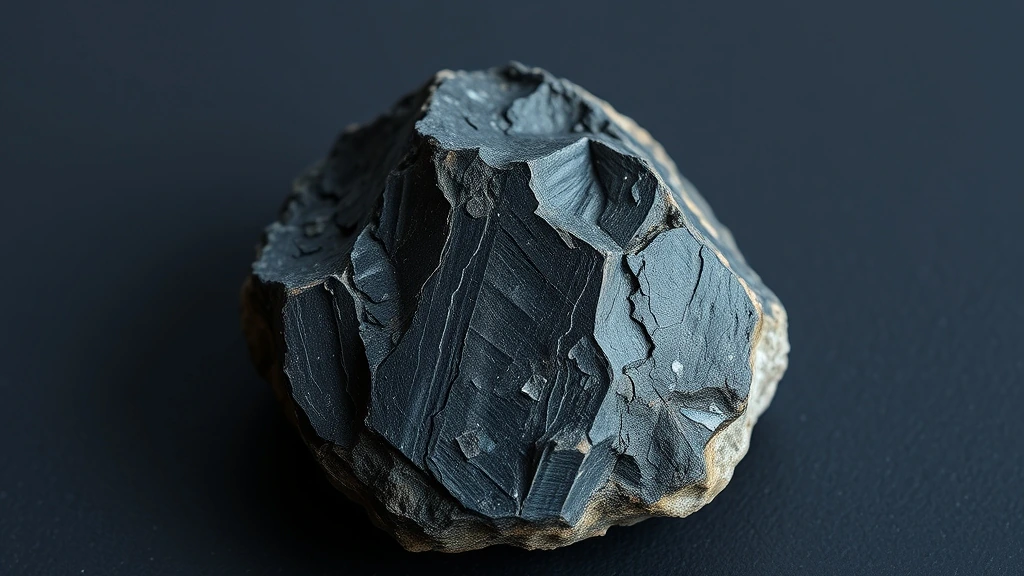
Schist belongs to the broad category of natural mineral aggregates rather than a single crystalline species. It forms through intense regional metamorphism, where heat and pressure realign silicate minerals into parallel layers. This geological process creates a polycrystalline fabric that distinguishes schist from lower-grade slate. Consequently, it is classified as a composite rock within the natural mineral group. In comparative mineralogical collections, practitioners and geologists frequently study Impactite alongside this crystal to appreciate their subtle energetic and structural differences.
What is Schist? Geological Overview & Definition
Schist is defined by its medium-grade metamorphic origin, positioned between phyllite and gneiss in the metamorphic sequence. The defining feature is schistosity, a planar fabric where platy minerals align perpendicular to the direction of stress. This alignment allows the rock to split into thin sheets, a property exploited in traditional lapidary carving.
The visual appeal of schist stems from the interlocking crystals of mica, chlorite, and quartz. Unlike uniform gemstones, schist displays a complex mosaic of colors and textures. Each slab is unique, reflecting the specific protolith composition and metamorphic conditions. This variability makes every piece a distinct geological record. In comparative mineralogical collections, practitioners and geologists frequently study Himekawa Yakuseki alongside this crystal to appreciate their subtle energetic and structural differences.
Schist Chemical Composition & Crystallographic Properties
Schist lacks a single stoichiometric formula, existing instead as a polycrystalline aggregate of multiple mineral phases. The dominant components typically include muscovite, biotite, and quartz, each contributing distinct physical properties. The composite crystal system means the rock exhibits no single lattice symmetry. Instead, it displays a macroscopic foliation driven by the preferred orientation of individual mineral grains.
The cation substitution within the mica layers, such as potassium replacing aluminum, influences the rock’s overall density and stability. This ionic exchange occurs during metamorphism, stabilizing the silicate sheet structures under high pressure. The resulting lattice structure is heterogeneous, with varying bond strengths between different mineral domains. This complexity affects how the rock responds to external mechanical forces.
Color variations in schist arise from chromophore color centers within the mineral grains. Iron and manganese impurities in biotite create deep greens and browns, while pure quartz remains clear. The refractive index varies between 1.55 and 1.75, depending on the dominant mineral phase. This optical diversity allows light to interact with multiple crystal orientations simultaneously.
Thermal behavior in schist is governed by the acid sensitivity and stability of its constituent minerals. Mica layers may exfoliate under extreme heat, while quartz remains thermally stable. The Mohs hardness range of 3.0 to 7.0 indicates that softer chlorite layers abrade faster than hard quartz inclusions. This differential wear requires careful polishing techniques to maintain surface integrity.
| Property | Specification |
|---|---|
| Mineral Group | Natural Mineral / Crystal |
| Chemical Formula | Composite rock (Mica, Chlorite, Garnet, Quartz, Feldspar) |
| Mohs Hardness | 3.0 – 7.0 |
| Crystal System | Composite (Polycrystalline) |
| Specific Gravity (Density) | 2.70 – 3.00 |
| Refractive Index | 1.55 – 1.75 |
| Color & Optical Properties | Natural Schist color spectrum and optical dispersion |
| Primary Mining Localities | Global primary localities |
| Water & Chemical Resistance | Sensitive (Avoid prolonged water soaking) |
| Chakra Alignment (Traditional) | Root Chakra |
| Zodiac Affinity (Traditional) | Taurus, Virgo, Capricorn |
| Symbolic Meaning (Traditional) | Grounding, stability, and connection to the earth |
Schist Varieties & Color Spectrum
Schist is a medium-grade metamorphic rock distinguished by its foliated texture, where minerals align in parallel layers. This alignment creates a distinct sheen and allows for easy splitting along specific planes. The visual appearance varies significantly depending on the dominant mineral composition within the rock matrix.
Garnet Schist
Garnet schist features prominent almandine garnet crystals embedded in a mica-rich matrix. These deep red to purple inclusions contrast sharply against the silvery or greenish background of the host rock. The formation occurs under high-pressure conditions where garnet crystals grow within the developing foliation.
This variety is highly prized for its striking color contrast and durability. The garnet inclusions can range from millimeter-sized specks to large, eye-catching nodules. Geologically, it forms in regions with significant iron and magnesium content during regional metamorphism.
Mica Schist
Mica schist is dominated by biotite or muscovite flakes, giving it a characteristic shiny, reflective surface. The abundance of these sheet silicates creates a lustrous appearance that catches light from multiple angles. This variety is the most common form of schist found in global geological surveys.
The foliation planes in mica schist are exceptionally well-defined, allowing the rock to split into thin, flexible sheets. While less colorful than garnet varieties, its structural integrity makes it valuable for industrial applications. It serves as a key indicator of moderate metamorphic grade in geological mapping.
Chlorite Schist
Chlorite schist displays a distinct green to olive hue due to the presence of chlorite minerals. This coloration results from the alteration of ferromagnesian minerals under low-temperature metamorphic conditions. The rock often exhibits a soft, waxy luster rather than a sharp glassy shine.
The chlorite flakes are typically fine-grained, creating a uniform green appearance across the surface. This variety is frequently found in association with slate and phyllite in lower-grade metamorphic belts. Its softness makes it less suitable for jewelry but useful for decorative stone applications.
Quartz Schist
Quartz schist contains a high percentage of quartz grains, often appearing as white or gray streaks. These hard, vitreous crystals provide significant hardness to the overall rock structure. The quartz typically forms elongated, stretched crystals aligned with the foliation direction.
This variety is known for its high silica content, which increases its resistance to weathering and abrasion. The interlocking quartz grains create a dense, interwoven fabric that is difficult to split cleanly. It is commonly found in high-grade metamorphic zones adjacent to granite intrusions.
Staurolite Schist
Staurolite schist is identified by the presence of staurolite crystals, which often form cross-shaped or star-like structures. These distinctive inclusions are dark brown and provide a unique visual signature to the rock. The formation requires specific pressure and temperature conditions typical of regional metamorphism.
The cross-shaped crystals are a hallmark of this variety, making it a favorite among mineral collectors. The surrounding matrix usually consists of mica and plagioclase feldspar. This rare combination of minerals indicates a specific tectonic history in the source region.
Where is Schist Found? Geological Mining & Extraction
Schist forms primarily through regional metamorphism of sedimentary and igneous protoliths under intense heat and pressure. It is commonly found in orogenic belts where tectonic plates have collided over millions of years. The transformation process aligns platy minerals, creating the characteristic foliated structure seen in these rocks.
Major deposits are located in mountainous regions such as the Himalayas, the Andes, and the Alps. These areas provide the necessary geological stress for the development of medium-grade metamorphic rocks. Extraction typically involves open-pit mining or quarrying, where large blocks are cut for industrial or decorative use.
Historical Significance & Cultural Lore of Schist
Ancient civilizations utilized schist for its workability and durability in construction and tool-making. The foliated structure allowed artisans to split the rock into thin, flat slabs for roofing and flooring. Archaeological sites in Mesopotamia and Egypt reveal schist tiles used in temple foundations and palace walls.
In Vedic traditions, schist was valued for its grounding properties and connection to the earth. It was often used in ritualistic contexts to symbolize stability and endurance. The rock’s ability to hold shape under pressure made it a metaphor for spiritual resilience in early philosophical texts.
Modern Uses & Jewelry Applications of Schist
Schist’s layered texture lends itself to both cabochon and faceted settings, allowing designers to showcase its subtle sheen. Lapidary artisans often split the rock along its foliation to produce thin, flexible sheets ideal for pendants and earrings. Ornamental carving exploits the mineral’s natural cleavage, yielding intricate cameos and decorative panels for luxury interiors.
- Cabochon pendants that highlight the stone’s soft luster
- Faceted rings emphasizing contrast between mica and garnet inclusions
- Carved plaques and wall art using thin schist sheets
Metaphysical Uses & Origins of Schist
Across ancient lapidary traditions, schist has been prized for its grounding energy, believed to anchor the wearer to the earth’s core. In meditation, practitioners hold a polished schist slab to stimulate the Root Chakra, fostering stability and a sense of physical security. Architectural applications in historic temples and burial chambers employed schist slabs for their perceived protective qualities, reinforcing the link between stone and spiritual fortitude.
Which Chakra and Zodiac Signs Align with Schist?
Schist resonates most strongly with the Root Chakra, the energy center governing survival, grounding, and connection to the material world. When placed on the base of the spine during meditation, it is said to amplify feelings of safety and rootedness, supporting daily resilience.
In astrological lore, schist aligns with the earth‑signs Taurus, Virgo, and Capricorn. These signs share attributes of practicality, perseverance, and a deep affinity for the natural world, making schist a favored talisman for individuals born under these constellations.
How to Identify Real vs. Fake Schist
Synthetic glass, resin composites, and dyed stone substitutes often mimic schist’s layered appearance, but they lack the genuine mineral composition and tactile feel of the natural rock. Imitations may display uniform coloration, excessive gloss, or an unnatural weight, signaling a departure from authentic schist’s polycrystalline structure.
Practical At-Home Authenticity Tests
- Temperature Test (Thermal Feel): Natural schist absorbs heat slowly and feels cool to the touch, whereas glass or resin warms quickly in the hand.
- Specific Gravity & Weight Test: Real schist has a density of 2.70‑3.00 g/cm³; a heftier feel than plastic imitations indicates authenticity.
- Scratch & Hardness Test (Mohs Comparison): Use a steel nail (hardness ~5.5); genuine schist should resist scratching if its dominant minerals approach the higher end of the 3‑7 Mohs range.
- Microscopic & Loupe Inspection (Internal Inclusions): Under 10× magnification, authentic schist reveals mica flakes, chlorite sheets, and occasional garnet specks, while fakes show bubbles, uniform patterns, or absent mineral grains.
Schist Valuation Factors, Grading & Pricing
Color variations dominate market perception; deep greens, mottled grays, and occasional ruby‑red garnet flecks create striking visual contrast. The natural texture of schist, with its characteristic platy mica and chlorite sheets, yields a shimmering banded appearance that collectors prize for ornamental display. Aesthetic banding and veining, when uninterrupted, elevate rarity and price.
Specimen mass and size are pivotal in pricing, as larger blocks retain structural integrity and allow for more ambitious carving or architectural use. Buyers assess mass in grams or kilograms, noting that heavier pieces command higher premiums due to transport costs and handling complexity. Light diffusion through mica‑rich layers adds visual depth, further influencing valuation.
Geographical origin and authenticity underpin market confidence; schists from renowned terrains such as the Scottish Highlands, Canadian Shield, or the Alpine metamorphic belts command premium rates. Provenance documentation verifies authenticity, satisfying collectors and wellness practitioners alike. Current wholesale trends show a surge in demand for ethically sourced, aesthetically striking schist for decorative panels and grounding stone collections.
How to Clean and Care for Schist
Wipe the surface briefly with a damp cloth, then dry immediately with a soft, lint‑free microfiber towel. This gentle approach removes dust without saturating the mineral, preserving the delicate mica and chlorite layers. Avoid ultrasonic cleaners, as the vibrational energy can fracture the composite structure and compromise the stone’s integrity.
Cleansing and Recharging Schist (Energetic Care)
For energetic renewal, place the schist in a clean, dry area and gently smudge it with white sage or cedar, allowing the aromatic smoke to pass over the surface without soaking the stone. This method respects the mineral’s moisture sensitivity while clearing stagnant energy according to traditional holistic practices.
Alternatively, expose the stone to soft moonlight for several hours or rest it on a clean selenite charging slab, both of which safely replenish its grounding properties without introducing heat or moisture. These dry, low‑impact techniques align with the stone’s physical resilience and esoteric traditions.
Frequently Asked Questions About Schist
Schist displays distinct mineralogical characteristics across its geological varieties and structural habits. Gemologists evaluate these natural varieties based on crystal habit, trace chromophore concentrations, and visual luster.
Primary Natural Schist
The benchmark natural variety exhibiting diagnostic color saturation and classic crystallographic symmetry.
Distinct Geological Morphs of Schist
Secondary regional and structural varieties formed under localized geological temperature and pressure conditions.
Is schist safe to wear in the shower?
Schist is water-sensitive and should not be exposed to prolonged soaking. The composite nature of the rock means water can penetrate micro-fractures, potentially weakening the bond between mineral grains. Always remove jewelry before showering to preserve the stone’s structural integrity.
How should I clean my schist jewelry?
Wipe the surface briefly with a damp cloth and dry it immediately. Avoid using ultrasonic cleaners, as the vibrations can cause structural fractures in the polycrystalline matrix. A gentle, quick wipe is the safest method to remove surface dust without damaging the stone.
What is the hardness of schist on the Mohs scale?
Schist exhibits a variable hardness ranging from 3.0 to 7.0. This range depends on the specific mineral composition, such as mica, quartz, or garnet, present in the sample. Consequently, individual grains may scratch softer minerals while remaining vulnerable to harder abrasives.
Which zodiac signs are aligned with schist?
Schist is traditionally associated with Taurus, Virgo, and Capricorn. These earth signs resonate with the stone’s grounding properties and stability. Wearing schist is believed to enhance the natural traits of these signs, promoting a stronger connection to the physical world.
Which chakra does schist activate?
Schist is primarily linked to the Root Chakra. This connection supports feelings of security, stability, and physical grounding. Practitioners use the stone to anchor energy and foster a deep sense of connection to the earth.
Can I use an ultrasonic cleaner on schist?
No, you should strictly avoid ultrasonic cleaners for schist. The intense vibrations can exploit natural cleavage planes and cause structural fractures within the composite rock. Stick to a damp cloth for brief, gentle cleaning to ensure the stone remains intact.
What is the chemical composition of schist?
Schist is a composite metamorphic rock containing mica, chlorite, garnet, quartz, and feldspar. It lacks a single chemical formula due to this complex mineral assemblage. The specific combination of these minerals determines the stone’s color, luster, and overall durability.
Why does schist have a variable refractive index?
The refractive index varies between 1.55 and 1.75 due to its mixed mineral content. Each constituent mineral, such as quartz or mica, possesses its own optical properties. This polycrystalline structure creates a complex interplay of light reflection and refraction across the surface.