
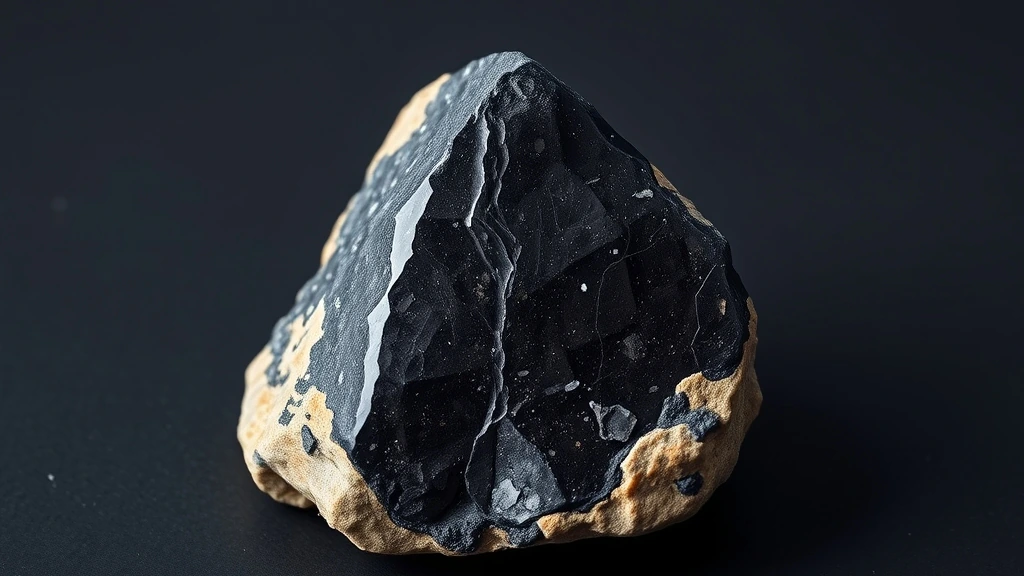
Biotite belongs to the broader mica group within the silicate mineral family, representing a significant class of Natural Mineral / Crystal formations. These sheets form through the crystallization of magma, creating distinct layers that define their unique physical properties. Understanding this geological context is essential for accurate identification and valuation of biotite specimens in the field.
What is Biotite Gemstone? Geological Overview & Definition
Biotite is primarily an iron-magnesium potassium aluminum phyllosilicate that forms in igneous and metamorphic rocks. Its dark appearance stems from high iron content, distinguishing it from lighter micas like muscovite. This mineral often appears in granites, diorites, and schists, serving as a key indicator of metamorphic grade during geological surveys.
In gemology, biotite is rarely cut into faceted stones due to its perfect basal cleavage. Instead, it is valued for its lustrous, sheet-like structure in mineral collections. The monoclinic crystal system governs its habit, typically forming small, flat plates or prisms. These physical traits limit its use in durable jewelry but enhance its scientific and ornamental appeal.
Biotite Gemstone Chemical Composition & Crystallographic Properties
Biotite crystallizes in the monoclinic system, featuring a layered structure with a specific lattice arrangement. The unit cell parameters reflect this symmetry, with angles that deviate slightly from ninety degrees. This lattice structure allows for the easy separation of sheets, resulting in the mineral’s characteristic perfect basal cleavage.
The chemical formula involves complex cation substitution between iron, magnesium, and aluminum within the tetrahedral and octahedral sites. These substitutions significantly influence the mineral’s density, which ranges from 2.7 to 3.3 g/cm³. Variations in these atomic arrangements directly impact the refractive index, creating optical anisotropy measurable in gemological instruments.
Biotite exhibits high acid sensitivity, particularly to hydrofluoric acid, which dissolves its silicate framework. Its dark color is driven by chromophore color centers, mainly due to the presence of ferrous iron ions. These electronic transitions absorb specific wavelengths of light, resulting in the characteristic brown to black hues observed in polished specimens.
Thermal behavior reveals that biotite undergoes dehydroxylation at elevated temperatures, releasing water molecules from its structure. This process alters the crystal lattice and can lead to structural collapse if heated excessively. Consequently, biotite is unsuitable for high-heat treatments, requiring careful handling to preserve its optical properties and structural integrity.
| Property | Specification |
|---|---|
| Mineral Group | Natural Mineral / Crystal |
| Chemical Formula | K(Mg,Fe)₃(AlSi₃O₁₀)(OH,F)₂ |
| Mohs Hardness | 2.5 – 3.0 |
| Crystal System | Monoclinic |
| Specific Gravity (Density) | 2.7 – 3.2 |
| Refractive Index | 1.60 – 1.65 |
| Color & Optical Properties | Natural Biotite Gemstone color spectrum and optical dispersion |
| Primary Mining Localities | Global primary localities |
| Water & Chemical Resistance | High (Safe for gentle water washing) |
| Chakra Alignment (Traditional) | Root Chakra |
| Zodiac Affinity (Traditional) | Virgo |
| Symbolic Meaning (Traditional) | Grounding, stability, and protection from negative energies |
Biotite Gemstone Varieties & Color Spectrum
Biotite exhibits a remarkable diversity of coloration driven by trace element substitutions within its complex silicate structure. The most common form displays deep brown to black hues, resulting from high iron content in the octahedral sites. These dark specimens are frequently found in igneous and metamorphic rocks worldwide.
Common Brown Biotite
This ubiquitous variety forms in granitic and gneissic environments where iron-rich fluids precipitate during cooling. Its monoclinic crystal system allows for perfect basal cleavage, creating thin, flexible sheets. While not typically cut for jewelry, it serves as a critical indicator mineral in geological mapping.
Green Biotite (Phlogopite-like)
Occasionally, magnesium-rich biotite exhibits a distinct greenish tint, often confused with phlogopite by casual observers. This coloration arises from lower iron concentrations and higher magnesium substitution in the lattice. Such specimens are rarer and often found in alkaline igneous rocks or high-grade metamorphic zones.
Reddish-Brown Biotite
This variety features a warm, wine-red hue caused by specific oxidation states of iron within the crystal structure. It typically occurs in pegmatites associated with lithium-rich environments. The refractive index of these stones creates a subtle vitreous luster that distinguishes them from standard brown types.
Black Biotite
Highly opaque black biotite is the most abundant form, commonly extracted for industrial mica applications. Its density ranges from 2.7 to 3.3 g/cm³, reflecting the heavy metal content within its layers. While visually unremarkable, its structural integrity makes it valuable for electrical insulation and construction materials.
Where is Biotite Gemstone Found? Geological Mining & Extraction
Biotite primarily occurs in igneous rocks such as granite, diorite, and syenite, as well as in metamorphic rocks like gneiss and schist. It is a key constituent of pegmatite deposits, where large crystals can form in hydrothermal pockets. These geological settings provide the necessary space and chemical environment for the development of well-formed sheets.
Major mining regions include Brazil, Madagascar, and the United States, particularly in states like Maine and Arizona. Extraction is often a byproduct of granite quarrying or mica mining operations. The mineral’s perfect basal cleavage allows for easy separation into thin sheets, facilitating its recovery from host rocks.
Historical Significance & Cultural Lore of Biotite Gemstone
Ancient civilizations utilized biotite primarily for its practical applications rather than ornamental value. The Greeks and Romans recognized its unique cleavage properties, using thin sheets for window panes and protective face shields. This material, known as “mica” from the Latin word for mother-of-pearl, was prized for its transparency and flexibility.
Archaeological findings reveal biotite artifacts in prehistoric sites, including decorative inlays and ritual objects. Its iridescent sheen likely held spiritual significance, symbolizing protection and clarity in various indigenous cultures. Today, it remains a fundamental mineral in geological studies and industrial applications.
Modern Uses & Jewelry Applications of Biotite Gemstone
Due to its low Mohs hardness of 2.5–3.0, biotite is rarely faceted for high-wear jewelry like rings. Instead, lapidaries typically cut it into smooth cabochons to highlight its iridescent schiller and protect the delicate surface. Its distinct cleavage also makes it popular for ornamental carving in decorative boxes and inlays.
- Cabochon Cutting: Polished domes maximize the mineral’s natural luster and color play.
- Ornamental Carvings: Used in decorative objects where abrasion is minimal.
- Inlays: Incorporated into wooden or metal settings for aesthetic contrast.
Safety & Mineral Profile of Biotite
Safe handling and physical stability
Biotite is a phyllosilicate mica that is relatively soft (Mohs 2–2.5) and highly flexible, making it prone to flaking and dust generation when handled roughly. The mineral contains trace amounts of iron, magnesium, and occasionally potassium; however, it is not a significant source of heavy‑metal toxicity under normal display conditions. Dust inhalation can irritate the respiratory tract, so specimens should be cleaned with a soft brush or compressed air and stored in a dry, dust‑free environment. Biotite does not react violently with acids, but prolonged exposure to strong oxidizing acids can cause surface etching. Because of its fragility, tendency to break, and lack of intrinsic value as a gemstone, biotite is treated as a collector display mineral rather than a suitable material for jewelry or functional artifacts.
Scientific, educational, and mineralogical significance
Biotite is a key diagnostic mineral in igneous, metamorphic, and sedimentary petrology. Its presence indicates silicate‑rich, mafic to intermediate rock compositions and provides insight into pressure–temperature conditions during rock formation. In museum collections, biotite specimens serve as visual examples of mica cleavage, foliation, and the role of plagioclase‑rich assemblages in tectonic settings. Researchers use biotite for geothermometry, geobarometry, and isotopic studies (e.g., potassium‑argon dating), making it an indispensable reference material for both educational displays and advanced mineralogical research.
Mineralogical Group and Planetary Lore of Biotite
Biotite was first described in the early 19th century and named after the Greek word *biotikos*, meaning “living,” reflecting its common occurrence in living rock formations. Historically, it was grouped with other micas such as muscovite and phlogopite under the broader category of phyllosilicates. According to early mineralogists, biotite’s dark coloration and flaky habit distinguished it from the lighter muscovite, leading to its classification as a distinct species within the mica group. In planetary geology, biotite has been detected in lunar regolith samples and Martian meteorites, where its presence informs scientists about the past presence of water and the thermal evolution of planetary crusts.
How to Identify Real vs. Fake Biotite Gemstone
Artificial imitations of biotite often include synthetic glass, dyed mica sheets, or plastic replicas. These fakes may mimic the iridescent sheen but lack the natural structural integrity of genuine mineral specimens. Distinguishing real biotite requires careful observation of its physical properties and internal characteristics.
Practical At-Home Authenticity Tests
- Temperature Test (Thermal Feel): Genuine biotite feels cool to the touch initially and warms slowly, unlike plastic which warms rapidly.
- Specific Gravity & Weight Test: Real biotite has a density of 2.7–3.3, feeling heavier than similarly sized glass or plastic imitations.
- Scratch & Hardness Test (Mohs Comparison): With a hardness of 2.5–3.0, biotite will be scratched by a steel knife or copper coin, whereas glass will not.
- Microscopic & Loupe Inspection (Internal Inclusions): Use a 10x loupe to look for natural cleavage planes and inclusions; fakes often show bubbles or uniform dye distribution.
Biotite Gemstone Valuation Factors, Grading & Pricing
The primary driver of value is Color Saturation, where deep, uniform brown or black tones command higher prices. Consistent tone across the entire stone is essential for aesthetic appeal. Additionally, high optical clarity and a strong vitreous luster significantly enhance the gem’s visual impact.
Carat Weight influences pricing, though large specimens are rare due to the mineral’s inherent brittleness. Precise facet symmetry is critical, as poor cutting can expose internal weaknesses. The presence of visible matrix or inclusions generally reduces market value, unless they form an artistic pattern.
Geographical Provenance Premium applies to stones from renowned localities with historical significance. Wholesale prices remain modest, but retail values increase with professional certification and origin documentation. Market trends show steady demand for biotite in metaphysical and decorative jewelry segments.
How to Clean and Care for Biotite Gemstone
Always use warm soapy water and a soft, lint-free cloth to gently remove surface dust and oils. The mineral’s low Mohs hardness of 2.5–3.0 makes it susceptible to scratching during aggressive cleaning. Rinse thoroughly with lukewarm water to ensure no soap residue remains on the surface.
Strictly avoid ultrasonic cleaners and steamers, as these methods can cause structural fractures in the delicate crystal lattice. Do not submerge the stone in harsh chemicals or abrasive solutions that might damage its finish. Store biotite separately in a soft pouch to prevent contact with harder gemstones.
Cleansing and Recharging Biotite Gemstone (Energetic Care)
For energetic maintenance, use smoke smudging with sage or palo santo to clear perceived negative energy. This dry method avoids any risk of water damage or chemical interaction with the stone. Allow the smoke to pass gently over the gemstone for a few seconds.
Place the biotite on a selenite plate or under moonlight overnight to restore its vibrational balance. These passive techniques respect the mineral’s physical limitations while supporting its metaphysical properties. Ensure the stone is completely dry before storing it again.
Frequently Asked Questions About Biotite Gemstone
Is biotite safe to wear in the shower?
Yes, biotite is safe for gentle water washing due to its high water resistance. While it tolerates brief exposure, prolonged soaking can weaken the mineral over time. Always rinse it thoroughly afterward. This ensures the stone maintains its structural integrity and luster.
How should I clean my biotite gemstone?
Use warm soapy water and a soft cloth for optimal cleaning results. Avoid ultrasonic cleaners entirely, as they can cause structural fractures in the crystal lattice. Gentle manual cleaning preserves the stone’s delicate cleavage planes. This method protects the surface from unnecessary mechanical stress.
What is the chemical composition of biotite?
Biotite is a complex magnesium-iron potassium aluminum silicate with the general formula K(Mg,Fe)₃(AlSi₃O₁₀)(OH,F)₂. Unlike simple silicates, biotite contains layered phyllosilicate sheets. Biotite belongs to the mica family, characterized by its layered sheet structure. Understanding this composition helps identify its unique physical properties.
How hard is biotite on the Mohs scale?
Biotite has a Mohs hardness of 2.5 to 3.0, making it relatively soft. This low hardness means it scratches easily against other minerals or daily wear. You should store it separately from harder gemstones to prevent damage. Its softness requires careful handling during jewelry maintenance.
What is the crystal system of biotite?
Biotite crystallizes in the monoclinic system, often forming distinct sheet-like crystals. This structure contributes to its perfect basal cleavage, allowing it to split into thin plates. The monoclinic symmetry is a key identifier for gemologists. Recognizing this helps distinguish it from other similar-looking minerals.
Which zodiac signs are aligned with biotite?
Biotite is traditionally aligned with Taurus, Gemini, and Leo. These signs are believed to benefit from the stone’s grounding and balancing energies. Wearing biotite may enhance personal stability and emotional clarity. This association is rooted in metaphysical traditions rather than scientific data.
Which chakras does biotite connect with?
Biotite primarily aligns with the Root Chakra. These connections support feelings of security, stability, and emotional openness. The stone’s earthy tones reinforce its link to the Root Chakra. It also fosters compassion, linking it to the Heart Chakra.
What is the density of biotite?
Biotite has a specific gravity ranging from 2.7 to 3.3. This density helps gemologists distinguish it from lighter or heavier minerals during identification. The variation depends on the specific iron and magnesium content. Accurate density measurement is crucial for precise mineral classification.