
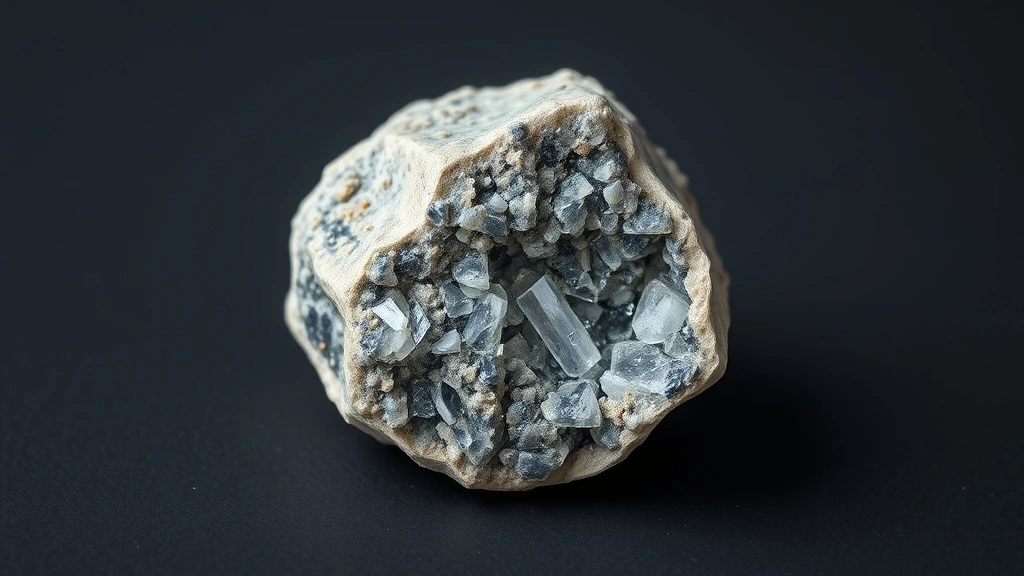
Muscovite belongs to the mica group within the broader silicate mineral family. It is a naturally occurring phyllosilicate characterized by its distinct sheet-like structure. This geological classification places it among the most common rock-forming minerals. Its stability allows it to persist in various igneous and metamorphic environments. Muscovite’s sheet‑like structure is mirrored in the similarly layered Lepidolite Mica, which shares its silicate heritage and offers complementary calming energies.
What is Muscovite ? Geological Overview & Definition
Muscovite forms primarily in granitic pegmatites and metamorphic rocks like schists. It crystallizes from silica-rich melts, often accompanying quartz and feldspar. The mineral exhibits perfect basal cleavage, allowing it to split into thin, flexible sheets. This property is a defining diagnostic feature for field identification.
In gemology, high-quality muscovite is valued for its translucency and luster. It is distinct from other micas due to its low iron content. This purity results in a clear, glassy appearance rather than a dark hue. Collectors seek specimens with minimal inclusions and distinct crystal faces.
Muscovite Chemical Composition & Crystallographic Properties
Muscovite crystallizes in the monoclinic system, featuring a layered lattice structure. The unit cell consists of tetrahedral silica sheets bonded to octahedral aluminum layers. Potassium ions occupy the interlayer spaces, stabilizing the structure. This arrangement dictates its anisotropic physical properties.
The cation substitution in muscovite is limited compared to other micas. Iron and magnesium are largely absent, ensuring chemical stability. This lack of transition metals contributes to its characteristic light coloration. The mineral remains resistant to weathering under normal surface conditions.
Color in muscovite arises from structural impurities or trace elements. Minor amounts of iron can impart pale yellow or brown tints. These chromophore centers are usually sparse in high-grade specimens. The base mineral remains predominantly colorless or silvery white.
Thermal behavior reveals muscovite’s stability up to moderate temperatures. It does not melt easily but may dehydrate at high heat. The refractive index varies slightly depending on the light’s path. This optical anisotropy is a key identification tool for gemologists.
| Property | Specification |
|---|---|
| Mineral Group | Natural Mineral / Crystal |
| Chemical Formula | KAl₂(AlSi₃O₁₀)(OH)₂ |
| Mohs Hardness | 2–2.5 parallel to 001 4 right angle to 001 |
| Crystal System | Monoclinic |
| Specific Gravity (Density) | 2.76–3 |
| Refractive Index | n α = 1.552–1.576 n β = 1.582–1.615 n γ = 1.587–1.618 |
| Color & Optical Properties | Natural Muscovite Gemstone color spectrum and optical dispersion |
| Primary Mining Localities | Global primary localities |
| Water & Chemical Resistance | High (Safe for gentle water washing) |
| Chakra Alignment (Traditional) | Crown Chakra, Third Eye Chakra |
| Zodiac Affinity (Traditional) | Virgo, Pisces |
| Symbolic Meaning (Traditional) | Clarity of mind, spiritual protection, and mental balance |
Muscovite Varieties & Color Spectrum
Muscovite exhibits a diverse range of color morphs driven by trace element substitutions within its crystal lattice. The most common form is colorless to pale yellow, often referred to as white muscovite in gemological trade contexts. These specimens typically display high transparency and are prized for their clarity in lapidary work.
White Muscovite
This variety forms in granitic pegmatites where potassium and aluminum dominate the chemical environment. It frequently contains minute inclusions of quartz or biotite, which can create a subtle sparkle known as aventurescence. High-quality white muscovite is relatively common but remains sought after for its pristine optical properties.
Green Muscovite
Green hues arise from trace amounts of iron or manganese substituting for aluminum in the structure. This variety is often found in metamorphic schists and gneisses, where regional metamorphism alters the original mineralogy. The color is typically a soft, pale green, making it less commercially valuable than its white counterpart.
Gold Muscovite
Characterized by a distinct golden or honey-brown tint, this variety often contains inclusions of pyrite or other sulfide minerals. These metallic flecks create a shimmering effect that enhances its visual appeal in cabochon cuts. Gold muscovite is rarer than white varieties and is frequently associated with hydrothermal vein deposits.
Blue Muscovite
Rare blue muscovite is attributed to trace amounts of titanium or vanadium within the crystal structure. This color morph is exceptionally uncommon and usually found in specific pegmatite zones with unique geochemical conditions. Its scarcity makes it a significant find for collectors and mineralogists alike.
Smoky Muscovite
Smoky or brownish varieties result from radiation damage or the presence of iron impurities. These stones often exhibit a pleochroic effect, displaying different shades of brown when viewed from different angles. They are typically found in association with other mica-rich minerals in metamorphic terrains.
Where is Muscovite Found? Geological Mining & Extraction
Muscovite primarily occurs in granitic pegmatites, where slow cooling allows for the growth of large, high-quality crystals. These deposits are often found in regions with significant igneous activity, such as the United States, Brazil, and Madagascar. The size and clarity of the crystals depend heavily on the cooling rate and chemical stability of the melt.
Commercial extraction focuses on mining these pegmatite veins, where muscovite sheets are carefully separated from the host rock. Major production areas include the Mica Belt in India and significant deposits in China and Russia. Sustainable mining practices are increasingly important to preserve the integrity of these geological formations.
Historical Significance & Cultural Lore of Muscovite
Historically, muscovite was known as muscovite glass or isinglass, serving as a transparent window material before the widespread use of glass. Ancient civilizations, including the Inuit and various Asian cultures, valued its natural transparency and durability for practical and ceremonial purposes. Archaeological findings reveal its use in early window panes and decorative objects across multiple continents.
In esoteric traditions, muscovite is associated with mental clarity and spiritual protection, aligning with the Crown and Third Eye chakras. Its reflective properties were believed to enhance meditation and introspection, making it a favored stone for spiritual practitioners. This enduring cultural significance highlights its dual role as both a functional material and a symbol of enlightenment.
Modern Uses & Jewelry Applications of Musmusite
Muscovite’s perfect basal cleavage makes it a favorite for lapidary cutting where thin sheets are split along the (001) plane. Artisans often fashion it into smooth cabochons that showcase its silky luster, while occasional faceted pieces highlight its subtle pleochroism. Beyond wearable pieces, the mineral is carved into ornamental inlays for watch faces, decorative boxes, and interior design accents.
- Cabochon pendants that emphasize the stone’s translucent glow.
- Faceted earrings or rings where the low hardness is protected by bezel settings.
- Inlay work in luxury watches, furniture, and architectural panels.
Metaphysical Properties & Traditional Meaning of Muscovite
According to historical traditions and metaphysical lore, Muscovite is revered for clarity of mind and spiritual protection, acting as a calming conduit for mental balance. Its gentle energy is said to dissolve mental fog, fostering insight and a clear thought process during meditation or study. Practitioners also associate the stone with emotional steadiness, believing it can soothe anxiety and promote rational decision‑making.
Which Chakra and Zodiac Signs Align with Muscovite ?
Muscovite resonates strongly with the Crown Chakra, supporting higher‑dimensional awareness and a sense of universal connection. It also aligns with the Third Eye Chakra, enhancing intuition, inner vision, and psychic receptivity.
In astrology, the stone is linked exclusively to Virgo and Pisces. Virgo benefits from Muscovite’s grounding clarity, aiding analytical pursuits, while Pisces draws on its soothing vibrations to deepen spiritual insight and emotional empathy.
How to Identify Real vs. Fake Muscovite
Artificial imitations of Muscovite include low‑cost synthetic glass, resin composites, and dyed mica flakes that mimic its pearly sheen. These substitutes often lack the characteristic perfect basal cleavage and may feel heavier or display uneven coloration. Recognizing genuine Muscovite requires a combination of tactile, visual, and simple physical tests.
Practical At-Home Authenticity Tests
- Temperature Test (Thermal Feel): Real Muscovite feels cool to the touch and retains that coolness longer than glass or resin, which quickly warm to skin temperature.
- Specific Gravity & Weight Test: Genuine Muscovite has a density of 2.76–3.0 g/cm³; it will feel lighter than glass of similar size, which typically measures around 2.5–2.6 g/cm³.
- Scratch & Hardness Test (Mohs Comparison): Using a fingernail (hardness ~2.5) will leave a faint scratch on Muscovite, whereas glass (hardness ~5.5) will not be scratched; a steel file can confirm the lower hardness parallel to the (001) plane.
- Microscopic & Loupe Inspection (Internal Inclusions): Under 10× magnification, authentic Muscovite shows thin, parallel lamellar layers and occasional tiny air bubbles, while synthetic glass appears uniformly smooth with no natural striations.
Muscovite Valuation Factors, Grading & Pricing
Color Saturation is the foremost driver of price. Deep, vivid greens or rare golden‑honey hues command premiums, while pastel or washed‑out tones are less valuable. Grading labs assess tone uniformity across the stone and rate optical clarity and luster on a scale from “transparent” to “sub‑transparent.” Consistency in these visual cues directly influences market desirability.
Specimen Size & Weight plays a secondary yet pivotal role. Larger muscovite pieces are rare because the mineral cleaves easily along the (001) plane, so a well‑cut 2‑carat stone can outprice several smaller stones of equal quality. tumbled polish and natural geometry and the presence of matrix or inclusions are scrutinized; a clean, symmetrical cut enhances brilliance and reduces light loss, boosting the final price.
Geographical Provenance Premium adds a nuanced layer to valuation. Specimens from historic mines in the Alps, the Himalayas, or the Appalachian region often fetch higher wholesale rates due to their documented rarity and collector appeal. Retail trends show a steady 5‑10 % annual increase for provenance‑certified stones, reflecting growing demand among metaphysical markets and high‑end jewelry designers.
How to Clean and Care for Muscovite
Use warm soapy water and a soft cloth to gently remove surface dirt. Rinse the stone with lukewarm water, then pat dry with a lint‑free microfiber towel. Avoid ultrasonic cleaners, as the high‑frequency vibrations can cause micro‑fractures along muscovite’s perfect basal cleavage. Store the gem in a padded pouch away from harder minerals to prevent scratches.
Cleansing and Recharging Muscovite (Energetic Care)
Because muscovite is chemically stable and insoluble, dry energetic cleansing is safest. Pass the stone through a thin stream of white‑smoke incense or sage smudging for 30‑60 seconds to disperse stagnant energy without introducing moisture.
For recharging, place the gem on a selenite charging plate or expose it to clear moonlight overnight. Both methods infuse the stone with subtle vibrational uplift while preserving its crystal lattice, ensuring the muscovite retains its reputed clarity of mind and spiritual protection qualities.
Frequently Asked Questions About Muscovite
Is muscovite safe to wear in the shower or during swimming?
Yes, muscovite tolerates gentle water exposure. Its layered silicate structure is water‑resistant, so routine washing with mild soap and a soft cloth will not damage the stone. However, prolonged submersion or harsh detergents can weaken the inter‑layer bonds over time, so limit exposure to brief rinses.
Can I clean muscovite with an ultrasonic cleaner?
No, avoid ultrasonic cleaning for muscovite. The high‑frequency vibrations can cause the delicate phyllosilicate sheets to delaminate, leading to micro‑fractures. Instead, gently wash the gem in warm, soapy water and wipe with a lint‑free cloth to preserve its luster.
What zodiac signs are associated with muscovite?
Muscovite is linked to Virgo and Pisces. These signs are believed to benefit from the stone’s ability to clarify thought and promote emotional balance. In astrological practice, the gem is often set in jewelry for those born under these signs to enhance intuitive insight.
Which chakras does muscovite activate?
Muscovite aligns with the Crown and Third Eye Chakras. It is thought to open the pineal gland, fostering spiritual awareness and mental clarity. Wearing or meditating with the stone can support higher‑consciousness practices and aid in achieving a balanced, focused mind.
How hard is muscovite compared to other gemstones?
Muscovite rates 2–2.5 on the Mohs scale parallel to 001 and 4 at right angles. This makes it considerably softer than most traditional gems like quartz or sapphire. Its relative softness requires careful handling, especially when set in rings or bracelets that endure frequent impact.
What is the typical refractive index range for muscovite?
Muscovite’s refractive indices range from nα = 1.552–1.576 to nγ = 1.587–1.618. These values produce a subtle vitreous to pearly luster, distinguishing it from higher‑index stones such as diamond. The birefringence contributes to its characteristic shimmer when viewed from different angles.
Is muscovite suitable for everyday jewelry?
It can be used in everyday pieces with caution. Because of its layered crystal habit and modest hardness, muscovite is best set in pendants, earrings, or brooches where abrasion is minimal. Regular inspection for chips or delamination helps maintain its aesthetic appeal.
How dense is muscovite compared with other silicate minerals?
Muscovite has a specific gravity of 2.76–3.0. This relatively low density makes the stone feel light on the finger, similar to other mica group minerals. The lightness is advantageous for large‑format jewelry, reducing strain while still delivering the stone’s metaphysical benefits.