
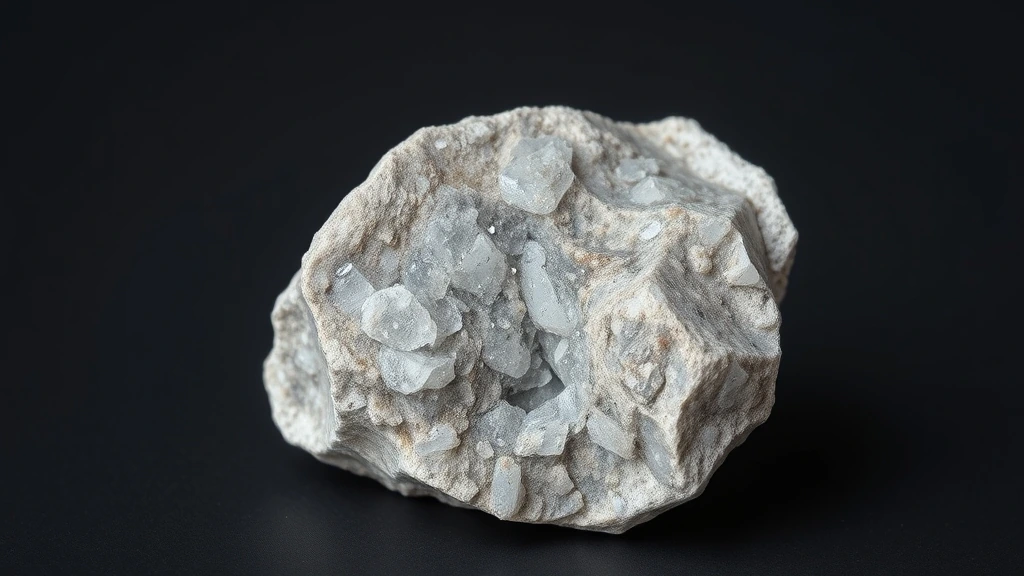
Lepidolite belongs to the mica subgroup of phyllosilicates and is classified as a natural mineral/crystal. It forms in granitic pegmatites and lithium‑bearing hydrothermal veins, where slow cooling allows its characteristic sheet‑like structure to develop. The mineral’s lithium content gives it a distinctive pink‑violet color palette, prized in both jewelry and metaphysical circles. Its monoclinic symmetry and perfect basal cleavage set it apart from other micas, while its low density (2.7‑3.0 g/cm³) contributes to a light, airy feel in the hand.
What is Lepidolite Mica Gemstone? Geological Overview & Definition
Lepidolite is the lithium‑rich end‑member of the mica group, a family of sheet silicates that share a layered crystal lattice. It typically occurs as thin, flexible plates that can be split into translucent sheets, displaying a soft pink to violet coloration caused by trace lithium and manganese.
In geological terms, lepidolite forms in granite pegmatites and lithium‑rich hydrothermal veins, environments that concentrate rare elements. Its presence often signals nearby deposits of spodumene, petalite, or other lithium minerals, making it a valuable indicator mineral for exploration geologists.
Lepidolite Mica Gemstone Chemical Composition & Crystallographic Properties
The mineral crystallizes in the monoclinic system, with a layered lattice built from tetrahedral SiO₄ sheets bonded to octahedral Al/Fe/Mg sheets. This architecture creates perfect basal cleavage, allowing the sheets to separate easily along the (001) plane.
Cation substitution is extensive: lithium and aluminum dominate the A‑site, while Fe²⁺, Mg²⁺, and additional Al occupy the octahedral B‑sites, producing the variable formula K(Li,Al)₃(Al,Fe,Mg)₂(Al,Si)₄O₁₀(OH,F)₂. Fluorine can replace hydroxyl groups, subtly altering refractive index and color intensity.
The chromophore responsible for lepidolite’s pink‑violet hue is primarily Mn²⁺ in the octahedral sites, with lithium influencing the crystal field environment. Acid exposure can leach lithium and fluorine, gradually dulling the color and weakening the sheet structure.
Thermally, lepidolite is stable up to ~600 °C; beyond this, dehydroxylation occurs, and the mica transforms to a spinel‑type phase, releasing water and fluorine. Its low specific gravity (2.7‑3.0) and modest refractive index (1.54‑1.58) make it easy to identify in hand‑sample analysis.
| Property | Specification |
|---|---|
| Mineral Group | Natural Mineral / Crystal |
| Chemical Formula | K(Li,Al)₃(Al,Fe,Mg)₂(Al,Si)₄O₁₀(OH,F)₂ |
| Mohs Hardness | 2.0 – 2.5 |
| Crystal System | Monoclinic |
| Specific Gravity (Density) | 2.7 – 3.0 |
| Refractive Index | 1.54 – 1.58 |
| Color & Optical Properties | Natural Lepidolite Mica Gemstone color spectrum and optical dispersion |
| Primary Mining Localities | Global primary localities |
| Water & Chemical Resistance | High (Safe for gentle water washing) |
| Chakra Alignment (Traditional) | Crown Chakra, Third Eye Chakra |
| Zodiac Affinity (Traditional) | Pisces, Libra |
| Symbolic Meaning (Traditional) | Spiritual awakening, emotional balance, and inner peace |
Lepidolite Mica Gemstone Varieties & Color Spectrum
Lepidolite exhibits a diverse palette driven by trace element substitution within its crystal lattice. The most common hues range from pale lilac to deep violet, influenced by lithium and aluminum content. These color variations are critical for grading in the gemstone market.
Lavender Lepidolite
This variety features a soft, pastel purple tone that is highly sought after for jewelry. It typically forms in pegmatite veins where lithium concentration is moderate. The stone often displays a translucent quality with visible mica flakes.
Deep Violet Lepidolite
Characterized by an intense, saturated purple color, this morph indicates higher levels of lithium impurities. It is rarer than its lavender counterpart and commands a premium price. The deep hue results from specific electronic transitions in the crystal structure.
Pink Lepidolite
Often confused with rhodonite, this variety displays a warm, rosy pink shade. It forms in hydrothermal environments where manganese traces are present. The color is usually more uniform and less translucent than violet types.
White or Colorless Lepidolite
This rare morph lacks significant chromophores, resulting in a clear or milky white appearance. It is primarily used in industrial applications rather than fine jewelry. The absence of color makes it difficult to distinguish from other micas without chemical testing.
Bicolor Lepidolite
Some specimens exhibit distinct bands of purple and white or pink and violet. This banding occurs due to fluctuating chemical conditions during crystallization. These unique patterns make each piece a one-of-a-kind collectible item.
Where is Lepidolite Mica Gemstone Found? Geological Mining & Extraction
Lepidolite primarily occurs in lithium-bearing pegmatites, which are coarse-grained igneous rocks. These deposits form in the late stages of magma crystallization. Major sources include the United States, Brazil, and the Democratic Republic of Congo.
Extraction involves open-pit mining followed by careful hand-sorting to preserve large crystals. The soft nature of the mineral requires gentle handling to prevent cleavage damage. Industrial mining focuses on lithium recovery, while gem-quality stones are selectively harvested.
Historical Significance & Cultural Lore of Lepidolite Mica Gemstone
Ancient civilizations valued lepidolite for its spiritual properties and use in rituals. Archaeological evidence suggests its presence in pre-Columbian American sites. It was often associated with divine communication and spiritual awakening.
In modern times, the stone has gained popularity in crystal healing practices. Believers associate it with the crown chakra and emotional balance. This renewed interest has driven its status as a popular metaphysical gemstone.
Modern Uses & Jewelry Applications of Lepidolite Mica Gemstone
Due to its low Mohs hardness of 2.0–2.5, lapidaries primarily cut lepidolite into smooth cabochons rather than faceted gems to prevent chipping. This soft mineral is also popular for ornamental carvings, beads, and tumbled stones that highlight its distinctive lilac and pink hues.
- Cabochon Cutting: Polished domes preserve the stone’s delicate structure while maximizing its silky luster.
- Ornamental Carving: Skilled artisans shape raw slabs into decorative bowls, plaques, and intricate figurines.
- Beadwork: Tumbled pieces are strung into necklaces, bracelets, and earrings for everyday spiritual wear.
Metaphysical Properties & Traditional Meaning of Lepidolite Mica Gemstone
According to historical traditions and metaphysical lore, lepidolite is revered for its ability to promote emotional balance and profound inner peace. Practitioners believe this lithium-bearing mica helps soothe anxiety and fosters a sense of calm during periods of high stress.
The stone is often associated with spiritual awakening, encouraging users to connect with their higher intuition. Its gentle energy is said to harmonize the mind and body, facilitating a deeper state of meditation and self-reflection.
Which Chakra and Zodiac Signs Align with Lepidolite Mica Gemstone?
In metaphysical practice, lepidolite is strongly aligned with the Crown Chakra and the Third Eye Chakra. These energy centers govern spiritual connection and intuitive insight, respectively, making this stone ideal for enhancing mental clarity and higher consciousness.
Astrologically, lepidolite resonates most deeply with the signs of Pisces and Libra. Both zodiac signs value harmony, empathy, and emotional depth, which are qualities that this gentle mineral is believed to amplify and stabilize.
How to Identify Real vs. Fake Lepidolite Mica Gemstone
Artificial imitations of lepidolite often include synthetic glass, dyed quartz, or plastic replicas designed to mimic the stone’s unique pink and purple coloration. While these fakes may look convincing at a glance, they lack the natural internal inclusions and specific physical properties of genuine mica.
Practical At-Home Authenticity Tests
- Temperature Test (Thermal Feel): Genuine lepidolite feels cool to the touch initially, whereas plastic imitations warm up quickly under hand heat.
- Specific Gravity & Weight Test: Real lepidolite has a density of 2.7–3.0, feeling slightly heavier than similarly sized glass or plastic fakes.
- Scratch & Hardness Test (Mohs Comparison): With a Mohs hardness of 2.0–2.5, lepidolite can be scratched by a copper coin or fingernail, unlike harder synthetic glass.
- Microscopic & Loupe Inspection (Internal Inclusions): A 10x loupe reveals natural mica flakes and irregular inclusions in real stones, while fakes often show air bubbles or uniform coloring.
Lepidolite Mica Gemstone Valuation Factors, Grading & Pricing
The primary driver of value is Color Saturation, specifically the intensity of the violet or pink hue. Uniform tone across the stone significantly enhances its aesthetic appeal and market desirability. Additionally, high optical clarity and a distinct pearly luster contribute to a premium grade.
Carat Weight plays a crucial role, as larger specimens with minimal inclusions are rarer and command higher prices. Facet symmetry is essential for maximizing light reflection, especially in cut gemstones. The presence of matrix or heavy inclusions typically reduces the overall valuation of the piece.
Geographical Provenance Premium often influences pricing, with stones from renowned localities fetching higher sums. Wholesale and retail market values fluctuate based on global demand and supply chain dynamics. Understanding these trends helps buyers assess fair market value accurately.
How to Clean and Care for Lepidolite Mica Gemstone
Due to its low Mohs Hardness of 2.0 to 2.5, lepidolite requires gentle handling to prevent scratches. Use warm soapy water and a soft cloth to gently wipe the surface clean. This method effectively removes dust and oils without damaging the delicate structure.
You must strictly avoid ultrasonic cleaners to prevent structural fractures within the mica sheets. Prolonged water soaking should also be avoided to maintain the stone’s integrity. Regular, gentle maintenance ensures the gemstone retains its natural beauty and structural stability.
Cleansing and Recharging Lepidolite Mica Gemstone (Energetic Care)
For energetic cleansing, use dry methods that respect the mineral’s sensitivity to moisture and heat. Smoke smudging with sage or palo santo is a popular and safe technique for clearing negative energies. This approach avoids any risk of physical damage to the soft crystal structure.
Moonlight exposure is another effective method for recharging lepidolite without causing harm. Placing the stone on a Selenite Plate overnight can also help restore its vibrational balance. These dry techniques ensure the gemstone remains physically intact while undergoing energetic maintenance.
Frequently Asked Questions About Lepidolite Mica Gemstone
What is the hardness of lepidolite and how does it affect everyday wear?
Lepidolite rates 2.0–2.5 on the Mohs scale. Its softness means it can scratch easily, so it is best suited for pendants, earrings, or occasional‑use rings rather than daily‑wear pieces that endure heavy impact or abrasion.
Is lepidolite water‑resistant or safe to wear while swimming?
Lepidolite is water‑sensitive; prolonged soaking should be avoided. Exposure to moisture can weaken the hydroxyl‑rich layers and cause surface clouding. Quick rinses are fine, but keep the stone dry during baths, showers, or swimming.
How should I clean my lepidolite jewelry without damaging it?
Clean lepidolite with warm soapy water and a soft cloth; avoid ultrasonic cleaners. The gentle soap‑water solution lifts dirt without stressing the crystal lattice, while ultrasonic vibrations can create micro‑fractures in the mica’s delicate sheets.
Can lepidolite be set in a metal that might react with its chemistry?
Lepidolite is chemically stable with most precious metals but should not be set in reactive alloys. Because its formula contains potassium, lithium, and fluorine, metals like copper or brass may cause discoloration over time; gold, silver, or platinum are preferred.
Which zodiac signs are traditionally associated with lepidolite?
Lepidolite aligns with Pisces and Libra. These signs are believed to benefit from the stone’s emotional‑balancing energy, enhancing intuition for Pisces and promoting fairness and harmony for Libra in personal and professional realms.
Which chakras does lepidolite activate in crystal healing practices?
Lepidolite works with the Crown Chakra and the Third Eye Chakra. Activation of these centers is said to foster spiritual awakening, improve mental clarity, and support inner peace by calming the mind’s chatter.
Is lepidolite suitable for use in meditation or as a talisman?
Yes, lepidolite is popular for meditation due to its calming violet hue. The stone’s lithium content is thought to promote emotional equilibrium, making it an effective talismans for those seeking serenity and balanced energy during practice.
How does lepidolite’s density compare to other common gemstones?
Lepidolite has a density of 2.7–3.0 g/cm³, lighter than quartz or sapphire. This relatively low specific gravity means it feels less heavy on the finger, but also contributes to its fragility, reinforcing the need for careful handling.