
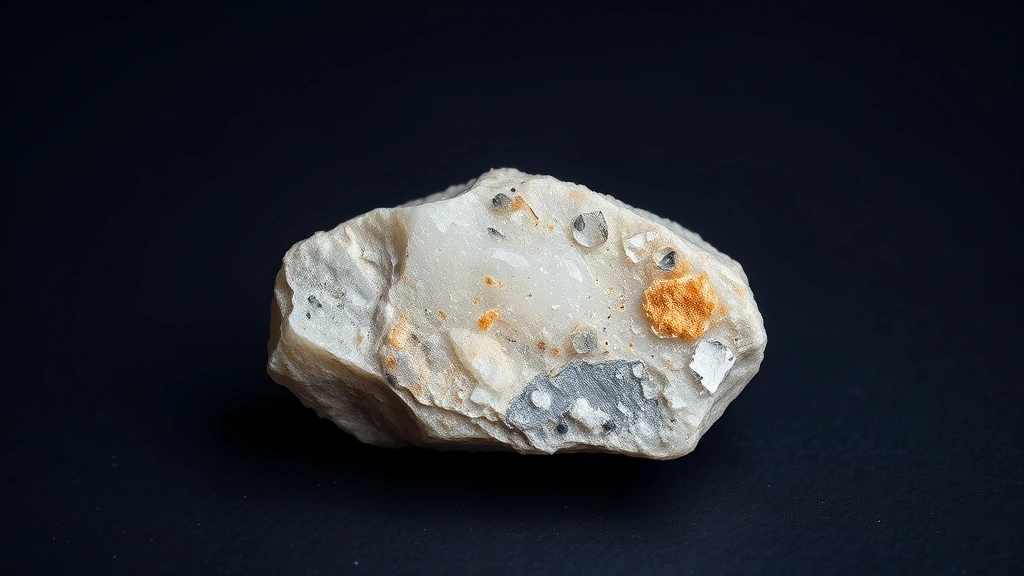
Feldspar constitutes the most abundant mineral group in the Earth’s crust, forming the backbone of igneous and metamorphic rocks. As a Natural Mineral / Crystal, it plays a critical role in geological processes and industrial applications. Its widespread occurrence ensures it is a fundamental component of planetary geology. Understanding its formation provides insight into the thermal history of the Earth’s interior.
What is Feldspar Gemstone? Geological Overview & Definition
Feldspar minerals crystallize during the cooling of magma, forming the primary framework of igneous rocks like granite. They are essential constituents of the continental crust, often comprising over 60% of its volume. This abundance makes them vital for understanding planetary formation and tectonic evolution.
In gemology, feldspar varieties like moonstone and labradorite are prized for their optical phenomena rather than simple color. These stones display adularescence or schiller, effects caused by light scattering within the crystal structure. Their geological origin links them to deep-seated magmatic processes and slow cooling environments.
Feldspar Gemstone Chemical Composition & Crystallographic Properties
Feldspar crystals belong to the Triclinic or monoclinic crystal systems, depending on their specific chemical composition. This structural classification dictates their cleavage planes and overall shape. The lattice structure is defined by a framework of tetrahedra linked by shared oxygen atoms. This arrangement allows for significant cation substitution within the crystal lattice.
The chemical formula varies based on the ratio of sodium, potassium, and calcium ions. This cation substitution creates a solid solution series, influencing the mineral’s physical properties. The framework’s stability is maintained by these large cations occupying interstitial sites. Variations in composition directly affect the stone’s density and refractive index.
Feldspar is generally stable under normal conditions but can be sensitive to strong acids. Prolonged exposure to acidic environments may degrade the surface, causing etching or dullness. This acid sensitivity is a critical consideration for long-term gemstone maintenance. Proper care ensures the preservation of the stone’s luster and structural integrity.
Color in feldspar arises from trace elements and structural defects, known as chromophore color centers. These imperfections absorb specific wavelengths of light, producing the observed hues. Thermal behavior is generally stable, but rapid temperature changes can cause fracturing. Understanding these properties helps in assessing the durability and aesthetic value of the gem.
| Property | Specification |
|---|---|
| Mineral Group | Natural Mineral / Crystal |
| Chemical Formula | KAlSi₃O₈ – NaAlSi₃O₈ – CaAl₂Si₂O₈ |
| Mohs Hardness | 6.0–6.5 |
| Crystal System | Triclinic or monoclinic |
| Specific Gravity (Density) | 2.55–2.76 |
| Refractive Index | 1.518–1.526 |
| Color & Optical Properties | Natural Feldspar Gemstone color spectrum and optical dispersion |
| Primary Mining Localities | Global primary localities |
| Water & Chemical Resistance | High (Safe for gentle water washing) |
| Chakra Alignment (Traditional) | Root Chakra, Sacral Chakra |
| Zodiac Affinity (Traditional) | Taurus, Virgo, Capricorn |
| Symbolic Meaning (Traditional) | Grounding, stability, and emotional balance |
Feldspar Varieties & Comprehensive Sub-Types
Moonstone
Moonstone forms in granitic pegmatites where orthoclase and albite intergrow during slow cooling. The intergrowth creates microscopic lamellae that scatter light, producing the signature adularescence—a milky‑blue shimmer that seems to glide across the stone. In cut gems the effect is most vivid when the stone is oriented perpendicular to the lamellae, and high‑grade material commands premium prices on the international market. Trade reports list Sri Lanka, Madagascar, and India as the primary sources of gem‑quality moonstone.
Labradorite
Labradorite is a triclinic plagioclase that develops Bøggild lamellae—thin, chemically distinct layers that cause the spectacular labradorescence. This optical phenomenon displays a shifting play of blue, green, and gold hues as the stone is rotated under light. The mineral typically crystallizes in mafic intrusions and layered igneous complexes, and its most valued specimens come from the Labrador Peninsula, Finland, and Madagascar. Because the effect is surface‑dependent, lapidaries often polish the stone to a high gloss to maximize the visual impact.
Sunstone
Sunstone is an oligoclase feldspar whose glittering appearance stems from microscopic platelets of hematite or copper that produce aventurescence. These metallic inclusions align parallel to crystal faces, reflecting light as bright, golden specks that resemble a sunrise. The gem is commonly mined from volcanic‑derived pegmatites in Norway, the United States (Oregon), and India, where the combination of clear host and abundant inclusions yields market‑grade material. Sunstone’s trade status is strong, especially for stones with a high concentration of uniformly distributed inclusions.
Amazonite
Amazonite belongs to the microcline subgroup of potassium feldspar and acquires its vivid blue‑green hue from trace lead (Pb) and structural water within the crystal lattice. The coloration is uniform, lacking the play‑of‑color seen in other feldspars, and is enhanced by careful cutting that showcases the stone’s cryptocrystalline texture. Major deposits occur in Russia’s Ural Mountains, Brazil, and Madagascar, where pegmatitic veins provide large, clean crystals for gem cutting. High‑quality amazonite commands a solid market niche due to its distinctive color and relative rarity.
Spectrolite
Spectrolite is a premium Finnish variety of labradorite that exhibits the full optical spectrum, including rare reds, purples, and oranges, set against a deep, dark host matrix. The stone forms in the ancient, slowly cooled pegmatites of the Kola Peninsula, where extreme pressure and temperature foster exceptionally fine Bøggild lamellae. Because the spectral display is more vivid and broader than typical labradorite, spectrolite is prized by collectors and commands top‑tier prices in the gemstone market. Its rarity and superior optical performance make it a benchmark for evaluating labradorescent feldspars.
Comparative Summary – Gemologists differentiate these feldspar gems primarily by their optical phenomena: adularescence for moonstone, labradorescence for labradorite and spectrolite, aventurescence for sunstone, and uniform cryptocrystalline coloration for amazonite. Microscopic examination of lamellar structures, inclusion type, and chemical trace elements confirms the variety, while cutting orientation is tailored to maximize each stone’s signature light effect.
Where is Feldspar Gemstone Found? Geological Mining & Extraction
Feldspar gemstones crystallize in pegmatitic veins that intrude granitic bodies, where slow cooling allows large, well‑formed crystals to develop. These pegmatites are rich in alkali and plagioclase components, providing the necessary chemistry for moonstone, amazonite, and sunstone to form alongside quartz and mica.
Primary extraction regions include the Labrador Peninsula (Canada) for labradorite, Finland’s Kola Peninsula for spectrolite, Sri Lanka and Madagascar for moonstone, Norway and Oregon (USA) for sunstone, and the Ural Mountains (Russia) for amazonite. Modern mining combines selective hand‑picking with mechanized crushing, followed by flotation and gravity separation to isolate gem‑quality feldspar crystals from host rock debris.
Historical Significance & Cultural Lore of Feldspar Gemstone
Ancient Romans prized moonstone for its alleged ability to calm the mind and predict the future, embedding it in signet rings and amulets uncovered at Pompeii. In the Middle Ages, labradorite was believed to protect travelers from danger, a belief reflected in Norse sagas that describe “the stone of the northern lights.”
Indigenous peoples of North America used sunstone as a solar compass, aligning its glittering inclusions with sunrise to navigate across the continent. In Turkish folklore, amazonite was called “the stone of the sea” and thought to grant sailors safe voyages, a tradition still celebrated in modern jewelry that honors its historic maritime symbolism.
Modern Uses & Jewelry Applications of Feldspar Gemstone
Feldspar is cut into cabochons or modestly faceted stones for rings, pendants, and earrings, capitalizing on its subtle luster and relatively low cost. Lapidary artisans favor it for ornamental carving, producing intricate beads, figurines, and inlay work that showcase its diverse colors. Its durability (Mohs 6–6.5) makes it suitable for everyday wear, though designers typically reserve it for semi‑precious pieces.
- Cabochon pendants highlighting the stone’s translucent glow
- Faceted earrings that amplify sparkle while remaining affordable
- Carved beads and miniature sculptures for bohemian‑style jewelry
- Inlay panels in high‑end watches and decorative boxes
Safety & Mineral Profile of Feldspar
Safe handling and physical stability
Feldspar is a silicate mineral that is generally non‑toxic and does not contain hazardous heavy metals. However, its fine dust can become airborne during cutting or polishing, posing an inhalation risk similar to other silicate powders; therefore, a respirator and proper ventilation are recommended when working with loose material. Feldspar is chemically stable under normal environmental conditions, but it can react slowly with strong acids, producing soluble silicates. The mineral is relatively soft (Mohs 6–6.5) and can be scratched or damaged by harder materials, which is why it is typically displayed in museums rather than fashioned into durable jewelry. Its tendency to cleave and its moderate hardness make it more suitable for study and exhibition than for everyday wear.
Scientific, educational, and mineralogical significance
Feldspar constitutes a major component of the Earth’s continental crust, making it a key subject in petrology and tectonic studies. Its crystal chemistry—varying ratios of potassium, sodium, and calcium—provides insight into magmatic differentiation and crustal evolution. In museum collections, feldspar specimens illustrate the diversity of crystal habits, twinning, and color zoning, serving as educational models for crystallography, mineral identification, and geological history. Researchers use feldspar to trace geochemical processes, such as weathering rates, soil formation, and the provenance of sedimentary deposits.
Mineralogical Group and Planetary Lore of Feldspar
Historically, feldspar was grouped with mica and quartz under the term “silicate” minerals, reflecting early 19th‑century classification schemes that emphasized crystal habit and chemical composition. According to early mineralogists, the mineral was divided into orthoclase, microcline, and albite based on the dominant cation (K, Na, or Ca) and the presence of twinning. In lapidary texts, feldspar has been associated with the “earth stone” due to its abundance in the crust, and it has occasionally been used as a symbolic representation of stability and endurance in planetary lore. While not a gemstone in the traditional sense, feldspar’s ubiquity and varied optical properties have made it a staple in both scientific study and decorative collections.
How to Identify Real vs. Fake Feldspar Gemstone
Artificial imitations such as colored glass, synthetic quartz, or dyed natural stones are common substitutes for feldspar. These replicas often mimic the stone’s hue but lack its characteristic density, refractive index, and internal fracture patterns. Recognizing these differences requires simple, observable tests that can be performed at home.
Practical At-Home Authenticity Tests
- Temperature Test (Thermal Feel): Real feldspar feels cool to the touch and retains that coolness longer than glass or plastic, which quickly warm to skin temperature.
- Specific Gravity & Weight Test: Feldspar’s density (2.55–2.76 g/cm³) makes it noticeably heavier than glass of the same size; a simple water‑displacement test can confirm this.
- Scratch & Hardness Test (Mohs Comparison): Using a steel nail (Mohs 5.5) or a quartz point (Mohs 7), a genuine feldspar will resist scratching from the nail but may show a light scratch from quartz.
- Microscopic & Loupe Inspection (Internal Inclusions): Under 10× magnification, natural feldspar displays characteristic cloudy inclusions and tiny twinning; synthetic glass appears uniformly clear with no internal fractures.
Feldspar Gemstone Valuation Factors, Grading & Pricing
Market value hinges primarily on Color Saturation and overall tone uniformity. Collectors prize stones with intense, consistent hues rather than patchy or washed-out appearances. Additionally, high optical clarity and a strong vitreous luster significantly elevate the gem’s desirability.
The Carat Weight of a specimen directly influences its total monetary worth. Precise facet symmetry ensures optimal light return, which is critical for faceted jewelry pieces. However, visible matrix or heavy inclusion presence often reduces the final grade and price.
Geographical Provenance Premium can dramatically increase the value of rare feldspar varieties. Specific mining locations with historical significance command higher wholesale and retail market rates. Current trends show steady demand for high-quality specimens from established global sources.
How to Clean and Care for Feldspar Gemstone
To maintain the stone’s integrity, use warm soapy water and a soft cloth for gentle cleaning. This method effectively removes surface oils and dust without causing any chemical damage. Always ensure the water is lukewarm to prevent thermal shock to the crystal structure.
It is crucial to avoid ultrasonic cleaners entirely when handling feldspar gemstones. The high-frequency vibrations can induce structural fractures or split the mineral along cleavage planes. Stick to manual, low-impact cleaning methods to preserve the stone’s physical stability over time.
Cleansing and Recharging Feldspar Gemstone (Energetic Care)
For energetic cleansing, utilize dry methods that avoid direct water exposure or harsh chemicals. Smoke smudging with sage or palo santo is a popular technique to clear stagnant energy. This approach respects the mineral’s physical properties while addressing metaphysical beliefs.
Place the gemstone on a selenite plate under moonlight for overnight recharging. This passive method allows the stone to absorb ambient energy without physical stress. Ensure the environment is dry to maintain the gemstone’s long-term structural integrity.
Frequently Asked Questions About Feldspar Gemstone
Is feldspar safe to wear in the shower?
Yes, feldspar is generally safe for gentle water exposure. The mineral possesses high water resistance, allowing it to withstand brief contact with shower water without immediate damage. However, prolonged soaking or exposure to harsh chemicals should be avoided to maintain its structural integrity.
Can I clean feldspar in an ultrasonic cleaner?
No, you should strictly avoid ultrasonic cleaners for feldspar. The intense vibrations can cause structural fractures within the crystal lattice due to its moderate hardness. Instead, use warm soapy water and a soft cloth for safe, effective cleaning.
What is the Mohs hardness of feldspar?
Feldspar registers between 6.0 and 6.5 on the Mohs scale. This moderate hardness makes it durable enough for most jewelry settings but susceptible to scratching by harder minerals like quartz. Careful handling is required to prevent surface abrasion during daily wear.
Which zodiac signs are aligned with feldspar?
Feldspar is traditionally associated with Taurus, Virgo, and Capricorn. These earth signs resonate with the stone’s grounding energy and stabilizing properties. Wearing feldspar may enhance the natural traits of reliability and practicality inherent in these zodiac profiles.
Which chakras does feldspar activate?
Feldspar primarily activates the Root Chakra and Sacral Chakra. These energy centers govern feelings of security, stability, and creative flow. The stone’s earthy vibrations help balance these lower chakras, promoting a sense of groundedness and emotional equilibrium.
What is the chemical composition of feldspar?
Feldspar is a complex silicate mineral containing aluminum, silicon, and various cations. Its chemical formula varies based on the specific type, such as orthoclase or plagioclase. This diverse composition results in a wide range of colors and physical properties observed in gem-quality specimens.
Does feldspar have a specific crystal system?
Feldspar crystals form in either the triclinic or monoclinic systems. This structural arrangement influences the stone’s cleavage planes and optical properties. Understanding this crystallography is essential for proper cutting and polishing to maximize brilliance and durability.
Is feldspar a good stone for beginners?
Yes, feldspar is an excellent entry-level gemstone for collectors. Its moderate hardness and accessible price point make it ideal for learning about mineral properties. Beginners can easily identify it through its characteristic luster and refractive index range of 1.518–1.526.