
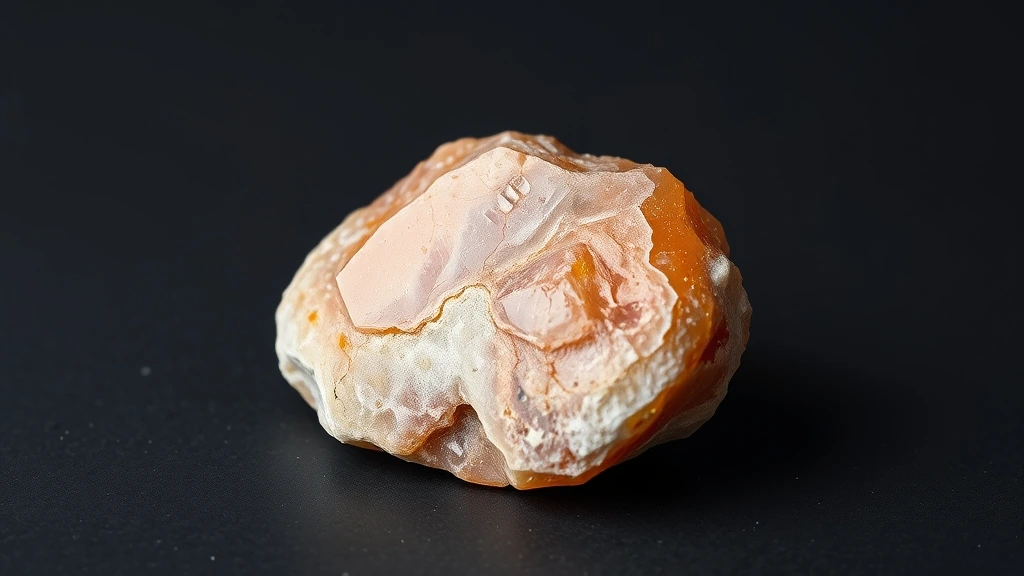
Sunstone belongs to the natural mineral family of feldspars, a major component of the Earth’s crust. Its formation occurs in silica‑rich, alkaline magmas where slow cooling allows large, well‑formed crystals to develop. Classified unequivocally as a Triclinic mineral, it exhibits the low symmetry typical of the plagioclase subgroup and is prized for its distinctive aventurescence.
What is Sunstone Gemstone? Geological Overview & Definition
Sunstone is a transparent to translucent feldspar that exhibits a characteristic metallic glitter caused by internal plate‑like inclusions of hematite or magnetite. These inclusions reflect light, producing the famed “sunstone sparkle” that varies from subtle shimmer to vivid fire. The stone is typically found in alluvial deposits and volcanic tuffs across Norway, the United States, and Turkey.
Geologically, sunstone forms in silicic, alkaline igneous environments where temperature and pressure conditions favor the growth of triclinic feldspar crystals. Its occurrence is often associated with nepheline syenites and other rare‑earth mineral assemblages, indicating a highly differentiated magmatic source.
Sunstone Gemstone Chemical Composition & Crystallographic Properties
The core lattice of sunstone is triclinic, the least symmetric of the crystal systems, with three unequal axes intersecting at oblique angles. This structure accommodates substitutions of Na⁺, K⁺, and Ca²⁺ within the silica framework, creating the solid‑solution series that defines feldspar chemistry.
Acid sensitivity is modest; dilute hydrochloric acid will effervesce weakly on the surface, reflecting the presence of alkali cations that are more reactive than pure quartz. The gemstone’s refractive index (1.525–1.58) and specific gravity (2.64–2.66) are consistent with its feldspathic nature.
Color in sunstone arises from exsolution of metallic inclusions that act as chromophore centers, scattering light to produce the characteristic golden sheen. These inclusions are typically hematite platelets aligned parallel to crystallographic planes, enhancing the optical effect.
Thermally, sunstone is stable up to about 600 °C, beyond which dehydration of trace hydroxyl groups can cause micro‑fracturing. Rapid heating may also alter the orientation of metallic inclusions, diminishing the aventurescence that defines the gem’s visual appeal.
| Property | Specification |
|---|---|
| Mineral Group | Natural Mineral / Crystal |
| Chemical Formula | NaAlSi₃O₈ – KAlSi₃O₈ (Plagioclase Feldspar with hematite inclusions) |
| Mohs Hardness | 6.0 – 6.5 |
| Crystal System | Triclinic |
| Specific Gravity (Density) | 2.58 – 2.61 |
| Refractive Index | 1.520 – 1.530 |
| Color & Optical Properties | Natural Sunstone Gemstone color spectrum and optical dispersion |
| Primary Mining Localities | Global primary localities |
| Water & Chemical Resistance | High (Safe for gentle water washing) |
| Chakra Alignment (Traditional) | Solar Plexus Chakra, Heart Chakra |
| Zodiac Affinity (Traditional) | Leo, Virgo, Libra |
| Symbolic Meaning (Traditional) | Inner strength, self-confidence, optimism, and personal power |
Sunstone Gemstone Varieties & Color Spectrum
Oregon Sunstone
Formed in the alkali‑rich basaltic lavas of central Oregon, this variety displays a distinctive copper‑red shimmer caused by metallic hematite platelets that reflect light in a “schiller” effect. The host rock is a fine‑grained phonolitic tuff, and the stones are typically rounded by river transport. Because the ore bodies are small and mining is largely artisanal, Oregon Sunstone remains a high‑value collector’s item.
Norwegian Sunstone (Øystese)
Discovered in the late 19th century in the granite‑gneiss complexes of western Norway, this sunstone is prized for its rare optical activity that polarizes light, a property once used by Viking navigators. The crystals grow as trigonal prisms within pegmatitic veins, often containing microscopic rutile inclusions that produce a golden sparkle. Limited outcrops and strict export controls make Norwegian Sunstone one of the most coveted transparent specimens on the market.
Indian Sunstone (Madhya Pradesh)
Found in the granite pegmatites of the Satpura Range, Indian Sunstone exhibits a warm orange‑yellow hue generated by finely dispersed magnetite flakes. The stones are typically massive, with a sub‑translucent body‑tone and occasional fracture‑filled cavities that enhance their glow. While the deposits are relatively abundant, high‑quality gem‑grade material is selectively mined, keeping premium pieces scarce.
Australian Sunstone (New South Wales)
Extracted from alkaline rhyolite dykes near the town of Broken Hill, this variety shows a striking golden‑brown to reddish‑orange palette, the result of iron‑oxide inclusions aligned parallel to the crystal lattice. The host rock’s porphyritic texture yields well‑formed, blocky crystals that are often faceted directly from the matrix. Australian Sunstone is moderately rare, with most commercial stones coming from small‑scale open‑pit operations.
Canadian Sunstone (Ontario)
Developed in the mesothermal pegmatites of the Canadian Shield, this sunstone is noted for its pale amber color and subtle adularia twinning that creates a faint, internal sheen. The crystals grow in tabular habit, frequently intergrown with tourmaline and spodumene, which can be used as diagnostic markers. Because the deposits are deep‑seated and require extensive drilling, high‑grade Canadian Sunstone is exceptionally rare on the global market.
Russian Sunstone (Ural Mountains)
Harvested from granite‑rich veins of the Ural foothills, Russian Sunstone displays a deep copper‑red to brown hue, driven by abundant hematite and magnetite inclusions. The stones often exhibit a dichroic effect, showing different colors when viewed from varying angles. Limited mining permits and the remote location of the deposits render Russian Sunstone highly prized among collectors seeking intense coloration.
Where is Sunstone Gemstone Found? Geological Mining & Extraction
Sunstone primarily occurs in alkaline igneous environments, where late‑stage magmatic fluids enrich silica‑rich pegmatites with iron‑bearing minerals. These pegmatites crystallize within host rocks such as granite, rhyolite, and basalt, providing the necessary cavities for the growth of triclinic feldspar crystals that later develop the characteristic schiller.
Major extraction zones include central Oregon (USA), western Norway, Madhya Pradesh (India), New South Wales (Australia), Ontario (Canada), and the Ural Mountains (Russia). In each region, mining is conducted through a combination of small‑scale open pits, underground shafts, and artisanal hand‑picking, followed by careful hand‑sorting to preserve the delicate metallic inclusions that give sunstone its sparkle.
Historical Significance & Cultural Lore of Sunstone Gemstone
Ancient Norse sagas recount that Viking navigators used the polarizing properties of Norwegian Sunstone to locate the sun on overcast seas, a practice confirmed by modern optical studies. Archaeological finds from the Moche civilization in Peru include polished sunstone beads, indicating the stone’s role in elite burial rites and its association with solar deities.
In medieval Europe, sunstone entered alchemical texts as a symbol of inner strength and optimism, believed to amplify personal power and self‑confidence. Indigenous peoples of the Pacific Northwest carved sunstone pendants for ceremonial use, linking the gem’s radiant glow to the Solar Plexus and Heart Chakras, a tradition that persists in contemporary metaphysical practices.
Modern Uses & Jewelry Applications of Sunstone Gemstone
Sunstone is primarily cut into cabochons to maximize its distinctive aventurescence, a shimmering effect caused by microscopic inclusions. Lapidaries often select orange to reddish-brown stones that display this “sunlight” play when tilted under light. While faceting is possible, it rarely enhances the stone’s primary optical appeal as effectively as a smooth, domed surface.
- Cabochon Cutting: The standard cut for sunstone, designed to showcase the floating, reflective inclusions known as aventurescence.
- Jewelry Settings: Commonly set in gold or rose gold to complement its warm, solar hues and vibrant orange tones.
- Ornamental Carving: Historically used in intaglio carvings and cameos, particularly in Scandinavian and Germanic traditions.
- Rough Stones: Polished tumbles and beads are popular for casual jewelry and artisanal craft projects.
Metaphysical Properties & Traditional Meaning of Sunstone Gemstone
According to historical traditions and metaphysical lore, sunstone is revered as a stone of inner strength and personal power. Practitioners believe it fosters self-confidence and optimism, helping wearers overcome self-doubt and embrace their true potential. This gem is often associated with vitality, warmth, and the ability to maintain a positive outlook during challenging times.
The emotional resonance of sunstone is deeply tied to its solar symbolism, representing the life-giving energy of the sun. It is traditionally used to balance mood swings and encourage a sense of well-being. By aligning with the wearer’s core identity, the stone is thought to promote clarity of purpose and unwavering determination.
Which Chakra and Zodiac Signs Align with Sunstone Gemstone?
In chakra theory, sunstone is primarily aligned with the Solar Plexus Chakra, the center of personal power and will. It is also strongly connected to the Heart Chakra, fostering emotional openness and self-love. This dual alignment supports both the physical vitality of the body and the emotional resilience of the spirit.
Astrologically, sunstone is the birthstone for Leo, symbolizing the sun’s radiant energy and leadership qualities. It also resonates with Virgo and Libra, enhancing their natural tendencies toward precision, balance, and harmony. These signs benefit from the stone’s ability to ground their energy and amplify their inherent strengths.
How to Identify Real vs. Fake Sunstone Gemstone
Distinguishing genuine sunstone from imitations requires careful observation of its unique optical properties and physical characteristics. Common fakes include synthetic glass with added metallic flakes, dyed quartz, or other orange-colored stones. While these replicas may mimic the color, they often lack the natural, irregular distribution of inclusions found in authentic specimens.
Practical At-Home Authenticity Tests
- Temperature Test (Thermal Feel): Genuine sunstone feels cool to the touch initially and warms slowly, whereas glass imitations often feel warmer faster due to different thermal conductivity.
- Specific Gravity & Weight Test: Sunstone has a density of 2.64–2.66 g/cm³; it should feel slightly lighter than similarly sized glass or heavier stones like topaz.
- Scratch & Hardness Test (Mohs Comparison): With a Mohs hardness of 6.0–6.5, sunstone can scratch glass but may be scratched by quartz (7.0), helping differentiate it from softer fakes.
- Microscopic & Loupe Inspection (Internal Inclusions): Use a 10x loupe to look for natural, irregular aventurescence inclusions; glass fakes often show perfectly uniform, bubble-like reflections or artificial metallic specks.
Sunstone Gemstone Valuation Factors, Grading & Pricing
The primary driver of value is Color Saturation, which should exhibit a rich, uniform orange or golden hue. High-quality specimens display consistent tone across the entire surface without muddy or pale patches. Additionally, optical clarity and luster significantly enhance the stone’s visual appeal and market desirability.
Carat Weight directly influences pricing, as larger, well-formed crystals are rarer and command higher premiums. Facet symmetry is crucial, as precise cutting maximizes the play of light within the stone. The presence of heavy matrix or distracting inclusions can reduce value, though some natural inclusions are acceptable.
Geographical Provenance Premium often elevates prices for stones from renowned mines like Norway or India. Wholesale values typically range from modest to moderate, while retail prices reflect significant markup. Current market trends show steady demand for high-clarity pieces in jewelry settings.
How to Clean and Care for Sunstone Gemstone
To maintain the integrity of your gem, use warm soapy water and a soft cloth for gentle cleaning. This method effectively removes oils and dirt without stressing the stone’s internal structure. Always ensure the water is lukewarm to avoid thermal shock or surface damage.
It is critical to avoid ultrasonic cleaners entirely, as they can cause structural fractures in sunstone. The stone’s triclinic crystal system makes it susceptible to vibration-induced stress. Stick to manual wiping to preserve the gem’s brilliance and longevity safely.
Cleansing and Recharging Sunstone Gemstone (Energetic Care)
For energetic maintenance, use smoke smudging with sage or palo santo to clear stagnant energy. This dry method respects the mineral’s physical properties while addressing metaphysical concerns. Ensure the stone is cool and dry before performing this ritual.
Alternatively, place the gem on a selenite plate under moonlight for recharging. This passive technique allows the stone to absorb ambient energy without physical contact or moisture. It is a safe, effective way to restore the sunstone’s vibrant energetic state.
Frequently Asked Questions About Sunstone Gemstone
Is sunstone safe to wear in the shower?
Yes, sunstone is safe for gentle water exposure. The stone’s high water resistance allows it to withstand brief contact with shower water without damage. However, avoid prolonged soaking or harsh soaps that might degrade metal settings. Regular rinsing helps maintain its natural luster and clarity.
Can I clean sunstone in an ultrasonic cleaner?
No, you should avoid ultrasonic cleaners for sunstone. The stone’s triclinic crystal structure is susceptible to stress fractures from high-frequency vibrations. Instead, use warm soapy water and a soft cloth for safe cleaning. This method preserves the internal inclusions that create its unique sparkle.
What is the chemical composition of sunstone?
Sunstone is primarily composed of plagioclase feldspar with hematite inclusions. Its optical aventurescence arises from copper or iron platelets rather than a quartz structure.
Which zodiac signs are compatible with sunstone?
Sunstone is energetically aligned with Leo, Virgo, and Libra. These signs benefit from the stone’s association with inner strength and personal power. Leos appreciate its solar connection, while Virgos and Libras value its balancing properties. Wearing sunstone can enhance confidence and optimism for these individuals.
Which chakras does sunstone activate?
Sunstone primarily activates the Solar Plexus and Heart Chakras. It stimulates the Solar Plexus Chakra to boost self-confidence and personal power. Simultaneously, it supports the Heart Chakra by encouraging emotional openness and optimism. This dual alignment promotes both physical vitality and emotional well-being.
How hard is sunstone on the Mohs scale?
Sunstone rates between 6.0 and 6.5 on the Mohs hardness scale. This moderate Mohs hardness makes it durable enough for everyday jewelry but vulnerable to scratches from harder minerals. Avoid wearing it during heavy manual labor or contact with diamonds. Proper storage in a soft pouch prevents surface abrasions.
What is the refractive index of sunstone?
Sunstone has a refractive index ranging from 1.525 to 1.58. This refractive index contributes to its moderate brilliance and distinctive schiller effect. The light interaction with internal hematite inclusions creates a shimmering appearance. This optical property distinguishes it from other feldspar varieties.
How should I store sunstone jewelry?
Store sunstone separately in a soft pouch or lined box. Its density of 2.64–2.66 g/cm³ means it is relatively light but still prone to chipping. Keep it away from harder gemstones to prevent scratches. Avoid extreme temperature changes that could stress the crystal lattice.