
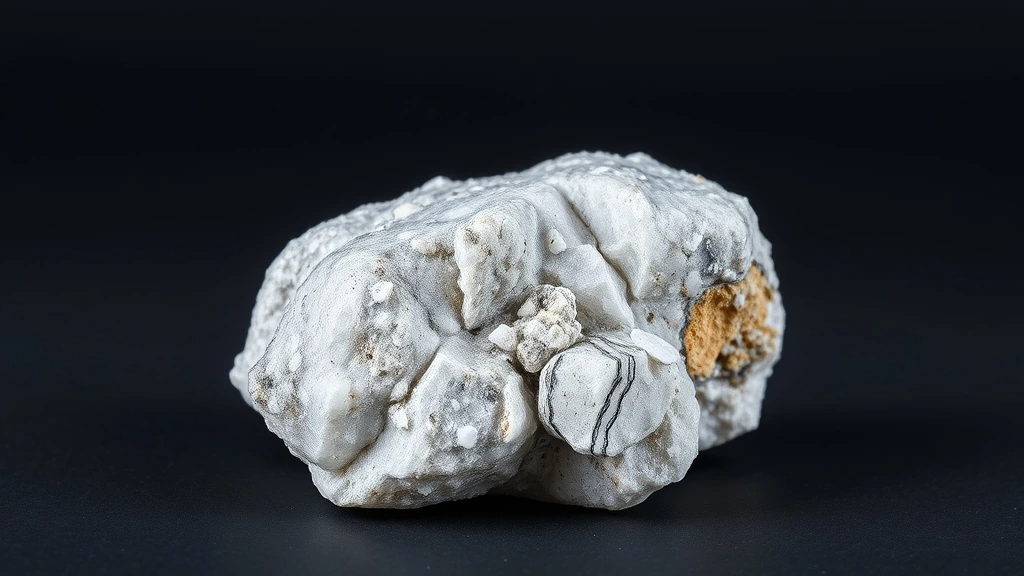
Cryolite is classified as a halide mineral, belonging to the broader family of natural minerals that crystallize in the monoclinic system. It is typically found in hydrothermal veins and volcanic fumaroles, where fluorine-rich fluids deposit this mineral in small, translucent crystals. The mineral’s low density and soft feel are characteristic of many halide species, yet its distinct blue hues set it apart in ornamental and historical contexts. Villiaumite, another notable member of the halide mineral group, shares similar formation environments and chemical characteristics with cryolite.
What is Cryolite? Geological Overview & Definition
Cryolite is a halide mineral composed of sodium, aluminum, and fluoride ions. It crystallizes in the monoclinic system, forming prismatic or tabular crystals that often appear translucent or pale blue. Historically, it was mined in Greenland and used as a flux in aluminum smelting, illustrating its industrial significance. In lapidary traditions, its gentle color and softness have made it a subject of fascination for collectors and historians alike.
Cryolite’s occurrence is typically associated with hydrothermal environments, where high-temperature fluids rich in fluorine precipitate the mineral in fissures and cavities. The mineral’s low hardness and fragile nature mean that many specimens are found as small, delicate crystals rather than large, robust masses. Its unique combination of chemical composition and crystal habit has made cryolite a subject of study in both geology and materials science.
Cryolite Chemical Composition & Crystallographic Properties
The chemical formula of cryolite is Na₃AlF₆, reflecting a precise stoichiometry of sodium, aluminum, and fluoride. In the monoclinic lattice, the unit cell is defined by unequal axes with one oblique angle, giving the mineral its characteristic prismatic shape. The crystal structure consists of AlF₆ octahedra linked by Na⁺ cations, creating a framework that accommodates slight cation substitution by other alkali metals, which can subtly alter the mineral’s color.
Cryolite is highly acid-sensitive; dilute acids can dissolve the mineral, releasing fluoride ions into solution. This property underscores the importance of careful handling in both laboratory and industrial settings. The mineral’s color centers arise from trace impurities or structural defects, often producing the pale blue hues observed in natural specimens. Thermal behavior shows that cryolite remains stable up to about 300 °C before decomposing, a factor that limits its use in high-temperature applications.
The mineral’s optical properties are modest, with a refractive index near 1.339 and minimal birefringence. These values contribute to its subtle luster and transparency, making it a subtle yet intriguing addition to mineral collections. Overall, cryolite’s combination of simple chemistry, distinctive crystal habit, and delicate physical properties make it a notable example of a halide mineral within the monoclinic crystal system.
| Property | Specification |
|---|---|
| Mineral Group | Natural Mineral / Crystal |
| Chemical Formula | Na₃ AlF₆ |
| Mohs Hardness | 2.5 to 3 |
| Crystal System | Monoclinic |
| Specific Gravity (Density) | 2.95 to 3.0. |
| Refractive Index | n α = 1.3385–1.339, n β = 1.3389–1.339, n γ = 1.3396–1.34 |
| Color & Optical Properties | Natural Cryolite color spectrum and optical dispersion |
| Primary Mining Localities | Global primary localities |
| Water & Chemical Resistance | High (Safe for gentle water washing) |
| Chakra Alignment (Traditional) | Crown Chakra, Third Eye Chakra |
| Zodiac Affinity (Traditional) | Aquarius, Pisces |
| Symbolic Meaning (Traditional) | Mental clarity, spiritual insight, and emotional purification |
Cryolite Varieties & Color Spectrum
Cryolite exhibits a limited but distinct color palette, primarily ranging from pure white to pale green or blue. Most specimens found in commercial deposits appear translucent to transparent, with the chemical purity of the fluorine-aluminum lattice directly influencing clarity. Minor trace elements can introduce subtle tints, though significant coloration remains exceptionally rare in natural occurrences.
White Cryolite
White cryolite represents the most common and commercially significant variety, often appearing as massive, blocky aggregates. These specimens typically form in alkali feldspar-rich pegmatites, where the mineral crystallizes in large, interlocking crystals. The lack of chromophoric impurities allows for high transparency, making white stones the primary source for industrial and lapidary use.
Green Cryolite
Greenish hues in cryolite are subtle and usually result from trace amounts of iron or other transition metals substituting within the crystal structure. This variety is less common than white specimens and often displays a faint, icy green tint under direct light. The optical anisotropy of the monoclinic system can enhance these pale colors, giving the stone a distinctive, ethereal appearance.
Blue Cryolite
Blue cryolite is an extremely rare morph, with coloration potentially linked to specific structural defects or trace manganese impurities. These specimens are highly sought after by collectors due to their scarcity and unique visual signature. The refractive index remains consistent with other varieties, but the blue tint provides a striking contrast to the typical white or green forms.
Colorless Cryolite
Colorless cryolite is essentially identical to white varieties but may appear more transparent when cut into cabochons or faceted stones. This form is prized for its clarity and lack of visible inclusions, which allows for maximum light transmission. The monoclinic crystal habit is often clearly visible in well-formed, colorless specimens, showcasing the mineral’s geometric precision.
Striated Cryolite
Some cryolite specimens exhibit distinct striations or growth lines on their crystal faces, a feature resulting from periodic changes in growth conditions. These crystallographic striations serve as diagnostic markers for authentic cryolite, distinguishing it from synthetic lookalikes. The presence of these lines often correlates with the mineral’s formation in slow-cooling, high-pressure environments.
Where is Cryolite Found? Geological Mining & Extraction
Cryolite is primarily found in alkaline pegmatites and syenites, often associated with other rare-earth minerals and fluorite. The most historically significant deposits are located in Greenland, particularly in the Ivittuut region, where the mineral was first identified in the early 19th century. These deposits form in specific tectonic settings where magmatic fluids rich in sodium, aluminum, and fluorine interact with host rocks.
Modern extraction is limited due to the mineral’s rarity and the development of synthetic alternatives for industrial use. Mining operations focus on high-purity veins within the pegmatite matrix, requiring careful separation from host rock and associated minerals. The geological rarity of natural cryolite means that most commercial supply now comes from synthetic production, with natural stones reserved for collection and niche lapidary applications.
Historical Significance & Cultural Lore of Cryolite
Historically, cryolite was initially valued for its industrial applications in aluminum smelting rather than as a gemstone. Ancient civilizations had limited exposure to this specific mineral, as its primary deposits were not widely known until European exploration of Greenland. However, its chemical properties were eventually recognized as crucial for lowering the melting point of alumina in the Hall-Héroult process.
In modern metaphysical traditions, cryolite is associated with mental clarity and spiritual insight, often linked to the Crown and Third Eye chakras. While lacking extensive archaeological records from ancient Greco-Roman or Egyptian contexts, its contemporary lore emphasizes emotional purification and heightened perception. This modern interpretation reflects a broader trend in crystal healing, where rare minerals are assigned specific energetic properties based on their visual and structural characteristics.
Modern Uses & Jewelry Applications of Cryolite
Cryolite’s low Mohs hardness of 2.5 to 3 makes it challenging for durable faceting, yet its unique optical properties offer distinct aesthetic value in jewelry design. Lapidaries often prefer cabochon cuts to showcase the stone’s subtle luster and internal clarity without risking fracture during polishing. Due to its fragility, this mineral is frequently set in protective bezel settings rather than prong mounts to ensure long-term wearability.
- Cabochon Jewelry: Smooth, domed cuts highlight the stone’s milky to transparent appearance and soft sheen.
- Ornamental Carvings: Artisans carve small figurines or decorative elements, leveraging the mineral’s ease of workability.
- Industrial Precursor: While rarely used as a primary gemstone, it serves as a critical flux in aluminum smelting.
- Collector’s Specimens: Crystalline clusters are highly prized by mineral collectors for their geometric perfection.
Metaphysical Properties & Traditional Meaning of Cryolite
According to historical traditions and metaphysical lore, cryolite is revered for its capacity to enhance mental clarity and facilitate deep spiritual insight. Ancient Mediterranean and Vedic lapidary practices associated this mineral with the purification of the mind, helping practitioners transcend emotional turbulence. It is believed to act as a bridge between the physical realm and higher consciousness, promoting a state of serene awareness.
In esoteric circles, the stone is linked to emotional purification, assisting individuals in releasing negative patterns and fostering inner peace. Its association with water elements in various global traditions underscores its role in balancing the mind and spirit. Practitioners often use cryolite during meditation to align their thoughts with universal truths and achieve a heightened state of perception.
Which Chakra and Zodiac Signs Align with Cryolite?
Cryolite is canonically aligned with the Crown Chakra and the Third Eye Chakra, both of which govern higher consciousness and intuition. The Crown Chakra, located at the top of the head, connects the individual to universal energy and spiritual wisdom. Cryolite’s energetic frequency is believed to stimulate this center, enhancing one’s ability to receive divine guidance and expand their perspective beyond the material world.
Astronomically, this mineral resonates strongly with the zodiac signs of Aquarius and Pisces. Aquarius, an air sign, values intellectual freedom and humanitarian ideals, which cryolite supports by clarifying thought processes. Pisces, a water sign, embodies deep empathy and spiritual sensitivity, areas where cryolite provides emotional grounding and protective clarity. These alignments highlight the stone’s dual nature of intellectual sharpness and emotional depth.
How to Identify Real vs. Fake Cryolite
Artificial imitations of cryolite often involve synthetic glass or dyed quartz, which mimic the stone’s pale blue or white coloration but lack its specific mineralogical properties. Synthetic glass typically exhibits a higher refractive index and greater hardness, making it easier to distinguish under professional testing. Dyed replicas may show uneven color distribution, particularly along crystal fractures or surface irregularities, which are absent in natural specimens.
Practical At-Home Authenticity Tests
- Temperature Test (Thermal Feel): Cryolite feels cool to the touch initially due to its low thermal conductivity. Hold the stone against your cheek or wrist; if it warms up rapidly, it may be plastic or glass, whereas genuine cryolite retains its coolness longer.
- Specific Gravity & Weight Test: With a density of 2.95 to 3.0 g/cm³, cryolite feels lighter than most silicate gems of similar size. Compare it against a known quartz specimen; cryolite should feel noticeably less dense and substantial.
- Scratch & Hardness Test (Mohs Comparison): Using a steel nail (hardness ~5.5) or a copper coin (hardness ~3.5), attempt to scratch the stone. Genuine cryolite (hardness 2.5-3) will be scratched by both, while glass or quartz imitations will remain unmarked or only lightly abraded.
- Microscopic & Loupe Inspection (Internal Inclusions): Examine the stone with a 10x loupe for natural inclusions such as fluid-filled cavities or tiny mineral crystals. Synthetic glass often contains tiny bubble inclusions or swirls, which are not characteristic of naturally formed cryolite.
Cryolite Valuation Factors, Grading & Pricing
The market first looks at color saturation, the intensity of the mineral’s pale blue‑white hue. Specimens that display a vivid, uniform tone without cloudiness command higher prices, as collectors prize visual vibrancy that mimics the mineral’s historic industrial glow. Energetic luster, perceived as a subtle inner sheen, also adds a premium in metaphysical circles.
Next, crystal size & weight (grams) dominate pricing. Larger, intact monoclinic crystals measured in grams are valued far above small fragments, especially when the surface is raw and unpolished, preserving natural texture. Tumbled or polished pieces fetch a modest premium, but any matrix inclusions that disrupt clarity can reduce the gram‑based price.
Finally, ethical sourcing & locality premium influences both holistic and collector markets. Cryolite from historic deposits in Greenland or the original Alaskan mines carries a provenance premium, while responsibly mined material that respects local ecosystems and indigenous rights commands higher bids. Transparency in extraction practices reassures buyers and often justifies a price premium.
How to Clean and Care for Cryolite
Gently wash Cryolite with warm soapy water, using a soft cloth to remove surface dust. Rinse briefly with clean lukewarm water, then pat dry with a lint‑free microfiber towel. Avoid ultrasonic cleaners, as the mineral’s monoclinic lattice can fracture under high‑frequency vibrations. Store the piece in a low‑humidity cabinet, away from acids and harsh chemicals, to preserve its natural luster.
Cleansing and Recharging Cryolite (Energetic Care)
For energetic maintenance, place the crystal on a clean selenite slab and allow moonlight to bathe it for several hours, a method praised across ancient lapidary traditions for gentle purification. Alternatively, pass a lightly smoldering bundle of sage or cedar over the stone, ensuring the smoke contacts the surface without soaking the mineral. Both practices respect Cryolite’s delicate structure while clearing residual energetic imprints.
A brief period of quiet meditation with the stone held in the Crown Chakra can further align its metaphysical properties, reinforcing mental clarity and emotional purification without physical alteration.
Frequently Asked Questions About Cryolite
Cryolite displays distinct mineralogical characteristics across its geological varieties and structural habits. Gemologists evaluate these natural varieties based on crystal habit, trace chromophore concentrations, and visual luster.
Primary Natural Cryolite
The benchmark natural variety exhibiting diagnostic color saturation and classic crystallographic symmetry.
Distinct Geological Morphs of Cryolite
Secondary regional and structural varieties formed under localized geological temperature and pressure conditions.
What is cryolite and where does it form?
Cryolite is a rare sodium aluminum fluoride mineral with the formula Na₃AlF₆. It crystallizes in the monoclinic system and is typically found in volcanic fumaroles and hydrothermal veins, especially in Greenland, Iceland, and the United States. The mineral’s low hardness (2.5–3 on the Mohs scale) and distinctive blue‑green hue make it a curiosity for collectors and researchers alike.
Is cryolite safe to wear in the shower or during swimming?
Yes, cryolite is water‑resistant and can be gently washed with water. Its density (2.95–3.0 g/cm³) and chemical stability mean it does not dissolve or degrade under normal shower conditions. However, prolonged exposure to harsh chemicals or high temperatures may cause surface etching, so a quick rinse is sufficient.
How should I clean a cryolite to avoid damage?
Use warm soapy water and a soft cloth, avoiding ultrasonic cleaners. The mineral’s fragile lattice can fracture under ultrasonic vibration, so gentle hand washing with mild detergent and a microfiber cloth is recommended. After cleaning, pat dry with a lint‑free towel to preserve its luster.
Can cryolite be polished or faceted for jewelry use?
Cryolite can be polished, but it is rarely faceted for commercial jewelry. Its softness and tendency to cleave along the monoclinic axes make precise cutting challenging. Jewelers typically use cryolite as a decorative accent or in scientific specimens rather than as a mainstream gemstone.
Does cryolite have any metaphysical or esoteric significance?
Cryolite is associated with the Crown and Third Eye Chakras, as well as the zodiac signs Aquarius and Pisces. In esoteric traditions, it is believed to enhance mental clarity, spiritual insight, and emotional purification. These associations are rooted in its pale blue color and historical use in metaphysical practices.
Is cryolite considered a precious or semi‑precious?
Cryolite is classified as a rare mineral rather than a precious gemstone. Its scarcity and low hardness limit its use in high‑value jewelry. However, collectors prize well‑formed crystals for their scientific value and unique optical properties, such as its low refractive indices (nα = 1.3385–1.339, nγ = 1.3396–1.34).
How can I identify authentic cryolite versus synthetic or imitation stones?
Authentic cryolite displays a monoclinic crystal habit, low hardness, and a characteristic blue‑green color. Synthetic analogs often lack the same refractive index range or may exhibit different cleavage patterns. A qualified gemologist can confirm authenticity using X‑ray diffraction or spectroscopic analysis.
What precautions should I take when handling cryolite in a laboratory setting?
Handle cryolite with gloves and avoid prolonged exposure to moisture or strong acids. While it is chemically stable in neutral conditions, exposure to concentrated hydrofluoric acid or strong oxidizers can dissolve the fluoride component. Store specimens in a dry, cool environment to prevent surface degradation.