
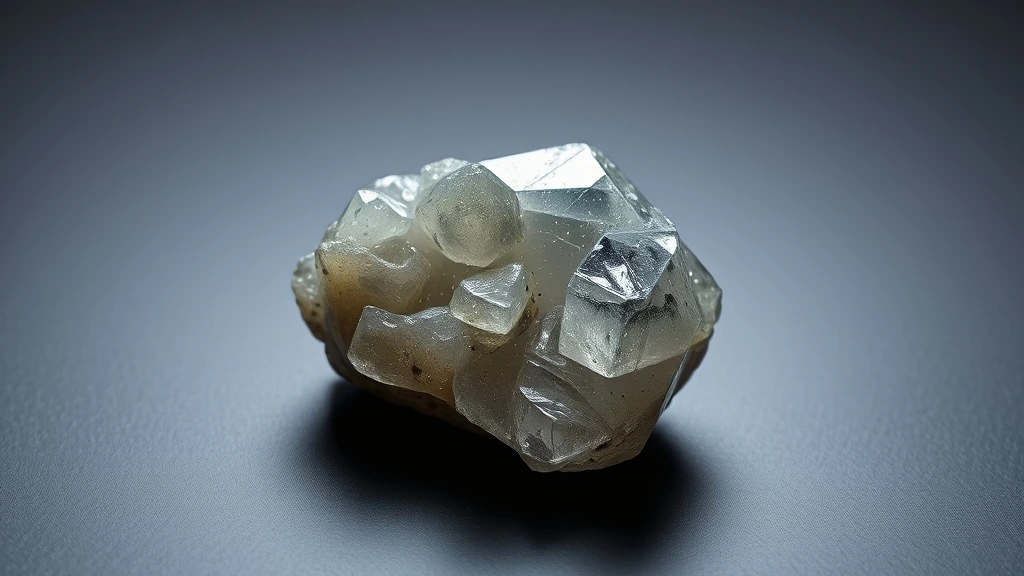
Fluorite belongs to the halide family, a group of minerals where a single anion (in this case, fluoride) dominates the structure. As a calcium fluoride compound, it crystallizes in the isometric (cubic) system, producing characteristic cubic and octahedral forms. It forms in hydrothermal veins, limestone caverns, and pegmatitic environments worldwide, often alongside minerals such as calcite, quartz, and barite. Its low hardness and perfect cleavage demand careful cutting, yet its brilliance and fluorescence reward skilled gem artisans.
What is Fluorite Gemstone? Geological Overview & Definition
Fluorite is a halide mineral whose primary chemical constituent is calcium fluoride (CaF₂). It occurs in a wide color range—purple, green, blue, yellow, and even colorless—thanks to trace impurities and radiation‑induced color centers. The stone’s transparency and high refractive index (1.433–1.448) give it a glassy luster prized by collectors.
In gemological terms, fluorite is valued for its fluorescence under ultraviolet light, a property that can reveal hidden banding and enhance its visual appeal. Because its Mohs hardness is only 4, it is best suited for pendants, earrings, and display pieces rather than rings or bracelets that endure heavy wear. Proper setting and protective care are essential to preserve its delicate surface.
Fluorite Gemstone Chemical Composition & Crystallographic Properties
Fluorite crystallizes in the isometric (cubic) system, forming well‑defined cubes, octahedra, and sometimes dodecahedra. Its unit cell is simple, with calcium ions at the corners and fluoride ions occupying the face centers, creating a tightly packed lattice that repeats every 4.02 Å. This symmetry underlies the mineral’s characteristic cleavage on four perfect planes.
The crystal chemistry allows limited cation substitution, where small amounts of strontium, lead, or rare‑earth elements replace calcium, subtly altering density (up to 3.56 g/cm³) and occasionally shifting color. However, the core Ca²⁺–F⁻ framework remains intact, preserving the halide’s fundamental properties across all varieties.
Fluorite is acid‑sensitive; exposure to strong acids can dissolve the fluoride lattice, producing hydrogen fluoride gas. This reactivity necessitates careful cleaning with mild, pH‑neutral solutions. The mineral’s color centers—electron traps created by radiation or impurity ions—absorb specific wavelengths, generating its vivid hues and strong UV‑induced fluorescence.
Thermally, fluorite exhibits low thermal conductivity and expands modestly with heat, which can induce cleavage or fracture if subjected to rapid temperature changes. Controlled heating can anneal color centers, sometimes fading fluorescence, while slow cooling preserves the stone’s natural brilliance for gemstone cutting and setting.
| Property | Specification |
|---|---|
| Mineral Group | Halides (Calcium Fluoride) |
| Chemical Formula | CaF₂ |
| Mohs Hardness | 4 (defining mineral) |
| Crystal System | Isometric / Cubic (Cubic and octahedral crystals) |
| Specific Gravity (Density) | 3.175–3.184; to 3.56 if high in rare-earth elements |
| Refractive Index | 1.433–1.448 |
| Color & Optical Properties | Natural Fluorite Gemstone color spectrum and optical dispersion |
| Primary Mining Localities | China, United Kingdom (Derbyshire), Mexico, Germany, USA |
| Water & Chemical Resistance | Moderate (Brief lukewarm water contact is safe; avoid hot water and acids) |
| Chakra Alignment (Traditional) | Third Eye Chakra and Crown Chakra |
| Zodiac Affinity (Traditional) | Capricorn, Pisces, Aquarius |
| Symbolic Meaning (Traditional) | Mental order, focus, auric cleansing, and learning facilitation |
Fluorite Gemstone Varieties & Color Spectrum
Purple‑Violet Fluorite
Formed in low‑temperature hydrothermal veins, purple‑violet fluorite often occurs alongside barite and galena in limestone host rocks. Its deep violet hue is intensified by microscopic inclusions of rare earth elements that cause fluorescence under UV light. This variety is moderately rare, prized by collectors for its vivid saturation and strong cathodoluminescence.
Green Fluorite (Chlorophane)
Green fluorite, known as chlorophane, precipitates in carbonate‑rich pegmatites where fluorine‑bearing fluids interact with calcium‑rich solutions. The characteristic emerald‑green color results from trace amounts of iron and rare‑earth activators, sometimes showing a striking color change when heated. High‑grade specimens from the United Kingdom are scarce, making them highly sought after for both gem and scientific study.
Blue Fluorite (Lazurite)
Blue fluorite, occasionally called lazurite, crystallizes in fissure fillings within marble and dolomite formations. Its sky‑blue to deep indigo shade is produced by minute inclusions of uranium and rare earths, giving it a subtle phosphorescence after exposure to sunlight. Large, clear crystals from Mexico’s Oaxaca region are uncommon, elevating their market value.
Yellow‑Orange Fluorite (Canary)
Canary‑yellow fluorite forms in sedimentary basins where evaporitic brines deposit calcium fluoride in thin layers. The bright yellow‑orange hue is due to trace thallium and manganese, often exhibiting a honeycomb pattern of tiny cavities. Specimens from China’s Hunan province are abundant, yet flawless, vivid stones remain rare and command premium prices.
Rainbow Fluorite (Multicolored)
Rainbow fluorite displays banded or zoned colors ranging from purple to green, blue, and yellow within a single crystal, reflecting fluctuating fluid chemistry during growth. These bands are caused by alternating concentrations of rare‑earth elements and transition metals, creating a natural “color‑gradient” effect. High‑quality rainbow stones from Spain’s Andalusia are exceptionally rare and highly collectible.
Black Fluorite (Carbonaceous)
Black fluorite, often termed carbonaceous fluorite, develops in deep‑seated hydrothermal systems where organic matter infiltrates the crystal lattice. Its opaque black appearance masks internal fluorescence that can be revealed under UV illumination. Rare black crystals from the United States (Illinois) are prized for their unique aesthetic and scientific intrigue.
Where is Fluorite Gemstone Found? Geological Mining & Extraction
Fluorite typically occurs in cubic crystal systems within limestone, marble, and granite pegmatites, where fluorine‑rich hydrothermal fluids replace calcium carbonate. The mineral fills veins, cavities, and breccia zones, often intergrown with galena, sphalerite, and quartz, creating complex ore bodies that require careful selective mining to preserve gem quality.
Major production centers include China (Hunan and Guizhou provinces), Mexico (Oaxaca), Spain (Andalusia), and the United States (Illinois and Kentucky). In these regions, open‑pit or underground extraction is followed by crushing, washing, and hand‑sorting to isolate the most brilliant crystals, a process that balances economic yield with the preservation of rare color varieties.
Historical Significance & Cultural Lore of Fluorite Gemstone
Ancient Romans used fluorite as a carving medium for ornamental intaglios and seals, valuing its ease of workability and bright colors. Archaeological finds from the Roman Empire include fluorite beads and inlays in jewelry, indicating its early status as a decorative stone.
In Eastern traditions, fluorite was believed to cleanse the aura and sharpen mental focus, aligning with its association to the Third Eye and Crown chakras. Medieval European alchemists prized it for its purported ability to facilitate learning and bring mental order, a lore that persists in modern crystal healing practices.
Modern Uses & Jewelry Applications of Fluorite Gemstone
Fluorite is prized in the lapidary arts for its vibrant colors and distinct cubic crystal system, which allows for precise geometric cutting. Because it ranks only 4 on the Mohs hardness scale, it requires careful handling to prevent chipping during the polishing process.
- Faceted Jewelry: Cutters often use step cuts or emerald cuts to highlight the stone’s clarity and color zoning.
- Cabochon Setting: Smooth, domed cuts are popular for showcasing unique internal patterns or “phantom” inclusions without risking facets.
- Ornamental Carving: Due to its relatively soft nature, fluorite is frequently carved into intricate sculptures, beads, and decorative paperweights.
Metaphysical Properties & Traditional Meaning of Fluorite Gemstone
According to historical traditions and metaphysical lore, fluorite is revered as a stone of mental order and intellectual clarity. Practitioners believe it helps organize chaotic thoughts, facilitating learning facilitation and enhancing concentration during complex tasks. This stone is often associated with the ability to see through illusions and maintain focus.
The emotional resonance of fluorite is linked to auric cleansing, where it is thought to clear negative energy from the aura. Users often report a sense of calm and heightened awareness when working with this mineral. Its multi-colored nature symbolizes the integration of different mental and spiritual aspects into a unified whole.
Which Chakra and Zodiac Signs Align with Fluorite Gemstone?
In chakra theory, fluorite is primarily aligned with the Third Eye Chakra and the Crown Chakra. The Third Eye connection supports intuition and mental clarity, while the Crown alignment fosters spiritual awareness and higher consciousness. This dual association makes it a powerful tool for meditation and mental discipline.
Astrologically, fluorite resonates strongly with the signs of Capricorn, Pisces, and Aquarius. Capricorns may use it to enhance their natural discipline, while Pisces and Aquarians might find it aids in their creative and intellectual pursuits. These zodiac signs often seek this stone to balance their inherent traits with focused mental energy.
How to Identify Real vs. Fake Fluorite Gemstone
Distinguishing genuine fluorite from artificial imitations is crucial for collectors and buyers. Common fakes include synthetic glass, which often lacks natural inclusions, and dyed replicas made from cheaper minerals like calcite. Understanding the physical properties of real fluorite helps in spotting these deceptions quickly.
Practical At-Home Authenticity Tests
- Temperature Test (Thermal Feel): Real fluorite feels cool to the touch initially but warms up quickly in your hand, whereas glass may retain its temperature longer or feel different due to its manufacturing process.
- Specific Gravity & Weight Test: Genuine fluorite has a specific gravity of 3.175–3.184. It should feel slightly heavier than glass of the same size, which typically has a lower density.
- Scratch & Hardness Test (Mohs Comparison): Fluorite ranks 4 on the Mohs hardness scale. A steel knife (hardness ~5.5) will scratch it, but it should not scratch glass (hardness ~5.5) easily.
- Microscopic & Loupe Inspection (Internal Inclusions): Use a 10x loupe to look for natural internal inclusions like cracks or color zoning. Synthetic glass is often perfectly clear or contains tiny bubbles, which are rare in natural fluorite.
Fluorite Gemstone Valuation Factors, Grading & Pricing
Market value hinges primarily on Color Saturation and the uniformity of tone across the stone. High-grade specimens display vivid, even hues without zoning or patchy color distribution. Additionally, optical clarity and a strong vitreous luster significantly enhance the gem’s overall visual appeal.
Carat Weight influences price, though large, flawless crystals are rare due to the mineral’s inherent fragility. Facet symmetry is critical for maximizing brilliance, as poor cutting can expose internal weaknesses. The presence of matrix or inclusions generally reduces value, though certain artistic specimens may command a premium.
Geographical Provenance Premium often elevates prices for stones from renowned localities like China or the UK. Wholesale costs remain modest, but retail markups reflect the labor-intensive cutting process required for this soft material. Current market trends show steady demand for multi-colored, high-clarity specimens from established mining regions.
How to Clean and Care for Fluorite Gemstone
Fluorite possesses a Mohs hardness of 4 and exhibits perfect cleavage, making it highly susceptible to chipping. You must never place this gemstone in ultrasonic cleaners, as the vibrations can shatter the crystal structure. Instead, use a soft, dry cloth to gently dust the surface after wear.
For deeper cleaning, brief contact with lukewarm water and mild soap is acceptable, but avoid hot water entirely. Dry the stone immediately with a lint-free cloth to prevent water spots or potential etching. Store fluorite separately from harder gems to prevent scratches that could compromise its structural integrity.
Cleansing and Recharging Fluorite Gemstone (Energetic Care)
To energetically cleanse fluorite, use dry methods such as smoke smudging with sage or palo santo. These techniques avoid any liquid contact, ensuring the mineral’s solubility and cleavage planes remain undisturbed. Hold the stone in a safe area where it cannot be dropped or knocked.
For recharging, place the gemstone on a selenite plate or under moonlight overnight. This passive method allows the crystal to absorb ambient energy without physical stress. Always handle the stone with care, as its low hardness makes it vulnerable to accidental impact.
Frequently Asked Questions About Fluorite Gemstone
Is fluorite safe to wear in water or rain?
Brief lukewarm water contact is safe, but hot water and acids should be avoided. Fluorite’s moderate water resistance means occasional exposure to rain or a quick rinse won’t damage the stone, yet prolonged soaking or exposure to acidic solutions can etch its surface and weaken the perfect cubic cleavage.
Can I clean fluorite in an ultrasonic cleaner?
No – fluorite should never be placed in an ultrasonic bath. With a Mohs hardness of 4 and flawless cubic cleavage, the vibrations of ultrasonic cleaning can cause chips or fractures. Instead, gently wipe the stone with a soft, damp cloth and a mild soap solution.
What zodiac signs are associated with fluorite?
Fluorite aligns with Capricorn, Pisces, and Aquarius. These signs are said to benefit from fluorite’s ability to bring mental order and focus, supporting the analytical and intuitive traits traditionally linked to the earth‑water‑air elements of these zodiacal profiles.
Which chakras does fluorite activate?
Fluorite is linked to the Third Eye Chakra and the Crown Chakra. Activation of these energy centers is believed to enhance intuition, spiritual clarity, and auric cleansing, helping the wearer attain higher states of consciousness and mental balance.
How can I tell if a fluorite piece is genuine?
Look for the characteristic cubic crystal habit and a uniform pale to vivid fluorescence under UV light. Genuine fluorite displays a refractive index between 1.433 and 1.448 and a density around 3.18 g/cm³, whereas synthetic imitations often lack these precise optical and physical properties.
Why does fluorite sometimes show rainbow‑like colors?
The phenomenon is called fluorescence, caused by trace rare‑earth elements within the crystal lattice. When exposed to ultraviolet light, these impurities emit vivid hues ranging from blue to green, creating the stone’s famed “rainbow fluorite” effect prized by collectors.
Is fluorite suitable for everyday jewelry?
Because of its low hardness and perfect cleavage, fluorite is best reserved for occasional wear or protective settings. It can chip or fracture under impact, so setting it in protective bezel mounts and avoiding heavy‑use pieces like rings or bracelets prolongs its beauty.
How should I store fluorite to preserve its color and clarity?
Store fluorite separately in a soft pouch or lined box, away from harder gemstones. This prevents scratches and protects the stone’s cubic cleavage planes; keeping it in a stable, room‑temperature environment also guards against thermal shock that could cause micro‑fractures.