
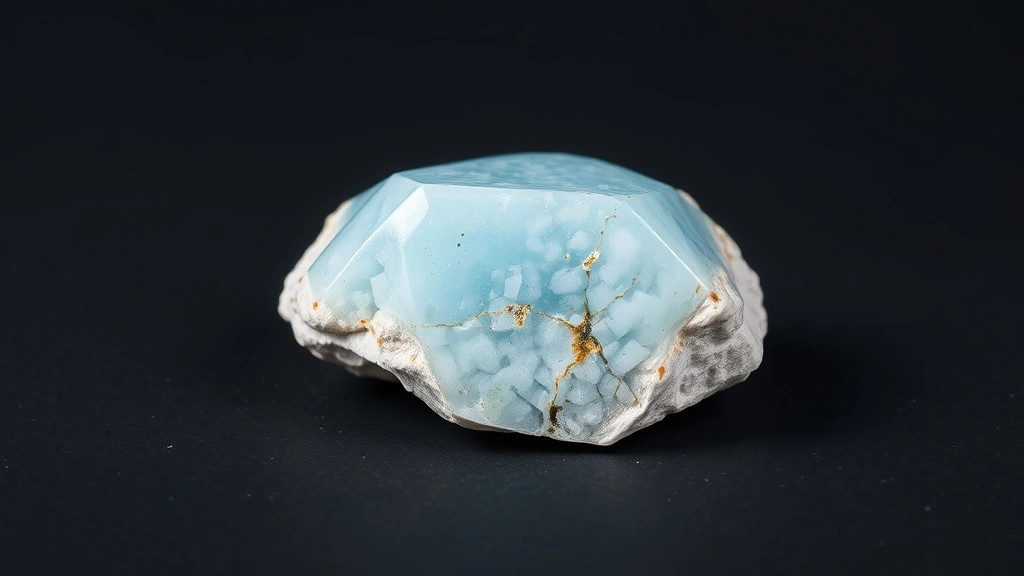
Larimar belongs to the pectolite group, a hydrated calcium-sodium silicate mineral. It is classified strictly as a Natural Mineral / Crystal, formed through hydrothermal alteration. This geological origin distinguishes it from synthetic glass or dyed stones. Its unique formation process creates the characteristic blue coloration found in high-quality specimens.
What is Larimar Gemstone? Geological Overview & Definition
Larimar is exclusively found in the Bahama Islands, specifically on the island of Hispaniola. It forms in hydrothermal veins within volcanic rock, where seawater interacts with basalt. This unique environment allows for the specific cation substitution that produces its blue color. No other location on Earth produces this gemstone variety.
The stone is prized for its sky-blue to turquoise color range, which varies based on manganese content. High-quality specimens display a mottled pattern resembling ocean waves. This natural color zoning is a key identifier for authentic larimar. Gemologists use this visual signature to distinguish it from imitations.
Larimar Gemstone Chemical Composition & Crystallographic Properties
Larimar crystallizes in the Triclinic system, characterized by unequal axes and non-right angles. Its chemical formula is NaCa₂Si₃O₈(OH), indicating a complex silicate structure. The lattice features a chain-like arrangement of silicon-oxygen tetrahedra. This triclinic symmetry dictates its cleavage and fracture patterns.
The blue coloration arises from chromophore centers involving manganese ions substituting for calcium. This cation substitution creates the distinct azure tones seen in gem-quality material. The mineral has a specific gravity of 2.84 to 2.90. Its refractive index ranges from 1.594 to 1.642, contributing to its vitreous luster.
Larimar is chemically sensitive to acids and strong alkaline solutions. Prolonged exposure can damage the surface and alter the crystal structure. It is also susceptible to thermal shock due to its moderate hardness. Proper care ensures the longevity of the pectolite lattice.
The mineral exhibits birefringence due to its anisotropic crystal structure. This optical property allows light to split into two rays. The Triclinic nature means it lacks high symmetry, affecting its sparkle. Understanding these properties helps in accurate identification and valuation.
| Property | Specification |
|---|---|
| Mineral Group | Natural Mineral / Crystal |
| Chemical Formula | NaCa₂ Si₃ O₈ (OH) |
| Mohs Hardness | 4.5 – 5 |
| Crystal System | Triclinic |
| Specific Gravity (Density) | 2.84 – 2.90 |
| Refractive Index | n α = 1.594 – 1.610 n β = 1.603 – 1.614 n γ = 1.631 – 1.642 |
| Color & Optical Properties | Natural Larimar Gemstone color spectrum and optical dispersion |
| Primary Mining Localities | Global primary localities |
| Water & Chemical Resistance | High (Safe for gentle water washing) |
| Chakra Alignment (Traditional) | Throat Chakra, Heart Chakra |
| Zodiac Affinity (Traditional) | Pisces, Cancer |
| Symbolic Meaning (Traditional) | Emotional balance, calmness, and protection from negative energy |
Larimar Gemstone Varieties & Color Spectrum
Larimar exhibits a unique chromatic range derived from trace manganese impurities within its pectolite structure. The most coveted specimens display a vivid, electric blue hue that commands premium market prices. This intense coloration results from optimal manganese oxidation states during the mineral’s formation.
Vivid Blue Larimar
This top-grade variety features a saturated, oceanic blue with minimal white veining. It typically forms in the uppermost layers of the deposit where oxidation is most pronounced. Collectors prize these stones for their uniform color saturation and clarity.
Sky Blue Larimar
Characterized by a lighter, pastel azure tone, this variety is more common than its vivid counterpart. It often contains subtle white fibrous inclusions that create a cloudy, ethereal appearance. The pectolite crystal lattice remains intact, preserving the stone’s characteristic texture.
White and Pale Blue Larimar
This lower-grade variety appears almost milky with faint hints of blue. It forms in zones with less manganese infiltration, resulting in a softer visual impact. While less valuable, it remains popular for bead carvings and large decorative pieces.
Greenish-Blue Larimar
Some specimens exhibit a distinct teal or turquoise tint due to varying mineral impurities. This morph is rarer and often confused with lower-quality turquoise by untrained buyers. The triclinic crystal system still dictates its internal structure and luster.
Mottled or Banded Larimar
These stones display irregular patterns of blue and white, resembling marble or sea foam. The banding results from fluctuating manganese concentrations during the slow cooling of the host rock. Such inclusion patterns make each piece unique and highly sought after by artists.
Where is Larimar Gemstone Found? Geological Mining & Extraction
Larimar is exclusively found in the Bahama Islands, specifically on the island of Hispaniola. It occurs in pegmatitic veins within limestone host rocks, formed by hydrothermal activity. These deposits are located in the Barahona province of the Dominican Republic.
Extraction is primarily conducted through open-pit mining methods in the southern regions. The stone is carefully separated from the surrounding calcite matrix to preserve its integrity. Strict regulations now govern mining to prevent over-extraction and environmental degradation.
Historical Significance & Cultural Lore of Larimar Gemstone
Indigenous Taíno people revered larimar as a sacred stone, believing it held the spirit of the sea. Archaeological evidence suggests it was used in ceremonial jewelry and burial rites. The mineral’s discovery by Western science in 1916 marked the beginning of its global recognition.
Modern lore associates larimar with emotional healing and protection from negative energies. It is often linked to the throat chakra, promoting clear communication and calmness. This cultural significance continues to drive its popularity in contemporary metaphysical practices.
Modern Uses & Jewelry Applications of Laraylor Gemstone
Larimar is most often cut as a smooth cabochon to showcase its characteristic sky‑blue mottling, though skilled lapidaries also produce limited faceted pieces for rings and pendants. The stone’s relatively low Mohs hardness (4.5‑5) makes it ideal for ornamental carving, allowing artisans to fashion beads, brooches, and decorative inlays without risking fracture. Contemporary designers favor Larimar for its soothing hue, integrating it into beach‑themed collections, luxury watches, and high‑end couture accessories.
- Cabochon pendants and earrings for a classic, polished look
- Faceted rings and cufflinks that highlight light play
- Carved figurines, beads, and inlays for artisanal décor
- Custom watch dials and cocktail‑shaker accents
Metaphysical Properties & Traditional Meaning of Larimar Gemstone
According to historical traditions and metaphysical lore, Larimar is revered as a stone of emotional balance and calmness, believed to soothe turbulent feelings and promote inner peace. Practitioners claim it acts as a protective shield against negative energy, encouraging clear communication and heartfelt expression. Its gentle blue tones are said to resonate with the sea, fostering a sense of tranquility and spiritual renewal.
Which Chakra and Zodiac Signs Align with Larimar Gemstone?
Larimar is expressly linked to the Throat Chakra, where it is thought to enhance verbal articulation and authentic self‑expression. Simultaneously, it vibrates with the Heart Chakra, supporting compassion, empathy, and the opening of emotional channels.
In astrology, Larimar’s energy is synchronized with the water signs Pisces and Cancer. These signs are associated with intuition, nurturing, and emotional depth, mirroring the stone’s reputed ability to nurture the soul and deepen intuitive insight.
How to Identify Real vs. Fake Larimar Gemstone
Artificial imitations of Larimar include dyed glass, polymer resins, and low‑grade synthetic stones that mimic its blue marbling. Some replicas are treated with surface coatings to imitate the natural frosted appearance, while others are simply painted over common minerals. Distinguishing genuine Larimar requires careful observation of its weight, texture, and internal characteristics.
Practical At-Home Authenticity Tests
- Temperature Test (Thermal Feel): Real Larimar feels cool to the touch and retains that coolness longer than glass or plastic, which quickly warm to skin temperature.
- Specific Gravity & Weight Test: With a density of 2.84‑2.90 g/cm³, genuine Larimar feels noticeably heavier than glass of the same size; a simple water‑displacement test can confirm this range.
- Scratch & Hardness Test (Mohs Comparison): Using a steel nail (hardness ~5.5) will not leave a permanent scratch on authentic Larimar, whereas glass or softer imitations may show visible marks.
- Microscopic & Loupe Inspection (Internal Inclusions): Under 10×–30× magnification, natural Larimar displays fine, irregular inclusions and a subtle internal cloudiness; synthetic glass typically appears uniformly clear or shows bubble patterns inconsistent with the stone’s natural texture.
Larimar Gemstone Valuation Factors, Grading & Pricing
Color Saturation is the foremost driver of price; stones displaying vivid sky‑blue to deep turquoise hues command the highest premiums. Uniform tone across the entire cabochon signals consistent trace element distribution, while a bright, glassy luster enhances visual impact. Minor surface blemishes are tolerated if the overall chromatic intensity remains strong.
Carat Weight influences value, but only when paired with excellent facet symmetry and minimal matrix intrusion. Larger specimens (over 5 ct) are rarer and thus more expensive, yet a heavy stone riddled with dark inclusions can be less valuable than a smaller, flawless piece. Transparent zones free of mineral “clouds” boost brilliance and market appeal.
Geographical Provenance Premium rewards stones sourced from the Dominican Republic’s Bahía de las Águilas, the only legal mining area for authentic larimar. Provenance certificates add credibility and often raise wholesale prices by 10‑20 %. Retail trends show a steady 5‑8 % annual increase, reflecting growing demand among collectors and metaphysical enthusiasts.
How to Clean and Care for Larimar Gemstone
Physical cleaning should be gentle: use warm soapy water and a soft cloth to remove dust and oils from the surface. Rinse briefly with lukewarm water, then pat dry with a lint‑free towel; never soak the stone for extended periods. Avoid ultrasonic cleaners entirely, as the triclinic crystal lattice can fracture under high‑frequency vibrations.
Cleansing and Recharging Larimar Gemstone (Energetic Care)
For energetic renewal, place the stone on a selenite charging plate for several hours; the neutral selenite will lift stagnant energies without altering the mineral’s chemistry. Alternatively, expose larimar to moonlight on a clear night, allowing lunar photons to restore its calm, soothing vibration.
A second safe method is smoke smudging with white sage or palo santo; pass the stone through the gentle plume to disperse negative impressions. Ensure the smoke is cool and the stone is not immersed in any liquid, preserving its delicate hydroxyl‑bearing structure.
Frequently Asked Questions About Larimar Gemstone
What is the chemical composition of larimar?
Larimar is a blue variety of pectolite with the formula NaCa₂Si₃O₈(OH). This unique mineral forms through the alteration of basaltic rock by hydrothermal fluids. Its distinctive color arises from trace amounts of copper within the crystal lattice. Understanding this chemical structure helps explain its specific physical properties.
How hard is larimar on the Mohs scale?
Larimar rates between 4.5 and 5 on the Mohs hardness scale. This makes it softer than quartz and more susceptible to scratching during daily wear. You should store it separately from harder gemstones to prevent surface damage. Its moderate hardness requires careful handling for long-term preservation.
Can I wear larimar in the shower?
No, you should avoid prolonged water soaking for larimar. While brief exposure is generally safe, extended contact can weaken the stone’s structural integrity over time. It is best to remove jewelry before bathing or swimming. This water sensitivity ensures the gemstone remains vibrant and intact.
Is it safe to use an ultrasonic cleaner?
You must avoid ultrasonic cleaners to prevent structural fractures in larimar. The high-frequency vibrations can cause internal stress and break the delicate crystal bonds. Instead, use warm soapy water and a soft cloth for gentle cleaning. This manual cleaning method is the safest approach for this gem.
Which zodiac signs are compatible with larimar?
Larimar is traditionally aligned with the zodiac signs Pisces and Cancer. Both water signs share an emotional depth that resonates with the stone’s calming energy. Wearing this gem may enhance intuition and emotional balance for these individuals. This astrological connection is widely recognized in metaphysical practices.
Which chakras does larimar correspond to?
Larimar primarily activates the Throat Chakra and Heart Chakra. These energy centers govern communication, self-expression, and emotional well-being. The stone’s soothing blue hues are believed to harmonize these specific chakras. This chakra alignment supports holistic spiritual practices and meditation.
What is the crystal system of larimar?
Larimar crystallizes in the triclinic system, which lacks symmetry axes. This complex structure contributes to its unique optical properties and color variations. The triclinic arrangement allows for the distinct banding patterns seen in high-quality specimens. Recognizing this system aids in accurate mineral identification.
How should I store my larimar jewelry?
Store larimar in a soft pouch or lined jewelry box to prevent scratches. Given its moderate hardness, it is vulnerable to abrasion from harder materials. Keep it away from direct sunlight to preserve its delicate blue coloration. Proper storage conditions are essential for maintaining the stone’s aesthetic appeal.