
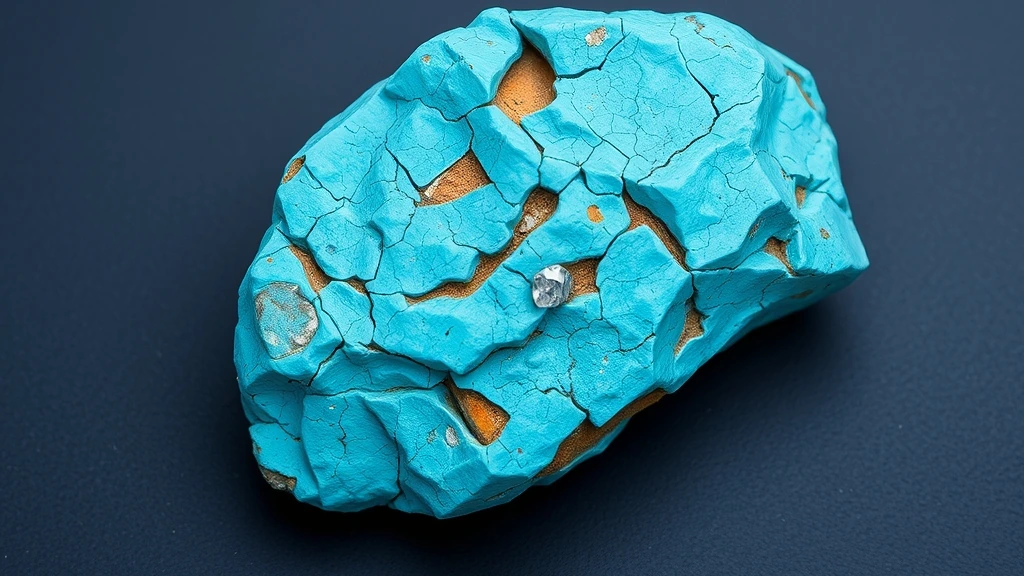
Turquoise belongs to the phosphate mineral group, specifically classified as a basic copper aluminum phosphate. This geological classification highlights its complex ionic structure, which distinguishes it from simpler silicate or carbonate minerals. The stone forms through hydrothermal processes, where copper-rich fluids interact with aluminum-bearing host rocks. Such conditions typically occur in arid environments, facilitating the precipitation of the mineral within vugs and fractures. Consequently, turquoise often exhibits a cryptocrystalline texture that lacks visible individual crystals to the naked eye.
What is Turquoise? Geological Overview & Definition
Turquoise is defined as a secondary mineral formed by the alteration of copper-bearing sulfides. It frequently occurs in cryptocrystalline masses or nodular aggregates rather than discrete crystals. This formation process is closely linked to oxidized zones in copper deposits, where groundwater circulates through porous rock. The resulting material is often porous, requiring stabilization treatments to enhance its durability for gemological applications.
The stone’s geological significance lies in its association with specific host rocks, such as granite or limestone. Hydrothermal activity drives the chemical reactions that precipitate turquoise from solution. Geologists identify its origin by examining the matrix, which may include pyrite, quartz, or calcite. Understanding these formation conditions helps experts distinguish natural turquoise from synthetic imitations or altered varieties.
Turquoise Chemical Composition & Crystallographic Properties
Turquoise crystallizes in the triclinic system, though it rarely forms distinct macroscopic crystals. Instead, it typically appears as fine-grained, cryptocrystalline masses or nodular aggregates. The lattice structure is complex, involving a three-dimensional network of phosphate tetrahedra and hydroxyl groups. This arrangement contributes to the mineral’s characteristic opacity and waxy luster.
The ideal chemical formula is CuAl₆(PO₄)₄(OH)₈·4H₂O, representing a hydrated copper aluminum phosphate. Cation substitution can occur, where iron or magnesium replaces aluminum, subtly altering the stone’s color and density. The primary chromophore is the copper ion, which absorbs specific wavelengths of light to produce the blue spectrum. Variations in iron content often shift the hue toward green or turquoise tones.
Turquoise exhibits significant acid sensitivity, reacting with strong acids to release phosphate and copper ions. This chemical reactivity is a key diagnostic property used in laboratory identification. Thermal behavior is also critical, as heating can dehydrate the mineral, causing color changes or structural degradation. Excessive heat may drive off water molecules, leading to a duller appearance or even fracturing of the stone.
The mineral’s refractive index ranges from 1.610 to 1.650, indicating a relatively high optical density. Its specific gravity typically falls between 2.60 and 2.90, depending on porosity and impurity content. These physical properties, combined with its triclinic symmetry, provide a robust framework for gemological analysis. Precise measurement of these parameters ensures accurate identification and valuation in the gem trade.
| Property | Specification |
|---|---|
| Mineral Group | Phosphates (Basic Copper Aluminum Phosphate) |
| Chemical Formula | CuAl₆(PO₄)₄(OH)₈·4H₂O (Hydrated Copper Aluminum Phosphate) |
| Mohs Hardness | 5.0 – 6.0 |
| Crystal System | Triclinic (Cryptocrystalline mass or nodular aggregates) |
| Specific Gravity (Density) | 2.60 – 2.90 |
| Refractive Index | 1.610 – 1.650 |
| Color & Optical Properties | Natural Turquoise color spectrum and optical dispersion |
| Primary Mining Localities | Iran (Nishapur), USA (Arizona, Nevada), Egypt (Sinai), China (Hubei) |
| Water & Chemical Resistance | Sensitive & Porous (Absorbs moisture, perfumes, and oils; discolors to green) |
| Chakra Alignment (Traditional) | Throat Chakra (Vishuddha) |
| Zodiac Affinity (Traditional) | Sagittarius, Pisces, Scorpio |
| Symbolic Meaning (Traditional) | Truthful communication, protection amulet, wisdom, and serenity |
Turquoise Varieties & Color Spectrum
Persian Turquoise
Formed in the arid basins of Iran’s Neyriz district, Persian turquoise precipitates from copper‑rich groundwater percolating through limestone and sandstone. The stone exhibits a vivid sky‑blue hue with a subtle matrix of white to gray veins, a result of fine‑grained calcite inclusions. Its consistent color and high translucency make it the most prized and commercially valuable variety, though large flawless pieces are scarce.
American Southwest Turquoise
The classic American Southwest turquoise originates from the copper deposits of Arizona, New Mexico, and Nevada, where it crystallizes in porous sandstone and volcanic tuff. Typical colors range from robin‑egg blue to deep teal, often overlaid with a characteristic spiderweb matrix of dark brown or black veins. Mining by Native American artisans has produced iconic jewelry, yet the finest, matrix‑free stones remain rare and command premium prices.
Chinese Turquoise (Xinjiang)
In the Xinjiang region of western China, turquoise forms within weathered granite and basaltic host rocks under oxidizing conditions. The resulting stones display a muted greenish‑blue palette, frequently interspersed with bright green or yellowish patches caused by iron oxide and manganese inclusions. While abundant, high‑quality, uniformly colored material is limited, making premium Chinese turquoise a sought‑after export.
Egyptian Turquoise (Sinai)
Egyptian turquoise is extracted from the phosphate‑rich sedimentary layers of the Sinai Peninsula, where ancient mining shafts still dot the landscape. The mineral shows a soft, pastel blue often veined with white calcite and occasional reddish iron stains, reflecting the region’s oxidizing groundwater. Its historical provenance adds cultural cachet, yet the supply is extremely limited, rendering authentic Egyptian pieces highly collectible.
Tibetan Turquoise (Ladakh)
High‑altitude deposits in Ladakh, India, yield turquoise that forms in metamorphosed limestone intersected by copper‑bearing hydrothermal fluids. The stones are distinguished by a deep, almost indigo blue with a dense, dark matrix of magnetite inclusions, giving a dramatic contrast. Because extraction occurs in remote, rugged terrain, Ladakh turquoise is both rare and prized for its unique visual depth.
Mexican Turquoise (Sonora)
In the copper belts of Sonora, Mexico, turquoise precipitates within porous volcanic ash altered by acidic groundwater. The color spectrum spans bright turquoise to teal, often highlighted by a white to light gray matrix that can form striking “starburst” patterns. Though production volumes are moderate, the distinctive matrix and vibrant hues secure its place in contemporary gemstone markets.
Where is Turquoise Found? Geological Mining & Extraction
Turquoise typically occurs as a cryptocrystalline mass within secondary deposits, filling fractures and cavities of host rocks such as limestone, sandstone, and volcanic tuff. The mineral precipitates from copper‑laden, phosphate‑rich solutions that percolate through these permeable strata, often accompanied by hydroxyl‑bearing minerals that stabilize its hydrated structure.
Major mining districts include Iran’s Neyriz basin, the American Southwest (Arizona, New Mexico, Nevada), China’s Xinjiang province, Egypt’s Sinai Peninsula, India’s Ladakh region, and Mexico’s Sonora copper belt. Extraction methods range from traditional open‑pit and shaft mining to artisanal hand‑picking, with careful washing and sorting required to preserve the fragile hydrous copper‑aluminum phosphate crystals.
Historical Significance & Cultural Lore of Turquoise
Turquoise has adorned the regalia of ancient Egypt, Persia, and the Americas, appearing in burial masks, inlay work, and ceremonial jewelry that signified divine protection and status. Archaeological finds such as the Egyptian pharaohs’ burial chambers, the Persian royal seals, and the Aztec pectorals demonstrate its long‑standing role as a sacred amulet and a marker of elite identity.
In esoteric traditions, turquoise is linked to the Throat Chakra (Vishuddha), fostering truthful communication, wisdom, and serenity across cultures from Turkish folklore to Native American spirituality. Its enduring allure continues to inspire modern designers, while its mythic reputation as a protective talisman persists in contemporary metaphysical practices.
Modern Uses & Jewelry Applications of Turquoise
Turquoise is prized for its vivid blue‑green hue and is routinely fashioned into cabochons, beads, and in‑setting stones for rings, pendants, and earrings. Lapidary artisans often employ a cabochon cut to showcase the stone’s natural matrix, while skilled faceting can produce brilliant, modern designs. Ornamental carving also thrives, producing intricate cameos, inlays, and decorative plaques for luxury interiors.
- Cabochon settings highlight the stone’s color and matrix.
- Faceted cuts are used for contemporary high‑gloss jewelry.
- Carved cameos and inlays serve ornamental and architectural purposes.
Metaphysical Properties & Traditional Meaning of Turquoise
According to historical traditions and metaphysical lore, turquoise is revered as a guardian of truth and a conduit for clear communication. It is believed to calm emotional turbulence, fostering serenity and encouraging honest self‑expression. Many cultures also attribute protective qualities, viewing the stone as an amulet against negativity and misfortune.
Which Chakra and Zodiac Signs Align with Turquoise?
Turquoise resonates most strongly with the Throat Chakra (Vishuddha), supporting vocal confidence and the articulation of inner wisdom. When this chakra is balanced, wearers often report heightened clarity in speech and a deeper sense of personal authenticity.
In astrology, turquoise is traditionally linked to Sagittarius, Pisces, and Scorpio. These signs are said to benefit from the stone’s stabilizing energy, which amplifies adventurous optimism, intuitive depth, and transformative insight respectively.
How to Identify Real vs. Fake Turquoise
Artificial imitations of turquoise include dyed howlite, plastic polymers, and synthetic glass that mimic its color but lack the stone’s characteristic matrix and density. Synthetic turquoise, produced in labs, may replicate the chemical formula but often displays a uniform, glassy appearance. Dyed replicas are typically lighter, with a surface that feels overly smooth and may bleed color when exposed to water.
Practical At-Home Authenticity Tests
- Temperature Test (Thermal Feel): Natural turquoise feels cool to the touch and retains that coolness longer than glass or plastic, which quickly warm to skin temperature.
- Specific Gravity & Weight Test: Real turquoise has a density of 2.60‑2.90 g/cm³; it feels noticeably heavier than dyed howlite or plastic of the same size.
- Scratch & Hardness Test (Mohs Comparison): With a hardness of 5‑6, turquoise can be scratched by a steel file but not by a copper coin; glass (hardness ~5.5) may show similar resistance, so combine with other tests.
- Microscopic & Loupe Inspection (Internal Inclusions): Under 10× magnification, authentic turquoise reveals a webbed matrix of veins and occasional mineral inclusions, whereas fakes often appear uniformly colored or display bubbles typical of glass.
Turquoise Valuation Factors, Grading & Pricing
Market value hinges primarily on Color Saturation, where deep, uniform sky-blue hues command the highest premiums. Stones exhibiting vibrant, even pigmentation without significant veining reflect superior copper content and geological stability. This visual vibrancy is further enhanced by a natural, waxy luster that signals proper hydration and preservation.
Crystal Size & Weight (Grams) directly influences pricing, as larger, unfractured specimens are rarer and more desirable. Raw material is valued by gram weight and dimensional integrity, while tumbled stones are assessed by polish quality and surface smoothness. Natural matrix inclusions, such as spiderweb patterns, add unique character but may reduce value if they compromise structural stability.
Ethical Sourcing & Locality Premium significantly impacts pricing in both holistic and collector markets. Renowned origins like Sleeping Beauty or Kingman often carry higher price tags due to their historical reputation and distinct aesthetic qualities. Buyers increasingly prioritize transparency in supply chains, ensuring that extraction methods respect environmental standards and local communities.
How to Clean and Care for Turquoise
As a porous phosphate mineral, turquoise is highly sensitive to moisture, perfumes, and body oils that can cause permanent discoloration. You must avoid water soaking, ultrasonic baths, and harsh chemicals to preserve its delicate sky-blue matrix and structural integrity. Exposure to liquids can penetrate the stone, leading to internal staining and a loss of its characteristic vibrant hue.
Gently dust the specimen using a completely dry, soft microfiber cloth or a camel-hair brush to remove surface dust. Store the stone in a low-humidity environment away from liquids, heat sources, and direct sunlight to prevent dehydration or cracking. Regular, dry maintenance ensures the mineral retains its natural luster and prevents the absorption of external contaminants.
Cleansing and Recharging Turquoise (Energetic Care)
For holistic energetic maintenance, place the stone on a selenite charging slab overnight to absorb gentle lunar energy. This dry method allows the crystal lattice to rest and recharge without exposure to moisture or thermal stress. Avoid direct intense sunlight, as prolonged UV exposure can fade the stone’s natural pigmentation and degrade its structural stability.
Alternatively, use herbal smudging with sage or palo santo to clear stagnant energy from the stone’s surface. Hold the turquoise near the rising smoke for a few minutes, allowing the aromatic vapors to interact with its porous surface safely. This ritualistic approach respects the mineral’s physical limitations while supporting its perceived metaphysical properties.
Frequently Asked Questions About Turquoise
Is turquoise safe to wear in the shower?
No, turquoise should not be exposed to water. Its porous crystal structure readily absorbs moisture, perfumes, and oils, which can cause the vivid sky‑blue matrix to turn green or become dull. Prolonged contact with water or steam accelerates this discoloration, so removal before bathing is advisable.
How should I clean a turquoise necklace?
Clean turquoise with a dry, soft microfiber cloth or a gentle brush. Because it is a hydrated copper‑aluminum phosphate, water and harsh chemicals can infiltrate the micro‑pores, leading to staining and loss of color. Light dusting removes surface debris without compromising the stone’s integrity.
Can I use an ultrasonic cleaner on turquoise jewelry?
Ultrasonic cleaning is not recommended for turquoise. The mineral’s cryptocrystalline, porous nature makes it vulnerable to the high‑frequency vibrations and liquid immersion of ultrasonic baths, which can erode the delicate matrix and alter its characteristic hue. Manual dry cleaning is the safest approach.
What zodiac signs are associated with turquoise?
Turquoise is linked to Sagittarius, Pisces, and Scorpio. These signs are traditionally believed to benefit from the stone’s protective and communicative energies, aligning with the astrological symbolism of truth‑seeking and emotional depth. Wearing turquoise is thought to enhance these traits for the aligned signs.
Which chakra does turquoise correspond to?
Turquoise resonates with the Throat Chakra (Vishuddha). This chakra governs expressive communication and authenticity, and the stone’s blue‑green color is said to amplify clear speech and honest self‑expression. Placement on the throat area is common in meditation practices.
Why does turquoise sometimes turn green?
Green discoloration occurs when turquoise absorbs moisture and oils. The hydrous phosphate lattice can incorporate water molecules, altering the light‑scattering properties and shifting the hue toward green. Keeping the stone dry and free from cosmetics helps preserve its original blue tone.
Is turquoise a hard suitable for daily wear?
Turquoise rates 5–6 on the Mohs scale, making it moderately hard but still vulnerable to scratches. Its triclinic crystal system yields a relatively soft, porous material, so daily wear is acceptable if the piece is handled gently and protected from abrasive contact.
Can turquoise be treated to improve its color?
Many turquoise stones undergo stabilization or impregnation to enhance durability and color. Treatments fill the microporous channels with polymers or resins, reducing water absorption and increasing hardness, but they must be disclosed, as untreated turquoise retains its natural, more delicate characteristics.