
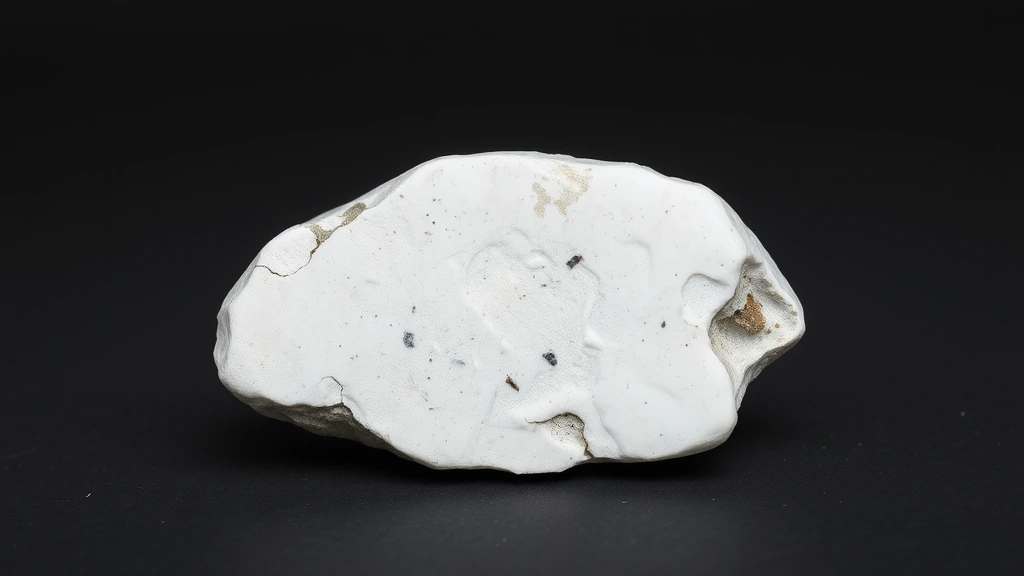
Howlite belongs to the Natural Mineral / Crystal group, forming in igneous and metamorphic environments. It is distinct for its porous, fibrous texture and lack of natural color. This geological origin influences its physical stability and susceptibility to environmental changes. Understanding its classification is essential for proper identification and care.
What is Howlite Gemstone? Geological Overview & Definition
Howlite is a hydrated calcium borosilicate that forms in contact metamorphic zones. It often occurs alongside calcite and quartz in igneous rock formations. Its porous structure allows for easy absorption of dyes and liquids. This characteristic makes it unique among common gemstones.
The stone is prized for its fibrous texture and distinct veining patterns. Unlike many gemstones, it lacks significant crystal luster in its raw state. Proper identification requires distinguishing it from lookalikes like calcite. Its geological context ensures consistent physical properties for lapidary work.
Howlite Gemstone Chemical Composition & Crystallographic Properties
Howlite crystallizes in the Monoclinic system, featuring a complex lattice structure. Its chemical formula is Ca₂B₅SiO₉(OH)₅, indicating high water content. This hydration makes the mineral sensitive to heat and acids. Thermal treatment can cause dehydration and structural instability.
The cation substitution of calcium within the lattice affects its density. Values range from 2.53 to 2.59 g/cm³, typical for borates. Acid sensitivity is a critical factor, as strong acids dissolve the structure. This property necessitates careful handling during cleaning and maintenance.
Color centers in howlite are generally absent in natural specimens. Most commercial colors result from artificial dyeing of the porous matrix. The refractive index ranges from 1.583 to 1.600, indicating low dispersion. This optical property contributes to its soft, matte appearance when polished.
Thermal behavior reveals that high temperatures drive off hydroxyl groups. This process alters the crystal structure and reduces the stone’s value. Stability is best maintained at room temperature and moderate humidity. Avoiding extreme conditions preserves the integrity of the monoclinic lattice.
| Property | Specification |
|---|---|
| Mineral Group | Natural Mineral / Crystal |
| Chemical Formula | Ca₂ B₅ SiO₉ (OH)₅ |
| Mohs Hardness | 3.5 |
| Crystal System | Monoclinic |
| Specific Gravity (Density) | 2.53 – 2.59 |
| Refractive Index | n α = 1.583 – 1.586 n β = 1.596 – 1.598 n γ = 1.600 |
| Color & Optical Properties | Natural Howlite Gemstone color spectrum and optical dispersion |
| Primary Mining Localities | Global primary localities |
| Water & Chemical Resistance | High (Safe for gentle water washing) |
| Chakra Alignment (Traditional) | Crown Chakra, Third Eye Chakra |
| Zodiac Affinity (Traditional) | Virgo, Pisces |
| Symbolic Meaning (Traditional) | Mental clarity, calming the mind, and enhancing intuition |
Howlite Gemstone Varieties & Color Spectrum
Natural howlite is predominantly white, but its visual character shifts dramatically based on trace impurities and mineral inclusions. The stone’s aesthetic value often depends on the presence of secondary minerals that create unique veining patterns. Understanding these variations is crucial for accurate identification and valuation in the gem trade.
Pure White Howlite
This variety exhibits a clean, milky-white appearance with minimal visible inclusions or veining. It forms in hydrothermal veins where pure calcium borosilicate precipitates without significant contamination. Such specimens are highly sought after for carving and beadwork due to their uniform surface. The lack of color makes it an ideal canvas for dyed treatments.
Blue Veined Howlite
Distinctive blue or green veins run through the white matrix, created by copper or iron impurities. These secondary mineral inclusions form during the late stages of crystal growth in the host rock. This variety is often mistaken for turquoise, but its monoclinic crystal structure differs significantly. The contrast between the white base and colored veins enhances its visual appeal.
Yellowish Howlite
A warm, creamy yellow hue characterizes this morph, resulting from trace amounts of sulfur or organic matter. It typically occurs in deposits where the surrounding geology contains higher levels of oxidized iron compounds. The color is usually subtle and evenly distributed throughout the stone. This variety is less common than the pure white form but remains popular for jewelry.
Mottled Howlite
This type features irregular patches of gray, brown, or black within the white base. These inclusion-rich zones indicate complex geological conditions during formation. The mottled pattern can resemble marble or agate, adding textural interest to the stone. It is often used in decorative objects where unique patterning is desired.
Dyed Howlite
While not a natural variety, dyed howlite is a major trade variety with vibrant blue or green colors. The dye penetrates the porous structure, mimicking the appearance of turquoise or lapis lazuli. Porous texture allows for deep color saturation, making it a cost-effective alternative to rarer stones. Buyers must distinguish between natural and treated specimens to ensure authenticity.
Where is Howlite Gemstone Found? Geological Mining & Extraction
Howlite primarily occurs in hydrothermal veins within limestone or dolomite host rocks. These deposits form when hot, mineral-rich fluids cool and precipitate within fractures. The stone is often found alongside other borates, such as ulexite or colemanite. This geological association helps geologists identify potential mining sites.
The most significant commercial deposits are located in Canada, particularly in the town of Howley, Ontario. Other notable sources include the United States, Mexico, and Afghanistan. Mining operations typically involve open-pit extraction followed by careful sorting and cleaning. The stone’s low Mohs hardness of 3.5 requires gentle handling during extraction to prevent breakage.
Historical Significance & Cultural Lore of Howlite Gemstone
Ancient civilizations, including the Maya and Aztecs, used howlite for ceremonial beads and jewelry. Archaeological findings in Mesoamerica reveal its importance in trade networks and spiritual practices. The stone was often carved into intricate designs, reflecting its cultural significance. Its availability in large deposits made it accessible for widespread use.
In modern times, howlite is associated with mental clarity and calming the mind. It is frequently used in meditation and mindfulness practices to enhance intuition. The stone’s gentle energy is believed to promote balance and focus. This enduring appeal ensures its continued popularity in contemporary wellness markets.
Modern Uses & Jewelry Applications of Howlite Gemstone
Howlite’s softness (Mohs 3.5) makes it ideal for lapidary cutting and polishing, allowing artisans to produce smooth cabochons or modest facets without risking fracture. Its opaque, veined white surface is frequently dyed to mimic turquoise, enhancing its market appeal in fashion jewelry. In addition to wearable pieces, skilled carvers create ornamental objects such as figurines, vases, and decorative inlays for furniture, capitalizing on the stone’s ease of carving and striking contrast when stained.
- Cabochon pendants and earrings, often dyed teal or blue
- Simple faceted rings for a subtle sparkle
- Carved miniatures, beads, and inlay work for luxury accessories
Metaphysical Properties & Traditional Meaning of Howlite Gemstone
According to historical traditions and metaphysical lore, Howlite is revered for fostering mental clarity and soothing turbulent emotions, acting as a calming anchor during stressful periods. Practitioners claim the stone gently calms the mind, reducing anxiety while encouraging honest communication and emotional expression. Its reputed ability to enhance intuition aligns it with contemplative practices, making it a favored talisman for meditation and inner‑work.
Which Chakra and Zodiac Signs Align with Howlite Gemstone?
Howlite resonates most strongly with the Crown Chakra, supporting spiritual connection and higher‑mind awareness, while also stimulating the Third Eye Chakra, which is associated with insight and intuitive perception. When placed on these energy centers, the stone is believed to clear mental fog and promote a sense of inner peace.
In astrology, Howlite is traditionally linked to Virgo and Pisces. Virgo’s analytical, earth‑grounded nature finds balance in Howlite’s calming influence, whereas Pisces’ watery, intuitive disposition is amplified by the stone’s ability to sharpen psychic receptivity. Together, these alignments underscore Howlite’s role as a bridge between rational thought and subtle intuition.
How to Identify Real vs. Fake Howlite Gemstone
Artificial imitations of Howlite include dyed quartz, synthetic glass, and resin composites that mimic its characteristic white‑with‑veins appearance. These substitutes often lack the stone’s distinctive monoclinic crystal structure and have a noticeably higher density. Recognizing genuine Howlite involves observing subtle physical cues and performing simple tests that reveal differences in weight, hardness, and internal features.
Practical At-Home Authenticity Tests
- Temperature Test (Thermal Feel): Real Howlite feels cool to the touch and retains that coolness longer than glass or resin, which quickly warm to skin temperature.
- Specific Gravity & Weight Test: With a density of 2.53 – 2.59 g/cm³, authentic Howlite feels lighter than most dyed quartz (≈2.65 g/cm³); a simple water‑displacement test can confirm the range.
- Scratch & Hardness Test (Mohs Comparison): Using a steel nail (Mohs 5.5) or a copper coin (Mohs 3), a genuine Howlite will be easily scratched by the nail but not by the coin, reflecting its 3.5 hardness.
- Microscopic & Loupe Inspection (Internal Inclusions): Under 10× magnification, natural Howlite shows fine, irregular vein patterns and occasional tiny bubbles; synthetic glass appears uniformly smooth with no natural inclusions.
Howlite Gemstone Valuation Factors, Grading & Pricing
Color Saturation is the foremost driver of price. Stones with a deep, uniform blue‑gray hue command higher premiums than pale or mottled examples. Optical clarity and a subtle, vitreous luster further enhance desirability, while surface blemishes reduce value.
Carat Weight influences market price but is secondary to visual quality. Larger pieces that maintain consistent tone and lack heavy matrix bands are rare and fetch premium rates. Facet symmetry and the presence of inclusions—especially dark calcium carbonate veins—are closely examined; a clean, well‑cut stone commands a higher per‑carat price.
Geographical Provenance Premium can add a noticeable markup, with specimens from the historic mines of Alaska or Turkey often valued above those from lesser‑known locales. Wholesale trends show steady demand for treated or dyed howlite, while retail prices rise when natural, untreated stones are offered with certification. Market fluctuations are modest, reflecting the gemstone’s relative abundance and its popularity in jewelry and metaphysical circles.
How to Clean and Care for Howlite Gemstone
Use warm soapy water and a soft cloth to gently remove dust and surface grime. Rinse briefly with lukewarm water, then pat dry with a lint‑free towel. Avoid ultrasonic cleaners to prevent structural fractures, as howlite’s Mohs hardness of 3.5 makes it vulnerable to vibration‑induced damage.
Cleansing and Recharging Howlite Gemstone (Energetic Care)
Because howlite is water‑soluble, dry energetic cleansing is safest. Pass the stone through smoke smudging from sage or palo santo for a few seconds to disperse stagnant energy without exposing it to moisture.
Alternatively, place the gemstone on a selenite charging plate or under full moonlight overnight. Both methods infuse the stone with gentle, restorative vibrations while respecting its mineral stability.
Frequently Asked Questions About Howlite Gemstone
Is howlite safe to wear in water or rain?
Howlite is water‑sensitive and should not be soaked for long periods. Prolonged exposure to moisture can cause the porous surface to weaken or develop stains, especially on untreated stones. A quick rinse is acceptable, but drying promptly with a soft cloth preserves its monoclinic crystal integrity.
How should I clean my howlite jewelry?
Clean howlite with warm, soapy water and a soft cloth, avoiding ultrasonic cleaners. The gentle method removes oils without stressing the stone’s relatively low Mohs hardness of 3.5. Ultrasonic vibrations can create micro‑fractures, leading to loss of polish or chips over time.
What is the chemical composition of howlite?
Howlite’s formula is Ca₂B₅SiO₉(OH)₅. This calcium‑borate‑silicate structure gives the gem its characteristic white‑gray matrix and contributes to its modest density of 2.53–2.59 g/cm³. The hydroxyl groups make it slightly more reactive to moisture than harder silicates.
Which zodiac signs are associated with howlite?
Howlite aligns with the zodiac signs Virgo and Pisces. Both signs are said to benefit from the stone’s calming energy, supporting mental clarity and emotional balance. In astrological practice, the stone is often used in meditative rituals for these signs.
Which chakras does howlite influence?
Howlite is linked to the Crown Chakra and the Third Eye Chakra. Activation of these energy centers is believed to enhance intuition and spiritual insight, while the stone’s soothing hue helps calm the mind during meditation or mindfulness exercises.
Can howlite be used in jewelry settings despite its softness?
Yes, but it should be set in protective mounts such as bezel or channel settings. Its Mohs hardness of 3.5 makes it prone to scratches, so encasing the gem reduces direct contact with harder surfaces. Regular inspection ensures no chips develop in high‑impact areas.
Does howlite have any notable optical properties?
Howlite exhibits refractive indices nα = 1.583–1.586, nβ = 1.596–1.598, nγ = 1.600. These modest values produce a subtle brilliance without strong fire, making the stone popular for dyed or etched designs where a muted background is desired.
Is howlite suitable for daily wear?
Howlite can be worn daily if cared for properly. Its low hardness and water sensitivity require gentle handling, but with warm soapy cleaning and avoidance of ultrasonic baths, the stone retains its appearance. Pairing it with protective settings further extends its lifespan in everyday use.