
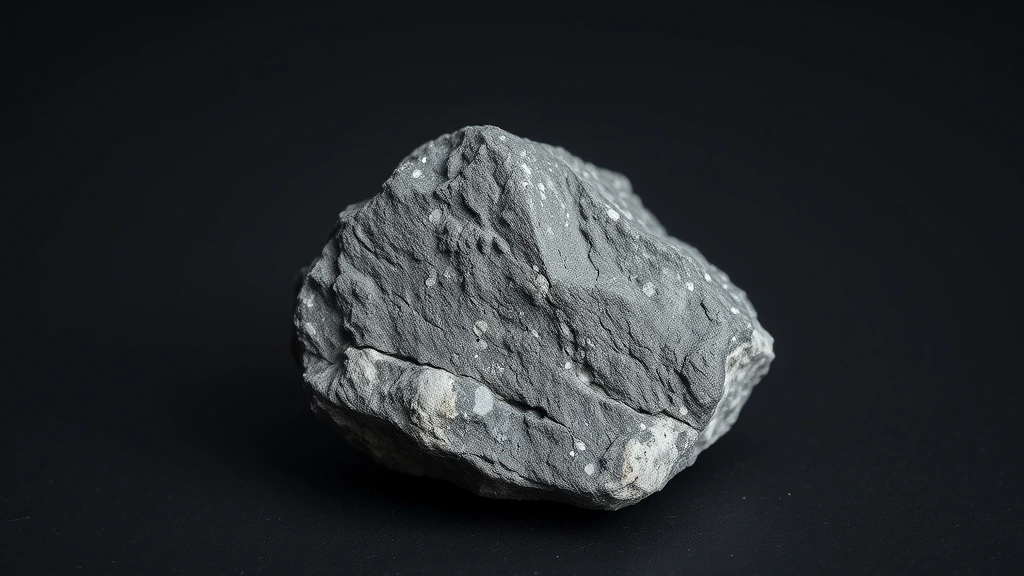
Datolite belongs to the Natural Mineral / Crystal group, forming in low-temperature hydrothermal environments. It typically occurs in cavities within limestone or dolomite, often associated with calcite and quartz. This geological classification highlights its origin in metasomatic processes. The stone’s delicate structure reflects its formation in specific chemical conditions. Understanding its parent group aids in proper identification and care.
What is Datolite Gemstone? Geological Overview & Definition
Datolite is a hydrothermal mineral that forms when hot, mineral-rich fluids interact with carbonate rocks. This process creates unique crystal habits, often appearing as drusy aggregates or distinct prisms. Its formation is strictly linked to low-temperature environments, distinguishing it from high-pressure igneous minerals.
The gemstone is defined by its calcium borosilicate composition and monoclinic symmetry. It is frequently found in association with other secondary minerals like calcite. This geological context is crucial for understanding its physical properties. Proper identification requires noting these specific formation conditions.
Datolite Gemstone Chemical Composition & Crystallographic Properties
Datolite crystallizes in the Monoclinic system, characterized by one right angle and two oblique angles. Its lattice structure features a refractive index ranging from 1.626 to 1.670. This optical property contributes to its characteristic glassy luster. The crystal habit often displays elongated prisms with distinct cleavage.
The chemical formula CaBSiO₄(OH) indicates a complex arrangement of cations and anions. Cation substitution is rare, maintaining the mineral’s structural integrity. However, the presence of hydroxyl groups makes it sensitive to acidic environments. This acid sensitivity requires careful handling during cleaning and storage.
Color variations in datolite stem from chromophore color centers, often involving trace impurities. These subtle inclusions create its signature pastel shades of green, blue, or white. The mineral exhibits thermal behavior that is stable under normal conditions. However, extreme heat can alter its optical properties slightly.
| Property | Specification |
|---|---|
| Mineral Group | Natural Mineral / Crystal |
| Chemical Formula | CaBSiO₄ (OH) |
| Mohs Hardness | 5 to 5.5 |
| Crystal System | Monoclinic |
| Specific Gravity (Density) | 2.96 – 3.00 |
| Refractive Index | n α = 1.626 n β = 1.653 – 1.654 n γ = 1.670 |
| Color & Optical Properties | Natural Datolite Gemstone color spectrum and optical dispersion |
| Primary Mining Localities | Global primary localities |
| Water & Chemical Resistance | High (Safe for gentle water washing) |
| Chakra Alignment (Traditional) | Heart Chakra, Throat Chakra |
| Zodiac Affinity (Traditional) | Taurus, Libra |
| Symbolic Meaning (Traditional) | Emotional balance, nurturing, and spiritual growth |
Datolite Gemstone Varieties & Color Spectrum
Datolite exhibits a diverse range of hues, primarily driven by trace element impurities within its monoclinic crystal lattice. The most common and commercially significant colors include white, green, yellow, and blue. These variations arise from subtle shifts in the CaBSiO₄(OH) chemical structure during formation.
White Datolite
This variety is the most abundant, often appearing as translucent to opaque masses with a waxy luster. It typically forms in hydrothermal veins where silica-rich fluids interact with basic igneous rocks. White datolite is prized for its purity and potential for carvings due to its moderate Mohs hardness of 5 to 5.5.
Green Datolite
Emerald-like green tones result from trace amounts of chromium or iron substituting within the crystal structure. These stones often display a distinct pleochroism, showing different shades when viewed from various angles. Green datolite is rarer than white varieties and is frequently found in association with fluorite and quartz.
Blue Datolite
Rare blue datolite owes its color to copper impurities, creating a striking azure or sky-blue appearance. This variety is exceptionally uncommon and is often found in small, well-formed crystals. Its high refractive index of approximately 1.65 enhances its visual brilliance and fire.
Yellow Datolite
Yellow hues are caused by iron oxide inclusions, ranging from pale lemon to deep amber. This variety is often found in pegmatite deposits and can exhibit a honeycomb-like internal structure. Yellow datolite is valued for its warm tones and is occasionally cut into cabochons to showcase its luster.
Datolite with Inclusions
Some specimens contain visible inclusions of other minerals, such as quartz or mica, creating unique internal patterns. These inclusion-rich stones are often marketed as “landscape” or “fantasy” gems. The presence of inclusions can lower the clarity grade but adds geological interest and rarity.
Where is Datolite Gemstone Found? Geological Mining & Extraction
Datolite primarily forms in alkaline igneous rocks and associated hydrothermal veins, often alongside minerals like fluorite and apatite. Major deposits are located in the United States, particularly in California and New Jersey, where it occurs in pegmatite dikes. These geological settings provide the necessary chemical environment for the formation of high-quality gem material.
Significant mining operations have also taken place in Germany, Italy, and Russia, where datolite is extracted for both industrial and gemological purposes. In the United States, the Crystal Cave in New Jersey is a famous locality for datolite specimens. Modern extraction techniques focus on preserving large, intact crystals for the collector market.
Historical Significance & Cultural Lore of Datolite Gemstone
Datolite has been known since antiquity, with references found in classical texts that describe translucent stones used for decorative purposes. Ancient civilizations likely valued it for its waxy luster and ability to take a fine polish. Archaeological findings suggest its use in small carvings and beads, though it was less common than quartz or feldspar.
In modern times, datolite has gained recognition among mineral collectors for its unique crystal habit and color variety. It is often associated with healing properties in alternative medicine, though these claims lack scientific validation. The stone continues to be appreciated for its aesthetic qualities and geological significance.
Modern Uses & Jewelry Applications of Datolite Gemstone
Datolite’s modest Mohs hardness of 5‑5.5 makes it amenable to both cabochon polishing and shallow faceting, allowing jewelers to showcase its subtle vitreous luster. Artisans often carve the stone into ornamental beads, pendants, and miniature sculptures for collectors. Its relatively low density (≈ 3 g/cm³) keeps finished pieces lightweight and comfortable for daily wear.
- Cabochon settings highlight the stone’s gentle adularescence and color range.
- Faceted cuts are limited to shallow pavilion angles to avoid chipping.
- Carved cameos and intaglios exploit Datolite’s fine grain for intricate detail.
Safety & Mineral Profile of Datolite
Safe handling and physical stability
Datolite is a relatively soft mineral, with a Mohs hardness of 4.5–5.5, and it can be easily scratched or damaged by abrasion. The crystal habit is often fibrous or columnar, and the material is prone to cracking when subjected to rapid temperature changes or mechanical shock. While the mineral itself is not known to contain significant amounts of heavy metals, it does contain fluorine and silicon in its lattice, and dust generated from grinding or cutting can become a source of fluorine inhalation if not properly ventilated. Because of its moderate hardness and tendency to fracture, Datolite is generally treated as a collector display mineral rather than a suitable material for jewelry or functional use. The risk of acidic reaction with strong acids is low, but the mineral should still be stored away from corrosive environments to prevent surface degradation.
Scientific, educational, and mineralogical significance
Datolite serves as an important reference material in mineralogy laboratories for the study of fluorine-bearing silicates and the crystallography of the phyllosilicate group. Its well‑defined crystal structure and transparency make it an excellent specimen for teaching crystal symmetry, optical properties, and the interpretation of X‑ray diffraction data. In museum collections, Datolite is often displayed alongside related minerals such as phlogopite and cummingtonite to illustrate the diversity of the muscovite‑group. Researchers also use Datolite to investigate trace element incorporation and fluid‑rock interactions in metamorphic and hydrothermal environments.
Mineralogical Group and Planetary Lore of Datolite
Historically, Datolite was first described in the early 19th century from deposits in the Alps and was named after the Greek word *dáto*, meaning “to give,” reflecting its bright, translucent appearance. According to early mineralogists, the mineral was classified within the phyllosilicate family due to its layered silicate structure, although modern crystallography places it in the muscovite‑group of sheet silicates. In lapidary texts, Datolite has occasionally been associated with the planet Mercury, symbolizing clarity of thought and intellectual acuity, but these associations are purely symbolic and not based on any scientific planetary geology.
How to Identify Real vs. Fake Datolite Gemstone
Artificial imitations of Datolite include dyed quartz, synthetic glass, and resin composites that mimic its pale green to white hues. Such replicas often lack the stone’s characteristic monoclinic crystal habit and display uniform clarity that natural specimens rarely possess. Recognizing these differences requires a combination of visual inspection and simple physical tests.
Practical At-Home Authenticity Tests
- Temperature Test (Thermal Feel): Genuine Datolite feels cool to the touch and retains that coolness longer than glass or plastic imitations, which quickly warm to skin temperature.
- Specific Gravity & Weight Test: With a density of 2.96–3.00 g/cm³, Datolite is noticeably heavier than quartz (≈ 2.65 g/cm³) but lighter than many heavy‑metal stones; a simple water displacement test can confirm this range.
- Scratch & Hardness Test (Mohs Comparison): Using a steel file (hardness ~6.5) will leave a faint scratch on Datolite, whereas glass (hardness ~5.5) may not; a copper coin (hardness ~3) will not scratch it, confirming the 5–5.5 hardness band.
- Microscopic & Loupe Inspection (Internal Inclusions): Under 10× magnification, natural Datolite often shows fine, irregular inclusions or growth striations, while synthetic glass appears completely flawless and bubble‑free.
Datolite Gemstone Valuation Factors, Grading & Pricing
Color Saturation is the primary driver of value, with deep, uniform green or blue-green tones commanding the highest premiums. Experts assess tone uniformity to ensure the hue remains consistent across the entire stone surface. High optical clarity and a vibrant, vitreous luster further enhance the gem’s visual appeal and market desirability.
Carat Weight significantly influences pricing, as large, high-quality datolite specimens are exceptionally rare in the global market. Facet symmetry and cut precision are critical for maximizing the stone’s refractive index and internal brilliance. The presence of matrix or visible inclusions can reduce value, though some collectors appreciate unique natural patterns.
Geographical Provenance Premium often elevates the price of stones from renowned localities like Italy or Russia. Wholesale prices remain modest, but retail values increase substantially for certified, high-grade specimens. Market trends indicate steady demand for unique, translucent datolite pieces among specialized gem collectors.
How to Clean and Care for Datolite Gemstone
To maintain the integrity of your datolite, always use warm soapy water and a soft, lint-free cloth for gentle cleaning. This method effectively removes surface oils and dust without stressing the crystal structure. Given its Mohs hardness of 5 to 5.5, the stone is susceptible to scratches from harder materials.
You must strictly avoid ultrasonic cleaners, as the vibrations can cause structural fractures in this monoclinic mineral. Never expose the gem to harsh chemicals or extreme temperature changes, which may compromise its stability. Store datolite separately in a soft pouch to prevent contact with harder gemstones.
Cleansing and Recharging Datolite Gemstone (Energetic Care)
For energetic cleansing, use smoke smudging with sage or palo santo to clear negative energy without exposing the stone to moisture. This dry method respects the mineral’s physical properties while addressing spiritual maintenance needs. Ensure the smoke circulates freely around the gem for several minutes.
Place the datolite on a selenite plate under moonlight for overnight recharging to restore its vibrational balance. This passive technique avoids any physical stress or chemical interaction with the crystal. Always handle the stone with clean, dry hands to preserve its luster and structural stability.
Frequently Asked Questions About Datolite Gemstone
What is the chemical composition of datolite?
Datolite is a calcium‑boron silicate hydroxide with the formula CaBSiO₄(OH). This composition gives the mineral its characteristic monoclinic crystal structure and contributes to its moderate Mohs hardness of 5–5.5, making it suitable for many jewelry settings while still requiring careful handling.
How hard is datolite compared to other gemstones?
Datolite ranks 5 to 5.5 on the Mohs scale, placing it between apatite and orthoclase feldspar. Its relative softness means it can be scratched by harder stones such as quartz or topaz, so protective settings and routine care are advisable to preserve its surface polish.
Can I wear datolite jewelry while swimming or washing my hands?
Yes, datolite is highly water‑resistant and safe for gentle water washing. Routine exposure to water—such as hand washing or brief swimming—won’t damage the stone, but prolonged soaking or harsh chemicals should be avoided to maintain its luster.
Should I clean datolite with an ultrasonic cleaner?
No, avoid ultrasonic cleaners; instead use warm soapy water and a soft cloth. Ultrasonic vibrations can create micro‑fractures in the relatively fragile crystal lattice, potentially leading to chips or loss of brilliance over time.
Which zodiac signs are most compatible with datolite?
Datolite aligns with Taurus, Gemini, and Leo. These signs are said to benefit from the stone’s grounding energy, enhancing confidence and communication—qualities traditionally associated with the mentioned astrological profiles.
Which chakras does datolite support?
Datolite resonates with the Root Chakra and the Heart Chakra. The grounding influence of the Root Chakra promotes stability, while the Heart Chakra connection encourages emotional balance and compassion, reflecting the stone’s reputed metaphysical properties.
How can I tell if a datolite gem is genuine?
Look for the characteristic monoclinic crystal habit and a refractive index of nα = 1.626, nβ = 1.653‑1.654, nγ = 1.670. Genuine specimens often display a milky to translucent appearance with occasional white inclusions; synthetic or glass imitations lack these optical signatures.
What care practices extend the life of datolite jewelry?
Store datolite pieces separately in a soft pouch and clean them with a mild detergent and lint‑free cloth. Avoid exposure to extreme temperature changes, harsh acids, or abrasive cleaning tools, as these can weaken the hydroxide groups in the crystal lattice and cause surface damage.