
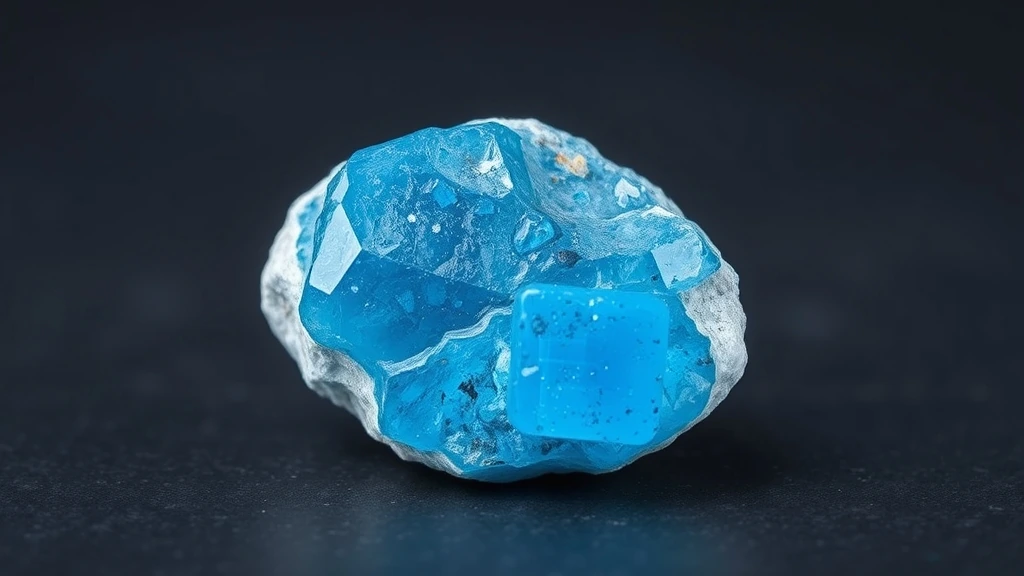
Blue topaz belongs to the silicate family, specifically the nesosilicate subgroup of aluminum fluorosilicates. Its prismatic crystals crystallize in the orthorhombic system, a hallmark of many high‑index, color‑bearing gems. The mineral’s structure accommodates a variety of cation substitutions, which, together with irradiation or heat treatment, produce its signature blue tones. Historically prized in ancient lapidary traditions, blue topaz has been fashioned into jewelry and ceremonial objects across cultures.
What is Blue Topaz? Geological Overview & Definition
Blue topaz is a member of the silicate mineral group, distinguished by its isolated tetrahedral SiO₄ units. Its natural color range spans from pale sky‑blue to intense cobalt, often achieved through post‑formation treatments. The gemstone is typically found in pegmatitic veins, where it crystallizes as well‑formed, prismatic crystals. In its raw state, blue topaz may appear translucent to opaque, but high‑quality specimens exhibit remarkable clarity and refractive brilliance. In comparative mineralogical collections, practitioners and geologists frequently study Amegreen alongside this crystal to appreciate their subtle energetic and structural differences.
Blue Topaz Chemical Composition & Crystallographic Properties
The definitive chemical formula for blue topaz is Al₂SiO₄(F,OH)₂, reflecting its status as an aluminum fluorosilicate. Crystallographically, it adopts an orthorhombic lattice, with three mutually perpendicular axes of unequal length. This arrangement allows for anisotropic optical behavior, giving the stone its characteristic double refraction and pleochroism. Cation substitution—primarily Fe²⁺, Mg²⁺, and Ti⁴⁺—introduces color centers that, when combined with irradiation or heat, yield the deep blue hues prized by collectors. The mineral is mildly acid‑sensitive; dilute hydrochloric acid can etch its surface, but it remains stable under normal environmental conditions. Thermal treatment above 400 °C can alter its color centers, often shifting blue tones toward violet or gray, underscoring the importance of controlled heat processing in gemstone enhancement.
| Property | Specification |
|---|---|
| Mineral Group | Silicates (Nesosilicates / Aluminum Fluorosilicate) |
| Chemical Formula | Al₂SiO₄(F,OH)₂ (Aluminum Fluorosilicate) |
| Mohs Hardness | 8.0 |
| Crystal System | Orthorhombic (Prismatic crystals) |
| Specific Gravity (Density) | 3.49 – 3.57 |
| Refractive Index | 1.606 – 1.638 |
| Color & Optical Properties | Natural Blue Topaz color spectrum and optical dispersion |
| Primary Mining Localities | Brazil (Minas Gerais), Pakistan, Russia (Ural), Nigeria, Mexico |
| Water & Chemical Resistance | High (Safe in lukewarm water; avoid thermal shock and harsh chemicals) |
| Chakra Alignment (Traditional) | Throat Chakra and Solar Plexus Chakra |
| Zodiac Affinity (Traditional) | Sagittarius, Scorpio, Leo |
| Symbolic Meaning (Traditional) | Clarity, truth, self-realization, manifestation, and good fortune |
Blue Topaz Varieties & Color Spectrum
The gemological market recognizes several distinct blue topaz varieties, each defined by unique geological processes and color saturation levels. These ranges span from pale sky tones to intense, electric shades that command premium valuations. Understanding these distinctions is essential for accurate appraisal and proper care of the stone. Similarly, collectors often compare the deepest electric hues of blue topaz to the vivid, sapphire‑like depths found in Indicolite Blue Tourmaline, highlighting subtle differences in crystal structure and market value.
Sky Blue Topaz
Sky blue topaz represents the most common and accessible variety within the blue spectrum. It typically exhibits a light, watery hue that mimics the appearance of a clear daytime sky. This variety often contains minor inclusions that do not significantly impact its overall aesthetic appeal or durability. In comparative mineralogical collections, practitioners and geologists frequently study Chiastolite Cross Stone alongside this crystal to appreciate their subtle energetic and structural differences.
Swiss Blue Topaz
Swiss blue topaz is not a natural color but a highly irradiated and heated treatment of colorless topaz. The resulting medium-blue shade is uniform, vivid, and widely recognized in the commercial jewelry sector. This process stabilizes the color, making it permanent under normal lighting conditions and wear. In comparative mineralogical collections, practitioners and geologists frequently study Green Sapphire alongside this crystal to appreciate their subtle energetic and structural differences.
London Blue Topaz
London blue topaz features a deep, dark blue coloration that is often enhanced through irradiation and heat treatment. It possesses a rich, saturated tone that appears almost navy in low-light conditions. This variety is prized for its intense depth and is frequently used in high-end engagement rings.
Ice Blue Topaz
Ice blue topaz displays a very pale, delicate blue tint that is often found in natural deposits. It is characterized by exceptional clarity and a subtle, ethereal glow that appeals to minimalist jewelry designs. This variety is less common than its treated counterparts but remains popular for its natural origin.
London Blue vs. Swiss Blue
While both are treated varieties, London blue is significantly darker and more saturated than Swiss blue. The distinction lies in the intensity of the irradiation and subsequent heating processes applied to the original stone. Collectors often prefer London blue for its dramatic visual impact and deeper color saturation.
Where is Blue Topaz Found? Geological Mining & Extraction
Blue topaz primarily forms in granite pegmatites and alluvial deposits, where hydrothermal fluids deposit aluminum fluorosilicate minerals. The most significant commercial sources include Brazil, specifically the Minas Gerais region, which yields high-quality natural and colorless stones. Other notable mining locations include the United States, Mexico, and Russia, each contributing distinct geological characteristics to the global supply.
Extraction methods typically involve open-pit mining for large pegmatite bodies or alluvial panning for secondary deposits. The raw crystals are then sorted by size and clarity before undergoing rigorous quality control. This ensures that only the finest specimens proceed to cutting and polishing for the international gemstone market.
Historical Significance & Cultural Lore of Blue Topaz
Ancient civilizations revered topaz as a stone of protection and divine favor, often associating it with the sun god Apollo. In Greco-Roman mythology, it was believed that topaz could reveal the future and protect the wearer from harm. Egyptian artisans also incorporated topaz into royal jewelry, valuing its durability and brilliant luster for ceremonial purposes.
Throughout the Middle Ages, topaz was considered a talisman for good fortune and clarity of thought. It was frequently gifted to couples to ensure fidelity and mutual understanding in their relationships. This enduring legacy of symbolic meaning continues to influence modern lapidary practices and gemological appreciation.
Modern Uses & Jewelry Applications of Blue Topaz
Blue topaz is a premier gemstone in the modern jewelry industry, prized for its brilliant luster and versatile color palette. Lapidaries typically cut these stones into faceted gems to maximize their high refractive index and optical dispersion. The mineral’s exceptional clarity allows for complex facet patterns that enhance its inherent sparkle and fire.
- Faceted Cuts: Standard round, oval, and emerald cuts are most common for engagement rings and high-end necklaces.
- Cabochon Polishing: Rarely used for topaz, but applied to stones with unique inclusions or high opacity.
- Ornamental Carving: Large, high-quality crystals are occasionally carved into decorative objects or architectural accents.
- Jewelry Settings: Frequently set in white gold or platinum to complement its cool blue tones.
Carat, Quality Grades & Value Factors of Blue Topaz
The value of blue topaz is primarily determined by the 4Cs: Color, Clarity, Cut, and Carat weight. Among these, color is the most significant factor, with deep, saturated Swiss Blue and London Blue commanding the highest premiums. Stones exhibiting a pure, vivid blue without secondary green or purple overtones are considered the most desirable in the global market.
Clarity and cut further influence the final valuation of the gemstone. A VVS (Very Very Slightly Included) clarity grade indicates minimal internal flaws, allowing light to pass through unobstructed. Precision cutting is essential to optimize the stone’s brilliance, as poor symmetry can dull the gem’s natural luster and reduce its overall market appeal.
Zodiac and Astrological Lore of Blue Topaz
In traditional astrological systems, blue topaz is strongly associated with the zodiac signs Sagittarius, Scorpio, and Leo. These signs are believed to benefit from the stone’s energetic properties, which promote clarity of thought and emotional balance. Wearing this gemstone is thought to align the wearer’s energy with their specific astrological sign’s inherent strengths.
Historical gemological lore also links blue topaz to the Throat Chakra and Solar Plexus Chakra. This alignment suggests the stone enhances communication, self-expression, and personal power. Across various cultural traditions, it has been revered as a symbol of truth, wisdom, and spiritual awakening, making it a popular choice for meditative and therapeutic practices.
How to Identify Real vs. Fake Blue Topaz
Distinguishing genuine blue topaz from imitations requires careful examination of its physical and optical properties. Common fakes include synthetic glass, dyed quartz, and other colorless minerals treated to mimic blue topaz’s appearance. Understanding the unique characteristics of natural topaz helps consumers avoid purchasing low-quality or fraudulent gemstones.
Practical At-Home Authenticity Tests
- Temperature Test (Thermal Feel): Genuine topaz feels cool to the touch initially due to its low thermal conductivity. Glass imitations, however, tend to warm up more quickly when held in the hand.
- Specific Gravity & Weight Test: Topaz has a specific gravity of 3.49-3.57, making it heavier than glass of the same size. A genuine stone will feel noticeably denser than a glass replica.
- Scratch & Hardness Test (Mohs Comparison): With a Mohs hardness of 8.0, topaz can scratch glass and quartz. It will not be scratched by a steel knife, whereas many imitations may show minor scratches.
- Microscopic & Loupe Inspection (Internal Inclusions): Use a 10x loupe to examine the stone for natural inclusions like rutile needles or fluid inclusions. Glass imitations often contain tiny, spherical bubbles or swirl marks that are not found in natural topaz.
Blue Topaz Valuation Factors, Grading & Pricing
The primary driver of market value is Color Saturation, specifically the intensity of the blue hue. Topaz exhibits a wide spectrum, ranging from pale sky blue to deep Swiss blue. Gemologists prioritize stones with uniform color distribution and minimal zoning. High optical clarity and strong vitreous luster further enhance the stone’s visual appeal and desirability.
Carat Weight significantly influences pricing, as larger, high-quality crystals are increasingly rare in nature. Facet symmetry and precision cutting are critical for maximizing brilliance and fire. The industry adheres to the 4Cs lapidary grading standards, evaluating cut, color, clarity, and carat weight holistically. Superior cut proportions ensure optimal light return, elevating the gemstone’s overall aesthetic value.
Geographical Provenance Premium plays a crucial role in determining final market value. Stones from renowned mines, such as Ouro Preto in Brazil, often command higher prices due to historical significance. Certified gem market value trends show consistent demand for vivid, untreated specimens. Reputable laboratories issue certificates that verify origin and treatment status, ensuring transparency for buyers.
How to Clean and Care for Blue Topaz
Blue topaz possesses perfect basal cleavage, making it susceptible to fracturing under mechanical stress. Consequently, ultrasonic and steam cleaning must be STRICTLY AVOIDED to prevent internal damage. These methods create vibrations and thermal shocks that can shatter the crystal lattice. Always inspect the stone for existing inclusions before attempting any cleaning procedure.
For routine maintenance, use warm soapy water and a soft, lint-free cloth. Gently wipe the surface to remove oils and dust without applying excessive pressure. Rinse thoroughly with lukewarm water to eliminate soap residue. Dry immediately with a soft towel to prevent water spots or potential thermal shock.
Cleansing and Recharging Blue Topaz (Energetic Care)
Holistic practitioners often recommend herbal smudging as a safe, dry method for energetic cleansing. Pass the stone gently through the smoke of sage or palo santo to clear stagnant energy. This process requires no water or heat, preserving the mineral’s structural integrity. Ensure the stone is cool and dry before and after the ritual.
For recharging, place the gemstone on a selenite charging slab under gentle moonlight. This method leverages natural lunar energy without exposing the topaz to intense heat. Avoid direct sunlight, as prolonged exposure can cause thermal expansion and potential cracking. Allow the stone to rest overnight to absorb the subtle energetic vibrations.
Frequently Asked Questions About Blue Topaz
Blue Topaz displays distinct mineralogical characteristics across its geological varieties and structural habits. Gemologists evaluate these natural varieties based on crystal habit, trace chromophore concentrations, and visual luster.
Primary Natural Blue Topaz
The benchmark natural variety exhibiting diagnostic color saturation and classic crystallographic symmetry.
Distinct Geological Morphs of Blue Topaz
Secondary regional and structural varieties formed under localized geological temperature and pressure conditions.
Is blue topaz safe to wear in the shower?
Yes, blue topaz can be worn in lukewarm showers, but avoid sudden temperature changes. The crystal’s high water resistance allows exposure to mild moisture, yet rapid thermal shock or harsh chemicals can damage its surface. Keep the stone out of hot water and avoid prolonged soaking to preserve its clarity and color.
Can I clean blue topaz with an ultrasonic cleaner?
No, ultrasonic cleaning should be avoided for blue topaz. The gemstone’s perfect basal cleavage makes it vulnerable to vibration damage. Instead, clean with warm soapy water and a soft cloth, gently wiping to remove dirt while protecting the crystal’s facets.
What is the ideal temperature range for storing blue topaz?
Store blue topaz between 15 °C and 25 °C (59 °F to 77 °F). Extreme temperatures can cause expansion or contraction, potentially leading to surface crazing or internal stress. Keep the stone in a dry, well-ventilated case away from direct sunlight to maintain its brilliance.
Does blue topaz have any special care instructions for jewelry settings?
Use a secure, low‑profile setting to protect the crystal’s edges. Blue topaz is relatively hard (Mohs 8.0) but its facets can be chipped by rough handling. A bezel or a low‑setting prong design minimizes exposure to impact and preserves the gemstone’s natural beauty.
Which zodiac signs are associated with blue topaz?
Blue topaz is linked to Sagittarius, Scorpio, and Leo. These signs are believed to resonate with the stone’s energetic qualities, such as clarity, truth, and self‑realization. Wearing blue topaz can support the traits traditionally attributed to these zodiac personalities.
Which chakras does blue topaz correspond to?
Blue topaz aligns with the Throat Chakra and the Solar Plexus Chakra. These energy centers are thought to benefit from the stone’s calming vibration, encouraging honest communication and personal confidence. Incorporating blue topaz into meditation or daily wear can enhance these chakra balances.
Can I use steam or hot water to clean blue topaz?
Avoid steam or hot water for cleaning blue topaz. The gemstone’s perfect basal cleavage makes it susceptible to damage from high heat or steam. Stick to gentle warm soapy water and a soft cloth, ensuring the stone remains free from scratches or surface wear.
Does blue topaz contain any harmful elements that require special handling?
Blue topaz is free from toxic elements, but it should still be handled with care. While the stone itself is safe, its fluorine content can be affected by harsh chemicals. Use mild soap solutions and avoid abrasive cleaners to maintain the crystal’s integrity and longevity.