
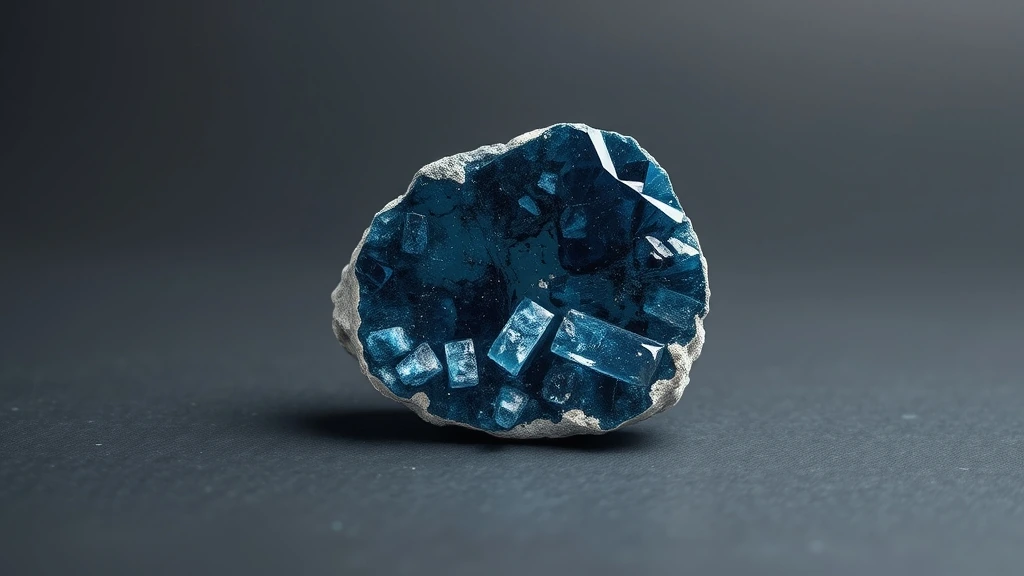
Indicolite belongs to the tourmaline super‑group, a complex cyclosilicate series that crystallizes in the trigonal system. As a natural mineral, it forms elongated prismatic crystals with striated faces, often occurring in pegmatitic veins and metamorphic schists. Its formation requires a fluorine‑rich environment, and the presence of Fe²⁺ imparts the characteristic blue coloration that distinguishes it from its pink, green, or black tourmaline siblings.
What is Indicolite (blue Tourmaline)? Geological Overview & Definition
Indicolite is the blue end‑member of the tourmaline series, defined by the dominance of ferrous iron (Fe²⁺) in its crystal lattice. Across ancient lapidary traditions, this hue was prized for its rarity and was often associated with the sea and sky, reflecting its deep, saturated color. In comparative mineralogical collections, practitioners and geologists frequently study Pink Tourmaline alongside this crystal to appreciate their subtle energetic and structural differences.
In modern mineralogy, Indicolite is recognized as a cyclosilicate where boron‑oxygen triangles link to form six‑membered rings, a structural motif that stabilizes the complex formula. The stone typically occurs in granitic pegmatites, metamorphic schists, and alluvial deposits where hydraulic action liberates the durable crystals for secondary concentration. In comparative mineralogical collections, practitioners and geologists frequently study Nellite alongside this crystal to appreciate their subtle energetic and structural differences.
Indicolite (blue Tourmaline) Chemical Composition & Crystallographic Properties
The definitive formula NaFe²⁺₃Al₆(BO₃)₃Si₆O₁₈(OH)₄ reflects a trigonal lattice with space group R3m, characterized by a three‑fold rotational axis and a mirror plane. This symmetry yields the characteristic elongated, striated prisms that display perfect cleavage parallel to the basal plane.
Cation substitution is a hallmark of tourmaline; in Indicolite, Fe²⁺ can be partially replaced by Mg²⁺, Mn²⁺, or Li⁺, subtly shifting the hue toward teal or turquoise. The chromophore responsible for the blue color is the Fe²⁺–Fe³⁺ intervalence charge transfer, which intensifies under ultraviolet illumination.
Indicolite is moderately sensitive to strong acids; prolonged exposure to hydrofluoric or hydrochloric acid can leach sodium and iron, leading to surface etching and loss of luster. However, it remains chemically stable under typical jewelry cleaning agents, provided abrasive powders are avoided.
Thermally, Indicolite exhibits reversible color change: heating above 400 °C can dehydrate the hydroxyl groups, causing a temporary paling, while cooling restores the original blue. This thermal behavior is exploited in laboratory studies to confirm the presence of Fe²⁺ and to differentiate it from other blue tourmalines such as elbaite.
| Property | Specification |
|---|---|
| Mineral Group | Natural Mineral / Crystal |
| Chemical Formula | NaFe²⁺₃Al₆(BO₃)₃Si₆O₁₈(OH)₄ |
| Mohs Hardness | 7.0 – 7.5 |
| Crystal System | Trigonal |
| Specific Gravity (Density) | 3.02 – 3.25 |
| Refractive Index | 1.620 – 1.640 |
| Color & Optical Properties | Natural Indicolite (blue Tourmaline) color spectrum and optical dispersion |
| Primary Mining Localities | Global primary localities |
| Water & Chemical Resistance | High (Safe for gentle water washing) |
| Chakra Alignment (Traditional) | Throat Chakra, Heart Chakra |
| Zodiac Affinity (Traditional) | Pisces, Libra |
| Symbolic Meaning (Traditional) | Emotional balance, clear communication, and mental clarity |
Indicolite (blue Tourmaline) Varieties & Color Spectrum
Indicolite represents the blue to blue-green end of the tourmaline spectrum, distinguished by its chromium and iron content. Unlike pure blue sapphire, this variety often exhibits a distinct greenish or grayish undertone. The specific hue depends on the precise ratio of these trace elements within the crystal lattice.
Deep Blue Indicolite
This rare morph displays a saturated, vivid blue color with minimal green tinting. High-quality specimens typically originate from Brazilian pegmatites where specific chemical conditions prevailed. The absence of significant manganese ensures a cleaner, more intense blue appearance.
Greenish-Blue Indicolite
Often confused with paraiba, this variety features a noticeable green component alongside the blue base. It forms in iron-rich environments that influence the final chromatic output. Collectors value this shade for its unique, oceanic visual depth.
Grayish-Blue Indicolite
Commonly found in lower-grade deposits, this morph presents a muted, steel-like blue hue. The presence of excess iron imparts a darker, less vibrant character to the stone. While less commercially valuable, it remains geologically significant for tracing formation conditions.
Pale Sky-Blue Indicolite
This lighter variety appears almost translucent, resembling a clear sky with a subtle blue wash. It often contains fewer inclusions than its darker counterparts, enhancing overall clarity. Such stones are frequently cut into large faceted gems for jewelry.
Where is Indicolite (blue Tourmaline) Found? Geological Mining & Extraction
Indicolite primarily occurs in granitic pegmatites, which are coarse-grained igneous rocks formed from the last stages of magma crystallization. These deposits are typically associated with high-temperature hydrothermal activity that concentrates boron and aluminum. The crystals often grow in large, well-formed prisms within the pegmatite matrix.
Major mining regions include Brazil, Nigeria, and Mozambique, where extensive pegmatite fields yield significant quantities. In Brazil, the Minas Gerais state remains a historic and productive source for high-quality blue tourmalines. Extraction involves careful hand-picking to preserve the integrity of the large, brittle crystals.
Historical Significance & Cultural Lore of Indicolite (blue Tourmaline)
Ancient civilizations often misidentified tourmaline as other gemstones due to its diverse color range and crystal habit. In ancient Egypt, blue tourmalines were sometimes confused with lapis lazuli or sodalite, valued for their protective properties. Archaeological findings suggest these stones were used in amulets and ceremonial jewelry, symbolizing divine protection.
In Greco-Roman lore, the stone was associated with the goddess Aphrodite, believed to enhance beauty and emotional balance. Vedic texts reference similar blue minerals as aids for mental clarity and spiritual communication. These historical attributions highlight the stone’s enduring appeal across diverse cultural contexts.
Modern Uses & Jewelry Applications of Indicolite (blue Tourmaline)
Indicolite is primarily fashioned into faceted gemstones for rings, pendants, and earrings, where its medium to dark blue hue complements silver and white gold settings. The stone’s high Mohs hardness allows lapidaries to create complex brilliant or oval cuts that maximize brilliance without risking chipping during wear.
- Cabochon Cutting: Smooth, domed stones are used for vintage-inspired jewelry, highlighting the gem’s subtle luster and eye-clean clarity.
- Ornamental Carving: Large, high-quality crystals are occasionally carved into beads or small figurines for collectors seeking unique artistic pieces.
- Mixed Stone Jewelry: Indicolite is frequently paired with clear quartz or other blue tourmaline varieties to create gradient effects in bracelets and necklaces.
Carat, Quality Grades & Value Factors of Indicolite (blue Tourmaline)
The market value of indicolite is heavily dictated by its color saturation, with deep, vivid blue tones commanding the highest prices. Stones exhibiting a purplish or greenish secondary hue are generally less valuable than those with a pure, intense blue appearance. The refractive index of 1.620–1.640 contributes to its strong brilliance, making the cut quality critical for enhancing visual appeal.
Clarity and carat weight significantly influence pricing, as larger stones with minimal inclusions are rare and expensive. Jewelry durability is excellent due to the mineral’s hardness, making it suitable for daily wear in rings and bracelets. Lapidary grading standards prioritize stones that are eye-clean, as internal fractures or silk can diminish both aesthetic value and structural integrity.
Zodiac and Astrological Lore of Indicolite (blue Tourmaline)
In contemporary metaphysical practices, indicolite is strongly associated with the Throat Chakra and Heart Chakra, promoting clear communication and emotional balance. Its serene blue energy is believed to soothe anxiety and foster mental clarity, making it a popular choice for meditation and stress relief.
Astrologically, this gemstone is considered a birthstone for Pisces and Libra, signs that value harmony and intuition. Throughout historical lapidary traditions, blue tourmaline has been revered for its protective qualities and its ability to enhance interpersonal relationships and emotional stability.
How to Identify Real vs. Fake Indicolite (blue Tourmaline)
Common imitations include synthetic glass, dyed quartz, and lab-created tourmaline, which can mimic the appearance of natural indicolite. Glass imitations often contain bubbles and lack the natural inclusions found in genuine stones. Dyed replicas may show color concentration along cracks or inclusions, which is not typical of naturally colored tourmaline.
Practical At-Home Authenticity Tests
- Temperature Test (Thermal Feel): Genuine indicolite feels cool to the touch and retains that coolness longer than glass or plastic imitations, which warm up quickly due to lower thermal conductivity.
- Specific Gravity & Weight Test: With a density of 3.02–3.25, real indicolite feels noticeably heavier than glass or plastic of the same size, providing a tactile clue for authenticity.
- Scratch & Hardness Test (Mohs Comparison): Indicolite has a Mohs hardness of 7.0–7.5, meaning it will scratch glass (hardness 5.5) but will not be scratched by a steel knife (hardness 5.5).
- Microscopic & Loupe Inspection (Internal Inclusions): Use a 10x loupe to look for natural inclusions like silk or mineral trails; synthetic glass often shows bubbles or a perfectly clean interior, while dyed stones may have color bleeding along fracture lines.
Indicolite (blue Tourmaline) Valuation Factors, Grading & Pricing
The market value of indicolite hinges first on Color Saturation; a deep, vivid blue with minimal green or violet undertones commands the highest premiums. Uniform hue across the stone and a pronounced, glassy luster further enhance desirability, as optical clarity directly reflects the mineral’s purity and internal structure.
Second, Carat Weight and facet symmetry play pivotal roles. Larger specimens with precise, symmetrical facets exhibit greater brilliance and are thus more valuable. Adhering to the 4Cs—color, clarity, cut, and carat—provides a standardized framework for grading, ensuring consistency across the gem market.
Finally, Geographical Provenance Premium can significantly affect pricing. Stones sourced from renowned localities such as Brazil, Madagascar, or the Himalayas often carry a historical allure that elevates their market value. Certified gemological reports from accredited laboratories corroborate provenance claims, allowing buyers to track trends and secure fair valuations.
How to Clean and Care for Indicolite (blue Tourmaline)
Indicolite is chemically stable and non-hygroscopic, making it safe for routine maintenance with warm soapy water. Gently wipe the surface with a soft cloth dampened in mild soap solution, then rinse with clean water and dry with a lint‑free towel. Ultrasonic cleaning is also acceptable, provided the device operates at a low frequency to avoid micro‑fracture risk.
Cleansing and Recharging Indicolite (blue Tourmaline) (Energetic Care)
For energetic renewal, place the stone on a selenite slab under gentle moonlight for several hours; the natural light enhances its vibrational properties without exposing it to heat. Alternatively, a brief herbal smudging session using sage or cedar can clear residual energies, allowing the indicolite to absorb fresh, positive vibrations. These dry, low‑energy practices preserve the crystal lattice while supporting its metaphysical functions.
Frequently Asked Questions About Indicolue (blue Tourmaline)
Indicolite (blue Tourmaline) displays distinct mineralogical characteristics across its geological varieties and structural habits. Gemologists evaluate these natural varieties based on crystal habit, trace chromophore concentrations, and visual luster.
Primary Natural Indicolite (blue Tourmaline)
The benchmark natural variety exhibiting diagnostic color saturation and classic crystallographic symmetry.
Distinct Geological Morphs of Indicolite (blue Tourmaline)
Secondary regional and structural varieties formed under localized geological temperature and pressure conditions.
What is the chemical composition of Indicolite?
Indicolite is a sodium‑iron‑aluminum tourmaline with the formula NaFe²⁺₃Al₆(BO₃)₃Si₆O₁₈(OH)₄. This trigonal silicate incorporates borate groups, giving the stone its vivid blue hue and contributing to its typical density of 3.02–3.25 g/cm³ and refractive index of 1.620–1.640.
How hard is Indicolite and can it be worn daily?
Indicolite ranks 7.0–7.5 on the Mohs scale, making it suitable for everyday jewelry. Its hardness resists scratches from most household items, though prolonged contact with abrasive surfaces can dull the polish. Regular cleaning with a soft cloth helps maintain its brilliance.
Is Indicolite safe to wear in the shower or while swimming?
Yes, Indicolite has high water resistance and tolerates gentle water washing. Warm, soapy water and a soft cloth will not damage the stone, but prolonged exposure to harsh chemicals or high‑pressure jets should be avoided to preserve its surface integrity.
Can I clean Indicolite in an ultrasonic cleaner?
Indicolite is safe for ultrasonic cleaning when used with warm soapy water. The gentle vibrations remove embedded grime without harming the crystal lattice, but always follow the cleaner’s recommended cycle time and avoid excessive heat to prevent any thermal shock.
Which zodiac signs are traditionally associated with Indicolite?
Indicolite aligns with the zodiac signs Pisces and Libra. In astrological lore, the stone is believed to amplify the intuitive qualities of Pisces and the diplomatic balance of Libra, reinforcing its reputation for fostering emotional equilibrium.
Which chakras does Indicolite influence according to metaphysical tradition?
The stone is linked to the Throat Chakra and the Heart Chakra. Practitioners claim it enhances clear communication and emotional openness, supporting a harmonious flow between thought and feeling during meditation or energy work.
How does Indicolite’s crystal system affect its optical properties?
Indicolite crystallizes in the trigonal system, producing characteristic pleochroism. Light entering the stone is split into distinct shades of blue, which, combined with its high refractive index, yields a vibrant sparkle that is prized in faceted gemstones.
What care practices extend the life of an Indicolite?
Store Indicolite separately in a soft pouch and clean it with warm soapy water and a microfiber cloth. Avoid exposing it to strong acids, extreme heat, or ultrasonic cycles longer than recommended, as these can weaken the hydroxyl groups that stabilize its crystal structure.