
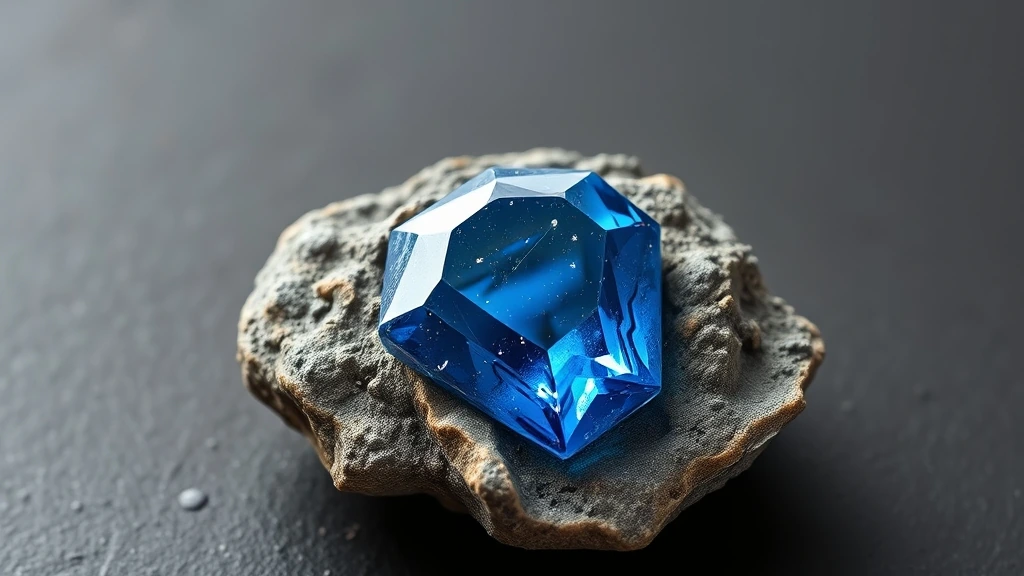
Blue sapphire belongs to the oxide family, specifically the Corundum Group, where each crystal is a single mineral rather than an aggregate. Formed in metamorphic schists, alluvial gravels, and basaltic pegmatites, it crystallizes in the trigonal (hexagonal bipyramidal or prismatic) system. This structure yields the characteristic hexagonal facets prized by cutters, while its high density (3.98‑4.06 g/cm³) and refractive index (1.762‑1.778) give it exceptional brilliance and durability.
What is Blue Sapphire Gemstone? Geological Overview & Definition
Blue sapphire is the blue‑colored variety of corundum, a trigonal oxide mineral that occurs in metamorphic and igneous environments worldwide. Its color arises from trace Fe‑Ti impurities that replace aluminum in the crystal lattice, creating selective light absorption in the visible spectrum. The stone is prized for its rarity, durability, and deep, saturated blue tones that range from pastel to velvety midnight.
In gemological terms, sapphire denotes any corundum of non‑red color, with blue being the most sought after. It forms as well‑developed prisms or bipyramids, often found in river gravels where erosion liberates the crystals from host rocks. The gemstone’s clarity, cut, and color saturation are evaluated against strict industry standards set by the GIA and other authorities.
Blue Sapphire Gemstone Chemical Composition & Crystallographic Properties
The fundamental formula of blue sapphire is Al₂O₃, with iron (Fe) and titanium (Ti) substituting for a small fraction of the aluminum cations. This cation substitution creates the chromophore responsible for the gemstone’s blue hue, while maintaining the overall stoichiometry of corundum. The crystal belongs unequivocally to the trigonal (hexagonal bipyramidal or prismatic) system, producing a hexagonal cross‑section and characteristic rhombohedral cleavage.
Its lattice is composed of tightly packed oxygen anions in a hexagonal close‑packed arrangement, with aluminum ions occupying two-thirds of the octahedral sites. The trigonal symmetry yields three equal axes in the basal plane and a distinct c‑axis, influencing optical properties such as birefringence and pleochroism. Because corundum is an oxide, it is chemically resistant but can be attacked by hydrofluoric acid, which dissolves the Al–O bonds.
Color centers in blue sapphire are primarily Fe²⁺‑Ti⁴⁺ charge‑transfer complexes, absorbing wavelengths around 450 nm and transmitting blue light. Heat treatment at 1500–1900 °C can alter these centers, enhancing or changing the hue by redistributing the Fe and Ti ions. Thermal stability is high; the gemstone tolerates typical jewelry‑making processes without degradation, though rapid temperature changes may induce micro‑fractures.
| Property | Specification |
|---|---|
| Mineral Group | Oxides (Corundum Group) |
| Chemical Formula | Al₂O₃:Fe,Ti (Aluminum Oxide with Iron/Titanium traces) |
| Mohs Hardness | 9.0 |
| Crystal System | Trigonal (Hexagonal bipyramidal or prismatic corundum) |
| Specific Gravity (Density) | 3.98 – 4.06 |
| Refractive Index | 1.762 – 1.778 |
| Color & Optical Properties | Natural Blue Sapphire Gemstone color spectrum and optical dispersion |
| Primary Mining Localities | Sri Lanka, Madagascar, Myanmar, Australia, Kashmir |
| Water & Chemical Resistance | Very High (Fully resistant to water and standard detergents) |
| Chakra Alignment (Traditional) | Throat Chakra and Third Eye Chakra |
| Zodiac Affinity (Traditional) | Virgo, Libra, Sagittarius |
| Symbolic Meaning (Traditional) | Wisdom, royalty, fidelity, mental focus, and spiritual clarity |
Blue Sapphire Gemstone Varieties & Color Spectrum
Blue sapphire exhibits a vast spectrum of hues, ranging from pale cornflower to deep midnight blue. The color is primarily driven by trace amounts of iron and titanium within the Al₂O₃ crystal lattice. These elements interact with light to produce the gem’s iconic saturation and vibrancy.
Royal Blue
Royal blue represents the most coveted hue in the sapphire market, characterized by a vivid, medium-dark blue tone. This variety typically displays high saturation with minimal secondary hues, commanding premium prices in global auctions. The refractive index of 1.762 to 1.778 enhances its brilliance and fire.
Ceylon Blue
Sourced predominantly from Sri Lanka, Ceylon blue sapphires are known for their lighter, more transparent blue tones. These stones often exhibit excellent clarity, allowing light to penetrate deeply without significant obstruction. Their Mohs hardness of 9.0 ensures durability, making them ideal for daily wear in fine jewelry.
Kashmir Blue
Kashmir sapphires are legendary for their velvety, cornflower-blue appearance, caused by microscopic silk inclusions. These rutile needle inclusions scatter light, creating a unique, soft glow rather than sharp brilliance. This distinct visual signature makes Kashmir stones exceptionally rare and highly prized by collectors.
Madagascar Blue
Madagascar produces a wide range of blue sapphires, from pale sky blue to intense royal shades. The geological conditions in this region allow for rapid crystal growth, resulting in large, high-quality faceted gems. These stones often feature clean inclusions, contributing to their clarity and market appeal.
Montana Blue
American Montana sapphires are recognized for their distinctive, slightly purplish-blue hue and exceptional transparency. These gems often contain fewer inclusions compared to other origins, resulting in a clean, icy appearance. Their trigonal crystal system contributes to their unique optical properties and cut performance.
Burmese Blue
Burma (Myanmar) has historically produced some of the finest blue sapphires, particularly from the Mogok valley. These stones often display a rich, deep blue with excellent color saturation and durability. The density of 3.98 to 4.06 g/cm³ reflects their dense, high-quality corundum structure.
Where is Blue Sapphire Gemstone Found? Geological Mining & Extraction
Blue sapphires form in metamorphic rocks such as marble and schist, where high pressure and temperature alter the original minerals. These deposits are often found in alluvial or residual soils, where weathering has concentrated the gemstones. The host rock composition plays a critical role in determining the gem’s color and clarity.
Primary mining regions include Sri Lanka, Madagascar, Myanmar, and Thailand, each offering distinct geological characteristics. Extraction methods vary from small-scale panning to large-scale open-pit mining, depending on the deposit type. Careful handling during extraction is essential to preserve the integrity of the crystal structure and minimize damage.
Historical Significance & Cultural Lore of Blue Sapphire Gemstone
Ancient civilizations revered blue sapphires as symbols of wisdom, royalty, and divine protection. In medieval Europe, the gem was believed to ward off evil and ensure fidelity, often set in royal crowns and religious artifacts. The esoteric keywords of wisdom and spiritual clarity reflect its enduring cultural significance across different eras.
Archaeological findings reveal sapphires in tombs and temples dating back thousands of years, highlighting their value in ancient societies. These gems were traded along major routes, connecting distant cultures and economies. Their association with the throat chakra and third eye chakra underscores their role in spiritual practices and meditation.
Modern Uses & Jewelry Applications of Blue Sapphire Gemstone
Blue sapphire is prized for its exceptional durability, making it ideal for faceted gemstones in rings and earrings that withstand daily wear. Lapidaries often cut these stones to maximize the stone’s natural brilliance and color saturation.
- Faceted Cuts: Standard round, oval, and cushion cuts are most common to enhance the stone’s refractive index.
- Cabochons: Smooth, domed cuts are used for fancy shapes or stones with significant inclusions.
- Ornamental Carving: High-quality material is carved into intricate figurines or architectural inlays for luxury displays.
Carat, Quality Grades & Value Factors of Blue Sapphire Gemstone
The primary determinant of value is color, with deep, velvety blue hues commanding the highest premiums in the market. Stones must exhibit vivid saturation without appearing too dark or washed out to be considered top-grade. The 4Cs framework (Color, Clarity, Cut, Carat) guides professional appraisal and pricing structures globally.
Clarity is assessed by the visibility of inclusions to the naked eye, with eye-clean stones being rare and valuable. Carat weight significantly impacts price per carat, as larger, high-quality sapphires are exponentially more expensive than smaller ones. Cut quality determines how well light interacts with the crystal, influencing the stone’s overall fire and brilliance.
Zodiac and Astrological Lore of Blue Sapphire Gemstone
In Vedic astrology, blue sapphire is the ruling gemstone for Virgo, Libra, and Sagittarius, believed to enhance mental clarity and focus. It is traditionally associated with the Throat Chakra and Third Eye Chakra, promoting spiritual communication and intuition.
Historically, this gemstone symbolized wisdom, royalty, and fidelity, often reserved for monarchs and high-ranking officials. Wearing it was thought to protect the wearer from envy and promote truthfulness in speech and action.
How to Identify Real vs. Fake Blue Sapphire Gemstone
Distinguishing natural sapphires from imitations requires careful observation, as synthetic glass and dyed spinels can mimic the appearance of genuine stones. Artificial lab-grown corundum is chemically identical to natural sapphire but often lacks the characteristic inclusions found in earth-mined gems.
Practical At-Home Authenticity Tests
- Temperature Test (Thermal Feel): Genuine sapphires feel cool to the touch initially due to their low thermal conductivity, whereas glass imitations warm up quickly in your hand.
- Specific Gravity & Weight Test: Sapphires have a high density of 3.98–4.06, making them feel significantly heavier than glass or quartz of the same size.
- Scratch & Hardness Test (Mohs Comparison): With a Mohs hardness of 9.0, sapphire can scratch glass and most other gemstones, while it cannot be scratched by a steel knife.
- Microscopic & Loupe Inspection (Internal Inclusions): Use a 10x loupe to look for natural inclusions like silk or rutile needles; glass often contains circular bubbles or swirls.
Blue Sapphire Gemstone Valuation Factors, Grading & Pricing
Color Saturation is the single most decisive attribute in a blue sapphire’s market value. Deep, vivid blues that dominate the stone without gray or green overtones command premium prices. Uniform tone across the entire facet pattern enhances perceived richness, while a high‑luster surface reflects light with a glassy brilliance that collectors prize.
Carat Weight influences price exponentially, but only when paired with excellent cut quality. Well‑proportioned facets and precise symmetry maximize sparkle and help mask minor inclusions. The matrix—natural crystal growth patterns—must be minimal; visible inclusions or cloudiness reduce clarity grades and depress valuation, especially in larger stones.
Geographical Provenance Premium adds a recognizable cachet, with sapphires from Kashmir, Sri Lanka, and Myanmar often fetching the highest premiums. Market trends show a steady rise in retail prices as demand for ethically sourced, untreated stones grows, while wholesale rates remain anchored to supply fluctuations and global economic conditions.
How to Clean and Care for Blue Sapphire Gemstone
Clean your blue sapphire with warm soapy water and a soft brush, gently scrubbing each facet to remove residue. Rinse thoroughly with clean, lukewarm water and pat dry with a lint‑free cloth. Because untreated sapphires tolerate ultrasonic vibrations, a brief cycle in a ultrasonic cleaner is safe, but avoid harsh chemicals or abrasive pads that could dull the surface.
Cleansing and Recharging Blue Sapphire Gemstone (Energetic Care)
For energetic renewal, place the sapphire on a selenite charging plate for several hours; the mineral’s high vibrational energy clears lingering negativity without any risk of moisture damage. Alternatively, expose the stone to moonlight on a clear night, allowing lunar photons to restore its inner brilliance and align with the throat and third‑eye chakras.
A gentle smoke smudging ritual can also refresh the stone’s aura. Pass the sapphire through the clean, cool smoke of white sage or palo santo, visualizing the blue hue becoming brighter and more focused. These dry methods respect the sapphire’s chemical stability while enhancing its metaphysical properties.
Frequently Asked Questions About Blue Sapphire Gemstone
What is the chemical composition of blue sapphire?
Blue sapphire is essentially corundum, Al₂O₃, with trace amounts of iron and titanium. These impurities replace aluminum in the crystal lattice, creating the deep blue hue that distinguishes sapphire from its colorless counterpart. The formula is often written as Al₂O₃:Fe,Ti, reflecting its mineralogical identity.
How hard is blue sapphire compared to other gemstones?
Blue sapphire rates a 9.0 on the Mohs hardness scale. This places it just below diamond and makes it exceptionally resistant to scratching, suitable for daily‑wear rings and bracelets. Its hardness stems from the strong Al–O bonds within the trigonal crystal structure.
Is blue sapphire safe to wear in water or during showering?
Yes – blue sapphire has very high water resistance and tolerates standard detergents. The dense corundum lattice does not absorb moisture, so the stone remains unaffected by rain, swimming, or routine cleaning. However, prolonged exposure to harsh chemicals should still be avoided.
Can I clean my untreated blue sapphire with an ultrasonic cleaner?
Untreated blue sapphires can be safely placed in an ultrasonic cleaner after a warm, soapy‑water rinse. The gentle vibrations remove fine grime without damaging the stone’s surface. For treated or heavily faceted pieces, a soft brush and mild soap remain the safest method.
Which zodiac signs are traditionally associated with blue sapphire?
Blue sapphire is linked to Virgo, Libra, and Sagittarius. Astrologers believe the stone amplifies the analytical precision of Virgo, the diplomatic balance of Libra, and the adventurous spirit of Sagittarius. Wearing sapphire is thought to harmonize these sign‑specific energies.
Which chakras does blue sapphire influence?
The gemstone resonates with the Throat Chakra and the Third Eye Chakra. It is said to enhance verbal expression, mental clarity, and intuitive insight, supporting spiritual communication and focused meditation. Aligning the stone with these chakras may deepen personal insight.
How can I tell if a blue sapphire is natural or lab‑grown?
Natural sapphires often display subtle growth zoning and inclusions, while lab‑grown stones are typically flawless or show uniform internal patterns. Microscopic examination and spectroscopic analysis can reveal the presence of flux residues or synthetic growth lines, confirming origin.
What care practices extend the life of a blue sapphire jewelry piece?
Store sapphire pieces separately in a soft pouch and avoid contact with harder gemstones like diamond. Regularly wipe the stone with a lint‑free cloth after wear, and clean it with warm, mildly soapy water using a soft brush. This routine preserves its luster and prevents surface abrasion.